How to Legally Sell Food from Your Austin Home Kitchen Under Texas Cottage Food Law
Texas gives home food producers an unusually wide runway. No state license. No inspection. No registration with the Texas Department of Agriculture. For an Austin home baker or jam maker trying to …

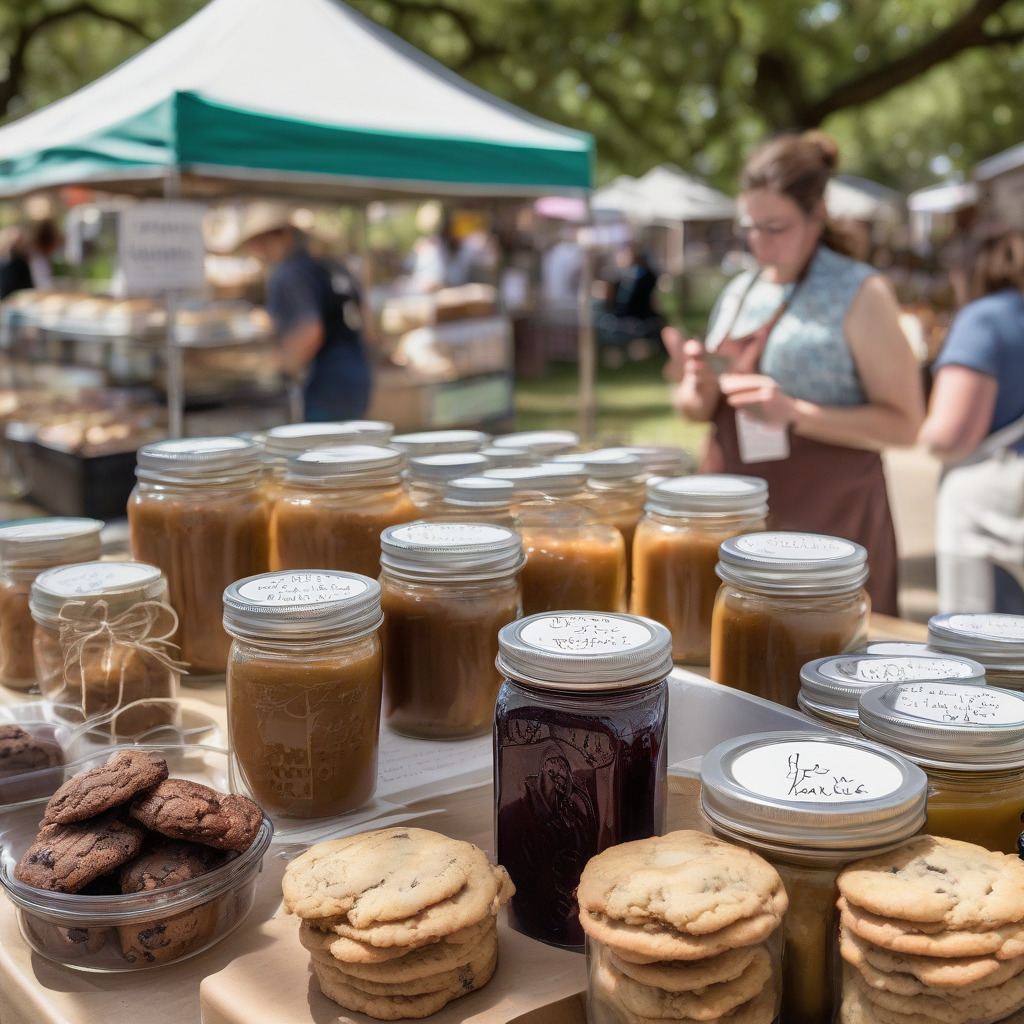
Texas gives home food producers an unusually wide runway. No state license. No inspection. No registration with the Texas Department of Agriculture. For an Austin home baker or jam maker trying to break into the Saturday market circuit, that’s good news. But the state rules are only part of the picture. The city’s zoning layer, market-specific requirements, labeling rules, and the hard line on online sales are where real operators get tripped up — and where the existing guidance consistently falls short.
This guide covers every layer: what Texas law permits and prohibits, what the City of Austin and Travis County actually add (or don’t), what your labels must say word for word, where the law draws the line on Instagram orders and delivery, and what SFC, Barton Creek, and Mueller farmers markets specifically require before you set up a table. If you’re making business decisions right now — which products to launch, which markets to target, whether to start taking orders — this is where to start.
What Texas Cottage Food Law Actually Allows
Texas Health & Safety Code Chapter 437, Subchapter D governs cottage food operations statewide. The legislature designed it to let home producers sell directly to consumers without the licensing and inspection overhead that applies to commercial food establishments. Compared to most states, it’s a permissive setup.
The permitted list is broad. Baked goods — cookies, bread, cakes, muffins, brownies, pies with non-perishable fillings — are all in. Candy and fudge. Roasted nuts. Granola. Dried herbs and herb mixes. Dry baking mixes. Fruit butters, jams, jellies. Dehydrated fruits and vegetables. Popcorn and popcorn snacks. Unroasted nut butters like peanut butter and almond butter. Coated or uncoated nuts.
What’s not allowed is anything requiring refrigeration for food safety. Cheesecakes, cream pies, custards, and most dairy-based goods are out. Fresh meat and anything made with it — tamales with meat filling, for instance — are prohibited. Canned low-acid vegetables (green beans, corn, beets processed in a water bath rather than a pressure canner) are off the table because of botulism risk. Fresh salsa falls outside the cottage food category. Alcoholic beverages don’t qualify either.
Pickles and fermented goods occupy a conditional zone, and this is where people get caught. Texas law doesn’t categorically prohibit them, but they must meet pH requirements (4.6 or below) to be considered shelf-stable and thus cottage food eligible. If you’re selling bread-and-butter pickles or kimchi, you need documented pH testing — either a lab test or a validated recipe from an extension food scientist — to establish that your product falls below the threshold. This isn’t a gray area to wing. Botulism is the reason this rule exists, and market managers are increasingly aware of it.
Texas cottage food law caps gross annual sales at $50,000. The 2025 legislative session (89th Legislature) closed in June 2025. Verify whether any changes to this cap were enacted by checking TDA’s cottage food guidance directly, since rule clarifications can follow session activity. Note that the cap applies to gross revenue, not profit — worth keeping in mind when you’re doing the math.
Broader context: most states require at minimum a registration or a one-time kitchen inspection. Several cap sales far lower. Texas requires none of that, which is why Austin’s weekend market circuit includes a significant proportion of home-based producers. It’s a real competitive advantage, as long as you don’t squander it by getting the other stuff wrong.
The City of Austin Layer Nobody Talks About
Does running a cottage food operation out of your Austin home require anything from the City of Austin?
The answer depends on how you operate. Most producers are in the clear, but there’s a specific trigger to know about.
The City of Austin’s Land Development Code regulates commercial activity from residential properties through what the Development Services Department (DSD) calls a Home Occupation review. Under Austin’s code, home occupations are classified as either Type 1 (by-right, no permit required, minimal external indication of business activity) or Type 2 (requires a zoning verification letter and must meet additional operational standards).
The critical distinction for cottage food producers is customer traffic to your address. If you’re producing at home and selling exclusively at markets, pop-ups, and other off-site venues, you’re a Type 1 home occupation. No one is coming to your house to pick up orders, nothing visible is happening from the street, and the city effectively has no idea or interest. No permit required.
If you begin offering porch pickup or designated home pickup windows — a model some Austin producers run through Instagram — that changes things. Regular customer visits to a residential address for commercial transactions can trigger Type 2 Home Occupation classification. You’d need a zoning verification letter from DSD and compliance with specific operational limits including parking and frequency of visits. Producers running pickup operations from their homes should contact DSD at (512) 978-4000 before establishing a regular pickup schedule.
One more layer: in planned communities — Circle C Ranch, Tarrytown, Barton Hills, Steiner Ranch governed by HOAs — commercial activity restrictions in governing documents may prohibit any business operation generating customer traffic or visible commercial signage, regardless of what the city allows. This is a civil matter between you and your HOA, not a city enforcement issue, but the consequences (fines, injunctions) are real. Check your CC&Rs before you launch. This is one of those things that seems bureaucratic until you get a letter from a property management company.
Travis County and Unincorporated Areas
Producers operating from Manor’s eastern fringe, the Pflugerville edge of Travis County, or other unincorporated areas frequently ask whether Travis County Environmental Health adds any permitting or inspection requirement on top of state law.
It doesn’t. More importantly, it legally cannot. Texas Health & Safety Code Chapter 437, Subchapter D contains an explicit state preemption clause that bars local health departments — county or municipal — from requiring cottage food producers to obtain permits, licenses, or certificates, or from inspecting their home kitchens. This wasn’t written in ambiguous language. It was deliberately written to prevent local governments from backdooring the regulatory burden the legislature chose to remove at the state level.
Travis County Environmental Health, reachable at (512) 854-4307, can confirm whether any county-level requirements apply to your specific situation before you launch. Based on the preemption provision, they shouldn’t. But if a Travis County inspector ever contacts you about your home kitchen operation, reference the preemption language in Chapter 437 and do not volunteer consent to a home kitchen inspection.
The preemption applies to production under the cottage food category. It does not apply to commercial food establishments. If you ever scale to a licensed commercial kitchen or open a retail storefront, county environmental health requirements fully apply.
What Your Label Must Say
Labeling is the area where cottage food producers most frequently get it wrong — not because the rules are ambiguous, but because a lot of people simply haven’t read the statute. Texas Health & Safety Code §437.0196 is specific, and the label on every product you sell at a market must include each of the following.
The required disclaimer. This is the one that matters most. It must appear word-for-word: “Made in a home kitchen that has not been inspected by the Department of State Health Services or a local health department.” Not a paraphrase. Not “made in a cottage food kitchen.” The specific statutory language. Market managers will notice if it’s missing or modified, and this element is also what limits your liability exposure under the cottage food category.
Producer name and home address — the address where the food was produced. Whether the statute requires a full street address or permits only city, state, and ZIP is worth verifying directly against the current text of §437.0196. Erring toward a full street address is the conservative call.
Product name. The common name of what you’re selling.
Ingredients listed in descending order by weight: most predominant first, least last. Every ingredient, including sub-ingredients in compound components. If you use a flavored extract that contains allergens, list those components.
Net weight or volume for pre-packaged goods.
Allergen disclosures for the Big Nine under the federal Food Allergen Labeling and Consumer Protection Act: milk, eggs, fish, shellfish, tree nuts (with specific nut named), wheat, peanuts, soybeans, and sesame. These can appear within the ingredient list or in a separate “Contains:” statement.
The statute uses the phrase “clearly and conspicuously” but doesn’t specify a minimum font size — verify this directly against the current statute text. Burying the disclaimer in six-point type beneath a decorative flourish is probably not the spirit of the thing.
See Sidebar B below for a compliant label template with all elements annotated.
Instagram, Online Orders, and Delivery
This is the question Austin vendors are actually navigating, and the state guidance on this point is, frankly, unhelpfully indirect.
Texas Health & Safety Code Chapter 437, Subchapter D limits cottage food sales to direct sales from the producer to the end consumer. The statute doesn’t authorize e-commerce sales with shipping or third-party platform sales. Verify with TDA’s current guidance whether the 2025 legislative session changed anything on online sales or delivery before building a business model around either.
On delivery specifically: as of the rules in place through 2023, Texas law did not authorize cottage food delivery. The permitted sales venues didn’t include delivering to a customer’s door. Check whether the 2025 session changed this before you start scheduling drop-offs.
Here’s how most Austin cottage food producers actually operate: taking orders via Instagram DMs or a Google Form, then completing the transaction in person at a market or designated pickup point. That model emerged precisely because the statute addresses where the transaction is completed rather than where order communication happens. Taking an order online and collecting payment in person at a market or pickup location is what many Austin vendors and food law practitioners consider more defensible, because the actual sale occurs at a permitted venue. Taking payment online before the in-person handoff looks more like an e-commerce transaction and carries more exposure.
To be direct: this is a calculated risk, not a safe harbor. Anyone building a business around this model should get a written interpretation from a Texas food law attorney. The statutory language hasn’t resolved it cleanly.
The practical line is clearer at the far ends. If you sell at Mueller on Sundays, post your weekly offerings on Instagram Friday, take inquiries and informal holds via DM, and complete sales at your booth — that’s the defensible model. Shipping cookies to a customer in Houston because they saw your post is not permitted. That part isn’t ambiguous.
What Austin’s Major Markets Actually Require
State law preempts local health inspection of cottage food producers. Markets, as private operators, cannot require a health certificate or inspection report that the state has explicitly said you don’t need. But they can set their own vendor standards — insurance, documentation, label review — as a condition of participation. This is where Austin producers run into friction, sometimes because market staff have incorrect assumptions about what the state requires.
Know the difference between what a market can require and what it cannot. Go in prepared. For broader context on how Austin’s food and hospitality sector handles regulatory and operational questions, our food and hospitality coverage addresses many of the issues vendors and operators share.
SFC Farmers Market (Downtown and Sunset Valley)
Sustainable Food Center’s two markets — Downtown at Republic Square on Saturdays and Sunset Valley at the Toney Burger Center on Saturdays — are the highest-traffic cottage food venues in Austin. The vendor application process is competitive and formal relative to smaller markets. Getting in takes time. It’s worth it.
SFC requires vendors to carry general liability insurance at a minimum of $1 million per occurrence / $2 million aggregate, with SFC named as an additional insured. This is non-negotiable and applies to cottage food vendors.
SFC reviews applications including product descriptions and label samples before approving participation. They do not require TDA registration — cottage food producers are not required to register with TDA, because the program is permit-free by design under Chapter 437, Subchapter D. If a market coordinator asks for your “TDA cottage food registration,” the correct response is straightforward: Texas doesn’t require cottage food producers to register with TDA. Bring a printed copy of the relevant statute section to that conversation. Not in a confrontational way — just so you’re not relying on memory when someone on the other end is confident they’re right.
SFC reviews label language as part of the application and expects to see the statutory disclaimer on any product brought to market.
Barton Creek Farmers Market
Barton Creek Farmers Market at the Barton Creek Square location on Saturdays draws a significant West Austin and Westlake customer base. Its vendor application process is less formal than SFC’s, though it’s become more structured as the market has grown.
Barton Creek requires general liability insurance — the standard ask is $1 million/$2 million. They review product lists and expect cottage food vendors to identify themselves as operating under the Texas cottage food category. Label review is part of onboarding, and market management has flagged missing disclaimer language.
One practical note that doesn’t appear in any official guidance: Barton Creek’s parking lot setting offers minimal shade. This matters for chocolate-dipped items or nut brittles in Austin’s summer heat. Those products start losing the battle around 10 a.m. in July. Plan accordingly.
Mueller Farmers Market (Urban Patchwork)
Mueller Farmers Market, operated by Urban Patchwork on Sundays at Lake Park in the Mueller development, is the most neighborhood-oriented of the three. It’s historically been the most accessible entry point for first-time cottage food vendors — application turnaround is faster than SFC, the customer base is loyal, and the East Side families who show up every Sunday tend to shop in a way that builds repeat business.
Urban Patchwork requires liability insurance — $1 million per occurrence is the standard ask — and reviews vendor applications for product category compliance. Mueller staff have generally been familiar with the cottage food rules, though individual knowledge varies. Bring documentation of your product category (a printed statute reference or a clear product description) when you apply. Don’t assume everyone you talk to has read the statute.
Mueller is also one of the primary venues where Austin’s East Side pop-up circuit intersects with the formal market structure. Producers doing informal pop-ups at East Side coffee shops on other days and a market table at Mueller on Sundays aren’t operating under different rules — the cottage food category applies uniformly regardless of venue format, as long as direct-to-consumer sales are occurring.
None of the three markets can legally require a health inspection certificate or a local permit. Neither exists for cottage food. But all three may ask questions implying one should exist — this happens more than you’d expect. Knowing that state law preempts local inspection, and being able to say so calmly and specifically, is more useful than any document you can produce, because there is no document. What you can bring: completed labels with the statutory disclaimer visible, a basic product list matching the permitted categories, and your insurance certificate.
When Austin Public Health or a Market Manager Asks for Documentation
Austin Public Health’s Environmental Health Services Division, reachable at (512) 978-0300, enforces food safety requirements for licensed food establishments: restaurants, food trucks, commercial caterers. It does not have inspection authority over cottage food home kitchens under the state preemption provision in Chapter 437, Subchapter D. If an APH inspector contacts you about your home kitchen cottage food operation, you’re not required to consent to an inspection. No permit card exists to show them because no permit is required.
Cottage food producers are required to maintain sales records under §437.0194. The statute doesn’t specify a format. A spreadsheet logging date, market or venue, product sold, quantity, and revenue satisfies the requirement. These records exist primarily to verify you haven’t exceeded the gross annual revenue cap. You don’t file them with anyone.
At any market, have on hand: compliant labels on every product (statutory disclaimer visible), a basic sales log for the current year showing cumulative revenue, and a clear understanding of which products fall within the permitted categories. If you sell anything in the fermented/acidified zone, bring documentation of pH testing.
When someone asks for a permit card, say this: “Texas cottage food law doesn’t require a permit, license, or registration. Production is covered under Health & Safety Code Chapter 437, Subchapter D. I maintain sales records as required under §437.0194. Happy to show you my labels.” That’s it. Don’t volunteer consent to any inspection of your production kitchen.
Austin-Specific Realities Worth Building Into Your Plan
The Heat Problem
Austin’s summer market season runs May through September, and it creates a practical problem for products that are legally permitted but physically fragile. Chocolate-dipped items, chocolate bark, nut brittles with chocolate coating, and soft caramels deteriorate in sustained heat. Surface bloom, texture breakdown, and a general appearance of surrender by about 10 a.m. This isn’t a legal issue — it’s a quality and customer experience issue with real business consequences.
SFC’s Sunset Valley location at the Toney Burger Center has covered areas that make it more hospitable for temperature-sensitive products during summer. Mueller’s Lake Park setting is open-air. A quality canopy tent with a reflective or ventilated top, plus a small cooling tray setup, is standard infrastructure for serious summer vendors. Plan your product mix seasonally: bars and cookies that travel well in heat, granola, dried goods, and hard candies are better summer performers than anything chocolate-forward. Save the bark for November.
Revenue Math in Austin’s Cost Context
The $50,000 gross cap sounds like a ceiling most part-time producers won’t approach. Austin’s actual market pricing — jams at $8–$14, baked goods $4–$12 per item, granola $12–$18 per bag — means a vendor with a strong product mix can generate real revenue per market day. But that cap is gross before materials, packaging, insurance, and market fees, and in a city where kitchen supplies and packaging cost what they cost, the ceiling is a genuine planning constraint rather than an abstract number.
November and December are when Austin cottage food producers see their largest revenue spikes. Holiday gift markets, the pop-up circuit at East Austin venues, and accelerated order volume drive serious volume in a compressed window. This is the period when tracking cumulative revenue actively — not retroactively in January — matters most. Exceeding the gross annual cap and continuing to sell puts you outside the cottage food category and into unlicensed commercial food production. That’s not a technicality. It’s the ball game.
Anyone considering cottage food production as a primary income in Austin’s current housing-cost environment should do that math honestly. The cottage food category works well for serious side income. It works for a business concept you’re testing before investing in a commercial kitchen license. For producers who outgrow the cottage food cap and start thinking about formal business structures, how much it costs to form an LLC in Austin and whether you actually need a lawyer is a practical next question. What it’s not designed to be is a full-time livelihood at Austin rent levels — and knowing that going in is just good planning.
SXSW, ACL, and Festival Pop-Ups
Cottage food rules don’t pause for festival context. If you’re selling at a sanctioned SXSW pop-up market or an ACL-adjacent vendor setup, you’re still bound by the direct-to-consumer requirement, the gross annual cap, the label requirements, and the permitted food list. Festival organizers may add their own vendor permitting layers on top of those requirements. Verify directly with any large festival’s vendor coordinator whether the cottage food category is sufficient for their specific vendor program before applying — a “we accept local vendors” invitation does not automatically extend to cottage food.
Sidebar A: Allowed vs. Prohibited Foods — Quick Reference
Permitted under Texas Cottage Food Law:
Baked goods: cookies, cakes, breads, muffins, brownies, scones, biscuits. Pies and pastries with shelf-stable fillings (fruit pies, pecan pie; not cream pies). Candy, fudge, toffee, hard candy, caramels. Roasted nuts (coated or plain). Granola and trail mix. Dried herbs, spice blends, dry seasoning mixes. Dry baking mixes (pancake mix, cookie mix). Fruit butters (apple butter, peach butter). Jams, jellies, and preserves (high-sugar, high-acid products). Dehydrated fruits and vegetables. Popcorn and popcorn snacks. Unroasted nut butters (peanut, almond, cashew). Acidified/fermented products with documented pH ≤ 4.6 — conditional, requires documented pH testing.
Prohibited:
Any product requiring refrigeration for food safety. Cheesecake, cream pies, custards, mousse. Fresh meat or poultry, or any product containing fresh meat. Canned low-acid vegetables (water-bath canned green beans, corn, beets). Fresh salsa or any refrigerated salsa. Alcoholic beverages. Acidified foods without documented pH testing showing ≤ 4.6.
Sidebar B: Compliant Label Template
Below is a model label for a hypothetical cottage food product — “Hill Country Pecan Brittle” — with each required element annotated. Your label doesn’t need to look like this, but it needs to include every element shown.
Hill Country Pecan Brittle
Made by Jana Reyes | 4812 Clawson Road, Austin, TX 78704
Net Wt. 6 oz (170g)
Ingredients: Sugar, Pecans, Butter (Cream, Salt), Corn Syrup, Baking Soda, Vanilla Extract, Salt.
Contains: Tree Nuts (Pecans), Milk.
“Made in a home kitchen that has not been inspected by the Department of State Health Services or a local health department.”
The statute requires the disclaimer to be “clearly and conspicuously” displayed; no minimum font size is specified in the statutory text, though verify this against the current statute. Make the disclaimer visually distinct — not buried in a design element. All elements can appear on a single label or front-and-back. A design template with all six fields mapped takes under an hour to build and will serve you at every market you ever do.
Sidebar C: Three-Market Comparison
| SFC Farmers Market | Barton Creek Farmers Market | Mueller Farmers Market | |
|---|---|---|---|
| Locations | Downtown (Republic Square, Sat) / Sunset Valley (Toney Burger Ctr, Sat) | Barton Creek Square area, Sat | Lake Park at Mueller, Sun |
| Operator | Sustainable Food Center | Private management | Urban Patchwork |
| Application process | Formal; competitive; product description and label review required | Written application; product category review; moderate turnaround | Written application; accessible to new vendors; faster turnaround |
| Insurance required | Yes — $1M/$2M GL; SFC named as additional insured | Yes — $1M/$2M GL standard | Yes — $1M occurrence minimum |
| Label review | Yes — statutory disclaimer and ingredient list reviewed pre-approval | Yes — label compliance flagged during onboarding | Yes — basic label review at application |
| TDA registration required | No — and market should not require it | No | No |
| Health inspection cert required | No — state law prohibits local inspection of cottage food | No | No |
| What to bring to application | Labels, product list, insurance cert, product description matching permitted categories | Labels, insurance cert, product list | Labels, insurance cert, brief product description |
| Summer shade conditions | Downtown: minimal / Sunset Valley: covered areas available | Limited — open parking lot | Open-air |
| Best for | Established producers; high traffic; professional setup expected | West Austin customer base; consistent weekly traffic | First-time vendors; East Side audience; community feel |
CityDesk Austin will update this guide as any 2025 legislative session rule clarifications are published by TDA or as market requirements change. Producers with specific legal questions about their product or operation should consult a Texas food law attorney.
For more local coverage, explore our Business & Professional section.