Which Austin Food Halls Are Actually Thriving and Which Are Running on Fumes
No outlet has revisited Austin's food hall boom since the opening-day press coverage. We counted the empty stalls, called the operators, and asked the question nobody asks: is this a restaurant or …

No outlet has revisited Austin’s food hall boom since the opening-day press coverage. We counted the empty stalls, called the operators, and asked the question nobody asks: is this a restaurant or a real estate amenity?
Every food hall in Austin got a press run when it opened. Local food writers showed up for the ribbon cutting, photographed the signage, filed something warm about the vendor mix, and moved on. That was the last independent look most of these places received.
Nobody filed the six-month check-in, or the two-year audit, or the honest account of what these halls look like on a Wednesday in July when it’s 104°F and UT is out of session. CityDesk Austin spent several weeks making those visits, calling operators, and tracking down vendors who left. The picture is more complicated than either the boosters or the skeptics have suggested. Some of these halls are functioning businesses. Others are running on a logic that has very little to do with whether the food is good.
For readers who want a short answer: Fareground at 501 Congress is the most operationally stable of Austin’s downtown food halls. It has retained more of its original vendor roster than its peers and benefits from a location that draws state government workers who show up at the office more reliably than their private-sector counterparts. Several newer entrants in East Austin and the Domain corridor have seen significant vendor churn and are counting more on events than on daily walk-in traffic. And the food hall category as a whole is facing a structural question that nobody raised during the boom: were these restaurants, or were they real estate amenities? That question determines whether they survive the next three years.
How to Read a Food Hall’s Health
Three factors matter most: vendor retention, traffic source, and lease structure.
Vendor retention is straightforward — how many of the original concepts are still operating? A hall that opened with twelve vendors and still has ten of the originals is a different business than one that opened with twelve and now has seven, three of whom replaced vendors who left quietly. Some turnover isn’t catastrophic; operators will correctly point out that vendors sometimes leave to open their own places, which is a legitimate success story. But a retention rate below 60% within three years, with no obvious explanation, is worth investigating.
Traffic source determines seasonal vulnerability more than anything else. A hall drawing primarily from office lunch crowds is exposed to hybrid work schedules, summer office drain, and downtown vacancy rates. A tourist-dependent hall lives on Austin’s uneven visitor calendar — enormous during SXSW, ACL, and Formula One, thin during a random August Tuesday. The most stable model is a hall with a genuine neighborhood regular base, because regulars don’t leave when the F1 crowd goes home. They also take years to cultivate, and they require a hall to be located somewhere people actually walk to. Parts of East Austin fit that description. Downtown almost never does.
Lease structure is where most vendor trouble starts. Food hall vendors typically operate under one of two models: a fixed monthly stall rent, or a base rent plus a percentage of revenue. The percentage model is friendlier to vendors early on when traffic is still building; the fixed model is simpler but can become punishing during slow seasons. What operators almost never disclose publicly is whether they’re charging market rate or something subsidized by the building owner. That question cuts to the core of what I’ve started calling the amenity problem, and I’ll come back to it.
The summer test ties all three together. Austin’s June through August stretch imposes stresses that no other season does at once: temperatures routinely above 100°F that make outdoor seating unusable for hours at a stretch, the departure of roughly 50,000 UT students who drain foot traffic from multiple neighborhoods, reduced downtown office density as workers go remote or take vacations, and a tourist calendar that goes quiet between the spring and fall event peaks. A hall that holds its vendors, keeps reasonable foot traffic, and pays operating costs through July is demonstrably a real business. A hall that’s essentially waiting for ACL to arrive in October is something else.
Fareground, 501 Congress: The Office Tower Case Study
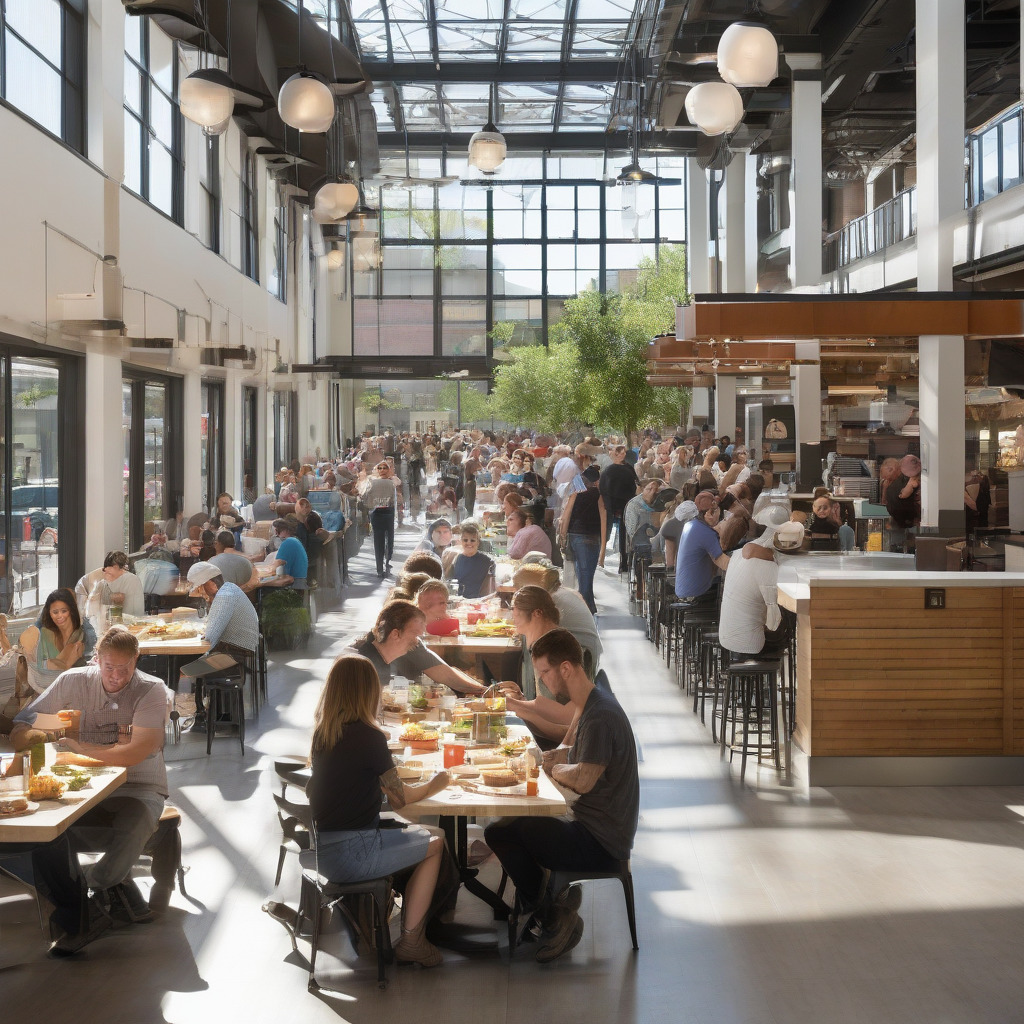
Fareground opened in 2018 inside the 501 Congress office tower, a Class A building that at the time was fully leased and busy with tech and finance workers. The hall was always honest about what it was: a ground-floor food and beverage concept designed to serve the building’s tenants and the surrounding downtown lunch crowd, with a bar operation that extended its usefulness past 2 p.m.
The location’s advantages are real, but they’re more specific than they look. Downtown Austin’s office market softened significantly in 2023 through 2025 as the tech sector contracted, and 501 Congress isn’t immune. But the hall sits in the state government corridor — walking distance from the Capitol complex and multiple state agency buildings — and Texas state employees returned to in-office work on a more consistent schedule than private-sector tech workers did. That pattern has delivered more reliable lunch-hour traffic than a purely private-sector building would provide. When asked directly about profitability and lease terms, the Fareground team confirmed the hall has operated continuously since opening but declined to share revenue figures. That’s standard practice — which is to say, no Austin food hall operator shares that information willingly.
The bar component matters. A hall generating real revenue after 5 p.m. isn’t solely dependent on the lunchtime office crowd. It can absorb a slow Tuesday at noon with a strong Thursday evening. Not every hall has that option; several of Austin’s food halls have limited or no alcohol service, which cuts their viable revenue window considerably.
Fareground’s proximity to the Convention Center — about half a mile at 500 E. Cesar Chavez — provides a secondary traffic source during major events that most downtown halls lack. Convention attendees willing to walk add to the office base on busy event weekends.
What Fareground hasn’t solved is summer. Foot traffic in July is observably lower than in October or March. The outdoor seating along Congress becomes unusable during midday heat for weeks at a stretch. But the hall survives it, because its indoor capacity is substantial, its air conditioning is the building’s air conditioning, and its vendor economics appear calibrated to seasonal variability. That last part is the key. There’s a difference between a hall that’s immune to summer and one that’s built to absorb it, and most coverage has never bothered to make that distinction. Our broader food & hospitality coverage has tracked this seasonal pattern across restaurant categories throughout Austin.
The Other Halls: What’s Changed
Austin Proper Food Hall sits inside the Austin Proper Hotel, which means its primary traffic source is hotel guests, not office workers or neighbors. That gives it a structural floor that office-dependent halls don’t have — guests still need to eat even during slow periods. The hall has rotated vendors more than Fareground. Operators of hotel-based concepts would argue that’s by design, that hospitality programming refreshes regularly to maintain novelty. Maybe. But the vendor mix now reads more like a hotel food court than a destination concept. That’s not a death sentence — it’s a genuinely different thing than what opened, and whether it was a deliberate repositioning or a quiet retreat from ambition is a question worth asking the operators directly. I asked. I got the traffic-numbers redirect.
The Linc on North Loop operates in a neighborhood that actually has residential foot traffic. North Loop has become one of Austin’s denser walkable retail strips, with a customer base that lives within a mile and arrives on foot or by bike. That local foundation shows in the traffic pattern — it doesn’t spike and crater the way tourist-dependent halls do. At least one anchor tenant has changed in the past year, and the seating layout has been reconfigured to accommodate more private events on weekday evenings. That pivot is a recognizable pressure response. When event space starts eating the footprint, daily customers notice. The question here isn’t whether the Linc survives — the neighborhood fundamentals are sound — it’s whether management holds the vendor-mix quality or keeps sliding toward the rentable-venue model.
The Domain corridor halls were always more dependent on retail shopper traffic than on office workers or neighborhood regulars. That model has its own rhythm: strong around the holidays, thin in summer, vulnerable to anything that pulls shoppers away from the Domain entirely. A food hall that functions as an upscale food court for a lifestyle retail center isn’t automatically a bad business, but it operates under constraints the other models don’t. What I observed during summer visits was more empty seats and slower service pacing than the halls’ social media presence would suggest — the kind of gap between presentation and reality that gets closed over in opening-day coverage and never revisited.
Several newer East Austin and Airport Boulevard entrants that opened in 2023 and 2024 are too recent for a fair vendor-retention read. But at least two have already converted stalls from active food vendors to event space or storage. Those conversions don’t get a press release. They’re visible to anyone who walks through on a Tuesday afternoon. They suggest that daily foot traffic hasn’t met whatever projections were used to build out the initial vendor mix. That’s not a verdict. It’s a flag.
What a Stall Actually Costs
The economics operators don’t publicize explain most of the churn.
Based on interviews with current and former vendors and benchmarks from commercial real estate and hospitality trade sources, stall rent in major U.S. markets runs roughly $3,000 to $8,000 per month depending on the hall, stall size, and lease terms. Austin-specific figures require operator confirmation that operators aren’t providing. Some halls add a percentage-of-revenue clause on top of base rent — typically somewhere in the 8 to 12% range of gross sales — which adds meaningfully to occupancy cost during strong months and provides some relief during slow ones. Buildout costs for a stall (equipment, millwork, fixtures) typically run $40,000 to $120,000 nationally, though some halls offer partially fitted stalls that reduce that upfront number.
Unlike a standalone restaurant lease where buildout cost amortizes over a longer term, food hall leases have historically been shorter. A vendor paying significant upfront costs on a short lease needs that investment to pay off fast. The argument for a stall over a standalone restaurant is real — shared HVAC, communal seating, shared permitting infrastructure, and the draw of a multi-concept destination that theoretically brings in more traffic than a single restaurant could. But compare it to a food truck. An established concept with its own following has to scrutinize the food hall math carefully, because the percentage clause takes a cut precisely when the business is performing. You’re trading overhead simplicity for foot traffic you don’t control.
Several former vendors told me, in various phrasings, that they hadn’t fully grasped how the percentage clause would interact with their actual sales volume until they were six months in. One former vendor at a downtown hall was direct: “The percentage wasn’t the problem. The problem was that the foot traffic they projected and the foot traffic that showed up were different numbers, and the fixed-rent floor didn’t adjust when they were wrong.” Another described realizing mid-lease that the building owner’s interest in keeping the stall occupied at below-market rates had evaporated once the hall had served its purpose as a leasing amenity. “They needed us to exist,” this vendor said. “They didn’t need us to succeed.”
That line stayed with me. It’s one of the cleaner summaries of the amenity problem I’ve heard from anyone.
The Amenity Problem
Almost no food coverage addresses this directly: several Austin food halls were not built primarily as hospitality businesses. They were built as real estate amenities — components of mixed-use developments whose primary function was to make an office tower easier to lease, a residential building more marketable, or a hotel more competitive.
That’s not inherently dishonest. Ground-floor retail that activates a building is good for the street, and food concepts operating on subsidized rent can be genuinely excellent. But the amenity logic and the independent hospitality logic diverge at a specific point. A food hall that exists to serve a building’s leasing pitch can tolerate below-market economics that a standalone food business cannot. When the building sells, the developer exits, or the subsidy disappears — because the tower is now leased and no longer needs the activation — the food hall faces economics it was never designed to survive independently.
Two or three of Austin’s existing food halls appear to fit this description. The tells are familiar to anyone who’s watched food hall cycles in other cities: longer dark-stall periods between vendors, reduced operating hours that make the space feel like a convenience rather than a destination, and operators who are vague in a very specific way about their relationship to the building’s ownership. When I asked whether the hall was profitable independently of the building’s interests, the answer was never a clean yes or no. It was a redirect to traffic numbers or vendor diversity that didn’t answer the question. I’ve heard that particular non-answer three times in the course of this reporting.
This matters for the medium term. Austin’s downtown office market hasn’t recovered to pre-pandemic occupancy levels, and several major office tenants have restructured their footprints. The buildings that anchor some of Austin’s food halls are dealing with those same pressures. A hall implicitly subsidized by a building that is itself under financial stress has less cushion than it appears. That’s not speculation — it’s just how the math works.
The Summer Test, Reported
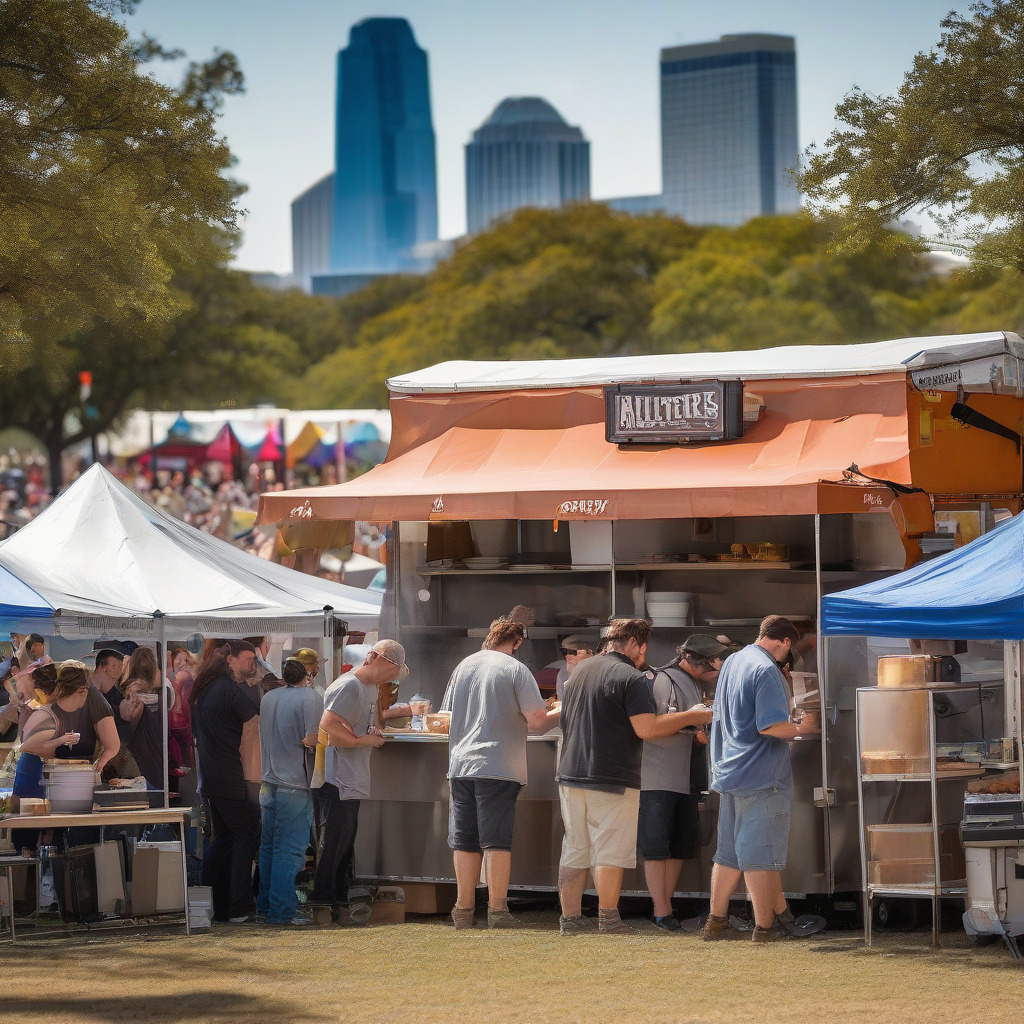
Austin routinely hits 100°F or above for stretches in June, July, and August. Outdoor seating becomes genuinely hazardous during midday, not mildly uncomfortable. Food halls with outdoor seating — and food hall-adjacent food truck parks that blur the line between the two models — lose that capacity during the exact season when shade and air conditioning would be most valuable to customers. Depending on the hall’s design and outdoor footprint, that’s a 30 to 50% capacity reduction. For a concept that depends on high seating turnover during lunch, that loss is hard to compensate for.
UT’s enrollment is approximately 50,000 students, most of whom leave between mid-May and late August. Their departure isn’t just a headcount problem. It removes the specific customer type — exploratory, eating out frequently, receptive to new concepts — that food halls depend on more than established neighborhood restaurants do. A longtime regular at a barbecue place will keep going all summer. A food hall’s customer base is more transient by nature, and summer drains it.
Downtown office density is measurably lower in summer. Employees who work hybrid schedules disproportionately go remote during vacation season, and buildings already running below capacity drop further. The lunch rush that Fareground and similar halls depend on thins out in a way that’s hard to fully compensate for.
The event-driven spikes — SXSW in March, ACL in October, Formula One in November — can make annual performance figures look healthier than the underlying daily economics deserve. A hall that does outstanding business during ACL weekend had a great October weekend. Whether it pays rent in August is a different question. When operators cite event traffic as evidence of their hall’s health, they’re presenting a selective picture. I’d push back on that framing every time, and I did.
What distinguishes halls that actually survive summer from halls that are waiting for October: the former have vendor economics calibrated to the slow months, a traffic source that doesn’t fully evaporate (state employees, neighborhood regulars, hotel guests), and operators who set leases with seasonal reality already priced in. The halls that struggle are the ones where the original projection was built on assumptions that the opening-week crowd would sustain itself. It never does. That’s not an Austin-specific insight — it’s just how restaurants work — but it keeps surprising people.
What Former Vendors Say Happened
The clearest account of the gap between pitch and reality came from a vendor who operated a stall at a downtown Austin food hall for just under two years before leaving. The vendor, who asked not to be identified by name or concept, described an initial sales conversation that leaned heavily on foot traffic projections derived from the building’s occupancy data and comparable halls in other markets. “They had numbers,” the vendor said. “The numbers seemed reasonable. The numbers were wrong.”
The specific failure wasn’t the rent, which fell within the range the vendor had budgeted. It was the daily average customer count during non-event months, which came in materially below what had been implied in pre-signing conversations. “Implied” is the right word — no operator puts traffic projections in writing as a guarantee. The vendor had modeled the business on those conversations, and when the gap became clear, the percentage-of-revenue clause provided some relief but the fixed-cost floor held. Eventually the concept made more sense somewhere else. That vendor now runs a food truck with a rotating schedule of weekly markets and private catering. “I make more money. The overhead is lower, I control my schedule, and I’m not dependent on whoever walks past a specific address.”
A current vendor at Fareground offered a counterpoint worth taking seriously. “The hall does what it says it does. I know what the foot traffic is. I’ve been here through a couple of Julys. It’s slow in summer. I priced for that. It comes back.” The phrase “I priced for that” is the whole story — a vendor who went in with clear eyes, negotiated accordingly, and built a model that absorbs seasonality rather than being blindsided by it. That kind of alignment between vendor expectations and operational reality appears more present at Fareground than at some of the newer halls, and it may be as important to retention as any single lease term. It’s also the kind of thing that doesn’t appear in any press release.
A third vendor, now departed from an East Austin hall that opened in 2023, signed a lease based on projections the operator described as “conservative,” only to find actual traffic fell below even that lowered estimate. “When someone tells you the numbers are conservative, they’re already worried,” this vendor said. It’s the same pattern you hear from anyone who’s signed a commercial lease based on a landlord’s traffic projections. The optimistic number is structural. It’s how the deal gets done.
The Verdict on Each Hall
Fareground at 501 Congress is the most operationally durable of Austin’s food halls by any measure I have access to. State government foot traffic has been more stable than the private-sector office density that most downtown halls depend on. The bar operation extends its revenue window past lunch. It has survived multiple summers without significant vendor attrition. The biggest open question is whether continuing downtown office softening filters through to 501 Congress’s tenant mix and eventually to the hall’s economics. This is a hall built to last if the building stays healthy, and likely to show stress quickly if it doesn’t. I’d watch 501 Congress leasing activity as a leading indicator, which is not advice you’d expect to come out of a food coverage piece.
The Linc on North Loop has the right neighborhood fundamentals — residential density, walkable regulars, a customer base that doesn’t track event season. The drift toward event-space use is a pressure signal worth watching, but the underlying location logic remains sound. Cautiously positive, if management holds the vendor-mix quality rather than ceding ground to the private-events calendar.
Austin Proper Food Hall is a hotel amenity in the plainest sense, and that’s not an insult — it means the hotel needs it functioning, which provides a floor that purely office-dependent halls don’t have. But the programming ambition of the original concept has been quietly reduced. It functions more as a convenience than a destination now. It’ll survive because the hotel needs it to. Whether it does anything interesting as a food concept is a question the operators don’t appear to be asking.
Domain-area halls face the shopper-traffic model’s inherent ceiling — strong in peak retail seasons, thinner otherwise, unable to build the neighborhood regular base that insulates against volatility. East Austin entrants from 2023 and 2024 are still in their proving years. The ones that have already converted stalls to event space are telling you something about their daily foot traffic, even if they aren’t saying it out loud. That’s not a death notice. But it’s not nothing, either. The broader pattern of why Austin restaurants keep closing in 2026 applies here — the same cost pressures and foot-traffic mismatches hitting standalone restaurants are accelerating the shakeout in food halls, too.
The honest summary: Austin built food halls at a pace that exceeded actual demand for the model, and several of them were designed to serve real estate purposes more than hospitality ones. The summer test reveals the difference between halls with genuine commercial foundations and halls running on event-season revenue and developer goodwill. Two or three of these halls are real businesses, not just attractive amenities. The opening-day press covered them all equally. The current operational reality isn’t equal. The gap between the best and the rest has been widening quietly for two years while everyone was focused on the next opening, and it’s wider now than anything in print has reflected.
CityDesk Austin will update this assessment after the 2025 summer period, when full June through August vendor counts and any new operator disclosures can be incorporated.