How Tipping Expectations at Austin Restaurants Are Changing
Austin diners are being asked to tip more, in more places, with less information about where the money lands. The workers on the other end are still earning $2.13 an hour.

Austin diners are being asked to tip more, in more places, with less information about where the money lands. The workers on the other end are still earning $2.13 an hour.
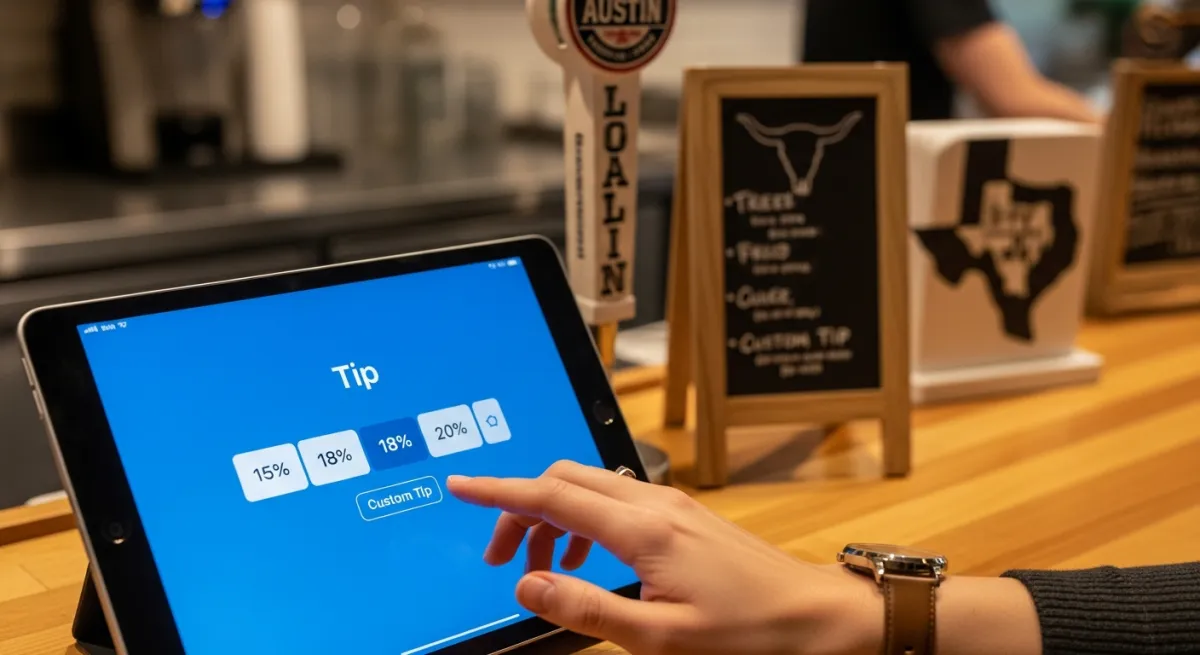
You ordered two breakfast tacos and a coffee at a counter on East 6th Street. The total came to $14.50. The iPad swiveled toward you. There was a tip prompt. You stood there for a few seconds — someone was behind you — and made a choice that added a few dollars to a transaction that involved no table service, no refills, no one carrying anything to you.
That moment is happening all over Austin now, at price points and service formats that wouldn’t have had a tip screen five years ago. The prompts have spread. The suggested amounts have climbed. And almost nothing about the experience tells you what the money actually does once you tap the screen.
The New Math at the Counter
The mechanism here is pretty simple: tablet-based point-of-sale systems — primarily Toast, Square, and Clover — ship with tip-request screens on by default. Standard Toast configurations display suggested amounts in the 18–20–22% range. Most operators never touch these settings after installation.
What was once the territory of sit-down restaurants now appears at walk-up food trailer windows, coffee shop counters, and fast-casual spots where you bus your own table. The prompt doesn’t explain what the service model is. It just asks.
Austin operators report the friction anecdotally: visible sighs at the counter, social media complaints about prompts at order-ahead windows. What those conversations miss is who actually pays for the irritation — and it’s usually not the counter-service spot that set off the annoyance in the first place.
What Austin Diners Are Actually Expected to Pay, By Context
There’s no single Austin tipping norm because there’s no single Austin dining context.
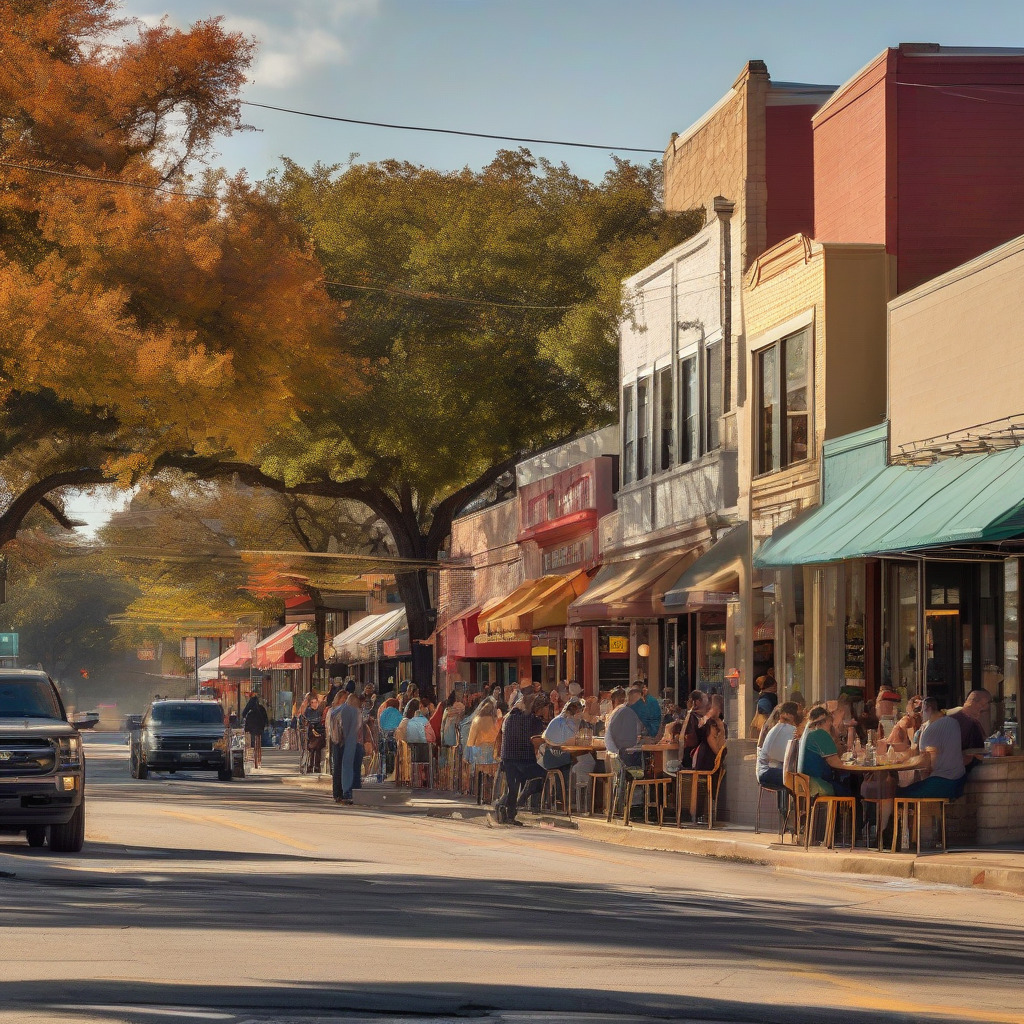
At full-service sit-down restaurants — the mid-range and upscale spots along East Austin’s dining corridors or on South Lamar — the working expectation runs roughly 18–20% for standard service. These figures reflect prevailing practice rather than published data; Austin-specific averages haven’t been systematically documented, which is itself a gap worth noting.
Counter service is where expectation collapses most visibly. At restaurants where you order at a register, get a number, and carry your own tray, there’s no industry consensus on whether a tip is expected at all. Workers at these spots may be paid full minimum wage rather than the tipped minimum, though it varies by operator. The prompt is still there. You have no idea which wage category applies. The operator isn’t required to tell you.
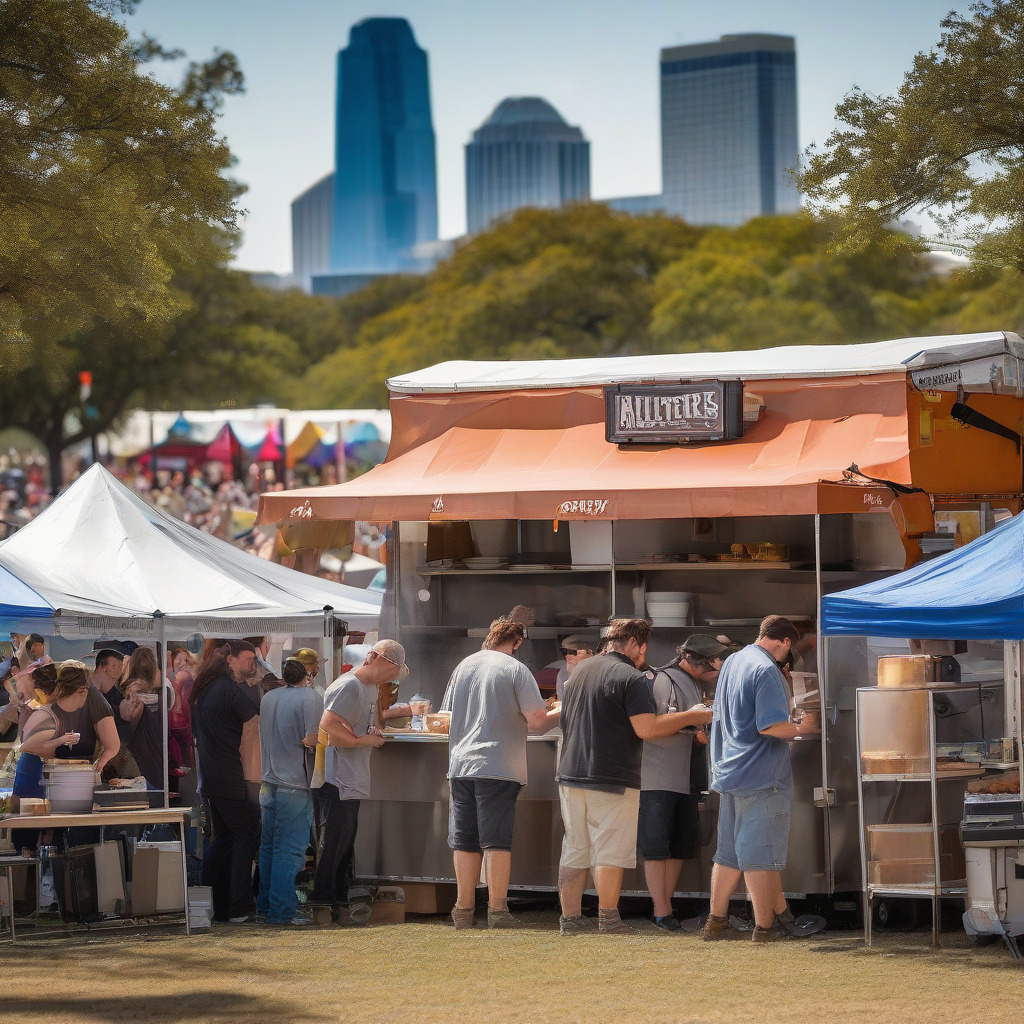
Austin has issued permits for more than 1,000 mobile food vendors — verify current count with Austin Public Health. At a trailer on South First or in the cluster at The Picnic on Barton Springs Road, you’re paying $12–18 for a plate and picking it up at a window. Tip prompts appear at most trailer POS setups, and norms are genuinely unsettled. Here’s the thing nobody at the window will tell you: some trailer workers earn full minimum wage and tips are supplemental. Others earn $2.13 an hour and the tips are the job. You can’t tell from the outside which is which.
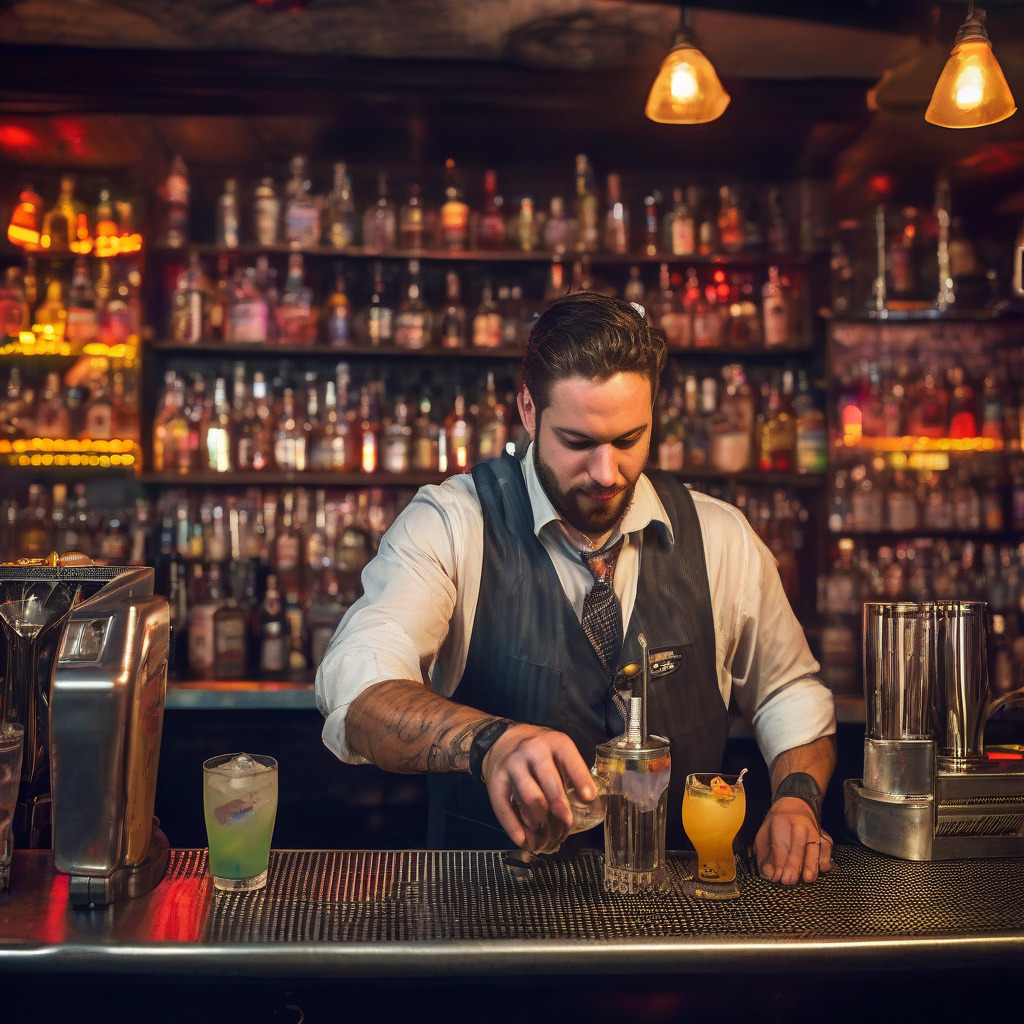
Bars along Rainey Street and East 6th are almost certainly paying bartenders tipped minimum wage. A per-drink tip on simple poured drinks and a percentage on craft cocktails is the established norm, and it’s one of the few parts of Austin’s tipping picture that hasn’t gotten murkier.
Independent cafes are genuinely contested territory. Tip screens are everywhere. Whether tipping is obligatory is harder — workers at many Austin coffee shops earn above tipped minimum wage, but not uniformly, and no Austin-specific data on what customers actually pay is publicly available. For broader context on how food-access and wage issues intersect across the city, see how Austin’s East Side food access gap is costing residents their health.
$2.13 an Hour: The Wage Floor Underneath Every Tip Screen
Texas hasn’t set its own tipped minimum wage. It defaults to the federal tipped minimum wage floor of $2.13 per hour, established under the Fair Labor Standards Act, for tipped employees.
A server working a four-hour Tuesday dinner shift earns $8.52 in base wages before a single table sits down.
Say a slow Tuesday means $250–300 in sales over four hours. At whatever tip percentage those diners leave, the server collects gross tips — then immediately owes tip-out to support staff, typically calculated at 3–5% of total sales. Not of tips received. Of sales. That distinction matters enormously on a bad night, as we’ll get to shortly. What remains, added to $8.52 in wages, is the shift’s take-home before tax.
The volatility between a slow Tuesday and a busy Friday is the defining financial reality of tipped work. It’s also why each individual diner’s decision matters more than most diners realize.
[Reporting note: This section requires at minimum two front-of-house workers on record with actual figures — gross tips per shift, tip-out percentage, net take-home — before publication.]
The Tip-Out Structure Nobody Talks About
The percentage you leave on the receipt is not what the server takes home. Between your tip and the server’s pocket sits a tip-out structure that most diners have never thought about.
Here’s how it typically works: the server pays out a percentage of their total sales — not their tips — to a pool shared by bussers, food runners, and bartenders. If sales are $300 and the tip-out rate is 4% of sales, the server owes $12 to the support pool. That’s true whether diners tipped 20% or 10%. If a server gets stiffed on a large table, they still owe the tip-out. No exceptions.
At higher-volume restaurants — Emmer & Rye on Rainey Street, for example — tip-out structures tend to be more formalized because consistent sales volume makes the math less brutal. At smaller independent spots, a single bad night can mean a server effectively pays to come to work.
The 2018 amendment to the Fair Labor Standards Act did address one real abuse: it explicitly prohibited managers and supervisors from keeping any portion of employee tips. What it doesn’t regulate is the structure of tip pools — how much servers must contribute, which positions are included, or whether the calculation is based on sales or tips received. Those decisions belong to the operator and vary widely. Confirm current FLSA language with an Austin employment attorney before publication.
[Reporting note: Requires on-record figures from at least three Austin workers — specific tip-out percentages, which positions receive, whether based on sales or tips.]
Service Charges: Which Austin Restaurants Use Them, and Where the Money Goes
A growing number of Austin restaurants have moved toward mandatory service charges — a line item added to every check — as an alternative to or supplement to the traditional tip. Most diners treat these like tips. They’re not.
A tip is a voluntary payment from the diner that goes to the worker. A service charge is revenue collected by the restaurant and distributed at the employer’s discretion. It’s business income first. The IRS and FLSA treat these differently, and operators have different obligations under each — confirm the specifics with a legal source before publication.
Emmer & Rye has at various points operated on a hospitality-included or service charge model; verify current policy directly with the restaurant. The logic is real: a house-collected service charge can be distributed to dishwashers and line cooks who never see tip income, addressing the structural inequity between server earnings and kitchen wages. Qui, the now-closed East Sixth restaurant, was an early Austin experimenter with no-tipping — and the local reaction was instructive. Some diners appreciated the transparency. Others just wanted the tip line back.
The problem is disclosure. Texas doesn’t require restaurants to explain on the menu or the receipt where a service charge goes. A mandatory service charge could fund consistent wages for the whole staff. It could also offset overhead. Without a disclosed policy, you genuinely cannot tell. If you see a mandatory service charge on your bill, ask: “Does this go to the staff, and how?” Most operators will answer. The answer tells you something useful about the place.
Why the Prompts Are Set the Way They Are
Toast holds significant market share among Austin independent restaurants. Many operators — especially those who adopted digital POS quickly during or after 2020 — configured their tip prompts at installation and never revisited them. The default settings stayed. The suggested amounts stayed high.
Not every operator is passive about it. At higher-volume establishments in corridors like Domain Northside or South Congress, tip defaults may be set deliberately. Whether prompting for 22% at a walk-up window is an appropriate use of the interface is a fair question — and one Austin operators should be asked directly and on record, because right now they mostly aren’t.
[Reporting note: Requires at least two operators on record — one independent East Austin operator, one higher-volume — before this section can carry attributed claims.]
Food Trucks: Austin’s Tipping Frontier
The food trailer scene operates at a price point and service model with no settled norm, and the spread of tablet POS has created real confusion on both sides of the window.
At a pod like The Picnic on Barton Springs Road, a family assembling lunch might order from three or four separate trailers. Each has its own tip screen. By the third window, a lot of people are hitting “no tip” — and that reflex, built up over multiple low-stakes prompts, is the same one they bring to dinner that evening.
Trailer wages are inconsistent across the industry. Some workers earn full minimum wage and tips are supplemental. Others are on $2.13 an hour and the tips are what the job pays. Nothing at the window tells you which is true. Operators aren’t required to say.
[Reporting note: Requires two or three trailer operators on record. This section should not be published without sourcing.]
What Diner Frustration Is Actually Costing Workers
When a diner hits “No Tip” at a counter-service spot where workers earn above minimum wage, the impact is modest. The real damage happens downstream: the diner, already worn down by three tip prompts before noon, carries that irritation into dinner and tips a full-service server less carefully. That server earns $2.13 an hour and owes tip-out on sales regardless of what any individual table decides.
The operators generating the most friction aren’t the ones absorbing the consequence. A walk-up window with an aggressive prompt creates the fatigue; a server at a sit-down restaurant on the other side of town takes the financial hit. The harm migrates.
This is the structural problem with how tipping has expanded. The system grew into service contexts where it was always optional or ambiguous, and the resulting customer backlash falls hardest on full-service workers whose income genuinely depends on it functioning. That’s not entirely the diner’s fault. But it’s worth understanding before you tap the screen.
Is Tipping Still the Right System?
I don’t think it is — or at least not in its current form, where “$2.13 an hour plus tips” persists as the legal baseline while the tip prompt has colonized every service format regardless of whether the worker behind the counter earns tipped minimum wage or not. The original logic of tipping was that it tied worker compensation to service quality at jobs where base wages were legislatively suppressed. That logic doesn’t hold at a counter where you order, wait, and carry your own tray.
Service charges solve the kitchen equity problem but create disclosure obligations many operators don’t meet. Full-wage models work in some markets and generate menu price resistance in others. Austin isn’t going to resolve this by consensus anytime soon.
What Austin has right now is a patchwork: a $2.13 wage floor, inconsistent tip structures, tip prompts in service contexts that never had them, and no meaningful disclosure requirements for how money is distributed either way. Diners are being asked to make financial decisions without the information those decisions require. The issues are part of a wider set of questions we track in our food & hospitality coverage.
What to Ask Before You Pay
A few questions worth asking, because Texas law requires operators to disclose almost nothing voluntarily.
“Is this a service charge or a tip?” A mandatory service charge is not a tip. If it’s a service charge, follow up: “Does this go to the staff, and how is it distributed?” Most operators will answer. The ones who won’t are telling you something.
“Are servers here on tipped minimum wage?” Front-of-house workers may not know the exact answer, but managers will. It matters when you’re deciding whether to tip at a counter-service format.
A practical calibration: at a full-service sit-down restaurant, 18–20% is the working floor — the server is on $2.13 an hour and has tip-outs coming regardless of what you decide. Counter service with no table service is genuinely optional territory, though if you know the worker is on tipped wages, that changes the math. Food trailers and walk-up windows have no settled norm, but the wage situation is the same uncertainty as counter service. At a bar, tip per drink on simple pours; more for cocktails that took real preparation.
The most important thing: if an elevated prompt at a taco counter annoyed you, that’s a reasonable reaction to a configuration decision the operator made and probably hasn’t revisited since 2021. Register that frustration with the operator, or skip the tip at the counter. Don’t carry it to the restaurant that evening and leave 12% on a table where someone spent four hours earning $8.52 in wages before your party walked in.
The iPad won’t tell you any of this. That’s why this piece exists.