What a Travis County DWI Actually Costs From Arrest to Resolution
The Real Tab, Line by Line: From the APD Tow Lot to Your Insurance Renewal

The Real Tab, Line by Line: From the APD Tow Lot to Your Insurance Renewal
Defense attorney blogs bury the numbers behind consultation CTAs. We pulled the actual figures from the moment APD pulls you over through your last SR-22 filing so Austin drivers know what they’re actually facing.
If you live in Austin and you drink, you should understand this exposure in concrete terms. Not the vague “$10,000 or more” that law firm landing pages use to generate consultation calls. The actual, itemized, sourced dollar amounts that accumulate from the moment the cuffs go on until the day your insurance rate finally comes back down.
Every figure below is drawn from local sources and cross-referenced against Travis County-specific data. Every number that’s wrong on competing pages is corrected here.
The First Six Hours — Bail, Booking, and Getting Out of 500 W. 10th
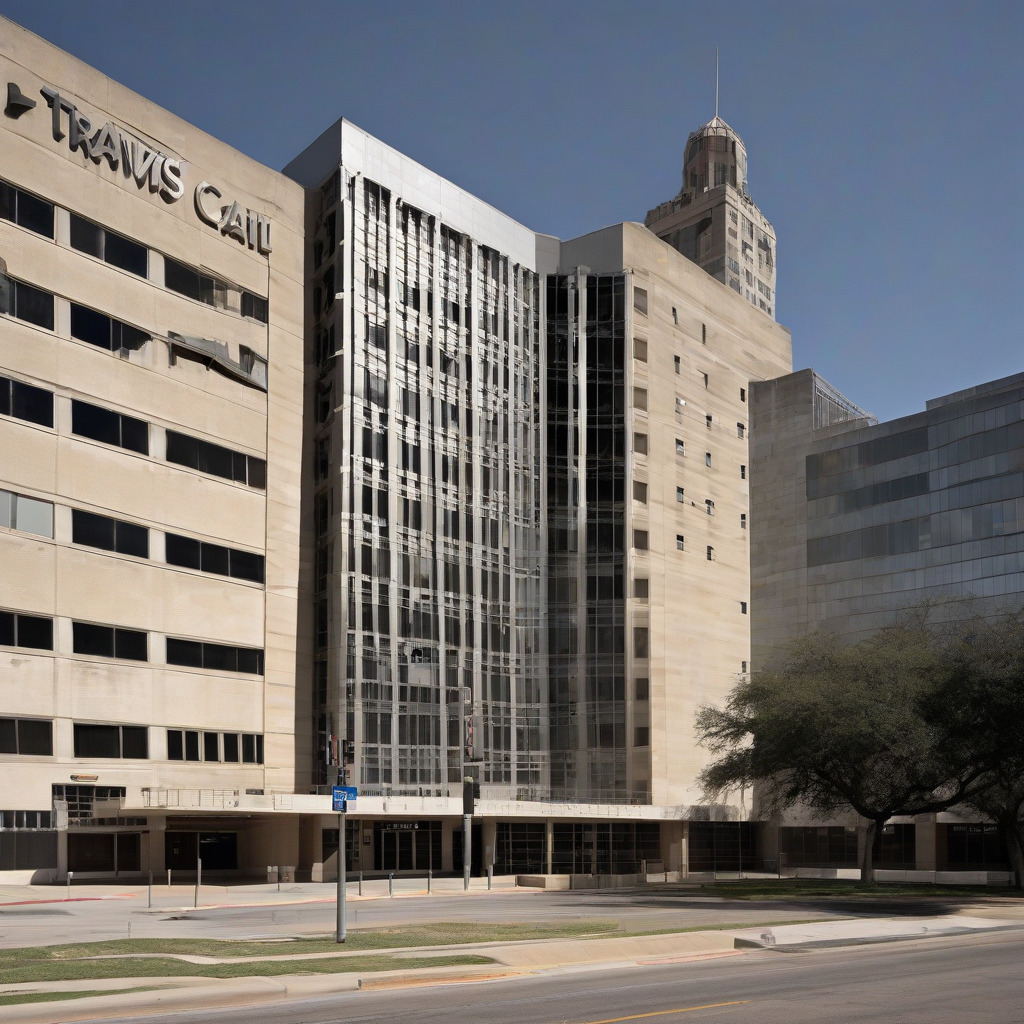
The Travis County Jail is at 500 W. 10th Street. APD will take you there. The process is routine and slow: fingerprints, photographs, a blood or breath test if not already done, property inventory. On a Friday or Saturday night, it gets slower. Weekend booking backlogs are real — attorneys who practice in Travis County routinely warn clients to expect hours before magistration even starts. The booking-to-release window typically runs eight to twenty-four hours, longer on weekends.
Once booking is complete, you appear before a Travis County magistrate for bail. This must happen within 48 hours of arrest. A first-offense Class B DWI — the standard charge when BAC reads between .08 and .14 with no accident or injury — typically draws bail between $2,000 and $3,000. That is not a fine. It’s a security deposit held to guarantee your appearance.
Most people don’t post the full cash amount. A licensed bail bondsman charges a non-refundable premium of 10 percent — the Texas statutory rate. On $2,500 bail, that’s $250. Gone, regardless of outcome. If a family member posts the full cash amount with the jail, you recover it when the case closes. Many people don’t have $2,500 in liquid cash available at two in the morning.
A personal recognizance bond lets you walk out on your signature alone. Travis County magistrates do issue PR bonds on first-offense DWIs for defendants with local ties, clean records, and no aggravating factors. Not guaranteed, but not rare.
PR bond: your out-of-pocket for this section is zero. Bail bondsman: you’re out $200 to $300 before you’ve left the building. Nonrefundable either way.
Your Car Is Already Gone — Tow Fees, Impound, and Getting It Back
APD runs a rotation tow system. You don’t choose the company. The contractors holding current Austin tow-rotation contracts operate lots concentrated along the Rundberg Lane corridor in northeast Austin and East Seventh Street. If you were arrested downtown, your car is now several miles away in a neighborhood that requires its own logistics to reach.
The initial tow runs $150 to $250 depending on vehicle type and time of night. Storage fees accrue at $20 to $35 per day after the vehicle arrives. Most lots charge an after-hours retrieval surcharge of $25 to $50.
Here’s the math that actually catches people. A Friday-night arrest means the car arrives late Friday or early Saturday. The lot may run reduced hours Saturday afternoon. By the time you’re out of jail and can arrange transportation to the impound area, you may have two days of storage fees before you’ve paid a dollar. A realistic retrieval before the 48-hour mark: $250 to $450 total, including tow, storage, and the after-hours fee.
You’ll also need a ride to the lot. Budget $15 to $30 for an Uber, because you can’t drive yourself there.
The 15-Day Decision Nobody Tells You About — The ALR Hearing Window
This is the most time-sensitive financial decision in the entire sequence, and it’s the one most frequently buried in online coverage. Honestly, it’s underemphasized even by attorneys who handle these cases regularly.
When APD arrests you for DWI in Texas and you either fail a chemical test or refuse one, the Department of Public Safety opens a separate administrative proceeding: the Administrative License Revocation process. It runs on a completely independent track from your criminal case. The court handling your DWI has no authority over it. The judge who set your bail has no authority over it. The State Office of Administrative Hearings handles Travis County ALR cases at 300 W. 15th Street in Austin, though many hearings have shifted to virtual format — confirm directly with SOAH when you file your request.
You have 15 calendar days from the date of arrest to request an ALR hearing. Not business days. Miss that window and your license is automatically suspended — 180 days for a first offense with a failed test, 90 days for refusal — with no hearing and no appeal of the suspension itself.
At arrest, the officer should have taken your physical license and issued a DIC-25 form, which works as a temporary driving permit valid for 40 days. After 40 days, if you haven’t requested a hearing or you’ve lost the ALR proceeding, the suspension begins.
Request the hearing even when the evidence against you is strong. Requesting it automatically delays the suspension while the case gets scheduled and heard. SOAH dockets run weeks to months out. A driver who files near the deadline may keep full driving privileges for an extended period while the criminal case is also pending. The ALR fight buys time even when it doesn’t produce a win.
Austin DWI defense attorneys who handle ALR hearings — and not all of them do — need DPS subpoena experience and administrative hearing practice. They typically charge $500 to $1,500 for ALR representation, billed separately from criminal defense fees. A handful of firms bundle the ALR into a flat overall fee. Most don’t. Ask explicitly before you sign anything.
What Austin Criminal Defense Attorneys Actually Charge
The Austin DWI defense market is competitive, with dozens of attorneys who handle these cases regularly. The dominant fee model for a first-offense Class B DWI is a flat fee through plea disposition.
Current market range for a first-offense plea: $2,500 to $5,000. That typically covers reviewing the case file, filing standard pretrial motions, negotiating with the Travis County DA’s office, and appearing at the plea hearing. It does not typically cover the ALR hearing, expert witness fees for any suppression hearing, an expunction filing afterward, or trial.
If the case goes to trial — a jury trial in Travis County Criminal Court — the fee structure changes entirely. Trial representation on a first-offense DWI runs $7,500 to $15,000 and above depending on attorney experience, complexity, and trial length. Some attorneys bill hourly rather than flat; experienced Austin criminal defense attorneys charge $250 to $450 per hour.
One thing that trips up a lot of people: Texas does not allow deferred adjudication for DWI. There’s no mechanism to plead guilty and have the charge dismissed after completing probation. A plea means a conviction. Many drivers research Texas DWI outcomes, find general information about deferred adjudication, and assume it applies here. It doesn’t. A first-offense DWI that resolves by plea results in a conviction on your record. The only question is what conditions attach to the sentence.
Court Fines, State Fees, and the DPS Surcharge That No Longer Exists
Travis County Criminal Courts assess fines at sentencing. For a first-offense Class B, the statutory fine range is $300 to $2,000, with the actual number determined by the judge based on circumstances and prior history. Court costs add administrative fees on top.
The Texas Driver Responsibility Program surcharge is gone. The Legislature repealed it effective September 1, 2019, through HB 2048. Under the old structure, a DWI conviction triggered a $1,000-per-year surcharge for three years — $3,000 total — payable to DPS on top of everything else. That figure still circulates on dozens of attorney websites, legal aggregators, and online forums. The content was written before the repeal and never updated. Don’t budget for it.
If you are arrested for DWI today in Travis County, you do not owe $3,000 in DPS surcharges. That program is gone.
What DPS fees remain? The license reinstatement fee — currently $125 to $200 — is required when you apply to restore your driving privileges after a suspension. Administrative processing costs are embedded in court fees. The multi-year surcharge obligation is repealed, and any source still citing it is outdated.
Ignition Interlock — Installation, Monthly Rental, and Where to Get It Done in Austin
A first-offense DWI conviction doesn’t automatically require an ignition interlock device for every driver. Courts can order it as a condition of bond or probation. It’s mandatory when BAC was .15 or higher — at which point the charge upgrades to a Class A misdemeanor. Judges also commonly require IID installation as a condition of an occupational license during the suspension period. If ordered, the typical minimum is six months, with longer requirements for elevated BAC or aggravating factors.
Three vendors hold most of the Austin-area IID market. Verify current pricing directly with each — rates shift.
Smart Start operates Austin installation locations; installation runs $75 to $100, monthly monitoring $70 to $90, with calibration required every 30 to 60 days. Dräger serves the Austin market through authorized service centers; installation costs $75 to $125, monthly fees $75 to $95, calibration every 30 to 60 days. Lifesafer operates through authorized dealers in the Austin metro; installation $70 to $100, monthly monitoring $60 to $80, calibration every 30 to 60 days.
On a six-month requirement, the total — installation plus six months of monitoring — runs roughly $495 to $670 at mid-range estimates. A 12-month requirement runs $840 to $1,140. Neither figure includes the time and hassle of calibration appointments, which you’ll need to schedule around work regardless of how inconvenient the timing is.
Mandatory Programs — DWI Education, Intervention, and the Victim Impact Panel
Texas law and Travis County courts attach several mandatory program requirements to DWI convictions. The 12-hour DWI Education Program is required as a condition of license reinstatement after conviction. Approved providers offer both online and in-person formats for Travis County residents. Cost runs $75 to $125 depending on provider, and the court sets the completion deadline.
For cases involving a BAC of .15 or higher, repeat offenses, or specific court findings, the court may require the 32-hour DWI Intervention Program — cost $185 to $275 by provider and format.
MADD organizes Victim Impact Panels periodically in Austin, and Travis County judges routinely require them as a probation condition. It’s a one-time session where DWI offenders hear directly from people affected by impaired driving crashes. Registration runs $25 to $50. Missing the court-set deadline to complete it is a probation violation. Don’t treat it as optional scheduling.
What a DWI Does to Your Car Insurance in Austin
This is where the financial exposure runs longest. Most DWI cost coverage either stops at the SR-22 filing fee or avoids specificity. The insurance impact is probably the part people least expect, and it keeps costing them long after everything else is resolved.
After a Texas DWI conviction, your carrier must file an SR-22 certificate of financial responsibility with DPS confirming you carry at least state-minimum coverage. The filing itself costs $15 to $35 — a one-time administrative fee your insurer charges. That’s not the problem.
The problem is your premium. Take a hypothetical: a 30-year-old Austin resident with a clean record, a standard commuter vehicle, and a home address in the 78704 corridor pays roughly $1,200 annually before a conviction. After a DWI conviction, that same driver faces a premium increase of 80 to 100 percent at renewal — assuming the carrier renews at all.
Many standard-market carriers won’t. They non-renew the policy, and the driver has to find coverage in the non-standard market, where rates are higher and options narrower. Realistically, that same driver is looking at $2,000 to $2,400 per year after a conviction. That elevated rate persists for as long as the conviction sits in the carrier’s underwriting lookback window. Most Texas carriers check driving records for three to seven years. DWI convictions stay on the Texas driving record for ten years. For drivers who end up in the non-standard market, the premium impact can run beyond that window.
Cumulative insurance premium increase over three years: $2,400 to $3,600 above what the driver would have paid without the conviction. This single line item, invisible on the night of arrest, ends up being one of the largest costs in the entire tab.
[Editor’s note: Insurance impact figures should be attributed to a named Austin independent insurance agent before publication, per editorial standards.]
The Full Tab — A First-Offense Travis County DWI, Line by Line
Low estimates assume a favorable outcome at each decision point: PR bond, quick impound retrieval, efficient attorney work, minimal court fine, shortest IID period, and a carrier that renews. High estimates reflect a bondsman, multiple days in impound, experienced counsel on a complex plea, maximum fine, and a non-renewal that pushes the driver to the non-standard market.
| Cost Category | Low Estimate | High Estimate |
|---|---|---|
| Bail bond premium (10% of bail, non-refundable) | $0 (PR bond) | $300 |
| Tow fee and impound retrieval | $265 | $475 |
| Transportation to impound lot | $15 | $30 |
| Criminal defense attorney (plea disposition) | $2,500 | $5,000 |
| ALR hearing attorney | $500 | $1,500 |
| Court fines and court costs | $600 | $2,200 |
| DPS license reinstatement fee | $125 | $200 |
| Ignition interlock device (6 months) | $495 | $670 |
| DWI Education Program | $75 | $125 |
| Victim Impact Panel | $25 | $50 |
| SR-22 filing fee | $15 | $35 |
| Cumulative insurance premium increase (3 years) | $2,400 | $3,600 |
| Estimated Total | $7,015 | $14,185 |
The table omits several real costs worth naming. Lost wages for court appearances, attorney meetings, mandatory program sessions, and IID calibration visits vary too much by individual to estimate fairly — but they’re real. An occupational license during suspension carries its own filing fees. And expunction or nondisclosure, if you’re ever eligible, runs $1,500 to $3,500 in attorney fees alone. Expunction of a DWI conviction is rare under current Texas law. Nondisclosure is available in limited circumstances for qualifying first-offense cases that meet specific statutory conditions.
The DPS surcharge line is zero because the program was repealed in 2019. Any source still showing $3,000 is wrong.
A first-offense Travis County DWI that resolves by plea costs somewhere between $7,000 and $14,000 from the night of arrest through the end of the insurance impact window. The case goes to trial, or a higher BAC triggers enhanced charges, and those numbers climb well past the high estimate. The biggest variables: attorney fees, insurance impact, and whether the driver loses their carrier entirely at renewal.
None of that accounts for what it costs to get to work, to job interviews, or to medical appointments during a suspension. That bill doesn’t show up on a fee schedule.
CityDesk Austin will update this cost map when fee schedules change. If you are a Travis County criminal defense attorney, insurance professional, or court official with data corrections, contact the newsroom.