What Travis County Probate Actually Costs and When You Can Skip It Entirely
The ARB notice on your kitchen counter tells you what the house is worth. Here's what happens to it when someone dies: the actual process, the real fees, and the shortcuts that work in Travis County.

The ARB notice on your kitchen counter tells you what the house is worth. Here’s what happens to it when someone dies: the actual process, the real fees, and the shortcuts that work in Travis County.
It tends to happen on a Friday evening or over a long weekend in July. A spouse dies. The house in East Austin, bought 22 years ago for $185,000 and appraised by TCAD this spring at $870,000, is titled solely in the deceased’s name. The surviving partner is 64 years old, still working, and suddenly can’t answer a question that the mortgage servicer will ask: who legally owns this property now?
The ARB protest notice on the kitchen counter—the one that arrived two weeks ago and now seems almost quaint—is the least of the problems. A house worth nearly a million dollars is in legal limbo. The path out of that limbo runs through Travis County Probate Court at 1000 Guadalupe Street.
This piece isn’t about estate planning. That conversation should have happened years ago. This is about the process that starts after a death: which legal pathway applies to your specific situation, what it actually costs to move through Travis County’s system in 2026, how long it realistically takes, and where a family can legitimately save money versus where cutting corners creates problems that surface at the worst possible moment—a title company’s closing table.
Why Travis County Is Not Like Most of Texas
Most Texas counties handle probate on a shared district court docket. A straightforward estate administration competes for hearing time with civil lawsuits, child custody disputes, and everything else that flows through a county courthouse. The practical effect is delay. Matters that are genuinely simple can sit for months waiting for a slot.
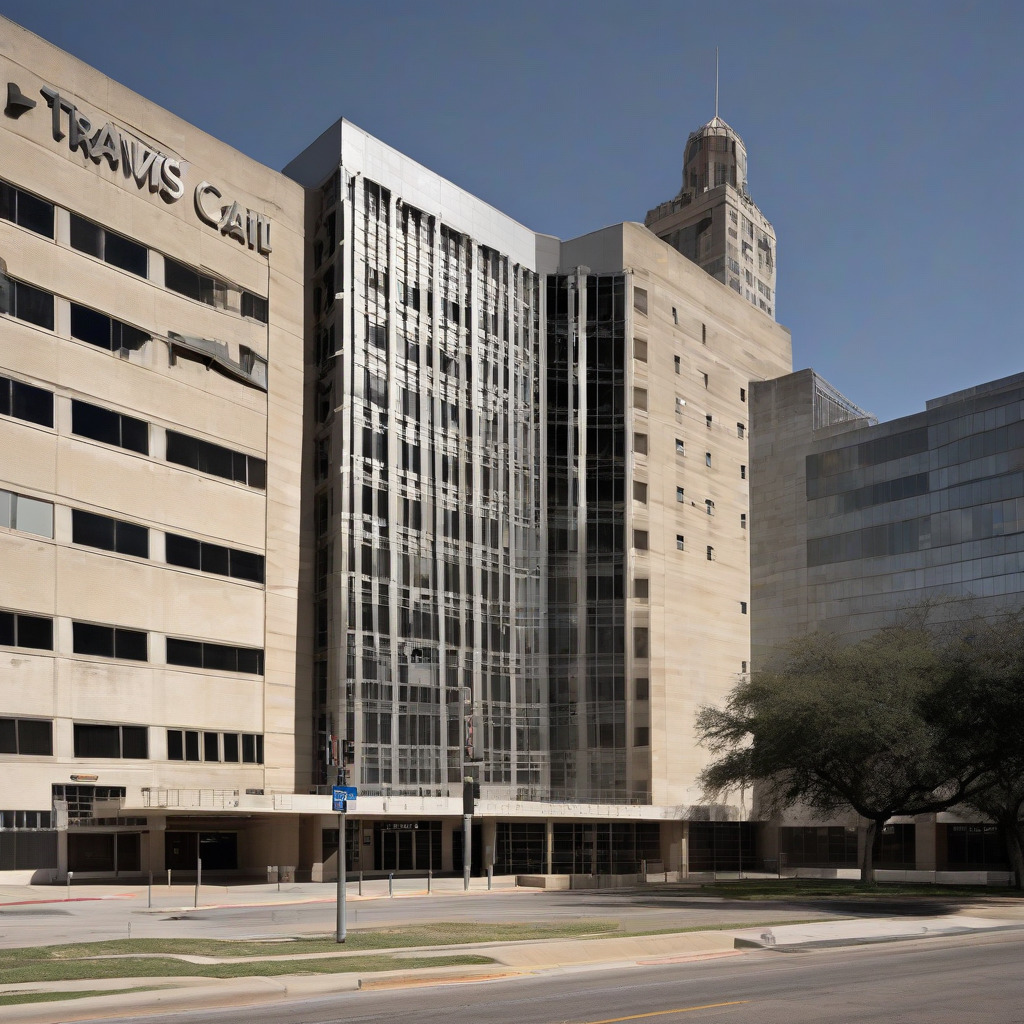
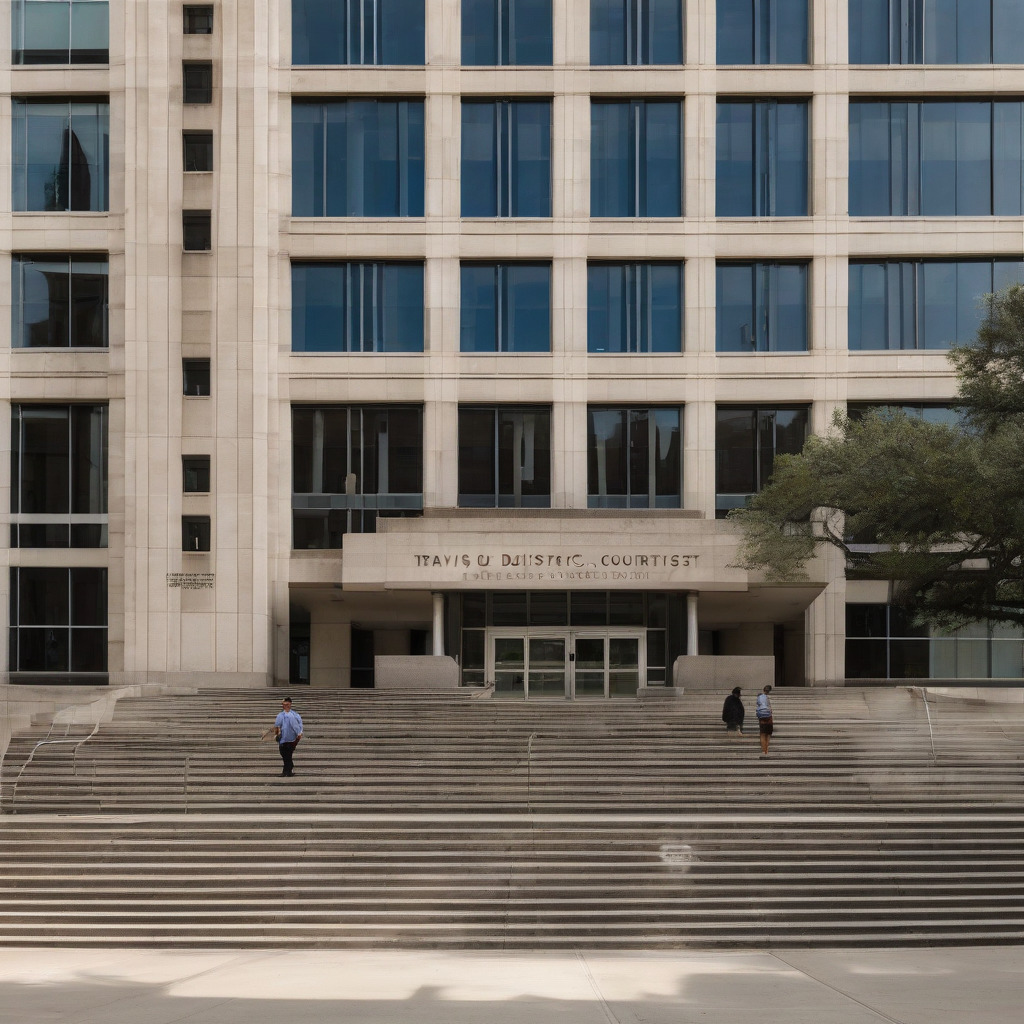
Travis County operates differently. Two dedicated statutory probate courts—Probate Court No. 1 and Probate Court No. 2—are housed at 1000 Guadalupe Street downtown. These courts handle probate cases only. Uncontested matters in Travis County typically reach their initial hearing within four to eight weeks of filing. Not three months. Not six. For a surviving spouse trying to resolve a real property question, that distinction matters more than most people realize going in.
[Editor’s note: Confirm current sitting judges for both courts with the Travis County court directory before publication. Verify docket timeline figures with the Travis County District Clerk or local practitioners.]
Electronic filing is available through eFile Texas for most probate submissions. This matters practically. Parking downtown on Guadalupe is a genuine friction point—ask anyone who’s made that drive on a weekday morning. Being able to submit documents remotely without a trip to the courthouse removes a real barrier for families already managing a difficult situation. The Travis County Law Library, also accessible through the courthouse complex, maintains free probate self-help guides that most residents don’t know exist. They’re not a substitute for legal advice, but they offer a legitimate first orientation for someone who has never thought about this process before.
The Decision Tree: Which Pathway Actually Applies
Texas probate law offers three meaningfully different pathways for a straightforward estate. Choosing the wrong one—or failing to qualify for the one you assumed—is the most common expensive mistake families make. Here’s how to read the branches.
Small Estate Affidavit. This is the cheapest and fastest option, and it’s widely misunderstood, particularly in a city where home values have climbed as sharply as Austin’s. The small estate affidavit applies when the total value of assets subject to distribution (excluding the homestead and exempt property, and excluding any property passing by beneficiary designation) is $75,000 or less, the person died without a will, and at least 30 days have passed since death. The affidavit is filed with the District Clerk, not with the probate court. It doesn’t require a hearing. If it qualifies, it can be the end of the formal legal process for a modest estate.
What disqualifies you: a valid will (even a simple one), real property other than the homestead, or total qualifying assets above $75,000. If any of those conditions apply, you move to a different branch.
Muniment of Title. This pathway applies when a valid will exists and the estate has no unpaid debts other than a mortgage or lien secured by real property, and when there’s no need to appoint an administrator. It requires one court hearing and results in a court order admitting the will to probate as a muniment of title. No executor is appointed. No inventory is required. No ongoing administration. For a straightforward situation—surviving spouse, clean title, will that leaves everything to the spouse, no other creditors—this is often the fastest path through the system for real property.
What disqualifies you includes the absence of a will, unpaid debts beyond secured liens, or a situation where someone actually needs formal authority to act on behalf of the estate (collecting accounts, managing business interests, dealing with creditors). As discussed in a later section, muniment of title also carries a practical risk in Austin’s current real estate market that’s worth understanding before you commit to this route.
Full Independent Administration. This is the default when neither shortcut applies. Texas’s law is actually quite favorable compared to most states here—something that gets undersold in our legal & finance coverage of estate and property matters. Texas allows independent administration, meaning the executor acts largely without ongoing court supervision. No reporting back to the court for every transaction. No permission slip to sell an asset. No annual accountings filed with the judge. The court appoints the executor, the executor acts, and the estate is eventually wound up and closed. The tradeoff is that full administration involves more paperwork, more mandatory notice periods, and more attorney time than the shortcuts. But full administration in Texas is still materially less burdensome than what families in non-independent-administration states face.
This pathway applies when multiple heirs have competing interests, prior-relationship children exist, a business interest is present, debts are contested, or the estate is complex enough that someone genuinely needs ongoing legal authority to manage it.
Why Austin’s Home Values Change the Calculation (But Not the Way You’d Expect)
Here’s the single most important local wrinkle that generic coverage gets wrong, and it directly applies to the Austin market in 2026.
A longtime homeowner in East Austin—Cherrywood, Govalle, Holly—may have a house that the Travis Central Appraisal District now values at $700,000 or $900,000 or more. At first glance, that seems to exceed every “modest estate” threshold and land the family squarely in expensive full-administration territory. But the small estate affidavit calculation specifically excludes the homestead from the $75,000 qualifying value. The house doesn’t count. This means a family with a $900,000 East Austin homestead and $55,000 in a bank account may qualify for the small estate affidavit pathway—the cheapest and fastest option—if no will exists and the other conditions are met. The TCAD appraisal notice that prompted this question in the first place is largely irrelevant to the eligibility analysis. I keep seeing families skip past this because the number on the notice scares them off before they’ve read the statute.
The more complicated problem that Austin’s appreciation creates runs in the other direction. Long-time East Austin homeowners—people who bought before the neighborhood transformed—sometimes have estates that exceed thresholds they’d have cleared easily a decade ago. Not because of the house. Because of assets accumulated on the strength of the house: a home equity line, investment accounts funded by earlier sales, a second property purchased as a rental. Those families need to sit down with someone who can actually look at the estate before assuming any shortcut applies.
Muniment of title has no asset cap, but it requires a will and no unsecured debts. For Austin families where the only real asset is a heavily appreciated homestead and the will was properly executed, muniment of title can handle a seven-figure estate that would look daunting on paper.
The Actual Travis County Probate Filing Fees
[Editorial note: All figures in this section must be verified against the current Travis County District Clerk fee schedule before publication. The figures below represent the structure and approximate ranges reported by local practitioners as of early 2026; do not publish specific dollar amounts without primary-source confirmation.]
Travis County’s probate court fees are set by the District Clerk and apply to all matters filed in Probate Court No. 1 and No. 2. For a standard independent administration—the most common full pathway—the filing fees cover the application to probate a will and for letters testamentary, the oath of the executor, and any required publication or citation fees where notice to unknown heirs or creditors is mandated. As a realistic out-of-pocket court cost for a straightforward uncontested independent administration, families should budget in the range of several hundred dollars in filing fees before attorney costs. The exact total depends on whether publication is required and how many documents must be filed.
Muniment of title proceedings carry a lower total fee because no executor is appointed and no ongoing administration occurs. The small estate affidavit carries the lowest court cost of the three pathways, since it’s filed with the District Clerk rather than with the probate court and doesn’t require a hearing. These figures are distinct from—and in addition to—attorney fees, which are addressed separately below.
What a Travis County Probate Attorney Actually Charges
The attorney cost question is where competing coverage is most consistently misleading. It conflates three fundamentally different situations and prices them as if they were the same. Austin practitioners have increasingly moved toward flat-fee billing for matters that fit a straightforward description: a valid will, one or two heirs, no real property disputes, no business interests, no prior-relationship children. Flat fees for uncontested independent administration work in the Austin market currently run in the range of $2,500 to $5,000 for a complete administration through closing. The range reflects differences in firm overhead, the complexity of the specific estate, and what’s included in the flat fee. Some practitioners include the inventory; some bill it separately. Matters involving real property, multiple heirs, or complications can push well above that range.
[Verify specific ranges with at least three Austin probate practitioners before publication. Named sources preferred.]
For muniment of title, the work is simpler. Practitioners who offer flat fees for muniment of title typically quote in the range of $1,500 to $3,500, depending on estate complexity and whether the will requires any additional drafting history to verify. Because no ongoing administration is required, the billing ends at the court order.
Small estate affidavit preparation is where families most consistently overpay. It’s a statutory form. Some families with genuinely simple situations complete it with library guidance at low cost. Verifying that an estate actually qualifies is worth a consultation—that part you probably shouldn’t skip. But the document itself isn’t complex. Many Austin practitioners charge between $500 and $1,500 to prepare and file it. Paying a full-service law firm rate to prepare a statutory form is usually unnecessary.
Complex or contested matters require hourly billing. Estates involving disputes between heirs, real property litigation, business interests, or intestate heirship proceedings with missing heirs require experienced counsel. Austin probate attorneys bill in the range of $300 to $500 per hour at established firms, with some variation at boutique practices. The shift from flat to hourly typically happens when adversarial parties are involved, not by estate size alone.
[Confirm hourly rate ranges with sourced practitioners before publication.]
How Long Does It Actually Take: A Travis County Timeline
“Six months to two years” is the answer that appears in most general coverage of Texas probate. It’s not wrong. But it’s not useful either.
Muniment of title is the fastest pathway to clear title on real property when it applies. Travis County’s dedicated courts typically schedule an initial hearing within four to eight weeks of filing. Once the order is signed, the family records it with the Travis County Deed Records to establish clear title. Because no ongoing administration follows, the process ends there. For an estate where this pathway fits cleanly, that’s a genuinely fast resolution.
Uncontested independent administration typically has its application hearing within four to eight weeks of filing in Travis County’s current docket conditions. After appointment, the executor works through mandatory notice periods and the closing of estate assets. A realistic timeline from filing to final discharge for a simple estate runs six to nine months. Moderately complex estates—multiple assets to transfer, a house to sell, a few accounts to close—land in the nine-to-fourteen-month range without dispute. The calendar isn’t arbitrary. The notice and claim windows are statutory requirements, and no judge is going to waive them because your mortgage servicer is impatient.
The small estate affidavit requires a 30-day waiting period from death, which is mandatory. After that, filing and processing time varies. Families with clean, well-documented situations can often complete the process relatively quickly once the waiting period has passed. Intestate heirship proceedings take longer because they require a separate proceeding to formally establish who the heirs are, often including an attorney ad litem appointed by the court to represent unknown heirs. Plan to add several months to any timeline that involves this step.
[Confirm current docket wait-time figures with Travis County District Clerk or local practitioners before publication.]
What Happens to the House When There Is No Will and the Surviving Spouse Is Not on the Deed
This is the highest-urgency scenario for many Austin families, and it’s also the one generic coverage handles worst. Texas is a community property state. The name on the deed doesn’t determine ownership for property acquired during a marriage. Property purchased during a valid Texas marriage—or during a marriage that moved to Texas from a community property state—is presumed community property regardless of whose name appears on title at the county deed records.
This matters immediately. The surviving spouse already owns half of a community property house, even if their name appears nowhere on the deed. Probate determines what happens to the other half: the deceased spouse’s community property interest. And this is where the situation can become unexpectedly complicated. If the deceased had no will and had children from a prior relationship—even adult children, even children the surviving spouse has never met—those children have a legal claim to the deceased’s community property interest under Texas intestacy law. The surviving spouse doesn’t automatically inherit the whole house. The deceased’s half passes to those children. The surviving spouse owns one half; the prior children own the other half together. This plays out regularly in Travis County Probate Court, and it catches families entirely off guard because most people assume that marriage confers automatic inheritance rights. It’s one of the more painful surprises I’ve seen families face in this process—not a legal technicality but a real financial shock.
When no will exists and real property is involved, a formal heirship proceeding is required to establish who the legal heirs are before title can be transferred. Muniment of title isn’t available. That pathway requires a will. The process involves more time, an attorney ad litem, and more court involvement than a simple administration.
Texas community property law isn’t intuitive to transplants from common-law property states. And look—most of the country falls into that category. People who moved here from California (itself a community property state) have different expectations than people who moved from New York or Illinois, where the name on the deed carries much more legal weight. Austin’s transplant population is large and still growing. Arriving with asset-titling assumptions that don’t hold under Texas law is a real and recurring problem—and as how Texas community property law works for divorcing couples in Austin shows, the same titling gaps that create probate complications can surface just as painfully during a divorce. Not a theoretical one.
A Practical Flag on Muniment of Title and Austin Title Companies
Generic estate planning content recommends muniment of title readily, and for good reason. When it applies, it’s genuinely elegant: one hearing, one order, no executor, no inventory, title clear. But there’s a locally important complication worth flagging before a family chooses this pathway, particularly if they anticipate selling the property in the future.
Austin title companies have been inconsistent about accepting muniment of title as sufficient evidence of clear title. Some companies operating under national underwriters have imposed their own documentation requirements beyond what Texas law requires.
A family that uses muniment of title and then tries to sell to a buyer whose title company won’t accept it faces a real problem at closing. Not a fatal one. But a friction-generating one that can delay or complicate a transaction at exactly the moment you don’t want surprises. If there’s any meaningful chance that the property will be sold, confirm in advance with the title company—or the type of company—that they’ll accept a muniment of title order before choosing this pathway. A brief conversation with a local real estate attorney or an Austin-based title officer can surface this issue before it becomes a closing-table crisis. This is a five-minute call that’s saved more than a few Austin families from a very bad day.
What to Do Monday Morning: Logistics and Free Resources
If you’re in this situation now, start with document gathering before the first attorney call. Bring the death certificate (you’ll need multiple certified copies—confirm the number with the District Clerk or your attorney), the deed to any real property, recent account statements, any will or trust documents, and a list of known creditors. The more organized you are at the first consultation, the shorter and cheaper that consultation is. No exceptions.
Use eFile Texas for document submission if your attorney or your situation allows for it. The practical benefit is avoiding a downtown parking situation that’s a genuine deterrent to getting things done promptly. The Travis County District Clerk’s eFile portal handles most probate submissions.
The Travis County Law Library at the courthouse offers free probate guides and self-help resources that many families don’t know exist. For someone trying to understand which pathway applies before hiring anyone, this is the right first stop. The library staff can’t give legal advice, but the guides are written for non-lawyers and are genuinely useful for orientation.
The Austin Bar Association Lawyer Referral Service (512-472-8303) is a reasonable first call if you need help identifying a vetted probate attorney and don’t have a personal referral. The service offers a brief initial consultation with a referred attorney at a reduced rate.
On whether you need professional help: the small estate affidavit is a statutory form, and some families with genuinely simple situations complete it with library guidance at low cost. For anything involving real property in a more complex scenario—especially no-will situations, prior-relationship children, or any dispute among heirs—professional legal help isn’t optional. The cost of getting it wrong exceeds the cost of getting it right by a wide margin, particularly when the asset in question is an East Austin house worth $700,000 or more.
The probate court isn’t going to expedite your situation because you have a mortgage servicer asking questions or an ARB deadline approaching. But Travis County’s dedicated probate courts move faster than most Texans expect, and that matters. Getting organized and filing promptly matters more here than it would in a county where the docket is backlogged for months. The process is manageable. The gap that hurts families isn’t the complexity of the system—it’s not starting it.
CityDesk Austin is a local business publication covering Austin and Travis County. Nothing in this article constitutes legal advice. Filing fees and court procedures are subject to change; verify current figures with the Travis County District Clerk before filing. Attorney fee ranges are based on reported market rates and should be confirmed with individual practitioners.