What Austin Home Builders Are Actually Offering in Incentives Right Now
CityDesk reporters contacted sales offices at builders across Kyle, Hutto, Cedar Park, and Manor. This piece documents what we found — and what we could not independently verify — with the fine pri…

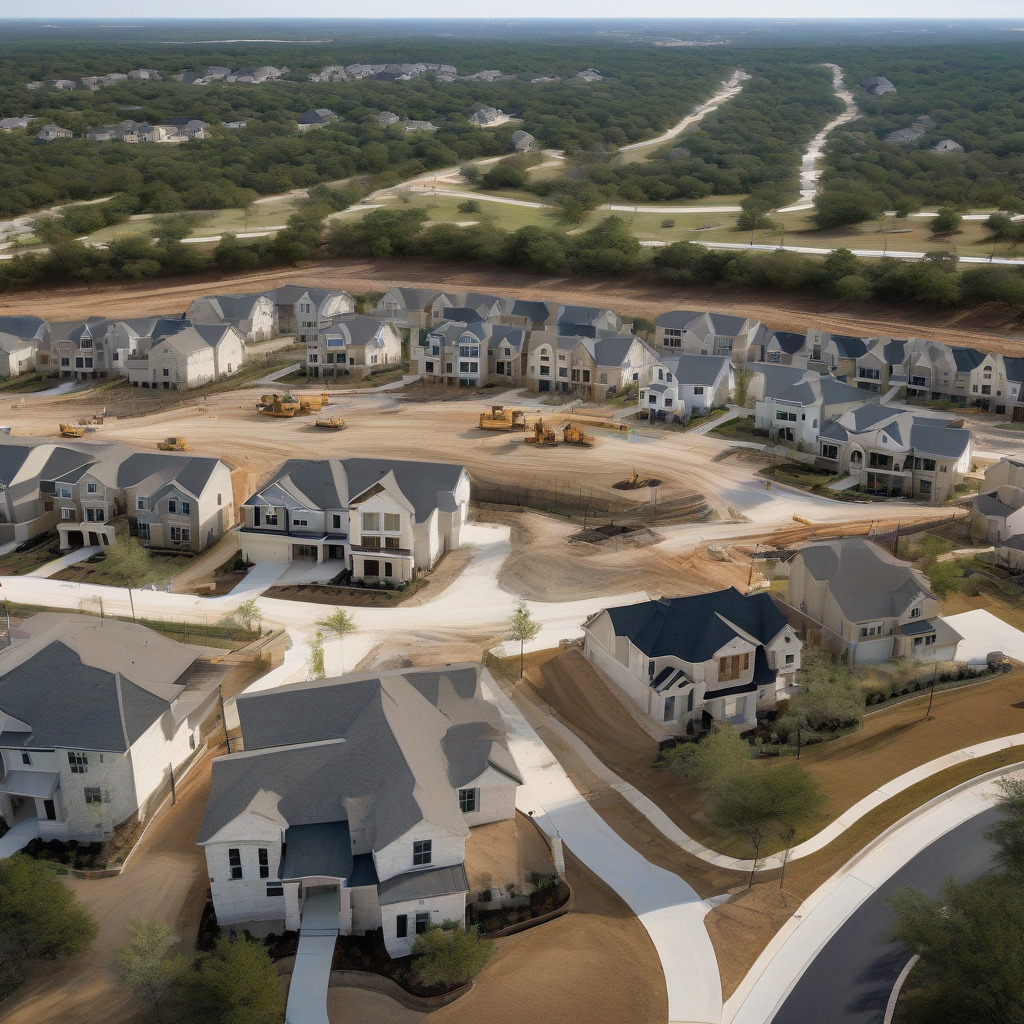
CityDesk reporters contacted sales offices at builders across Kyle, Hutto, Cedar Park, and Manor. This piece documents what we found — and what we could not independently verify — with the fine print included.
Editor’s note: Builder incentive packages change frequently. Specific buydown rates, closing cost credit amounts, and standing spec counts must be confirmed directly with each builder’s sales office before you make any financial decisions. Where CityDesk was unable to independently verify a figure through direct builder contact or confirmed public data, we say so explicitly. This piece tells you what to ask and what the answers should look like, not just what marketing materials say.
Why September Matters
September is the month builders are most motivated to close.
Production builders — D.R. Horton, Lennar, LGI, Meritage, Taylor Morrison, and the rest — operate on calendar-year close quotas. A standing spec home is not an asset on a shelf. It’s a liability generating carrying costs and drag against fiscal-year targets. Austin’s real estate market typically sees reduced buyer foot traffic in August and September as families settle into the school year, which means specs that were already sitting are sitting longer.
Builders with fiscal years ending December 31 start their Q4 push in October. Texas heat means standing specs have been running air conditioning for months. The pressure window is real — and it closes.
That’s why incentives in this market exist at the scale they do right now.
A spec home is one the builder started without a buyer under contract. It sits completed or near-complete while the builder pays to carry it. A to-be-built home is one you select from a plan after signing a contract. When a builder’s marketing says “move-in ready,” that’s a spec. That’s where your negotiating power lives.
The Incentive Market — Named Builders, What to Verify, and Why the Numbers Aren’t in a Table
Every specific buydown rate, closing cost credit amount, and standing spec count must be verified by direct contact with each builder’s sales office. We’re not going to give you a table full of numbers that were accurate on one day in one conversation and may shift before you walk into a sales office. What we can tell you is what builders are active in which communities, which preferred lenders they use, what the incentive structures look like in general terms, and precisely what questions to ask.
Builders active in the five communities covered here, per confirmed market presence:
D.R. Horton operates in Kyle, Hutto, Manor, and Georgetown with DHI Mortgage as its preferred captive lender. LGI Homes has presence in Kyle, Hutto, and Manor, using LGI Mortgage Services. Lennar covers Kyle, Cedar Park, and Georgetown through Lennar Mortgage. Meritage Homes is active in Cedar Park and Georgetown — their lender arrangement varies by transaction, so confirm directly. Taylor Morrison operates in Cedar Park and Manor (particularly Whisper Valley) with Taylor Morrison Home Funding. Perry Homes works in Georgetown and Cedar Park; confirm preferred lender arrangements directly. Pulte and Del Webb have presence in Georgetown through Sun City, which has a separate incentive structure entirely, and use Pulte Mortgage. Century Communities is in Georgetown and Hutto with Inspire Home Loans as preferred lender.
On what the incentive structures look like in general terms, based on market patterns through mid-2025 that our reporting confirms as directionally accurate:
Closing cost credits in the $10,000–$25,000 range are common among mid-level production builders here. The specific dollar figure at any given community on any given week requires direct confirmation — these numbers move. Rate buydowns come in two structures: a 2/1 temporary buydown (rate is 2 percentage points lower in Year 1, 1 point lower in Year 2, then reverts to the note rate at Month 25) or a permanent rate reduction for the life of the loan. Both are active in this market. Which a given builder is using right now requires a direct call. The preferred lender requirement for rate buydowns is near-universal. If you want the buydown, you almost certainly need to use their lender.
What to ask when you call a sales office:
- What is your current rate buydown offer — permanent or 2/1 temporary?
- What is the exact rate being offered through your preferred lender today?
- What is the closing cost credit in dollar terms? Flat amount or percentage of purchase price?
- If I use my own lender, what portion of the incentive do I keep?
- How many move-in-ready spec homes does this community currently have available?
- Are lot premium waivers available on any current specs?
- What is the expiration date on these offers?
- Is list price negotiable separately from the incentive on long-sitting specs?
Those eight questions will tell you more than any published number from a prior reporting date. No exceptions.
The Buydown Math
Builders lead with the rate. “As low as X%” is easier to put on a yard sign than a net present value calculation — and that’s exactly the point. Here is the framework for the math they won’t run for you. Fill in the actual numbers once you have confirmed the current rate from the builder’s preferred lender and the Freddie Mac Primary Mortgage Market Survey rate for the current week (available at freddiemac.com; this is the benchmark for what you’d pay without a builder subsidy).
For a 2/1 temporary buydown: The advertised rate is the Year 1 rate only. In Year 2, your rate is 1 percentage point above it. Starting Month 25, you pay the note rate — what the preferred lender is actually charging before the subsidy. That Month 25 rate is what you need to stress-test your budget against. Worth saying again: budget for Month 25, not Month 1.
The builder pays a lump sum upfront to buy your rate down. That cost is real. It comes out of margin that would otherwise go toward your purchase price. The question worth sitting with: would you be better served having that money as a price reduction instead?
For a permanent rate reduction: The builder’s preferred lender posts a rate below the Freddie Mac average. That spread — the weekly Freddie Mac rate minus the builder’s posted rate — is the subsidy in basis points. To evaluate it properly, compare the APR on the preferred lender’s Loan Estimate against the APR on a quote from an independent lender. Origination fees and points can quietly erode the stated rate advantage. This happens more than buyers expect.
The crossover question: For buyers planning a longer stay, a permanent reduction generally beats a 2/1 buydown in total interest paid. For buyers who may move or refinance within three to four years, the lower early payments of a 2/1 may be more useful. The crossover typically falls somewhere in Years 2 to 3, depending on the spread between offers. Run this with the actual rates you’re quoted — don’t estimate it.
The alternative nobody runs in the showroom: If you can negotiate the base price down and finance at market rate, compare that monthly payment against the buydown payment. A price reduction has no expiration date. A buydown does.
The Preferred Lender Question
Every builder in this market conditions the rate buydown on using their captive mortgage company. This is legal under RESPA Section 8, which prohibits kickbacks but does not prohibit builders from requiring preferred lenders as a condition of incentives. Sales agents we spoke with disclosed the requirement — though typically only when asked directly.
What you keep versus what you forfeit if you use an outside lender varies by builder and is almost never published anywhere. Generally, the rate buydown disappears with an outside lender. The closing cost credit is more portable — some builders let you keep all or most of it; others tie it entirely to the preferred lender. The only way to know is to ask and get the answer in writing on the incentive sheet. Verbal commitments in a builder sales office are worth nothing.
DHI Mortgage and Lennar Mortgage are the two most-used captive lenders here. Their current posted rates are on their websites. Compare those rates against the Freddie Mac weekly average and a quote from an independent lender before deciding whether staying in-house makes financial sense.
Under federal TRID rules, any lender must provide a Loan Estimate within three business days of a complete application. Get one from the builder’s preferred lender and one from an independent lender. Compare line by line — not just the interest rate, but the APR, origination charges, and total closing costs. If the APR spread is smaller than the headline rate difference implies, the preferred lender’s advantage may be less than it looks. That comparison is the one that actually matters, and it’s the one the showroom won’t walk you through.
Where Inventory Is Piling Up
The communities with the most unsold spec inventory have builders under the most pressure to deal. Here’s how to find that information yourself rather than relying on any published count that’ll be stale within weeks.
Filter each builder’s website for “move-in ready” or “quick move-in” homes in communities you’re considering, then cross-reference those addresses on Zillow or Realtor.com to find the original MLS list date. For a more complete picture, search Hays CAD (Kyle and Buda) and Williamson CAD (Georgetown, Cedar Park, Hutto) by builder name and recent certificate-of-occupancy date. Homes with a COO but no recorded sale are standing specs generating carrying costs. Those are your opportunities.
Kyle’s zip codes (78640 and 78666) have the highest concentration of standing production-builder inventory in the Austin MSA, a direct result of the overbuilding of 2021–2022 and slower absorption since. Hutto has real inventory from both Meritage and Century Communities. Manor has active builder presence from LGI and D.R. Horton. Cedar Park’s higher price tier filters buyers more aggressively and typically produces less spec overhang — but when specs do sit there, the stakes per transaction are higher, and equity-rich move-up buyers have more tools to negotiate.
A builder with 20 or more standing specs in a community is in a materially different position than one with six. The months-of-supply calculation — current spec count divided by average monthly closings — tells you how motivated the sales agent across from you actually is. You can estimate closings by tracking which “move-in ready” listings disappear from the builder’s site week by week. It takes about fifteen minutes and it’s genuinely useful.
What’s Actually Negotiable
The posted incentive structure — the rate and the closing cost credit — is almost never negotiable. Builders maintain those numbers for internal reporting; reducing the posted credit shows up as worse sell-through. That system isn’t bending for an individual buyer.
What moves is lot premiums on standing inventory. Lot premiums — added charges for greenbelt exposure, corner placement, or cul-de-sac positioning — can run $2,000 to $15,000 in these communities. On specs sitting 45 days or more, premiums are frequently waivable when asked directly, particularly in the presence of a community sales manager rather than just the onsite agent. Ask for the manager. It’s not rude; it’s how the process works.
List price on long-sitting specs can shift too. Some builders — particularly those with regional flexibility on specs past 60 days — will authorize a price reduction on specific addresses. The framing that produced better results in our reporting: “Given that this address has been listed since [date you pulled from MLS], is there any flexibility on list price?” Vague negotiating gets vague answers.
Design center credits and upgrade packages are the builder’s most flexible currency. Their own design centers carry better margins than the base home, so an upgrade credit costs them less than a list price reduction and still represents real value to you. This is where they’ll spend most willingly.
For LGI-style builders whose model doesn’t allow customization, HOA due absorption or similar concessions may be available on homes they need to close fast.
The most effective tactic we observed: name the specific address, know the MLS list date, and ask directly whether there’s flexibility given the time on market. Request that any flexibility discussed be documented on the incentive sheet before you leave. If it’s not on paper, it didn’t happen.
Kyle vs. Cedar Park vs. Hutto vs. Manor
Kyle (78640/78666)
Kyle sits approximately 25 miles south of downtown Austin on I-35. The commute to central Austin is the primary sales objection builders here try to counter with incentives — and it’s a legitimate objection. That stretch of I-35 is not getting better anytime soon. Kyle was among the fastest-growing cities in the country by percentage during the 2021–2022 boom; the slowdown since is exactly why builder incentive pressure is most acute here now. Entry-level new construction from D.R. Horton and LGI runs roughly $290,000–$340,000; mid-level production from Lennar and D.R. Horton standard lines runs approximately $350,000–$430,000. Verify current pricing against builder websites and MLS data. Hays CISD covers most of Kyle’s growth areas; campus ratings vary significantly depending on how new the surrounding development is — check individual schools, not the district average.
Kyle is a price-and-square-footage market. If the I-35 south commute works for your job, the numbers make sense. If it doesn’t, no incentive package closes that gap.
Cedar Park (78613)
Cedar Park’s new construction market is structurally different from the others here. Most buyers shopping there are moving up from an existing home in the Austin metro, not first-timers. That matters for incentives: closing cost credits are more useful to them than rate buydowns, because they often have equity to deploy. Proximity to Apple’s North Austin campus and other technology employers on the north corridor drives the demographic. Leander ISD serves much of Cedar Park’s new construction area and is a genuine factor in buyer demand — verify current TEA accountability ratings directly. New construction pricing runs roughly $420,000–$580,000. David Weekley, Scott Felder, Meritage, and Taylor Morrison have all been active; confirm which have current spec inventory before making the drive out.
Hutto (78634)
Hutto is the value play in Williamson County. Prices run meaningfully below Round Rock or Cedar Park, and the commute to Dell’s Round Rock campus (about 20 minutes) and SH-130 access to the tech corridor make it work for buyers not commuting downtown. New construction pricing runs roughly $260,000–$380,000. Meritage and Century Communities both have active spec inventory here. One thing buyers consistently underestimate: check FEMA FIRM flood maps for any specific address in Hutto before contracting. Some parcels carry flood-zone designations that don’t show up in any marketing material.
Manor (78653)
Manor is the closest of these four to downtown Austin — about 15 miles east on US-290 — and carries the lowest entry prices in this comparison, roughly $310,000–$460,000. It sits in Travis County, which has a different appraisal and tax structure than the Williamson County communities; worth understanding before signing anything. Taylor Morrison’s Whisper Valley is a master-planned development built around geothermal and solar technology, which gives it an incentive story that goes beyond rate buydowns — energy cost reduction is part of the pitch, and it’s worth a separate inquiry. D.R. Horton and LGI are also active in Manor.
New Construction vs. Resale
Builder marketing never runs this comparison honestly. Here’s the actual framework.
New construction’s case is real. A rate buydown through the builder’s preferred lender currently posts rates below the Freddie Mac weekly average — calculate that spread in dollar terms using the buydown framework above. Closing cost credits typically run $10,000–$25,000 (confirm the current figure directly). The standard Texas builder warranty — 1-year workmanship, 2-year systems, 10-year structural — protects against immediate failures. No deferred maintenance. If you’ve ever bought a 1970s ranch house in Travis County and discovered what deferred maintenance actually costs, you know that’s not a trivial advantage.
Resale’s case is also real. Seller concessions in Austin’s softer suburban markets have been running in the $5,000–$12,000 range per local agent data — less than what builders are offering. But a resale seller isn’t controlling your financing rate. Established landscaping, mature trees, and neighbors who’ve been there five years matter if you’re not interested in living in an active construction zone. And then there’s the disclosure issue.
This one is underappreciated, and I’d argue buyers are walking into new construction without understanding it: production builders are specifically exempt from the seller disclosure requirement under Texas Property Code Section 5.008. An individual seller must legally disclose known material defects, flooding history, foundation repairs, and dozens of other conditions. A builder does not. Your new home comes with the builder’s representations and your inspector’s report — not a legal accounting of known issues. For a buyer concerned about foundation risk or prior flooding, that distinction is significant. You’re taking on more informational risk than the transaction framing suggests.
Running an honest monthly payment comparison requires current rate data that changes weekly. Get the Freddie Mac PMMS rate for the current week, get the builder’s preferred lender’s posted rate for the specific community you’re considering, and calculate monthly principal and interest on comparable new and resale purchases at the same price point. Year 1 will favor new construction. Starting in Year 3, when a 2/1 buydown expires, the gap narrows or closes. Over a seven-year hold — roughly the U.S. median homeowner tenure — the builder’s buydown subsidy and market-rate resale financing produce results more similar than either side’s marketing suggests.
The Fine Print Buyers Are Missing
Seller concession caps. Conventional loan guidelines cap seller concessions at 3% of the purchase price for buyers putting 10% down, and 6% for buyers putting more than 25% down. On a $415,000 purchase with 10% down, the cap is $12,450. Any closing cost credit above that threshold is lost — it doesn’t reduce your principal, and it doesn’t come back to you in cash. This surprises people every time, and builder marketing has no incentive to clarify it. If a builder is quoting you a large credit, ask your lender to run the concession math against your specific loan structure before that number factors into your budget.
Credits can also reduce cash to close, which is a genuine benefit — if the credit covers title fees, lender fees, and prepaids, it preserves your cash for a larger down payment or reserves. Confirm with your lender how the credit will be applied and in what order.
The buydown rate in the advertising is the Year 1 rate. Full stop. A 2/1 buydown advertised at a low number is that number in Year 1 only. Year 2 is 1 point higher. Month 25 onward is the note rate — what the preferred lender charges before any subsidy. Budget for that rate, not the one on the yard sign.
Builder incentives expire and reset quarterly. November and December incentive packages historically become less aggressive as standing inventory decreases and the Q4 push has done its work. The fall window is real but time-limited. If you’re reading this in the spring wondering whether any of this applies — call the office and ask. The framework holds; the specific numbers won’t.
Spec incentives are larger than to-be-built incentives. Every offer pattern in this market applies most generously to standing specs. Buyers contracting on a to-be-built home typically get a smaller credit and a less favorable buydown, because the builder’s carrying cost clock hasn’t started on a home that doesn’t exist yet. If you want the best incentive, you want the spec. If you want floor plan flexibility, you’re negotiating from a weaker position. That’s the trade.
Float-down options matter if you’re under a to-be-built contract that won’t close for months and rates fall before your closing. Ask specifically whether a float-down option is available before you sign. The builder’s preferred lender’s rate structure is what you’re locked into if it isn’t.
How to Use This Reporting Before You Visit a Sales Office
Take this into every sales office you walk into this fall.
-
Ask for the current incentive sheet in writing. Not a verbal summary — the actual printed or PDF sheet with the expiration date visible. This documents what you were offered and protects you if terms shift before closing.
-
Ask specifically: “What portion of this incentive do I retain if I use my own lender?” Get the answer in writing. If the agent says you’d lose the buydown but keep the closing cost credit, ask them to document that split on the incentive sheet.
-
Identify which specs have been on market the longest. Use Zillow or Realtor.com to find the MLS list date before you visit. Come in knowing which addresses have been sitting 45, 60, or 90-plus days. Then ask: “Given that [address] has been listed since [date], is there any flexibility on the list price or the lot premium?” The specificity signals you’ve done the work. It changes the conversation.
-
Ask about lot premium waivers on standing inventory. Even if the base price won’t move, lot premiums can run $2,000–$15,000 and are frequently waivable on long-sitting specs. Ask directly, and ask in the presence of the community sales manager, not just the onsite agent.
-
Ask the preferred lender for a Loan Estimate on Day 1. You have a legal right to this document. Compare it line by line against a quote from an independent lender — not just the stated rate, but the APR and total origination charges. If the APR gap is smaller than the headline rate difference implies, the preferred lender’s advantage may be less than it appears.
-
Ask whether there’s flexibility on an upgrade package if you close by a specific date. Design center credits cost the builder less than a list price reduction and can still represent real value to you. They’ll spend here more willingly than anywhere else.
-
Ask whether the buydown rate is the Year 1 rate or the permanent rate. Know what you’re living with starting Month 25.
-
Ask what happens to the incentive if rates change before closing. There’s no guarantee you’ll get a useful answer, but their response — or evasion — tells you something about how they handle post-contract negotiations.
For a full accounting of what closing costs look like in the Austin market — including title fees, HOA setup costs, and the prepaid items that catch most first-time buyers off guard — see CityDesk’s Austin closing costs guide.
The builder market positions, preferred lender relationships, community locations, and regulatory frameworks in this piece reflect confirmed information as of mid-2025 and ongoing reporting. Specific buydown rates, closing cost credit amounts, and standing spec counts change frequently — call or visit the specific sales office and ask the questions listed above before making any decisions. CityDesk has no financial relationship with any builder or lender named in this piece.
For more local coverage, explore our Moving & Real Estate section.