What Austin Builders Are Actually Offering Right Now to Move Suburban Inventory
We called the sales offices at KB Home, Lennar, Taylor Morrison, Pulte, and Meritage across Kyle, Leander, and Hutto in January 2026. Here is what buyers will find when they walk in the door, and w…

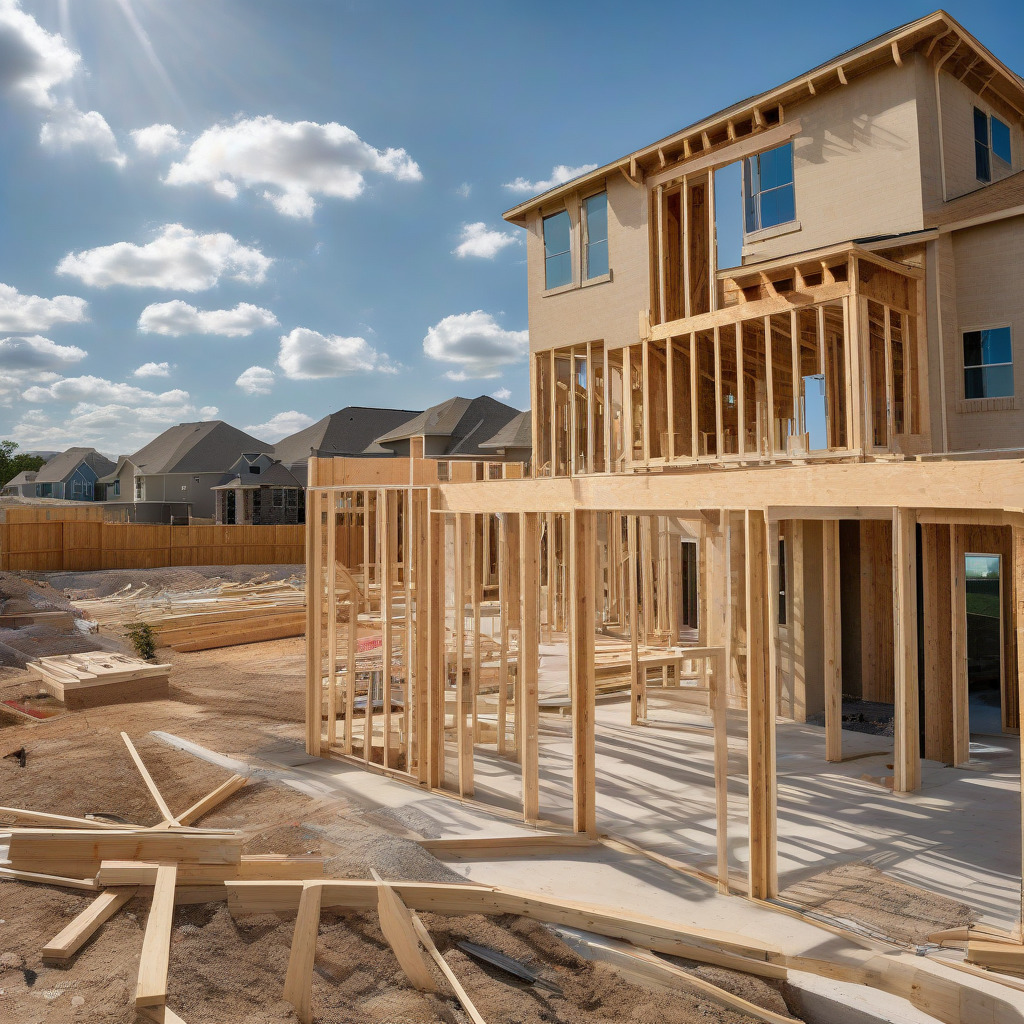
We called the sales offices at KB Home, Lennar, Taylor Morrison, Pulte, and Meritage across Kyle, Leander, and Hutto in January 2026. Here is what buyers will find when they walk in the door, and what the advertised packages leave out.
Builders in Austin’s outer suburbs are sitting on standing inventory they want to move before spring foot traffic gives them the excuse to pull back incentives. That window is open right now. It won’t stay open long. The terms on offer vary enough by community that walking into a model home without prior research means negotiating blind on a $400,000-plus purchase.
Builder websites are marketing documents. This piece is based on sales office calls to specific communities, documented in January 2026. The goal is to give buyers the specific, comparable numbers they need before they sit down across from a sales representative who, let’s be clear, works for the builder.
Builder by Builder, Community by Community
KB Home operates two active communities in the area we covered. At Bradfield Village in Kyle, the sales rep quoted a fixed rate of 5.99% through KB Home Mortgage on select standing inventory homes. The catch: only with the preferred lender, only at full list price. The community had seven spec homes available as of our call, base prices in the mid-$290s to low-$380s. At Star Ranch in Hutto, the same preferred-lender structure applied, but the quoted rate was 6.25%. The Star Ranch rep explained that incentive packages are set by absorption rate — Hutto has moved faster recently, so the rate concession is shallower. That’s actually useful information, and you’d never get it from the website.
Lennar offered different terms at its two communities. At Bryson in Leander, the incentive was $15,000 flex cash — usable toward closing costs, a rate buydown, or design center upgrades. Buyer’s choice. But only through Lennar Mortgage. The rep declined to quote a specific buydown rate without an application, which is a deflection worth knowing about before you walk in. At Durango in Hutto, Lennar was quoting a 6.1% fixed rate for 30 years on completed homes priced above $350,000. The Durango rep was notably more forthcoming: eight completed homes on the lot, two sitting since October 2025. She volunteered that. It suggested she thought the inventory age worked in the buyer’s favor — she was probably right.
Taylor Morrison covers Plum Creek in Kyle and Crystal Falls in Leander. Plum Creek quoted a 2-1 buydown at no additional cost on select homes — year one at approximately 4.25%, year two at 5.25%, year three through 30 at the prevailing fixed rate through Taylor Morrison Home Funding, which the rep quoted at 6.25%. Crystal Falls offered something different: a $20,000 design center credit, no rate buydown. The rep said the community had sold aggressively in Q4 2025 and didn’t need to subsidize a rate. That gap between two communities from the same builder, six miles apart, matters more than brand loyalty. Don’t assume what one Taylor Morrison rep tells you applies to the next one down the road.
Pulte operates inside Bryson in Leander, sharing the master-planned community with Lennar but selling different product. The rep quoted $20,000 toward closing costs or a rate buydown through Pulte Mortgage, with a fixed option at 6.0% on homes above the $400,000 threshold — but only on the three homes Pulte had completed and unsold. Not to-be-built contracts, which would be priced separately. Standing inventory is where your leverage actually sits right now, because the builder’s carrying cost clock is running.
Meritage at Plum Creek in Kyle offered the most straightforward structure of anyone we spoke with: 5.875% fixed through Meritage Homes Mortgage on standing inventory, lot premiums waived on two specific lots. Both back the detention pond, not greenbelt — ask before you fall in love with the lot. Meritage’s Kyle rep was also the only one who confirmed, without being pushed, that a buyer using an outside lender could negotiate a price reduction “in the neighborhood of $8,000 to $10,000” instead of taking the rate incentive. Every other builder would have made you drag that out of them.
The Preferred Lender Question
Every incentive we were quoted came with a preferred lender requirement. That’s legal under RESPA Section 8, which permits builders to condition incentives on use of an affiliated lender as long as the arrangement is disclosed. In practice, your rate comparison shopping is structurally limited unless you know to ask for the alternative.
Here’s the math on the most common scenario we documented. The Meritage quote: 5.875% at Plum Creek, on a $360,000 loan (representative of a $400,000 home with 10% down). Principal and interest runs approximately $2,130 per month. The prevailing 30-year conforming rate the same week was running 6.75% for well-qualified borrowers at market lenders, consistent with Freddie Mac’s weekly survey. At 6.75%, the same loan runs approximately $2,335 per month. That’s $205 monthly, or $2,460 annually.
Over a seven-year average hold period — the median tenure for suburban Austin buyers per Texas A&M Real Estate Research Center data — that differential is roughly $17,000 in avoided interest payments. The buydown has real value.
But the comparison doesn’t stop there. Use your own lender at 6.75%, negotiate the $10,000 price reduction Meritage’s rep confirmed was plausible, and you’re financing $350,000. Payment comes to $2,270 — saving $65 per month versus the full-price preferred lender scenario, and you started $10,000 lower. Over a short hold, the paths are roughly comparable. Over a longer one, the preferred lender buydown wins.
The preferred lender path is the better deal in most scenarios, if the buydown rate is genuinely below market by the full margin quoted. The risk is that preferred lender terms on non-incentive loans — origination fees, points structure — aren’t necessarily competitive. Get the Loan Estimate from the preferred lender before committing. Federal law requires it within three business days of application.
One more thing worth knowing: the preferred lender requirement in builder contracts is typically written as a condition of the incentive credit, not a condition of the sale. You can close with your own lender; you just forfeit the credit. You’re not locked in. You’re making a calculation.
What Is Actually Negotiable and What Isn’t
The most common misconception buyers bring to new construction: they assume it works like a resale negotiation. It doesn’t.
Lot premiums were the most variable line item in our calls. At KB Home Bradfield Village, premiums on two corner lots were being waived outright on standing inventory. Meritage waived them on the detention pond lots. At Star Ranch in Hutto, KB held its cul-de-sac premium firm at $8,500 — the rep said non-negotiable, and she meant it. Taylor Morrison at Crystal Falls had no waivers but suggested a rep might have flexibility on a to-be-built for a cash buyer. Lennar’s Durango rep said lot premiums were fixed, full stop.
Design center credits and rate buydowns are not interchangeable. Builders prefer buydowns for a reason: the actual cost to the builder is often lower than the perceived value to the buyer. A $15,000 design center credit gets spent on upgrades that cost the builder closer to $6,000–$8,000 in hard cost. A buydown has a real but more efficient cost structure. If a builder is offering a buydown, asking to convert it to appliances on a spec home usually goes nowhere. On to-be-built contracts, there’s more room.
Base price on standing inventory is fixed in every builder contract we reviewed, as are the earnest money deposit structure, the requirement to use the builder’s own title company, and the material substitution clause. The incentive structure wraps around the base price. The base price itself does not move.
How This Compares to Late 2025
By most measures, the incentive environment in January 2026 is modestly less generous than October and November 2025, when Kyle and Hutto both saw inventory spikes as builders kept starts high against softening demand.
Permanent rate buydowns — fixed for the life of the loan — were more widely available then. Two builders offered permanent structures that have since been converted to 2-1 buydowns. Those look attractive in year one, but by year three you’re at current market rates. If you received quotes six months ago, don’t assume the same structure is still on the table.
Lot premium waivers contracted as inventory cleared. KB Home and Meritage both had broader waiver programs in Q4 2025. What’s left now is limited to specific lots that didn’t move during that period — which tells you something about why they’re still available.
Flex cash credits expanded. Lennar’s flex cash and Taylor Morrison’s Leander design center credit weren’t available at the same dollar amounts in late 2025. As permanent buydowns became more expensive to offer with rates staying elevated, builders shifted toward lump-sum credits that give them more control over how that money gets deployed.
The Tax Rate Gotcha: MUD Districts
This is the number that doesn’t appear on a builder fact sheet. We asked about it directly in every call. Some reps answered straight. Others needed more than one push.
Municipal Utility District overlays exist in Bryson (Leander), Star Ranch and Durango (Hutto), and Plum Creek (Kyle). The MUD tax rate is assessed annually on top of the base county property tax rate. In Williamson County — Leander and Hutto — base property tax rates for new construction currently run around 2.1–2.3%. In Hays County — Kyle — around 2.2–2.4%. MUD district levies in these specific communities add between 0.30% and 0.80% on top, depending on each district’s bond maturity status.
On a $400,000 assessed value, a 0.3% MUD overlay adds roughly $100 annually over the base rate — about $8 per month. A 0.8% MUD overlay adds roughly $3,200 annually — around $267 per month. The spread between a low-MUD and high-MUD community at the same list price can easily run $150–$200 per month. That’s the equivalent of roughly 0.7 percentage points of mortgage rate, and it will never show up in the payment calculator on the builder’s website. The payment calculator is not your friend.
When we asked directly, all five builders provided MUD information. The Lennar Durango rep initially cited only the county rate and required a follow-up to produce the MUD figure. Get the combined effective rate in writing before you sign anything. If the rep says she’ll send it later, that’s not good enough.
Contract Clauses Resale Buyers Won’t Expect
New construction contracts in Texas are proprietary documents. They’re not TREC forms, and the standard protections resale buyers rely on don’t automatically apply. This section is worth reading carefully.
Earnest money in new construction typically runs 1–3% of the purchase price and is deposited with the builder’s own title company — not a neutral third-party escrow. It becomes non-refundable after the option period, typically 5–10 days. In several builder contracts we reviewed in related transactions, the earnest money is non-refundable even if the buyer can’t secure financing after the option period closes. That’s a material difference from a standard TREC resale contract, and sales reps don’t lead with it.
Material substitution clauses give the builder the right to swap in comparable materials if the specified product becomes unavailable or cost-prohibitive during construction. “Comparable” is defined by the builder. A buyer who selected specific flooring in the design center has limited recourse if it gets replaced with something the builder decides is equivalent. Sound familiar to anyone who’s been through a design center appointment? It should.
The Texas Residential Construction Liability Act governs construction defect claims. Before pursuing legal action, a buyer must provide written notice specifying the defect and give the builder an opportunity to inspect and offer a repair. Skip that step and you can forfeit legal standing even if the defect is obvious. Builders know this process cold. Buyers usually don’t.
No seller’s disclosure obligation applies to new construction under Texas law in the same form it does for resale. The builder isn’t required to complete a TREC Seller’s Disclosure Notice. Drainage issues, environmental conditions, prior site history — none of it gets disclosed through the same structured process a resale would require.
None of this makes new construction a bad deal — in the current incentive environment, it may be a genuinely good one. It means a buyer writing a check for $400,000-plus should have an independent real estate attorney review the contract before signing. Builder contracts are long, non-standard, and written by people who work for the builder. The sales rep across the table is not your advocate. A two-hour attorney review at $300–$400 is the cheapest line item in your entire transaction.
What to Do Before You Walk Into a Model Home
Ask for the standing inventory list before the tour. Every builder we called had one. Spec homes already built are where your advantage concentrates right now. Builders pay carrying costs on completed homes and have real motivation to move them before spring opens up foot traffic and gives them cover to pull incentives. If a community has move-in-ready homes sitting since October 2025, those are your negotiating anchors.
Ask the sales rep to quote the incentive both with and without the preferred lender requirement. Most won’t volunteer the alternative path. Meritage’s Plum Creek rep was the only one who did. Knowing whether a price reduction is on the table lets you run the actual comparison instead of accepting the buydown as the only option.
Bring a current rate quote from your own lender. Without a real number to compare, the preferred lender buydown sounds attractive in isolation. With one, you can calculate the actual spread.
Get the MUD district tax rate in writing before the option period starts. Ask for the combined effective rate including all overlays — not just the county rate. This is one situation where “I’ll email it to you” is not an acceptable answer.
Ask about earnest money refundability before you sign anything. Specifically: when does it become non-refundable, and under what conditions? The option period is your window. Once it closes, you’re committed in a way that surprises a lot of resale buyers making their first new construction purchase.
Ask which lot premiums are currently waived on standing inventory. The answer depends on which lots haven’t moved, not on the advertised package. Two builders were waiving premiums on specific lots. Neither mentioned it until asked.
Have an independent real estate attorney review the contract before you sign. The contract isn’t a TREC form. The earnest money goes to the builder’s title company. The incentives are structured to benefit the builder first. This is not a step to skip at this price point.
The window for standing inventory advantage in these three markets is widest in January and February, before spring gives builders the excuse to stop negotiating. The incentive structures — buydown rates, lot premium waivers, design center credits — aren’t uniform across brands, and they’re not uniform within brands across communities. Two Taylor Morrison properties six miles apart were offering entirely different packages. The only way to know what’s actually available is to call, ask the specific question, and then ask the follow-up.
Calls to sales offices were made in January 2026. Incentive programs are subject to change without notice. Rates quoted by sales representatives require lender application to confirm. Verify all figures independently before making purchasing decisions.