Which Austin Auto Body Shops Work Directly With State Farm and USAA
State Farm and USAA steer policyholders toward specific Austin repair shops. We looked at which shops are on those lists, what they give up to be there, and whether you're better off choosing your …

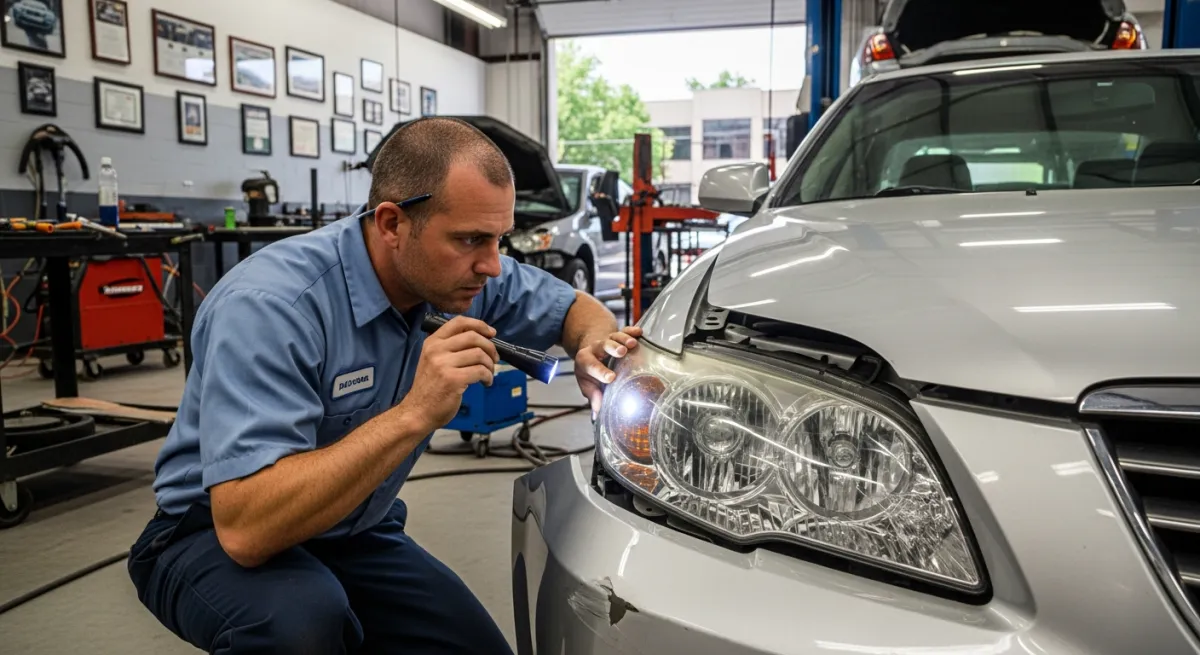
State Farm and USAA steer policyholders toward specific Austin repair shops. We looked at which shops are on those lists, what they give up to be there, and whether you’re better off choosing your own.
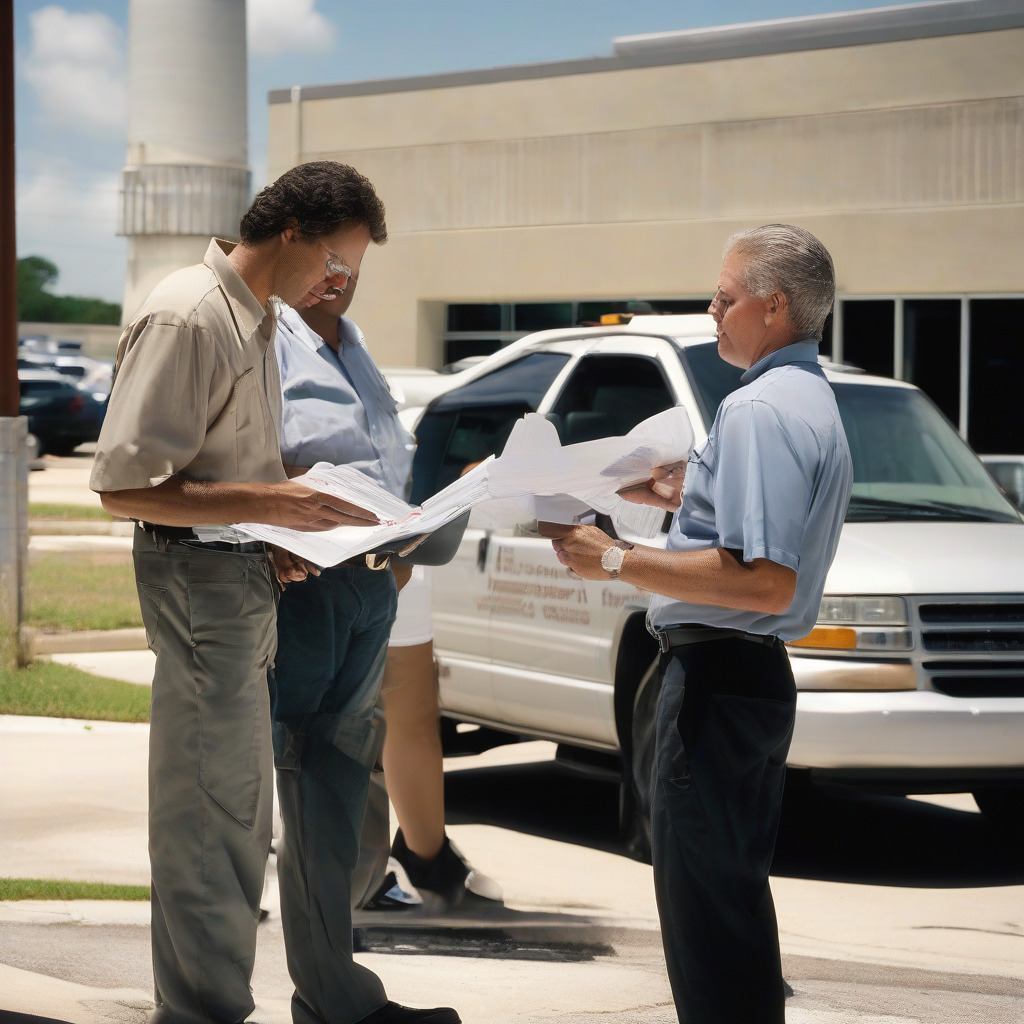
When your car takes a hit on MoPac or a baseball-sized hailstone tears through Pflugerville, your insurance company doesn’t just cut you a check. It has a list. A list of body shops it’s already negotiated with, already built claims workflows around, already maintains a financial relationship with. That list shapes where a significant share of Austin’s collision repairs end up — often before the driver has had a chance to think about it.
This piece lays out how that system works in Austin, which shops are on which lists, what Texas law says about your rights inside it, and when the preferred-shop path is genuinely the smarter call versus when it quietly costs you something.
How the Preferred-Shop System Actually Works
Insurance companies call them Direct Repair Programs, or DRPs. The mechanics are straightforward: an insurer contracts with a body shop — or more commonly a chain of shops — to handle claims in a given market. In exchange for guaranteed referral volume, the shop agrees to negotiated labor rates, insurer-specified parts sourcing guidelines, and faster paperwork processing that lets adjusters close files quicker.
In theory, both sides benefit. The insurer gets predictable repair costs and faster cycle times. The shop gets a steady pipeline of work without spending on marketing. But here’s what matters: your car is still your property. The shop is still legally responsible for repairing it correctly. You still have the right to choose where it goes. None of that changes because an insurance company has a preferred list.
In Austin, the DRP world is dominated by national chains. Caliber Collision, Gerber Collision & Glass, and Crash Champions (which absorbed most of the former Service King locations here) operate multiple Austin-area facilities and hold preferred-network agreements with virtually every major insurer. A policyholder using their insurer’s locator tool anywhere in the Austin metro will almost certainly be pointed toward one of these three brands.
The core tension is this: the shop’s repeat business comes from the insurer, not from you. You’re likely a one-time customer after a collision. The adjuster sending claims their way is a recurring revenue relationship. That doesn’t make DRP shops dishonest — most do competent work — but the incentive structure isn’t purely organized around your satisfaction. When there’s a question about whether to use an OEM part or a cheaper aftermarket part, or whether a repair warrants additional labor time, the shop’s primary obligation inside the DRP relationship is to whatever the insurer’s approval process will accept. I don’t think that makes the system corrupt. I do think it’s worth knowing before you drop your car off.
Which Austin Shops Are on State Farm’s and USAA’s Lists
Using State Farm’s Carwise locator and USAA’s shop-finder tool, here’s what the networks look like across the Austin metro as of this reporting. Participation changes without notice — verify by phone before assuming a shop is still active in a given program.
State Farm Select Service in Austin runs heavily toward Caliber Collision and Crash Champions, with facilities across South Austin, East Austin, North Austin, and the Round Rock corridor. Gerber Collision & Glass locations in the northeast Austin and North Loop area also appear consistently. Run the Carwise tool for your specific ZIP to confirm what’s currently active. One thing the locator doesn’t show: when any given shop’s agreement was last updated. That’s a more significant gap than it sounds, because shop participation does shift.
USAA’s network in Austin overlaps substantially with State Farm’s, because national chains negotiate participation across multiple carriers at once. Caliber Collision and Crash Champions facilities appear at multiple Austin-area sites. Crash Champions locations that previously operated as Service King are still showing up in some USAA results during the brand transition — worth confirming the current operator when you call.
USAA adds one layer worth knowing about: its RepairCenter program includes quality checkpoints beyond a standard DRP arrangement, and repairs through it come with a USAA-backed warranty. That’s a concrete benefit, not marketing language. It’s one of the more meaningful differences between USAA’s setup and a generic insurer referral.
What Texas Law Says About Your Right to Choose
No insurer doing business in Texas can require you to use a specific repair shop. The Texas Department of Insurance reinforces this in regulatory guidance. An insurer cannot refuse to pay your claim, reduce your payment, or penalize you because you chose a shop outside its network.
Your insurer can recommend a shop. It can explain why it prefers that shop. It cannot tell you that you must use it, and it cannot deny your otherwise-valid claim because you went somewhere else.
Where it gets murkier is the adjuster conversation. Some policyholders report being told — with varying degrees of directness — that going outside the network means the insurer “can’t guarantee the work” or that things will take longer. Some of that is true: the process is administratively smoother at a DRP shop. But if a claims representative implies your coverage depends on using their preferred shop, that crosses into territory the TDI takes seriously.
The response, said calmly and followed up in writing: “I understand you have preferred shops, and I’ve noted your recommendation. I’m exercising my right under Texas law to select my own repair facility. Please confirm my claim will be processed accordingly.”
Document every conversation with insurer representatives. Email confirmations. Dated notes. Saved voicemails. If you’ve ever tried to reconstruct a phone conversation with an insurance adjuster from memory three weeks after the fact, you already know why this matters.
The Real Trade-Off
DRP shops offer genuine advantages. Direct billing means you’re not writing a check and waiting for reimbursement. Established adjuster relationships mean the estimator and the claims rep share workflows that actually function. Intake at facilities with on-site insurer adjusters is faster. And for USAA members, the RepairCenter warranty adds recourse that independent shops may not match.
But the risks are real too, and they’re worth understanding in concrete terms.
Austin’s independent-shop market rate for collision repair labor runs roughly $55 to $75 per hour for body work, with the higher end at shops carrying OEM certifications. DRP labor rates negotiated with major insurers run lower — that’s the whole point of the arrangement. On a repair involving significant labor hours, that compression is meaningful. The shop makes it work on volume, not margin per car. That’s a sustainable model until a complex repair hits the floor and there’s no room to absorb it.
Parts sourcing is the other lever. DRP agreements typically allow or prioritize aftermarket or LKQ (like-kind-and-quality used) parts instead of OEM, unless your policy mandates OEM or the vehicle is under manufacturer warranty. For bumper replacements, panel repaints, and glass, the difference between OEM and quality aftermarket is often minimal. The risk profile rises with repair complexity. Frame straightening, airbag replacement, ADAS recalibration after structural damage — those are the situations where “good enough” parts can mean something. A well-negotiated DRP arrangement and a capable technician can produce excellent outcomes even on complex repairs. But the parts conversation is one you’ll have with an independent shop working for you; at a DRP shop, it’s a conversation already partly resolved by the insurer’s approval workflow.
What Austin’s Hail Season Does to Both Systems
Austin sits at the southern edge of Tornado Alley’s hail corridor. The spring storm window — March through May, sometimes into June — produces demand spikes that expose the DRP system’s capacity limits in a way nothing else does.
The 2023 hail events that tracked through Williamson County and the 2024 storms that hit the metro deposited thousands of damaged vehicles into the market at the same time. At peak, major DRP chains in the Austin metro were quoting four-to-eight-week intake waits for new hail claims. That’s the specific failure mode of the DRP model: when every preferred shop in a market is processing the same wave of insurer-referred claims simultaneously, the volume capacity that makes the system efficient in normal conditions becomes a bottleneck.
Independent shops and specialist paintless dent repair operations sometimes move faster in exactly this scenario — not because they’re better staffed, but because they’re not locked into insurer volume commitments that flood their bays all at once. PDR shops in particular operate largely outside the DRP structure and can offer significantly shorter waits after a major storm.
The caveat matters: PDR is only appropriate for dents without paint damage. Any panel with cracked or chipped paint requires conventional body work. The PDR shops will tell you this honestly. But it’s worth asking explicitly, because some DRP shops subcontract PDR work rather than performing it in-house. Confirm whether hail repair will be done on-site or handed off.
What Shop Owners on Each Side Actually Say
To get past the press-release version of this debate, we talked to a manager at a DRP-affiliated Crash Champions location in North Austin and the owner of an independent shop on the South Congress corridor who opted out of preferred networks years ago.
The Crash Champions manager spoke on background because he wasn’t authorized to discuss insurer agreements publicly. “We know what the insurer will approve before we write the estimate,” he said. “That’s actually faster for the customer in most cases — less back-and-forth. The supplement process is where it gets complicated. If we find additional damage once the car’s torn down, we document it and submit it, but the approval cycle adds time.” On labor rates, he was blunt: “The rates are what they are. We make it work on volume. We’re not going to cut corners on a repair to compensate — that’s a liability — but there’s not a lot of room to absorb inefficiencies.”
The independent shop owner left a DRP relationship with a major insurer several years ago. “The agreement worked fine when repair volumes were modest,” he said. “As they pushed labor rates lower and started specifying more aftermarket parts, it started affecting what I could do for the customer. I had a car where the insurer wanted an aftermarket headlight assembly on a newer vehicle. It wasn’t going to calibrate correctly with the ADAS system. I refused, wrote it OEM, and the customer had to fight with the adjuster for two weeks. I decided I didn’t want to be in that position on every third job.” He handles supplements directly with adjusters rather than inside a pre-negotiated framework. “It takes longer sometimes. But the customer knows I’m writing what the car actually needs.”
Both owners said the same thing unprompted: the quality of the actual body work — panel fit, blend, finish — varies more by individual technician than by whether a shop is DRP-affiliated or not. Chain shops have excellent technicians and mediocre ones. So do independent shops. “Go independent for quality” isn’t always the right shorthand, and anyone telling you otherwise is oversimplifying.
A Price Reality Check on Common Austin Repairs
These figures come from shop conversations and insurer estimating data. Individual quotes will vary by vehicle make, model year, paint code, and damage extent. Get written quotes before committing.
Rear bumper repair and repaint with no structural damage typically runs $500–$900 at independent shops at market labor rates. DRP shops may come in lower due to negotiated rates, with potential differences in materials specs.
Door panel replacement with blend to adjacent panels runs $800–$1,500 depending on the vehicle and whether OEM or aftermarket panels are specified. The gap between OEM and aftermarket narrows on older vehicles where aftermarket panel quality is well-established.
Rear-end collision with frame or structural involvement: $2,500–$6,000 or more depending on severity. This is the repair category where parts specification and labor rate compression matter most. A frame-straightening operation on a newer vehicle with active safety systems is not the place to optimize for cost. I can’t stress that enough — if your car has a forward-collision camera or lane-departure sensors anywhere near the damage, the recalibration after structural repair is a safety issue, not a line-item negotiation.
One counterintuitive note: for truly minor damage — a single-panel dent, a cracked tail lamp — the DRP system’s direct billing and established adjuster relationships can produce a faster, lower-friction outcome than writing an independent estimate and waiting for approval. The DRP disadvantages get sharper as repair complexity increases.
Red Flags to Watch For
Any shop — DRP or independent — that tells you a second opinion will “complicate” your claim is protecting its own workflow, not yours. Texas law does not prohibit you from getting multiple estimates. A reputable shop will welcome the comparison.
Watch who’s running your repair. If you’re calling for updates and the answer is consistently “we’re waiting to hear from the adjuster,” the adjuster is effectively managing your car. That’s not illegal, but it means your preferences are a secondary variable. Your repair should be managed between you and the shop, with the insurer’s approval as a separate administrative layer — not the other way around.
Aftermarket or salvage parts should appear on the estimate with an explicit conversation. Insurers can specify non-OEM parts in most circumstances under Texas law and standard policy language. But the shop is obligated to tell you. If you see “CAPA-certified aftermarket” or “LKQ” on an estimate without anyone mentioning it, ask whether OEM is available and what the cost difference is. For vehicles under manufacturer warranty, OEM is typically required to preserve the coverage.
A legitimate collision repair estimate breaks out each operation: remove and replace, refinish, blend, sublet for alignment or glass. A lump-sum labor figure without itemization gives you no basis to verify whether the hours are reasonable or whether the insurer has compressed them below standard times. Ask for the breakdown. Any legitimate shop will provide it without pushback.
If your vehicle has a forward-collision camera, lane-departure system, or adaptive cruise control anywhere near the repaired area, ask directly whether ADAS recalibration is included in the estimate. Some DRP estimates treat this as a line item; others defer it as a future supplement. Ask before the car leaves the shop. The consequences of skipping recalibration aren’t visible until something goes wrong.
How to Use an Independent Austin Shop Without Blowing Up Your Claim
Choosing your own shop is your right under Texas law. The process works best when you manage it proactively.
Before you drop the car: photograph every panel, interior and exterior, with timestamps. Document the odometer. Get the shop’s written estimate before authorizing any work — it should include parts specification, labor rate, and the specific operations to be performed.
Tell your claims representative the name, address, and phone number of the shop you’ve chosen. Do this by email, or follow up a phone call with written confirmation immediately after. Some insurers will send their own adjuster to the independent shop to review the estimate. This is standard and not a problem. What you’re watching for is whether the adjuster’s estimate and the shop’s differ significantly in scope.
When they don’t match: the supplement process exists for this. The shop submits documentation for the additional work, the adjuster reviews it, and the difference is negotiated. This takes time — sometimes a week or more — but it’s a normal part of non-DRP claims. The shop handles the supplement submission, not you.
If the adjuster won’t move on a lowball: request a reinspection with documentation — OEM parts pricing, labor time guides, photos. File a complaint with the Texas Department of Insurance if the position seems unreasonable relative to the documented damage. For significant repair values, a public adjuster works on commission from the settlement, so there’s no upfront cost.
For starting points on independent shops: the North Lamar/Burnet corridor between North Loop and Rundberg has a concentration of independents with long community histories — several have been at the same address for twenty-plus years. The South Congress/St. Elmo area south of Ben White has long-operating independents, including a few with OEM certifications for specific makes. Cedar Park has a growing cluster of independents serving the north suburb market that aren’t affiliated with the major chains. These aren’t endorsements — they’re places to start making calls and getting written estimates.
When the Preferred Shop Makes Sense and When It Doesn’t
For straightforward repairs — single panel, bumper, glass, nothing structural — the DRP path is usually fine. Direct billing, established workflows, and for USAA members the RepairCenter warranty make it the lower-friction option when the repair is simple and you don’t have bandwidth to manage an adjuster-shop negotiation yourself.
Go independent when the damage is structural. Frame involvement, airbag deployment, anything requiring a measure of the vehicle’s geometry. Go independent when your car is newer with active ADAS systems and you want to vet who’s doing the calibration and confirm it’s documented. Go independent if you’ve been through the DRP system on a previous claim and had a bad experience with parts or communication — one bad experience is enough to justify wanting more control the next time. And go independent if it’s April and every preferred shop in the metro has a five-week backlog while an independent you’ve found has capacity next week.
For a closer look at how auto insurance decisions intersect with other major costs Austin residents are managing this year, our automotive coverage tracks repair trends, dealer market conditions, and insurer behavior across the metro.
For routine repairs where speed matters most, the DRP shop is probably fine. For complex repairs where the quality of the outcome is what you’ll live with, the extra friction is worth it.
What’s never acceptable under any program: signing off on a completed repair before you’ve inspected it yourself, approved any supplement changes, and received written documentation of every part installed and every operation performed. That paper trail is yours, regardless of which shop did the work or who sent you there.
CityDesk Austin used State Farm’s Carwise locator and USAA’s shop-finder tool to identify network participants for Austin-area shops; readers should verify current participation directly with shops before scheduling, as program membership changes. Shop owner interviews were conducted in person in April 2025. Repair cost figures are reported estimates from Austin-area shops and should not be treated as quotes. Readers with questions about Texas consumer rights regarding shop selection should consult the Texas Department of Insurance at tdi.texas.gov or an attorney familiar with insurance law.