Is Austin Still a Good Place to Start a Business Compared to Dallas and Houston
Austin's office vacancy crisis, a quieter VC market, and rising property taxes have changed the calculus. Here's what the numbers actually say, broken down by business type.

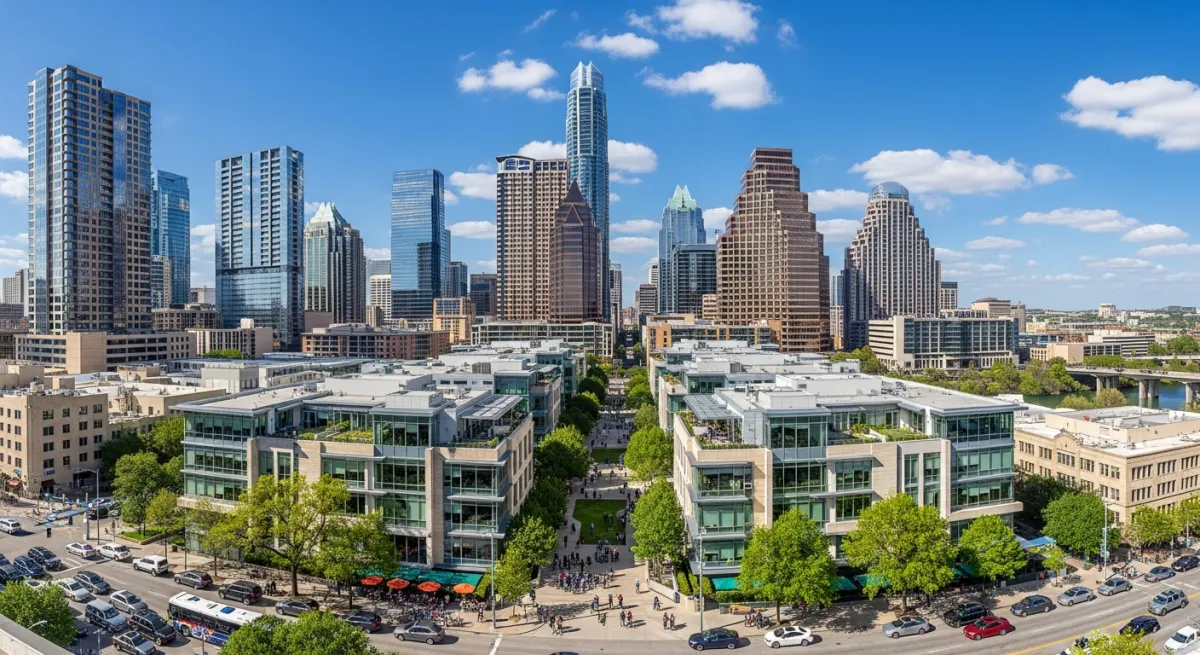
Austin’s office vacancy crisis, a quieter VC market, and rising property taxes have changed the calculus. Here’s what the numbers actually say, broken down by business type.
The short answer is: it depends on what you’re building. The longer answer requires a city-by-city reckoning that Austin’s booster ecosystem has been slow to provide — and, frankly, reluctant to have.
For most of the 2010s and into the early 2020s, Austin’s pitch to founders was simple. Lower cost than San Francisco. Better weather than Seattle. No state income tax. A network dense enough to matter. That pitch still holds. It also contains omissions that have grown harder to ignore since 2022.
The tech correction hit Austin’s office market hard. A sublease glut driven by growth-stage companies that scaled into Austin’s Domain office corridor still hasn’t fully cleared. Vacancy in Austin’s central business district and suburban tech corridors has settled around 23–25%, depending on submarket and quarter. In 2019, that number would have been unthinkable. The VC market, which peaked near $6 billion in total deal value in 2021, pulled back to roughly $2.5–3.5 billion annually in 2023, with 2024 figures not yet fully verified.
None of this makes Austin the wrong answer for every founder. But the city-selection decision — one that affects your burn rate, your hiring costs, your permitting timeline, and your access to capital for years — deserves a clearer look than most local coverage provides.
Office Space
Austin’s vacancy crisis is, counterintuitively, one of the better arguments for choosing Austin right now. If you know how to negotiate.
Class A office in Austin’s CBD runs roughly $45–55 per square foot annually on a full-service gross basis. The Domain, which spent several years commanding a tech-campus premium around $50–60, has softened considerably. Landlords are offering concessions and free-rent periods on multi-year leases that bring effective costs meaningfully below asking rates. For a seed-stage company that doesn’t need a Domain address, that gap is worth negotiating seriously.
East Austin and the Mueller development area are a different story. Flex and creative office runs $28–38 per square foot there — competitive with Houston’s Galleria and Westchase districts at $32–42, and cheaper than Dallas Uptown and the Turtle Creek corridor, which runs roughly $38–48 for Class A. If Austin Domain landlords are offering real concessions on multi-year leases, the effective gap with Dallas narrows fast.
Here’s the risk Austin carries that Dallas and Houston mostly don’t: no rent stabilization mechanism. Austin’s history shows that lease renewals on desirable corridors — South Congress, East Sixth — can spike hard when the market tightens. The Domain’s current generosity reflects oversupply, not structural durability. Anyone hunting for space in East Austin around 2018 knows exactly how fast “affordable creative office” becomes a punchline.
Houston is a different animal entirely. The city operates without a formal zoning code, which keeps industrial and flex space costs structurally low rather than cyclically low. For founders who need warehouse, lab, or manufacturing space, Houston has genuine advantages that neither Austin nor Dallas can match on pure cost — and those advantages don’t disappear when the market recovers.
Lock in multi-year leases now and you’ll benefit from these concessions. Sign short-term hoping to ride the wave indefinitely, and you may find yourself renegotiating into a very different market in 2027.
Labor Costs
This is where Austin’s cost story gets most complicated, particularly for founders who think in terms of fully loaded employee cost rather than just rent per square foot.
For software engineers with three to seven years of experience, Austin base salaries run roughly $130,000–145,000. Dallas runs $120,000–135,000 for comparable roles. Houston, which has a smaller software talent pool relative to its size, runs around $110,000–125,000 — though salaries for specialized energy-tech engineers push well above that.
A $15,000 annual gap between Austin and Dallas, multiplied across an engineering team of eight, is $120,000 in additional annual payroll. Real money for an early-stage company. Austin’s housing costs, even after the 2023–2024 moderation that pulled median home prices back from 2022 peaks, still anchor employee salary expectations near those peak levels. The prices came down; the expectations didn’t entirely follow.
For founders building physical businesses — restaurants, retail, construction-dependent concepts — Austin’s labor market carries a different premium. Construction labor costs have stayed elevated well past the pandemic-era spike, and local contractors report that subcontractor availability continues to add cost and time to commercial buildouts in ways that are less acute in Dallas’s suburban markets. Austin’s restaurant and hotel labor market, shaped by years of rapid population growth and a service economy competing for workers with tech-adjacent roles, runs higher than comparable Houston and Dallas markets.
A restaurant founder’s monthly payroll gap compared to an equivalent Dallas location can compound to six figures over a year. Over three to five years, that’s the difference between a business that works and one that doesn’t.
Taxes and Permitting
The reflexive “no state income tax” talking point that appears in every Texas-vs.-somewhere-else business article deserves a direct correction: that advantage is identical across Austin, Dallas, and Houston. It is not a differentiator in a Texas-vs.-Texas comparison. It should carry zero weight in your city-selection decision. Zero.
Property tax burden does differ, and materially. Austin and Travis County’s combined rate — city, county, Austin ISD, and other taxing entities — runs approximately $1.90–2.10 per $100 of assessed valuation. That’s higher than what commercial property owners pay in Plano, Frisco, or other Dallas-area suburban municipalities that have aggressively courted commercial development with abatement programs. For a company leasing space in a building where taxes flow through to NNN costs, this gap is real and recurring.
Austin also applies business personal property tax to equipment, furniture, and inventory. It hits restaurants, medical practices, and manufacturers harder than it hits pure-software companies — a detail that often doesn’t surface until your first appraisal notice arrives.
The appraisal process for business personal property in Travis County has generated consistent complaints about both the valuation methodology and the appeal process. These aren’t complaints from people who enjoy filling out protest forms. On permitting, Austin’s record is poor. Commercial permitting timelines have historically run three to six months longer than comparable Dallas projects, and considerably longer than Houston, where the no-zoning framework means many commercial projects face fewer regulatory hurdles from the start.
A restaurant founder who misses a planned opening date because of permitting delays carries the full cost of a built-out but unopened space — rent, utilities, loan interest — for those extra months. Dallas’s permitting environment is faster. Houston’s is faster still, particularly for any project that doesn’t trigger environmental or floodplain review.
Austin’s Land Development Code has been in various states of reform for years, and there are genuine efforts to accelerate commercial permitting. But the improvements remain partial. Founders told that permitting is getting faster should ask for specific timelines from recent applicants in their project category before budgeting accordingly. “We’re working on it” is not a budget line.
Grants, Microloans, and Local Programs
Austin has a structural advantage in small business capital access — one that surfaces regularly in our Austin business and professional coverage — that doesn’t get enough attention.
BCL of Texas is a community development financial institution based in Austin offering microloans up to $250,000. Its track record serving minority-owned and women-owned businesses is stronger than comparable organizations headquartered in Dallas or Houston.
The Austin Small Business Program, administered through the City of Austin Economic Development Department, offers periodic grant rounds that have been a real resource for brick-and-mortar small businesses. Availability varies by fiscal year and council appropriation — verify current round status directly with the program before you plan around it.
The Austin SBDC at ACC’s Highland Campus offers free one-on-one consulting and SBA loan packaging assistance. It costs nothing to use and has helped a significant number of local founders navigate lending relationships they couldn’t have managed independently. The SBDC network exists in Dallas through the North Texas SBDC and in Houston through the University of Houston, so this isn’t purely an Austin advantage. But Austin’s concentration of SBDC, CDFI, and city program resources in a relatively compact founder community means local service providers know each other and refer across organizations efficiently. That informal connective tissue matters more than it sounds.
Dallas’s SOLV economic development program and the city’s incentive framework are real and shouldn’t be dismissed. Dallas has made aggressive use of economic development incentives for larger employers in particular. Houston Exponential has done credible work connecting founders to capital networks. LiftFund operates across Texas and the Southeast, with meaningful presence in all three cities.
VC Access and the Founder Network
Austin’s venture capital funding totaled close to $6 billion in 2021, driven by genuine local deal flow and coastal funds writing checks into Austin-based companies from New York and San Francisco offices. As those coastal funds pulled back from their 2021 deployment pace, Austin’s deal volume contracted. The 2023 estimated range of $2.5–3.5 billion reflects a real decline in absolute dollars.
What Austin retains, even at lower volume, is a meaningful concentration of locally headquartered funds deploying at a pace and check size relevant to pre-seed through Series A founders. Capital Factory at 701 Brazos combines accelerator programming with its own fund and an active angel network. LiveOak Venture Partners focuses explicitly on Texas-based companies and has a track record through multiple cycles. Silverton Partners is one of the longer-tenured Austin-focused firms. CTAN, the Central Texas Angel Network, provides the seed-stage infrastructure that keeps the deal pipeline populated for later-stage institutional follow-on.
Dallas’s venture ecosystem has grown, particularly in fintech. The Plano and Frisco corridor houses legacy financial services infrastructure that has generated real fintech deal flow. But Dallas doesn’t have comparable density of locally focused early-stage institutional funds. Houston’s venture market remains heavily concentrated in energy tech — Ion Houston is the primary institutional hub — and lags broadly in software.
A resource neither Dallas nor Houston can replicate is SXSW’s annual deal-flow effect. If you’ve attended SXSW Interactive, you know that the introductions made in Austin each March have a time-compressed intensity no comparable event in the other two cities generates. You meet potential investors, design partners, enterprise customers, and key hires in settings considerably less formal than any conference room, and those introductions actually go somewhere. For founders needing seed to Series A capital who can afford Austin’s labor market, that density still arguably justifies the cost premium.
If you’re a fintech founder, Dallas may offer a more direct path to your specific investor set. If you’re a services or non-tech founder who doesn’t need venture capital, the VC ecosystem question is largely irrelevant to your location decision and you should stop treating it like it isn’t.
Which City for Which Business
Rather than organizing this by city, which produces hedged conclusions, here’s a direct answer by business type.
B2B SaaS and enterprise software: Austin. Dell’s headquarters, Apple’s 133-acre North Austin campus, Oracle’s relocated corporate HQ, Tesla’s Gigafactory in southeast Travis County — that’s a genuine enterprise customer pipeline within a 30-minute drive. At the stage when design partnerships and initial enterprise contracts are the primary goal, proximity to potential design partners is worth something real.
Fintech and financial services: Dallas. The concentration of legacy financial services infrastructure in the Plano and Frisco corridor gives fintech founders access to enterprise customers and strategic partners that Austin’s relatively thin financial services footprint can’t match. This one isn’t close.
Energy technology and oil and gas software: Houston, and it’s not close. The Ion Houston hub and the concentration of energy supermajors, midstream operators, and energy-adjacent private equity make Houston the only serious answer for any founder whose customer base is in oil and gas, utility-scale renewables, or industrial energy infrastructure. Austin has ERCOT nearby and a growing climate-tech conversation. It doesn’t have the customer density, and the gap isn’t closing quickly.
Healthcare and biotech: Houston, though Austin is developing. The Texas Medical Center anchors a biotech community in Houston that Austin simply can’t approach. UT Dell Medical School is an emerging anchor for a nascent life sciences corridor in Austin, and there’s genuine early-stage activity worth watching. But it’s years behind Houston’s infrastructure — probably more than people in the Austin scene want to admit.
Music, media, and entertainment tech: Austin. The SXSW effect, the Austin City Limits community, the density of music publishing, talent management, and entertainment law relationships that have formed around Austin’s music identity make it the only Texas city where a media or entertainment-tech founder has a genuine local industry infrastructure. This isn’t branding. It’s actual deal flow and customer relationships.
Restaurant, retail, and consumer brand launches: Dallas, usually. Lower labor costs, faster permitting, lower combined property taxes, and a large suburban consumer market that doesn’t require fighting for attention in a saturated Austin market. Austin offers brand recognition for certain direct-to-consumer stories — Yeti and Kendra Scott get cited constantly, for good reason. But brand origin story doesn’t offset the operational cost differences for most founders. Run your actual unit economics before you decide Austin’s cultural cachet is worth the premium.
Logistics, supply chain, and distribution: Dallas. Its position as a major transportation hub — DFW Airport, the intersection of major freight corridors — is a structural geographic advantage neither Austin nor Houston can replicate for founders whose business model depends on distribution speed and cost.
Creator economy and lifestyle DTC brands: Austin, selectively. Founders building brands that genuinely benefit from Austin’s cultural identity — outdoor and lifestyle, music-adjacent, artisan food and beverage — have a real market and story to tell from Austin that they can’t replicate from Dallas or Houston. Whether that’s worth the cost premium is a question your unit economics should answer, not your gut.
The Real Opportunity
If you’re a tech or SaaS founder at pre-seed or seed who needs locally headquartered venture capital, enterprise customer proximity, and a founder network with real deal-flow velocity, Austin’s cost premium still has a return on it. Particularly right now, when office lease concessions have narrowed the space cost gap and the network infrastructure remains intact.
For non-tech small business founders — restaurant, retail, professional services, consumer brand without a venture capital strategy — Dallas offers a more financially favorable operating environment on almost every measurable dimension: lower effective labor costs, lower combined property taxes, faster permitting, and a large suburban consumer market. Houston deserves serious consideration for any service business that wants lower costs and doesn’t need Austin’s specific brand association.
Energy, healthcare, industrial, biotech: Houston. Austin’s cultural appeal and current lease concessions are irrelevant to that decision. The customer density and institutional infrastructure in Houston exist at a scale Austin can’t approach in those sectors, and acting like that might change soon is wishful thinking.
One note specifically for founders already in Austin who are second-guessing their location: the current tenant’s market is real and time-limited. Class A space in The Domain and creative office in East Austin and Mueller is available today at effective rates that may not recur for several years. If your business type fits Austin’s advantages — enterprise tech, creative industries, climate tech, any business that benefits from the SXSW-adjacent founder network — the moment to lock in favorable lease terms is now. The founders who sign multi-year leases in 2025 will be paying 2025 rates when the market firms up again.
The correction created an entry point. But only for founders who are honest about whether Austin is the right city for what they’re building in the first place.