We Called Austin OB-GYN Offices to Find Out Who Is Taking New Patients and Whether They Accept Medicaid
Calls made and verified the week of September 8, 2026. Insurance acceptance and availability change frequently. Re-verify at time of scheduling.

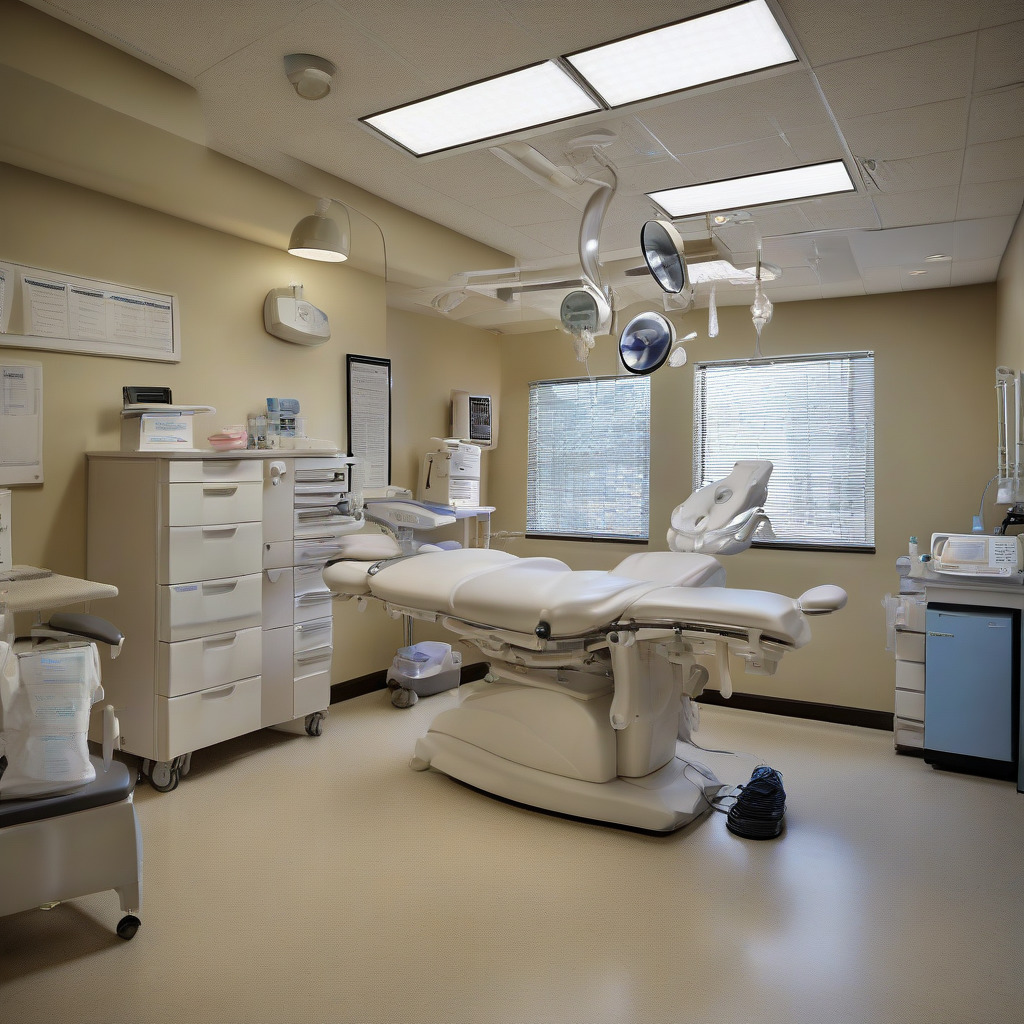
Calls made and verified the week of September 8, 2026. Insurance acceptance and availability change frequently. Re-verify at time of scheduling.
Finding an OB-GYN in Austin who is actually taking new patients, actually accepts your specific insurance plan, and can see you in under three months requires more than a Healthgrades search. Healthgrades lists names. Zocdoc lists names with “book now” buttons that dead-end at voicemail or a “we’re not accepting new patients at this time” message. Neither platform tells you whether a practice accepts STAR Medicaid through Molina or Superior specifically, what the self-pay rate is, or whether you’ll wait three weeks or three months.
So we made the calls. Over the week of September 8, 2026, CityDesk Austin contacted more than 15 OB-GYN offices, hospital-affiliated practices, and safety-net clinics across the city. Same questions everywhere: Are you taking new patients? How long is the wait? Which insurance plans do you accept—specifically Medicaid, CHIP, and ACA marketplace plans? What does a new-patient visit cost out of pocket?
The timing matters. Texas Medicaid redetermination displaced hundreds of thousands of Texans from coverage over the past two years, and the residual effects are still playing out here. People who lost Medicaid and haven’t yet replaced it are managing care without insurance right now. UT Austin students returned to campus this month, many establishing care in Austin for the first time. ACA open enrollment opens November 1. The next six weeks are the window for figuring out which practices are in-network before you lock into coverage that doesn’t include your preferred provider.
Here’s what we found.
Before You Call, Know Which Type of Medicaid You Have
Texas Medicaid trips up most callers before the first question. Telling an OB-GYN office “I have Medicaid” isn’t enough information for them to confirm whether they can see you. The managed care organization (MCO) administering your coverage determines network eligibility—not Medicaid itself. This explains a lot of frustrating calls that go nowhere.
Texas has not expanded Medicaid under the ACA. Most non-pregnant low-income adult women in Texas don’t qualify for regular Medicaid at all, regardless of income. The programs that actually apply to OB-GYN care:
Medicaid for Pregnant Women (MPW) covers pregnant women with incomes up to 198% of the federal poverty level. It’s the primary Medicaid pathway for OB-GYN care in Texas—prenatal visits, delivery, and 60 days of postpartum care.
CHIP Perinatal covers unborn children of women who don’t qualify for MPW but whose household income falls within CHIP limits.
Texas Women’s Health Program (TWHP) covers family planning services—contraception, annual well-woman exams, cancer screenings—for women who meet income requirements but aren’t pregnant and don’t otherwise qualify for Medicaid. Family planning only, not full Medicaid. This program has had funding and administrative changes; verify current status when you call.
STAR Managed Care Plans administer most Medicaid and CHIP coverage in Austin. The major ones are Molina Healthcare, Superior HealthPlan, and UnitedHealthcare Community Plan. When you call an OB-GYN office, give them the MCO name, not just “Medicaid.” A practice may be in-network with Superior but not Molina. That distinction alone can save you a wasted appointment and a surprise bill.
One thing that catches people off guard: for family planning and well-woman visits under STAR, Texas rules generally allow self-referral—you can go directly to an in-network OB-GYN without a primary care physician first. For symptom-based specialist visits like pelvic pain or abnormal bleeding, your MCO may require a PCP referral. Check your plan materials before scheduling.
CommUnityCare FQHCs—Start Here If You’re Uninsured or on Medicaid
CommUnityCare is Austin’s federally qualified health center network. For uninsured patients, Medicaid patients, and patients with limited income, it’s the most important entry point in this guide—and I’d say that to almost anyone who isn’t walking in with straightforward commercial insurance. Much like our reporting on Austin pediatric practices accepting new patients, what we found when calling OB-GYN offices is that the safety-net system is doing more of the access work than most patients realize.
CommUnityCare operates more than a dozen locations across Austin, though not all provide full OB-GYN services. Known locations with OB-GYN care include Rosewood-Zaragosa in East Austin, Jollyville Road near the 183 and Domain corridor, North Loop, and St. John. When you call, ask specifically whether the location has an OB-GYN on staff and whether it provides what you need—prenatal care, annual exams, IUD or implant placement, or colposcopy follow-up. The intake staff are used to helping patients figure this out.
The sliding fee scale runs down to zero at the lowest income tiers. You’ll provide income documentation at your first visit; staff walk you through it during intake. CommUnityCare accepts Medicaid, CHIP, and ACA marketplace plans—call to confirm which specific STAR MCO plans are in-network at the location you’re targeting.
For patients without a car: the Jollyville Road site is a real logistics problem on public transit for prenatal appointments, which are frequent. East Austin and South Austin locations are considerably more accessible. Call CommUnityCare’s main scheduling line and tell them your address. They’re used to the question.
Planned Parenthood Austin—Know What It Covers Before You Call
Planned Parenthood of Greater Texas operates two Austin locations: South Lamar and Rundberg on North IH-35. Knowing the scope of care upfront saves time and prevents the frustration of calling expecting services they don’t offer.
What they do: annual Pap smears, well-woman exams, contraception counseling and prescriptions, IUD and implant insertion and removal, the shot and ring, STI testing and treatment, pregnancy testing, referrals.
What they don’t do: prenatal care, obstetric care, labor and delivery, colposcopy or LEEP for abnormal Pap follow-up, infertility evaluation or treatment. If your Pap comes back abnormal and requires colposcopy, you’ll need a different provider. Planned Parenthood will help with the referral, but you’re making a second call to a second office—plan for it.
Both locations offer scheduled appointments. Same-day visits are available for some urgent concerns; call first. Title X funding allows sliding-scale fees based on income, and at lower income levels visits can be free or close to it. For insurance acceptance—including whether any Texas Medicaid program is currently accepted—call the location directly. This has been subject to funding changes and must be verified before you schedule.
For an uninsured or low-income patient who needs an annual well-woman exam, contraception, or STI care, Planned Parenthood is a practical option. It is not a substitute for prenatal care. If you’re pregnant and need obstetric management, start with CommUnityCare or a hospital-affiliated practice.
Hospital-Affiliated Groups—UT Health Austin, Ascension Seton, and St. David’s
The three major hospital systems each employ OB-GYN physician groups handling comprehensive care: high-risk pregnancy, abnormal Pap follow-up, minimally invasive surgery. They also carry longer waits and, in some cases, facility fees on top of physician charges—a combination that surprises patients when the bill arrives.
UT Health Austin
UT Health Austin’s OB-GYN practice is at The Medical Park at The Triangle, near 45th and Guadalupe. Call directly to confirm new-patient availability, current wait times, and insurance acceptance. When you ask about self-pay costs, ask specifically whether your visit bills as a hospital outpatient encounter. UT Health Austin clinics use hospital outpatient billing in some cases, which substantially increases your out-of-pocket cost even with insurance. Find this out before you show up.
In 2022, UT Health Austin and Ascension Seton formally separated their clinical partnership. If a physician you previously saw through the Dell Medical School/Seton model is no longer where you expect them, call both systems’ scheduling lines to locate them.
Ascension Seton
Ascension Seton’s OB-GYN physicians practice at several locations, including Seton Medical Center Austin on 38th Street and outpatient offices in the Domain area. Call to confirm new-patient availability, wait times, and which STAR MCO plans are in-network. When you call about self-pay rates, ask about the billing structure—physician fee plus potential facility fee. The estimates we received were in the $350–$600 range before facility fees; get the specific figure before you schedule.
One thing patients need to know before scheduling with Seton: Ascension is a Catholic health system operating under the Ethical and Religious Directives (ERDs), and this has direct practical consequences. Contraception counseling at Seton-affiliated offices does not include prescriptions for or placement of contraceptives—the pill, IUDs, implants, none of it. Tubal ligation and other permanent sterilization procedures are not performed at Seton facilities. If you want routine contraception alongside your OB-GYN care, you’ll need a separate provider. This isn’t a critique of Seton’s care quality; it’s just information you need before you walk in the door and find out the hard way.
St. David’s HealthCare
St. David’s (HCA Healthcare) operates OB-GYN services at St. David’s Medical Center on 32nd and I-35, South Austin Medical Center on Ben White, and North Austin Medical Center at 183 and Burnet. Call central scheduling to confirm new-patient availability, wait times, and insurance acceptance, including Medicaid and ACA marketplace tiers. As with other hospital-affiliated practices, ask upfront whether your visit carries a hospital outpatient facility fee. The answer affects what you actually pay. Ask before you schedule.
Private Practices—What to Know Before You Call
Private OB-GYN practices in Austin vary considerably by location, insurance acceptance, and accessibility for Medicaid or marketplace patients. The practices we flagged to contact include Austin Area OB-GYN (multi-location group) and Capital Women’s Care (regional group with Austin locations). Call each directly.
Private practices generally quoted new-patient visits in the $200–$400 range—below the hospital-affiliated estimates, largely because there’s no facility fee. If you’re paying out of pocket or burning through a high deductible, that gap is real.
When you call, give the insurer name and the specific plan tier. Ambetter (Centene), one of the most widely sold marketplace silver plans in Central Texas, has a narrower network than major commercial plans. Confirm by name whether any practice accepts it. Your insurance plan may separately require a referral for symptom-based specialist visits; check your plan documents before scheduling.
Private OB-GYN options on the east side are genuinely sparse. For patients in zip codes 78702, 78721, and 78724, CommUnityCare’s Rosewood-Zaragosa clinic is the most geographically practical primary option. This isn’t a minor inconvenience—it’s a real access gap, and it has consequences for east Austin patients whose insurance may not cover CommUnityCare.
UT Students—What University Health Services Actually Offers
Many UT students don’t realize how much gynecological care University Health Services provides on campus. It’s worth a call before you go hunting for an off-campus provider. UHS at the Whitaker Building provides annual well-woman exams, Pap smears, contraception counseling and prescriptions, STI testing and treatment, and pregnancy testing. Call UHS to confirm the full current service menu, including whether IUD or implant placement is available on-site—the scope has expanded in recent years.
Demand for gynecological appointments increases as the semester goes on. Students who wait until October or November often hit a real backlog. If you’re reading this in September, the appointment window is open now. For urgent concerns—abnormal bleeding, missed periods, STI exposure—ask about same-day options when you call.
UHS accepts UT’s Student Health Insurance Plan (SHIP). Students on a parent’s employer plan should call UHS billing before their visit. Students who had Texas Medicaid or CHIP should ask UHS directly whether those plans are accepted and verify before scheduling.
Here’s something that happens every year: students on parent insurance figure they’ll just see their hometown OB-GYN for annual care, then find themselves mid-semester without an Austin provider when something time-sensitive comes up. Don’t do that to yourself.
Which Door to Walk Through Based on Your Situation
Every path here leads to a phone call, and everything in this guide should be re-verified at time of scheduling. Networks change. Practices open and close their schedules. Rates shift.
This is also where our health & wellness coverage of Austin provider access goes deeper—including similar call-based reporting on other specialties.
Pregnant with STAR Medicaid (Molina, Superior, or UHC Community Plan): Call CommUnityCare first and ask which location has obstetric OB-GYN services. Ascension Seton is a second call—confirm which STAR MCO plans they accept. Have your MCO name ready, not just “Medicaid.”
Pregnant and uninsured: Apply for Medicaid for Pregnant Women now through Texas Health and Human Services. While that application processes, CommUnityCare’s sliding scale covers initial visits down to zero cost. Don’t wait for the application to resolve before establishing care.
Not pregnant, uninsured, need a well-woman exam: CommUnityCare (sliding scale, zero-dollar tier available) and Planned Parenthood (Title X sliding scale) are your most financially accessible options. Both provide full preventive care including Pap smears and contraception. Private practices run $200–$400 self-pay; confirm before scheduling.
UT student: Call University Health Services at the Whitaker Building first. If you need care before a UHS slot opens, Planned Parenthood’s South Lamar location provides equivalent preventive gynecological care.
Commercial insurance or ACA marketplace plan, want a private practice: Give the insurer name and plan tier when you call—not just the insurer. Ambetter marketplace holders have a narrower private-practice network than most. BCBS and United marketplace plans typically have broader access, but verify by plan name.
Want to avoid ERD restrictions: UT Health Austin, St. David’s, CommUnityCare, and private practices are not Catholic health system affiliated. Contraception and sterilization services are available at those providers.
Planning for ACA open enrollment November 1: Before you pick a plan, check whether your preferred practice is in-network for that specific plan tier—not the insurer generally. A BCBS silver and a BCBS gold on the marketplace can have different networks. Call the practice with the specific plan name and tier before you enroll. It takes fifteen minutes and can save you a year of problems.
All availability, wait times, and insurance information reflects calls made the week of September 8, 2026. Insurance networks change mid-year and at open enrollment. Re-verify directly with any practice before scheduling. Have your insurance card—including the MCO name if you have STAR Medicaid—in hand when you call.
Have a correction or an update from a practice not listed here? Email the desk at tips@citydeskaustin.com.