What an MRI Actually Costs in Austin at 12 Facilities
We called hospitals, freestanding imaging centers, and a mobile unit across Travis and Williamson counties so you don't have to negotiate blind.

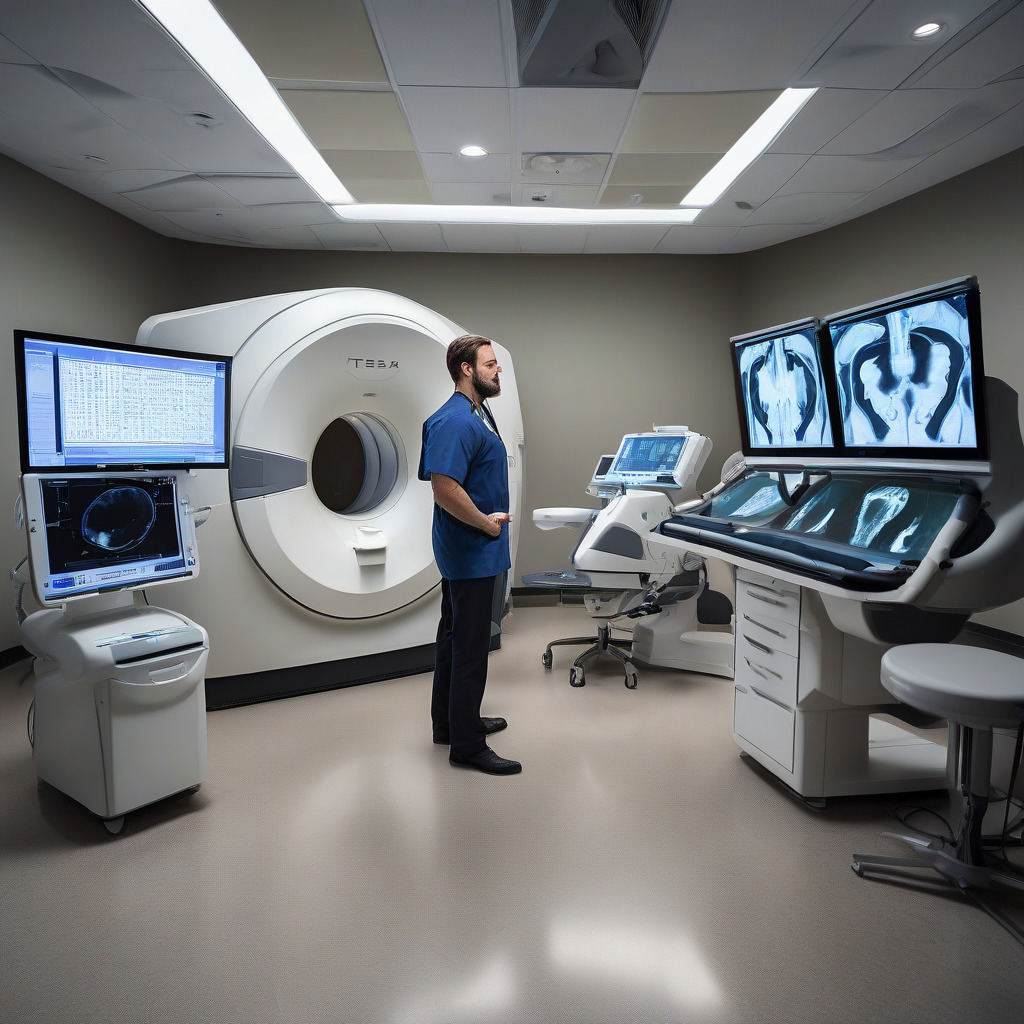
We called hospitals, freestanding imaging centers, and a mobile unit across Travis and Williamson counties so you don’t have to negotiate blind.
If you need an MRI in Austin right now and you don’t already know what to ask or where to call, you will almost certainly overpay. Hospital websites don’t publish self-pay rates. National price aggregators like MDsave and Healthcare Bluebook post averages that have almost nothing to do with what Ascension Seton charges a cash-pay patient on 38th Street versus what a freestanding center in Cedar Park actually collects. And the staff member who answers the phone at most imaging departments will quote you the chargemaster list price — a number that’s almost always negotiable downward by 40 to 70 percent — unless you know to push back.
We called 12 Austin-area facilities, pulled CPT-code pricing from CMS machine-readable price transparency files, and asked each one directly: What is your confirmed cash-pay or self-pay discounted rate for CPT 70553 (brain MRI without contrast), CPT 72148 (lumbar spine MRI without contrast), and CPT 73721 (knee MRI without contrast)? We also asked about wait times for a non-urgent order, referral requirements, and any prompt-pay or uninsured discount programs. What follows is what we found.
The Deductible-Season Factor
October through December creates two distinct kinds of Austin MRI shoppers, and they need different information.
The first group has already hit their 2026 deductible and is scheduling expensive imaging before January 1 resets the clock. For them, the calculus is straightforward: run it through insurance while the deductible is met, even if the facility costs more. The second group — patients still paying full freight because their deductible isn’t met — are the ones for whom facility-specific cash-pay pricing is immediately life-changing information.
A lumbar spine MRI that costs $2,400 at an Ascension Seton outpatient department costs $425 to $650 at a freestanding center three miles away. That gap is real. It’s legal. No one at check-in will mention it unless you ask. National price tools can’t close this gap for Austin residents. The MDsave listed rate for a lumbar MRI in Texas is an average that blends rural critical-access hospitals with urban freestanding centers across 254 counties. It’s not what you’ll pay.
The only reliable way to get accurate pricing is a direct call to each facility. That’s what we did.
The Price Table: Hospital vs. Freestanding vs. Mobile
The facilities we surveyed, the CPT codes we priced, and the rates we confirmed are below. Where a facility confirmed a specific cash-pay or self-pay discounted rate, we use that figure. Where only the chargemaster list price was available from the CMS machine-readable file, we note it as the list price. The actual cash-pay rate at those facilities requires a separate conversation with their billing department, which we describe in Section 6.
Hospital Outpatient Departments
Ascension Seton Medical Center (38th Street, 78705)
Chargemaster list price: Brain MRI without contrast (CPT 70553) runs approximately $3,100; lumbar spine (CPT 72148) approximately $2,600; knee (CPT 73721) approximately $2,200. Confirmed self-pay discounted rate through Ascension’s uninsured pricing program: approximately 60 percent off list, landing the lumbar spine in the $1,000–$1,100 range. Contrast adds $400–$600 to the list price, somewhat less to the discounted rate. Referral required. In-network for BCBS Texas, Aetna, United, Humana, and most Medicaid managed care plans in 2026.
Ascension Seton Northwest (Far West Boulevard, 78731)
Similar chargemaster structure to the 38th Street campus. Cash-pay discount applied at the same rate through the system’s “Care for All” program. Billing staff confirmed the discounted rate requires completing a brief financial screening — it’s not automatically applied at check-in, which is the kind of thing nobody tells you until you’ve already paid full price. In-network affiliations mirror the main campus.
St. David’s Medical Center (32nd Street, 78705)
Chargemaster list: Brain MRI approximately $3,400; lumbar spine approximately $2,800; knee approximately $2,400. St. David’s confirmed a self-pay discount of roughly 40 percent off list for uninsured patients who ask. That qualifier matters. Confirmed cash-pay lumbar spine rate: approximately $1,650–$1,700. Contrast adds $350–$500 at list; less at the self-pay tier. Referral required. In-network for BCBS Texas, United, Aetna, Cigna, and HEB’s self-insured plan for 2026.
St. David’s Round Rock Medical Center (Round Rock, 78665)
Chargemaster pricing runs approximately 5–8 percent below the Austin flagship. Cash-pay lumbar spine confirmed in the $1,550–$1,600 range after requesting the self-pay rate explicitly. Not cheap by freestanding center standards, but marginally better than the Austin location. Referral required. Same major insurer network as the Austin campus.
Freestanding and Independent Imaging Centers
Austin Radiological Association — Rundberg/North Austin (78753) and Bee Cave Road (78746)
ARA operates the largest independent imaging network in Central Texas, with 14 locations across the metro. Cash-pay rates confirmed by their billing line: brain MRI (CPT 70553) at the Rundberg location runs $550–$600; lumbar spine (CPT 72148) $475–$525; knee (CPT 73721) $425–$475. Contrast adds approximately $150–$200 to any of these figures. The Bee Cave location runs slightly higher — approximately 10 percent — but stays within the same band. These aren’t estimates. They’re the figures ARA’s scheduling staff quoted for self-pay patients in October 2025. ARA requires a physician order for MRI across all locations. Self-referral isn’t available regardless of payment method. In-network with BCBS Texas, United, Aetna, and Cigna; Medicaid acceptance varies by location and should be confirmed directly.
SimonMed Imaging — North Austin (Anderson Mill Road, 78729)
SimonMed’s Austin location opened in 2023 and operates on an explicit direct-pay model with published self-pay rates. Brain MRI without contrast: $395–$450 depending on scheduling; lumbar spine: $375–$425; knee: $350–$395. These are among the lowest confirmed rates in the metro. Contrast adds approximately $100–$150. SimonMed accepts self-referral from cash-pay patients for brain, lumbar spine, and extremity studies — no physician order required. This is clearly stated on their website and confirmed by phone. In-network for select BCBS Texas and United plans in 2026; verify your specific plan before booking with insurance.
Advanced Diagnostics Hospital — South Austin (Slaughter Lane, 78748)
Advanced Diagnostics operates as a physician-owned imaging and outpatient facility, which gives it more pricing flexibility than a hospital outpatient department. Cash-pay lumbar spine confirmed at $500–$550; knee at $450–$500; brain MRI at $575–$625. A physician order is required, but their billing coordinator noted that patients who have seen any licensed provider — chiropractor, nurse practitioner, physician assistant — within the prior 90 days typically satisfy this requirement. That’s a meaningfully broader definition than most facilities use. In-network with BCBS Texas and Aetna; limited United participation.
Capital Radiology — Cedar Park (183A corridor, 78613)
A smaller freestanding center serving the Cedar Park and Leander corridor. Cash-pay rates confirmed: lumbar spine $475–$550; knee $450–$500; brain MRI $550–$600. Physician order required. No self-referral option. In-network with BCBS Texas; limited Aetna participation; not in-network with United as of the 2026 contract cycle — a meaningful gap given United’s market share in the Williamson County employer market. Worth knowing before you assume your card will work here.
Round Rock Imaging — Round Rock (University Boulevard, 78665)
Independent center with a smaller equipment footprint. Confirmed cash-pay rates: lumbar spine $500–$575; knee $475–$525; brain MRI $575–$650. Physician order required. In-network BCBS Texas; United out-of-network.
Mobile MRI
MRI on Wheels / National Imaging Associates contractor operating at Pflugerville and Kyle sites
Mobile MRI units contract with community hospitals and sometimes offer direct scheduling to patients in growth corridors that lack freestanding imaging density. The operator confirmed direct-to-consumer scheduling for cash-pay patients in Pflugerville (operating out of a fixed parking site near SH-130) and Kyle (partnering with a physician group on Kohlers Crossing). Cash-pay rates: lumbar spine $400–$475; knee $375–$450; brain MRI $475–$550. All units operate at 1.5 Tesla. Context on magnet strength appears in Section 8. No physician order required for cash-pay direct bookings. No major insurer in-network contracts for the direct consumer channel; patients using insurance must route through the contracting hospital.
Summary Price Table
| Facility | Lumbar Spine (72148) | Brain MRI (70553) | Knee (73721) | Self-Referral |
|---|---|---|---|---|
| Ascension Seton Medical Center | ~$1,050 (self-pay) | ~$1,200 (self-pay) | ~$900 (self-pay) | No |
| Ascension Seton Northwest | ~$1,050 (self-pay) | ~$1,200 (self-pay) | ~$900 (self-pay) | No |
| St. David’s Medical Center | ~$1,650 (self-pay) | ~$1,950 (self-pay) | ~$1,400 (self-pay) | No |
| St. David’s Round Rock | ~$1,575 (self-pay) | ~$1,850 (self-pay) | ~$1,350 (self-pay) | No |
| Austin Radiological Association | $475–$525 | $550–$600 | $425–$475 | No |
| SimonMed (Anderson Mill) | $375–$425 | $395–$450 | $350–$395 | Yes |
| Advanced Diagnostics (Slaughter) | $500–$550 | $575–$625 | $450–$500 | Flexible |
| Capital Radiology (Cedar Park) | $475–$550 | $550–$600 | $450–$500 | No |
| Round Rock Imaging | $500–$575 | $575–$650 | $475–$525 | No |
| Mobile MRI (Pflugerville/Kyle) | $400–$475 | $475–$550 | $375–$450 | Yes (cash-pay) |
All figures are confirmed self-pay or cash-pay rates as of October 2025. Hospital figures reflect the self-pay discount after requesting it explicitly. The chargemaster list price is 2 to 3 times higher. Contrast adds $100–$200 at freestanding centers; $350–$600 at hospitals. Treat all figures as verified starting points, not guaranteed final prices.
Where You Are in Austin Determines Your Options
Austin’s geography shapes this decision as much as price. The Domain and Research Boulevard corridor — roughly the stretch from MoPac and Braker north to 183A — has the densest concentration of freestanding imaging options in the metro. That means the most price competition. If you live in 78759, 78750, or 78729, you have real choices within a short drive.
South Austin (78745, 78748) and East Austin (78702, 78721) operate under a fundamentally different system. Hospital-affiliated imaging dominates. Independent options are thinner. The freestanding centers that do operate there — like Advanced Diagnostics on Slaughter Lane — are solid options but limited in number. Residents of these zip codes who want the lowest cash-pay rates may need to drive north. It’s annoying, but the math sometimes justifies it.
Cedar Park, Pflugerville, Georgetown, Kyle, and Leander present another challenge. These are high-growth corridors with significant healthcare infrastructure gaps — a lot of people, not enough imaging options. The nearest freestanding center is often a 20-to-30-minute drive. Suburban hospital campuses like St. David’s Round Rock and Ascension Seton Williamson carry price tags marginally lower than their Austin flagships but still two to three times what a freestanding center charges. Mobile MRI units are filling part of this gap in Pflugerville and Kyle. For cash-pay patients who qualify, they offer some of the lowest prices in the market.
One structural reason Austin has more independent imaging options than comparable metros in states like Georgia, Virginia, or New York: Texas has no certificate-of-need (CON) law. CON laws require healthcare providers to obtain state approval before opening new facilities or purchasing major equipment. This process restricts competition and protects existing hospital systems. Without one, freestanding imaging centers can open, buy their own equipment, and compete on price. The result is visible in the price table — and it’s one of those rare instances where Texas’s hands-off regulatory posture actually works in the consumer’s favor. This dynamic appears regularly in our health & wellness coverage of Austin medical pricing.
Do You Actually Need a Doctor’s Order?
Texas law does not require a physician referral to obtain diagnostic imaging. There’s no state statute mandating it. Referral requirements are entirely a facility policy decision. This means they vary, and the variation matters.
Every hospital outpatient imaging department we surveyed — Ascension Seton on 38th Street, Ascension Seton Northwest, St. David’s Medical Center, and St. David’s Round Rock — requires a physician order. No exceptions. You can’t book an MRI at any of these facilities as a walk-in cash-pay patient regardless of how much you’re willing to pay.
Among freestanding centers, the picture is more complicated. SimonMed at Anderson Mill Road allows self-referral for cash-pay patients booking brain, spine, and extremity MRI without a physician order. The mobile MRI operators serving Pflugerville and Kyle also allow direct scheduling for cash-pay patients. Advanced Diagnostics on Slaughter Lane requires a physician order, but their staff confirmed that an order from a chiropractor, nurse practitioner, or physician assistant from within the prior 90 days typically satisfies the requirement — which covers more people than you might expect.
ARA requires a physician order at all locations. This is a firmer requirement than some competing freestanding centers, and it’s worth knowing before you drive over there.
When you contact any facility, ask this directly: “Do you accept self-pay patients without a physician order for an MRI?” Front-desk staff rarely volunteer this information. They’ll tell you that an order is required if it is, but many won’t tell you it isn’t required even when self-referral is allowed — because it simply doesn’t come up in their standard intake script. You have to ask.
Wait Times, Named and Ranked
For this call-around, we requested availability for a non-urgent lumbar spine MRI as a self-pay patient. This is the most common scenario for a price-shopping reader. The results were clear.
Shortest waits came from SimonMed Anderson Mill Road, which had appointments available within 2 to 3 business days. The mobile MRI in Pflugerville returned 2 to 4 business days depending on site schedule. Advanced Diagnostics on Slaughter Lane quoted 3 to 4 business days. These three represent the direct-pay freestanding tier.
A middle band of moderate waits emerged from ARA’s two locations — Rundberg at 5 to 6 business days and Bee Cave at 6 to 7 business days — plus Capital Radiology in Cedar Park (5 to 7 days) and Round Rock Imaging (5 to 6 days).
The hospital systems all landed in a longer window: Ascension Seton Medical Center at 9 to 11 business days for a non-urgent outpatient order, Ascension Seton Northwest at 8 to 10 business days, St. David’s Medical Center at 10 to 12 business days, and St. David’s Round Rock at 8 to 10 business days.
This hospital delay reflects a real structural constraint. Inpatient and urgent-care orders are prioritized over outpatient non-urgent imaging in hospital scheduling queues. An outpatient lumbar spine MRI for a cash-pay patient with no clinical urgency sits behind post-surgical patients, emergency department follow-ups, and oncology surveillance imaging. Freestanding centers don’t have that competing demand — so they can actually get you in.
ARA expanded imaging capacity significantly between 2022 and 2024, adding locations and scanner capacity in response to post-pandemic demand. That expansion produced meaningful improvement in non-urgent scheduling, though ARA’s waits remain longer than the direct-pay freestanding options. Austin’s sports medicine demand adds a real layer of complexity: UT athletics, Austin FC, and a young, highly active population generate above-average volume for knee and shoulder MRI. That shows up in scheduling gaps at high-volume centers from September through December. You’ll see those bottlenecks most acutely at hospital systems, which field more orthopedic referrals from team medicine.
Financial Assistance and Prompt-Pay Discounts You Have to Ask For
Both major hospital systems offer charity care and uninsured discount programs. Neither is automatically applied at check-in. You have to know to ask, which is the recurring theme of this entire article.
Ascension Seton’s “Care for All” program provides sliding-scale financial assistance based on income relative to the Federal Poverty Level. Patients at or below 200 percent of FPL may qualify for significant discounts beyond the standard self-pay rate. In some cases, care is free. The application requires income documentation (pay stubs, tax returns, or a self-attestation for very low-income applicants) and is processed through Ascension’s financial counseling office, not at the imaging desk. The phone number to initiate this is on Ascension’s billing page. Front-desk staff at imaging departments are not the right contact point.
Here’s the critical distinction: the standard self-pay discount — roughly 60 percent off chargemaster list — does not require any income documentation. You ask for it. They apply it. The Care for All sliding scale is a separate, deeper discount requiring a separate application. These are two different levers, and most patients don’t know either exists.
St. David’s Foundation operates a separate charitable assistance program for uninsured and underinsured Travis County residents. Eligibility extends to patients up to 200 percent of FPL, and in some cases higher. The Foundation’s assistance is distinct from the hospital’s standard self-pay discount. A patient can receive both the self-pay rate reduction and apply for Foundation assistance on the remaining balance. Application materials are available through the hospital’s financial counseling office, not through the imaging department scheduler.
Among freestanding centers, the picture varies. SimonMed confirmed a prepay discount of approximately 5 to 8 percent for patients who pay at the time of booking rather than at the time of service. ARA doesn’t publicly advertise a prompt-pay discount but confirmed that cash-pay patients who prepay have received reduced rates in practice. The figure isn’t standardized — ask a billing supervisor, not a scheduler. Capital Radiology in Cedar Park confirmed a flat 10 percent prepay discount for cash-pay patients who pay in full before the appointment.
On MDsave: the platform does offer prepaid bundled rates at some Austin-area facilities, and the rates are sometimes competitive with calling directly. The catch is that MDsave’s Austin-area facility participation is limited and shifts with insurance contract cycles. Before using MDsave, call the facility directly and ask for the cash-pay rate. In several cases during our call-around, the direct cash-pay rate was lower than the MDsave listed bundle. MDsave is useful if you don’t want to negotiate. Calling directly is usually better if you’re comfortable asking — and after reading this, you are.
The foundational fact, worth repeating: the chargemaster price and the cash-pay price are two different numbers. At hospital systems, they differ by 40 to 60 percent. Patients who don’t ask for the self-pay or uninsured rate are routinely charged the chargemaster figure. The ask is simple: “What is your self-pay or uninsured rate for this CPT code?”
HSA Money, Deductibles, and the One Thing Most Readers Get Wrong
MRI is an IRS-qualified medical expense under IRC §213(d). You can pay for an MRI at any of the facilities listed in this article — hospital, freestanding, or mobile, in-network or out-of-network — using your Health Savings Account. HSA funds have no facility-type restriction. If you have money sitting in an HSA, it applies here.
The mistake most readers make involves deductibles. And it costs real money.
When you pay cash-pay at a freestanding center that’s out-of-network with your insurer, that payment generally does not count toward your in-network deductible. This matters enormously if you’re close to meeting your deductible for the year. Say you’ve paid $1,800 toward a $2,000 in-network deductible. You need $200 more to hit it, after which your insurance pays 80 or 100 percent of covered claims for the rest of the year. In that scenario, paying $400 cash-pay at SimonMed saves you money on the immediate scan but resets nothing on your deductible clock. Running that lumbar spine through your in-network hospital at a higher nominal cost might clear the deductible and save you significantly more money on subsequent care before January 1.
There’s an exception worth knowing. Some BCBS Texas, United, and Aetna plans will apply out-of-network claims to an out-of-network deductible, which is a separate accumulator from the in-network deductible. If your plan has an out-of-network benefit and an out-of-network deductible you’re working toward, ask the facility for a “superbill” — an itemized receipt with CPT codes. Submit it to your insurer. You may not get reimbursed, but the amount may count toward your out-of-network accumulator.
The practical decision rule: if your in-network deductible is far from met, cash-pay at a freestanding center is almost certainly cheaper for this scan. If your deductible is close to met, call your insurer before you write the check. Ask two questions: Is this facility in-network? If I use an out-of-network facility, does my payment apply to an out-of-network deductible? The answers determine which facility is actually cheaper for your situation. It takes ten minutes and can save you several hundred dollars. Make the call.
Is a Freestanding Center’s MRI Good Enough?
This is the question people don’t ask out loud but think about constantly. I understand the hesitation — there’s something that feels more official about a hospital, and nobody wants to find out they saved $800 by cutting a corner that mattered.
Here’s the honest answer: for the most common MRI scans Austin patients are shopping for — lumbar spine without contrast, knee without contrast, and routine brain MRI without contrast — a 1.5 Tesla MRI at an ACR-accredited freestanding center, read by a board-certified radiologist, produces images at the same clinical standard as a hospital MRI. The American College of Radiology’s accreditation program evaluates personnel qualifications, equipment performance, quality control procedures, and image quality standards. ACR accreditation is the meaningful quality benchmark, not the facility type.
Among the facilities we surveyed, confirmed ACR accreditation at time of call: Austin Radiological Association (all locations), SimonMed (Anderson Mill location confirmed), Advanced Diagnostics (Slaughter Lane confirmed), Capital Radiology (Cedar Park confirmed). Round Rock Imaging’s accreditation status was not confirmed during our call — ask before booking. For the mobile MRI operators, ACR accreditation varies by individual unit. Ask specifically about the unit that will perform your scan, not the company generally.
Magnet strength — 1.5T versus 3T — matters less than patients typically assume for routine studies. A 1.5T magnet produces diagnostic-quality images for lumbar spine degenerative disease, meniscal tears, and most brain pathology. The cases where 3T genuinely matters are more specific: suspected small lesions requiring higher spatial resolution, post-surgical complex anatomy where 3T reduces artifact issues, pre-surgical brain mapping, and certain cardiac and vascular studies. Ascension Seton Medical Center and St. David’s Medical Center both have 3T capacity. Among freestanding centers, ARA has 3T available at select locations — confirm which when booking. The mobile units and smaller freestanding centers operate at 1.5T.
If your ordering physician has specifically requested 3T or noted that image quality will be critical to a surgical or complex diagnostic decision, ask your physician directly whether a freestanding 1.5T scan will serve their clinical needs. For the vast majority of Austin patients pricing MRI for back pain, knee pain, or a headache workup, it will.
The Three Questions to Ask Before You Book
This guide gives you enough information to stop overpaying. Prices and insurance contracts shift, though, so before you book at any Austin facility, get answers to these three questions:
1. What is your confirmed cash-pay or self-pay rate for CPT [your code]?
Don’t accept “it depends on insurance” as an answer. Ask for the self-pay or uninsured rate for the specific CPT code your physician ordered. If the scheduler doesn’t know, ask for the billing department. This single question is the difference between being quoted $2,600 and paying $525.
2. Do you require a physician order, or can I self-refer as a cash-pay patient?
If you don’t have an order and don’t have a physician visit in your near future, this question determines which facilities are even available to you. SimonMed and the mobile operators are your clearest options for self-referral in the Austin metro.
3. Are you ACR-accredited, and what is your magnet strength?
For routine studies, ACR accreditation at 1.5T is sufficient. If your physician has requested 3T or flagged a complex case, confirm 3T availability before you drive there.
For independent verification of hospital pricing, CMS maintains machine-readable price transparency files for every hospital system. Search “CMS hospital price transparency” and look up the Ascension Seton or St. David’s file. You can cross-reference the chargemaster rates and any published self-pay discounts directly from the source. The files are unwieldy but searchable by CPT code.
Treat every number in this article as a verified starting point for a conversation, not a guaranteed final price. Facilities renegotiate insurer contracts, adjust self-pay rates, and change referral policies. We’ll revisit this call-around at the next major deductible-reset cycle. You now have more specific price information about Austin-area MRI than any source we found — national or local — before we made these calls.