What ACL Fest Food Vendors Actually Pay for a Booth and Whether the Math Works
The booth fees, permit requirements, staffing costs, and real margins behind ACL's food vendor rows — numbers no one has published until now.

The booth fees, permit requirements, staffing costs, and real margins behind ACL’s food vendor rows — numbers no one has published until now.
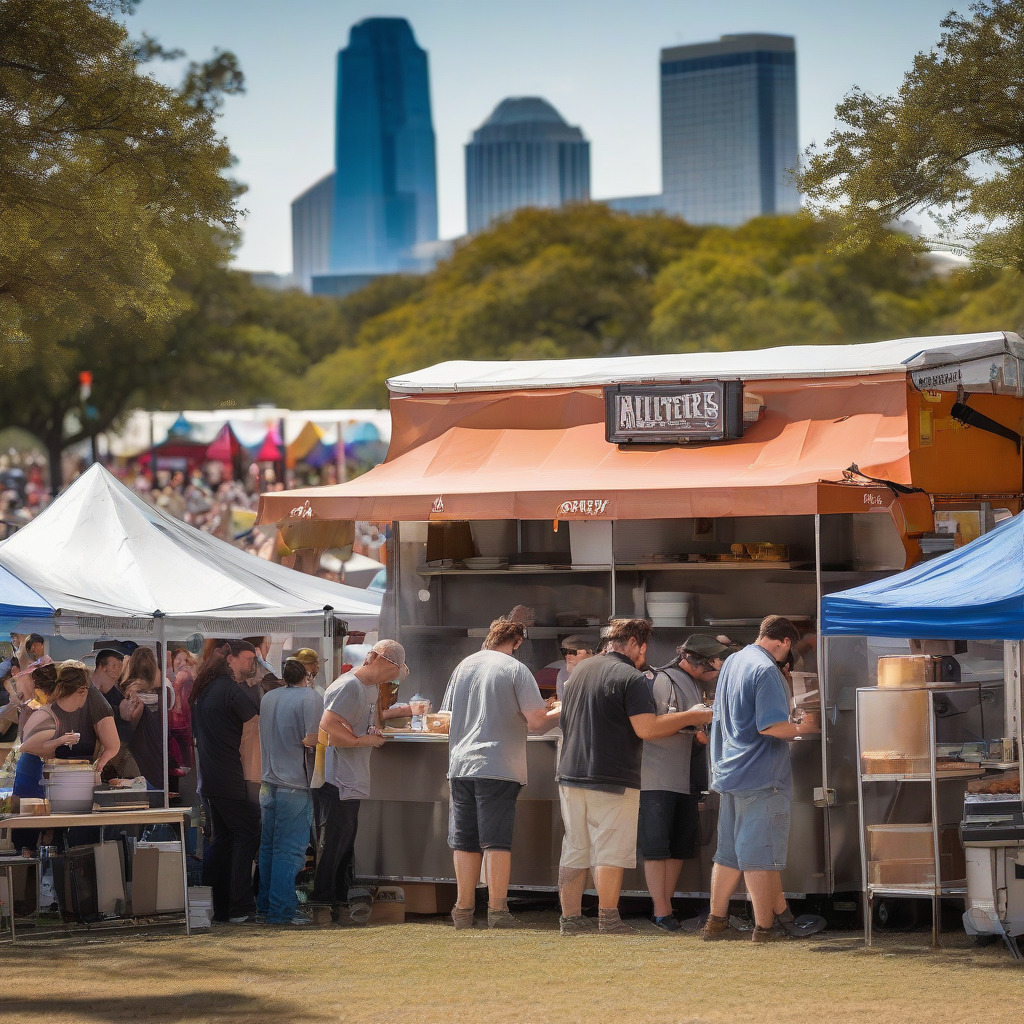
Every October, 75,000 people a day walk into Zilker Park and spend money on food. $12 breakfast tacos before noon. $16 brisket plates by 1 p.m. $14 popsicles in the afternoon heat. From the festivalgoer’s side, it looks like a food-truck festival that happens to have a concert attached. From the vendor’s side, it looks like a six-day pressure test against a cost stack that most operators don’t fully model before they sign.
CityDesk Austin spent the past several weeks talking to current and former ACL food vendors, Austin permitting officials, and commissary operators to reconstruct what the economics actually look like. Some figures came directly from vendor interviews; some are industry-comparable ranges where specific contract terms remain unconfirmed. We say so throughout. The one number nobody would confirm on record — whether C3 Presents takes a revenue percentage on top of the flat booth fee — we’re still chasing.
Who Controls the Vendor Program and How Selection Works
The ACL Fest food vendor program is run by C3 Presents, the Austin-founded concert promoter that Live Nation acquired. C3 handles vendor selection internally. There’s no open marketplace, no waitlist.
Applications open in January or February for the October festival, roughly eight to nine months out. Selection is curated, not first-come. C3 reviews concept, cuisine type, operational track record, and whether a vendor fills a gap in the food map rather than duplicating what’s already approved. In practice, that gives established operators with festival experience and clean health inspection histories a structural advantage over first-timers with great food but no documented volume capacity.
The roster mixes regional and national concession groups with Austin-based operators. Torchy’s Tacos has held recurring spots — a presence that reflects both genuine quality and the operational reliability a 75,000-person-a-day event demands. Several other Austin vendors cycle through based on concept fit and capacity. The consistent pattern is that C3 gravitates toward operators who’ve proven they can execute at scale without surprises.
Getting approved is step one. Understanding what you’ve agreed to is step two. Several vendors told us the financial surprises live in the gap between those two moments.
What C3 Charges for the Booth Itself
This is the number that doesn’t appear anywhere in public ACL coverage, and it’s the number this reporting took the longest to get even a partial handle on.
Based on interviews with vendors who participated within the past two years and reporting from comparable festivals, booth fees reflect placement zone and footprint. Similar-scale festivals charge flat fees in the $8,000 to $20,000-plus range per weekend for mid-size food operators, with premium placement higher. ACL’s figures, as vendors described them, sit within that band. Operators in the Culinary Experience zone near Barton Springs put their fees at the upper end or above it.
None of the vendors who spoke with CityDesk Austin would disclose their exact contracted fee on record, citing NDAs. One operator who ran a single-booth taco concept at ACL for two consecutive years before stepping back said: “The booth fee alone was enough that we knew we’d need to do serious volume just to be in the conversation on profit. It wasn’t a surprise exactly, but it focuses the mind.”
The piece of the contract vendors were most reluctant to discuss is whether C3 takes a revenue percentage on top of the flat fee. We couldn’t confirm it with actual contract language. The industry standard at major festivals is a flat fee plus a revenue-share clause — typically 20 to 30 percent of gross sales — that functions like a concession royalty. Several vendors strongly implied that a percentage clause exists in C3’s agreements. None would confirm the rate. One said only: “Read every line before you sign, especially the lines about what happens after the register closes.”
We’re continuing to pursue this. If you have direct experience with a C3 vendor contract, contact us.
The Austin Permit Stack
On top of whatever C3 charges, every vendor absorbs a separate layer of City of Austin compliance costs not included in the booth fee. This part isn’t complicated, but it’s easy to budget wrong.
Vendors at a multi-day Austin event must obtain a Temporary Food Establishment permit through Austin Public Health’s Environmental Health Services Division. The fee runs roughly $150 to $400 depending on risk category and event duration. Call Austin Environmental Health Services at 512-978-0300 to confirm the exact figure for ACL’s specific event structure before budgeting — don’t guess.
Here’s the detail that tripped up multiple operators: ACL runs as two separate three-day weekends with a week gap in between. Some vendors pulled a second permit for Weekend 2 when one permit covered both weekends. That one phone call would have saved them $150 to $400 for no reason.
Austin Public Health conducts a pre-event inspection before the festival opens and sends inspectors for unannounced mid-event walkthroughs. No separate fee for the initial visit, but violations requiring re-inspection can trigger additional charges. Vendors who hadn’t set up cold-holding systems correctly before the inspector arrived described scrambling during setup day — already chaotic without a compliance issue added to it.
Every food-handling employee must hold a valid Texas Food Handler card, obtained through a state-approved provider. Ten dollars per person for a two-hour online course. For a crew of eight, that’s $80 — negligible in isolation, but the cards must be in hand before anyone touches food, which becomes a credentialing headache when you’re hiring last-minute replacements between weekends.
Vendors not operating from a fully licensed mobile food unit must establish a commissary relationship with a licensed commercial kitchen for prep, storage, and cleaning. Many ACL operators run a tent-and-table setup because vehicle access at Zilker is restricted, which makes this a real cost. Austin commissaries serving event vendors include Moveable Feast and Austin Shared Kitchen, among others; contact each directly for current rates. Austin Public Health verifies commissary relationships during inspections. Enforcement was inconsistent by vendors’ accounts — one inspector asked for commissary documentation during an ACL mid-event walkthrough, another never did — but getting caught without documentation mid-festival is a permit-suspension risk. Don’t roll those dice.
Staffing the Booth Across Six Operating Days
A mid-size ACL food operation needs roughly six to ten workers per shift. Single booth, moderate menu complexity, line capacity of 30 to 50 covers per hour. ACL’s operating hours run approximately 11 a.m. to 10 p.m., with setup at least two hours before gates open and breakdown extending well after close. Booth staff are realistically working 10 to 12 hours a day.
Texas’s minimum wage is $7.25. Nobody’s working a 10-hour ACL shift for that. Vendors described the functional market rate for experienced festival food workers in Austin at $15 to $20 per hour, with lead workers or supervisors at $20 to $25. These are people who can handle volume, know food safety, and don’t disappear at hour eight. You pay for that.
For a crew of eight at a blended rate of $17 per hour across 10-hour days over six operating days, base labor runs approximately $8,160. That’s the floor, before overtime, tips where applicable, or transit costs.
Many vendors build in informal transit subsidies. Parking near Zilker during ACL is effectively impossible, and workers commuting from across Austin need either a ride budget or a shuttle arrangement. Several vendors mentioned covering Uber costs or running a crew van — the kind of non-line-item expense that doesn’t show up in the original pro forma and quietly eats several hundred dollars.
Then there’s the Week 1 to Week 2 turnover problem. Staff who worked Weekend 1 don’t always return. They found other work, burned out, or the one-week gap broke their availability. Vendors described needing to re-staff and re-brief for Weekend 2, eroding whatever efficiency the first week produced. Some operators have moved toward temporary staffing agencies for ACL — higher per-hour cost, but guaranteed bodies and less churn management. It’s not elegant. It’s what some of them are doing.
Food Cost, Generator Fuel, Ice, and October Heat
Festival food cost runs higher than restaurant food cost, structurally. You’re prepping for projected volume that may not materialize, and unsold prep goes in the trash. Industry benchmarks put festival food cost at 28 to 35 percent of gross revenue, compared to 25 to 30 percent at a well-run brick-and-mortar. Single-event prep with limited ability to carry product across the week gap pushes vendors toward the higher end.
Zilker doesn’t provide robust electrical hookup infrastructure across all vendor zones. Many operators run diesel generators for refrigeration and cooking equipment. A continuous-run generator over six operating days, including overnight refrigeration loads, costs roughly $500 to $1,500 in fuel depending on equipment draw. Vendors who accessed C3-provided electrical hookups in certain zones had a real cost advantage — one described saving easily $1,000 in fuel over the event. Not a trivial number when you’re watching every line.
Open-air refrigeration in October Austin heat is its own problem. Temperatures regularly hit 85 to 95°F during festival hours, and that requires more ice than operators new to outdoor events expect. Vendors sourced bagged ice from Restaurant Depot on Rundberg Lane or Cash & Carry on Ben White, running supply runs before each weekend. Total ice cost across six days ran $300 to $600 for operations using supplemental coolers alongside mechanical refrigeration.
Maintaining cold-holding below 41°F in a tent with ambient temps in the high 80s is harder than it sounds. One vendor running a chicken-based menu pulled product mid-service on Saturday of Weekend 1 because cold-holding temps crept up during a rush. Correct call — the only correct call. Also an expensive one: roughly $800 in wasted food cost plus lost revenue on uncompleted transactions. Nobody talks about that part.
What Vendors Actually Gross and What’s Left
Here’s the revenue model built from the ground up.
With 75,000 daily attendees, industry estimates suggest 15 to 25 percent make a purchase from any given vendor zone on a given day — not from one specific booth, but from the broader area. Average transaction at current Austin festival pricing runs $12 to $18.
A well-located booth in a high-traffic zone doing 300 to 600 transactions per day at a $15 average produces a gross revenue range of roughly $27,000 to $54,000 across both weekends. Top performers can reach $80,000 to $120,000. Struggling or fringe-located booths — particularly those on the southern perimeter — may gross $15,000 to $25,000.
One vendor who ran a booth in what they called a “middle-tier location” told us their two-weekend gross was approximately $47,000. They declined to specify net profit but said it was “enough to come back, not enough to feel comfortable.” That phrase has stayed with me.
Against that $47,000 gross, here’s what exits the till before profit:
The booth fee for both weekends sits somewhere between $16,000 and $40,000 depending on zone and negotiation. Austin’s TFE permit runs $150 to $400. Commissary costs vary by operator and duration. Labor for eight staff at ten hours per day across six days at $17 per hour averages roughly $8,160. Food cost at 30 percent of $47,000 runs $14,100. Generator fuel: $500 to $1,500. Ice: $300 to $600. Transport, certifications, and miscellaneous supplies: another $500 to $1,000.
Now add the clause nobody will confirm publicly. If a 25 percent revenue share applies to a $47,000 gross, that’s another $11,750 extracted before the vendor sees net. Multiple vendors strongly implied it does. That single clause converts a borderline positive into a certain loss.
For a top-performing booth grossing $100,000, the math improves — but even at that volume, a 25 percent revenue share shrinks gross available to cover costs to $75,000. Still potentially profitable for a well-run operation with controlled food cost. But a fundamentally different business than the headline gross suggested when you were filling out the application in February.
Weekend 1 vs. Weekend 2 and Why the Gap Matters
Vendors who’ve worked both weekends consistently describe Weekend 1 as the stronger performer, though the gap varies by year and lineup. The structural reason isn’t complicated: Weekend 1 draws more out-of-town attendees in full festival mode, spending freely, treating it as a destination trip. Weekend 2 draws more locals making a single-day decision, and some of the novelty has worn off for repeat visitors who already hit the food zone the prior weekend.
The practical implication: vendors who staff and prep both weekends symmetrically are probably overinvested in Weekend 2. Several described reducing prep quantities and cutting one staff position based on Weekend 1 performance data. The one-week gap isn’t really downtime — it’s a recalibration window. One vendor who treated Weekend 1 as a full-bore launch and then adjusted staffing and prep for Weekend 2 said the efficiency difference was meaningful. Most operators don’t build the tracking system to know what to adjust. Most don’t think to try.
Independent Food Trucks vs. Large Concession Groups
The cost structure of ACL favors scale. That’s the finding that should give independent Austin food truck operators the most pause, and it’s not obvious from the outside.
A multi-booth concession group operating three or four positions at ACL — and probably other C3 events nationally — amortizes costs a single-truck operator simply can’t match. Staff get shared across positions. Bulk ingredient purchasing unlocks pricing a single booth can’t reach. Equipment and setup labor spread across booths. An operator running C3 events year-round has pre-negotiated relationships and knows the contract cold. They’re not reading the revenue-share clause for the first time on signing day.
For an independent Austin truck, the economics get further complicated by Zilker’s vehicle access restrictions. A food truck can’t drive in and operate as it would at a street corner or trailer park. Many truck operators who’ve done ACL end up running a commissary-plus-tent setup, using the truck’s licensed kitchen for prep and a separate tent for service. That adds tent rental, equipment costs, and the operational overhead of splitting prep from service across locations — costs a food truck operation wasn’t built to carry.
Torchy’s has concession infrastructure well beyond what it needs for a single festival booth. A single independent truck with two employees and a devoted following but no festival operations history is a genuinely different situation. The numbers don’t automatically work against them — but they’re absorbing fixed costs that larger operators spread across multiple booths, and they’re signing the same contract. For a broader look at how Austin restaurants navigate pricing pressures and added fees, our food & hospitality coverage has ongoing reporting worth bookmarking.
What Vendors Wish They’d Known Before Signing
The surprises vendors described fell into a few categories. None are unforeseeable. Most are just things nobody told operators to ask about.
Multiple vendors described suspecting mid-event that their gross was subject to a percentage extraction they hadn’t fully modeled. One said: “You think about the booth fee. You don’t necessarily think about what comes out of every transaction on top of it.” Whether this is a universal clause or a negotiated term that varies by vendor, we couldn’t confirm. The uncertainty itself is the warning.
Setup and breakdown days carry real costs without generating any revenue. Vendors who hadn’t budgeted labor for those days found a gap in their cost model. One operator estimated setup and breakdown labor across both weekends at $1,200 to $1,800 — money that didn’t appear anywhere in the original pro forma.
The commissary requirement caught several operators off guard. Vendors who planned to operate from a tent assumed their licensed food truck satisfied the requirement without a formal commissary relationship. It doesn’t. Austin Public Health requires that relationship to be documented regardless of whether the truck is on-site. One operator established an emergency commissary agreement the week before the event, at a premium because of the short notice. Solvable — but only if you know about it before the week before.
The two-permit mistake was the most avoidable. Several vendors pulled a second TFE permit for Weekend 2 unnecessarily. One call to Austin Environmental Health Services at 512-978-0300 before submitting paperwork resolves the question. Most operators didn’t make that call.
Separately, vendors who employed staff and then shuttered their ACL operation at season’s end raised questions about final-pay obligations — a situation covered in detail for Austin workers when a closed restaurant doesn’t pay the final paycheck.
The Bottom Line on Whether the Booth Pencils Out
It pencils out under specific conditions: a well-placed booth in a high-traffic zone, a menu with strong per-item margin and fast execution, an experienced crew that doesn’t need to be rebuilt between weekends, enough operational scale to amortize fixed costs, and a contract that doesn’t include a punishing revenue share on top of a five-figure booth fee. When those conditions align, the event is worth doing.
When they don’t, the math turns fast. It doesn’t pencil out for a first-time vendor in a fringe location. It doesn’t pencil out for an independent food truck absorbing the cost of a commissary-plus-tent conversion while a national concession group in the next zone runs five booths off shared overhead. It doesn’t pencil out for any operator whose food cost runs above 35 percent because they prepped for volume that didn’t show up.
Model the pessimistic scenario first. Then the base case. Compare both against the booth fee before you decide anything.
Every prospective 2026 vendor should get answers to these questions before signing:
Is the booth fee a flat fee for both weekends, or is each weekend billed separately? Does the contract include a revenue-percentage clause, and if so, what rate and against what definition of gross? What is the specific placement zone, and what did comparable vendors gross from that zone in prior years? What is C3’s policy on setup and breakdown day access, and are those days compensated? Does the contract specify how the City of Austin TFE permit covers the two-weekend structure?
The one question this reporting couldn’t fully resolve is the revenue-percentage clause. C3 Presents didn’t respond to requests for comment. No vendor would disclose the rate on record. The clause’s existence is strongly implied by multiple interviews; its specific structure — and whether it’s universally applied or negotiated case by case — remains unconfirmed. That gap bothers me, and it should bother anyone thinking about signing.
If you’re a current or former ACL food vendor with direct knowledge of how the revenue-share clause works in C3’s agreements, CityDesk Austin wants to hear from you. Documents can be submitted confidentially through the contact on our site.
The food at ACL is genuinely good. Getting there is genuinely hard. Both things are true, and only one of them is visible from the crowd.