What Happens to Your Austin Restaurant Gift Card When the Restaurant Closes
Austin's independent restaurant sector is closing at an elevated rate in 2025. Texas law does not automatically protect the money on that card. Here's what your legal options actually are — and how…

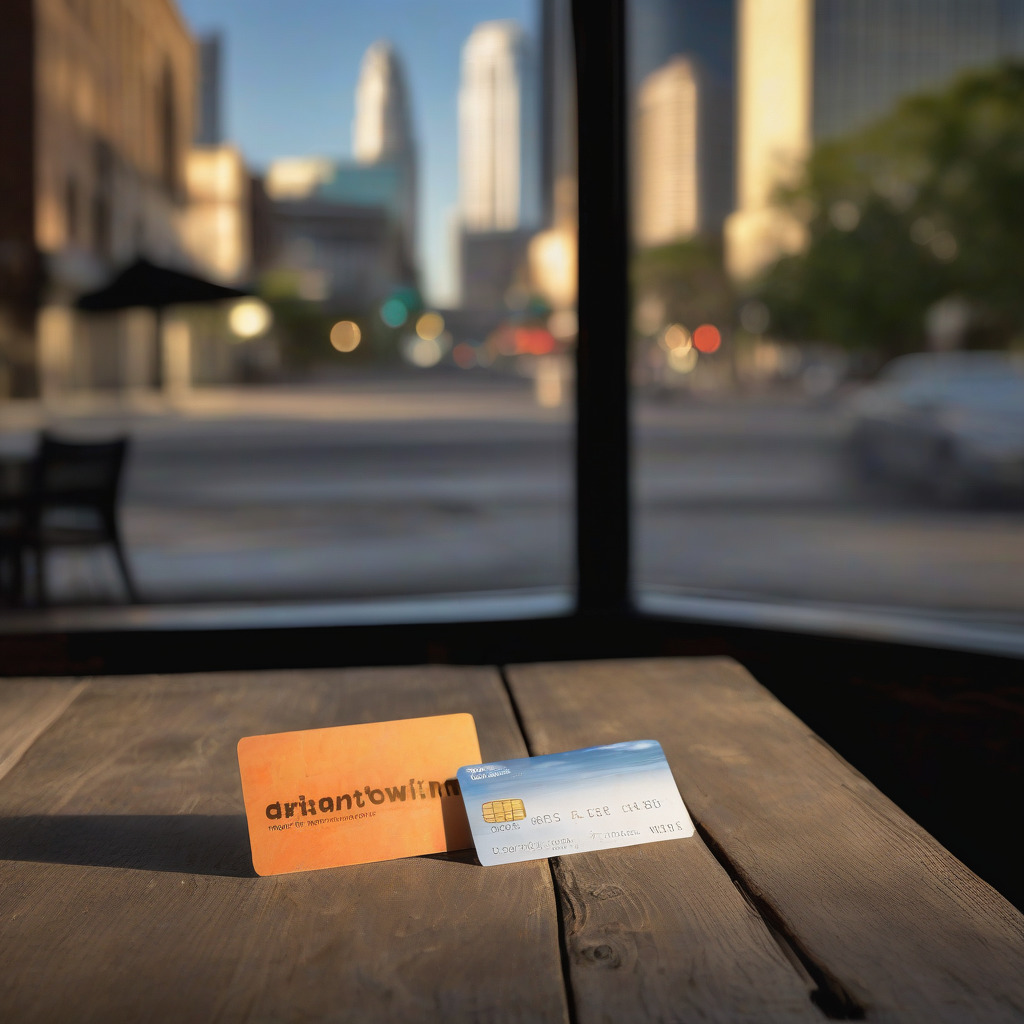
Austin’s independent restaurant sector is closing at an elevated rate in 2025. Texas law does not automatically protect the money on that card. Here’s what your legal options actually are — and how to buy smart before the holidays.
The gift card sat in a wallet for three weeks. Then the restaurant — a well-regarded East Austin spot that had been a neighborhood fixture for years — locked its doors on a Tuesday. The announcement came via Instagram post, nothing more. The card had $75 on it, purchased online through the restaurant’s own website a month earlier for a birthday gift. The phone number rang to voicemail. The website stopped loading. The money was gone.
That scenario isn’t hypothetical in Austin right now. Every time a customer buys a gift card to an independent restaurant, they’re taking on the risk that the business could close before the card gets used. Commercial lease costs are up. Post-pandemic debt loads are heavy. The dining market is cooling. Holiday gift card season opens around Thanksgiving, and the window between when you swipe your credit card and when a restaurant might disappear is sometimes measured in weeks.
The Closure Wave Is Not Abstract
Austin’s restaurant closure pace in 2024 and into 2025 has been relentless. Independent operators on high-rent corridors — Rainey Street, East Sixth, South Congress, South Lamar — are hitting the wall. Post-pandemic lease renewals are pricing them out of spaces they held when rents were lower and a Saturday night crowd was easier to count on.
The consumer side of those closures has gone largely unaddressed: the gift cards. Every restaurant that closes with unredeemed balances creates a class of creditors who typically don’t know they’re creditors until it’s too late.
The timing problem is seasonal and predictable. January is historically when restaurants that limped through the holiday rush finally announce closures. The slow post-holiday weeks make the numbers untenable. A gift card purchased as a Christmas gift on December 15 can be worthless by January 20. Austin has seen this pattern repeat. It will repeat again this year.
What Texas Law Actually Says, and Doesn’t
The statute governing gift cards in Texas is the Business & Commerce Code, Chapter 604A. It restricts when a business can impose expiration dates and inactivity fees — a gift card generally can’t expire in less than two years from issuance, and dormancy fee rules are constrained. If you buy a gift card to a going-concern restaurant and it tries to expire your balance after six months, Chapter 604A is your defense.
Here’s the thing, though: Chapter 604A does not create any refund obligation when the issuing business closes. The statute governs the relationship between a functioning business and its customers. It has nothing to say about what happens when the business stops functioning.
The federal Credit CARD Act of 2009 is sometimes cited in gift card discussions. It establishes a five-year minimum before an issuer can let a gift card expire — but that protection applies when the business is operating. It doesn’t follow you into a closure and doesn’t compel payment from a closed entity.
No Texas statute guarantees recovery of a gift card balance from a restaurant that has shut down. You may have options — several of them discussed below — but none of them is automatic, none of them is fast, and most won’t make you whole.
Your Recovery Options, Ranked Honestly
Credit card chargeback is your best shot. If you purchased the gift card with a credit card — not a debit card, not cash — and the purchase falls within your card issuer’s dispute window, a chargeback is your fastest and most reliable option. The theory is services not rendered: you paid for something you can’t use. Call your card issuer the day you learn of the closure. Screenshot the Instagram post. Save any email from the restaurant. Photograph the locked door if you drive by. Don’t wait to see if the restaurant might reopen. Time windows close faster than restaurants do.
Chapter 11 reorganization, while it’s active. If the restaurant files for Chapter 11 reorganization rather than simply going dark, there’s a structured process — and courts often push debtors to keep honoring gift cards to preserve the customer base. Call the restaurant directly and ask whether cards are still being accepted. Check PACER (pacer.uscourts.gov) to verify the filing type and status. This window closes when the Chapter 11 converts to Chapter 7, so move quickly.
Texas Attorney General complaint under the DTPA. The Texas Deceptive Trade Practices Act gives the AG’s Consumer Protection Division authority to investigate businesses that engage in false or deceptive conduct. The specific theory: if a restaurant sold gift cards while already knowing it was closing — collecting money with no intention of honoring those cards — that may violate the DTPA. File at texasattorneygeneral.gov/consumer-protection/file-complaint or call 800-621-0508. The office investigates patterns across multiple complaints, not individual disputes, and enforcement takes time. But if multiple consumers report the same business, that record can lead to civil penalties and, sometimes, restitution orders. File even if you think you’re the only person filing. You may not be.
ClaimItTexas.org. Texas requires businesses to turn over unclaimed property — including unredeemed gift card balances — to the state Comptroller after a dormancy period. Consumers can search and claim those funds at ClaimItTexas.org. Honest reality: independent restaurants rarely comply with this when they close. A properly wound-down legal entity should file unclaimed property reports with the Comptroller. When a small operator locks the doors and walks away, that paperwork usually doesn’t happen. Check the site anyway — it costs nothing — but don’t count on finding your $75 there.
Proof of claim in Chapter 7 bankruptcy. If the restaurant files Chapter 7 liquidation, gift card holders become unsecured creditors. You can file a proof of claim through PACER. Unsecured creditors sit behind secured lenders, the landlord, employees owed wages, and suppliers. In most restaurant Chapter 7 cases, the assets simply aren’t there to reach unsecured creditors. File the claim — it’s your only shot in this scenario — but expect little.
Small claims court against a dissolved entity. You can file in Travis County Justice of the Peace court without an attorney. The problem is collection. Even with a judgment, a closed restaurant with no assets gives you nothing to collect against. This option exists. It rarely produces money.
Why the Type of Closure Changes Everything
The type of closure is the single most important variable in determining what happens to your money. Three scenarios, radically different outcomes.
Chapter 11 reorganization is the consumer-friendliest scenario, which sounds counterintuitive because it’s still a bankruptcy. In Chapter 11, the business is attempting to restructure and keep operating. Your card may still work. The process is public and structured and gives you legal mechanisms to participate. This is the scenario where “my restaurant filed bankruptcy” actually produces the best consumer outcome — a strange sentence, but true.
Chapter 7 liquidation means the business has given up on reorganizing. A trustee liquidates assets and pays creditors in prescribed priority order. Gift card holders, as unsecured creditors, are near the bottom. Recovery is possible but rarely meaningful in restaurant cases, where kitchen equipment and lease rights often don’t cover what’s owed to secured creditors.
Sudden closure with no bankruptcy filing is the most common scenario for Austin’s independent operators. It is also the worst. No court, no trustee, no structured claims process, no legal mechanism forcing anyone to do anything. These are the closures announced on Instagram by someone who has already stopped reading messages. The owner may be personally liable in some circumstances — particularly if they operated as a sole proprietor rather than through an LLC — but chasing an individual owner in small claims court for a $50 gift card is a losing proposition in time and money.
To check whether an Austin restaurant has filed for bankruptcy, go to pacer.uscourts.gov, create a free account, and search the Western District of Texas court by business name.
The Risk Hierarchy for Austin Restaurant Gift Cards
Not all Austin gift cards carry the same risk. Knowing which category a restaurant falls into before you buy takes about five minutes and can save genuine grief.
Single-location independent restaurants carry the highest risk. When a standalone spot closes, the legal entity that issued your card is gone — no parent company, no sister location, no backstop. This includes many of Austin’s most beloved restaurants: the chef-driven spots on East Sixth, the neighborhood institutions on South Congress, the cocktail-bar-with-food concepts on Rainey. The food is often exceptional. The gift card risk is real. You can still buy — just buy a smaller denomination than you otherwise would, and hold onto your receipt and purchase confirmation.
Multi-concept local hospitality groups are better but not guaranteed. Austin has several well-established groups operating multiple concepts, including MML Hospitality and Emmer & Rye Hospitality Group. The critical variable is whether their gift cards are issued by the parent entity or by individual restaurant LLCs. A card issued by the parent, redeemable at any group restaurant, is substantially safer than a card issued specifically to one location. Before buying, call and ask directly: “Is this gift card redeemable at any of your group’s locations?” Get that in writing — an email confirmation or a screenshot of their terms. That documentation matters if you need to dispute the card later.
Corporate-backed and franchise operators carry the lowest closure risk in Austin’s market. If one location of a chain closes, the card stays valid at others. Torchy’s Tacos, which started in Austin and now operates as a multi-state chain, is an example of an operator where a gift card has corporate backing well beyond any single location. Chain gift cards aren’t zero-risk — corporate bankruptcies happen — but the specific lease-pressure-driven failure pattern hitting Austin’s independent operators isn’t the risk you’re taking here.
What’s Driving the Closures
Independent operators on Austin’s primary dining corridors — South Congress, East Sixth, the Domain, South Lamar — are facing lease renewals at prices that make their unit economics unworkable. A restaurant that signed five years ago at $5,000 per month may be looking at $8,000 to $10,000 at renewal, depending on the block. That math breaks against typical restaurant margins, which are already thin enough that most people outside the industry would find them alarming. There’s no subsidy, no relief program, no cavalry. Operators who can’t make it work lock the doors.
The seasonal timing matters for gift card buyers specifically. November and December are peak gift card purchase season. January is when restaurants that barely made it through the holiday rush announce that they’re done. The slow weeks hit and the numbers become impossible to ignore. Buy a card in mid-December, find a lock on the door in January. Austin will see that this year. It happens every year. It’s one pattern tracked in our food & hospitality coverage that recurs with enough regularity to be treated as a planning risk, not a surprise.
Before You Buy This Holiday Season
Five questions worth answering before you purchase:
Does the restaurant have more than one location, or is it part of a named hospitality group? Multi-location and group-backed cards are meaningfully safer. Check the group’s website to confirm it actually exists and lists multiple operating restaurants.
Does the gift card say explicitly that it’s redeemable at any location? If you can’t find that language, ask before you buy. “You can use it anywhere” from a server is not the same as a written policy. Get a screenshot of their terms or an email confirmation.
Has the restaurant been open fewer than two years? New restaurants close at higher rates. A concept that opened in 2023 on a high-rent corridor is a riskier gift card purchase than a place with a seven-year track record. Check their social media for an opening date.
Has the corridor seen neighboring closures recently? South Congress, East Sixth, Rainey Street, and South Lamar have all faced documented lease-pressure closures in 2024. It doesn’t predict your restaurant’s fate, but it’s a real marker of market stress in that area.
What denomination are you buying? This is the simplest risk-reduction available: if you love a single-location independent and want to support them, buy a $25 card instead of $100. You’re expressing the same thing. The person receiving it feels the same thing. The difference is what it costs you if the restaurant is gone by February.
How to File a Texas AG Complaint About an Unredeemed Gift Card
Where to file: texasattorneygeneral.gov/consumer-protection/file-complaint
Phone: 800-621-0508
What to have ready:
- Date and amount of your gift card purchase
- Proof of purchase — receipt, credit card statement, confirmation email, transaction screenshot
- Documentation of the closure — the Instagram post, a photo of the locked door, any email from the restaurant
- Records of any contact you attempted after the closure, and whatever response you got or didn’t get
- The card itself, or a screenshot of the card number and any balance confirmation
The legal theory, plainly: The DTPA prohibits businesses from engaging in false or deceptive conduct in consumer transactions. A restaurant that sold gift cards while already knowing it was closing — collecting money it had no plan to honor — is the conduct this statute covers. You don’t need to prove the owner’s intent to file. You report the facts. The AG’s office figures out what they add up to.
What to actually expect: The Consumer Protection Division investigates patterns across complaints, not individual disputes. One complaint about one restaurant is unlikely to produce a quick refund. Multiple complaints about the same business substantially increase the likelihood of an investigation that leads somewhere. File regardless. Your complaint contributes to a record that may already be building.
Workers left unpaid when an Austin restaurant closes face a parallel problem — the same sudden-shutdown pattern that strands gift card holders also leaves staff without final paychecks, and what Austin workers can do when a closed restaurant doesn’t pay the final paycheck follows a similar path through Texas law.
The AG complaint process is a law enforcement tool, not a reimbursement mechanism. It’s most useful when you have evidence suggesting the restaurant’s conduct was deceptive rather than simply the result of a business failing in ordinary ways. Both situations warrant filing. Just don’t expect a check in the mail next month.
If you’re holding an unredeemed gift card from a closed Austin restaurant and have tried to recover the balance — successfully or not — CityDesk Austin wants to hear from it. Reach out through the contact page.