What to Do When Your Austin Teenager Is Having a Mental Health Crisis
A step-by-step decision guide for Travis County parents — from the first phone call through inpatient care, who pays, and what to do when the system says no.

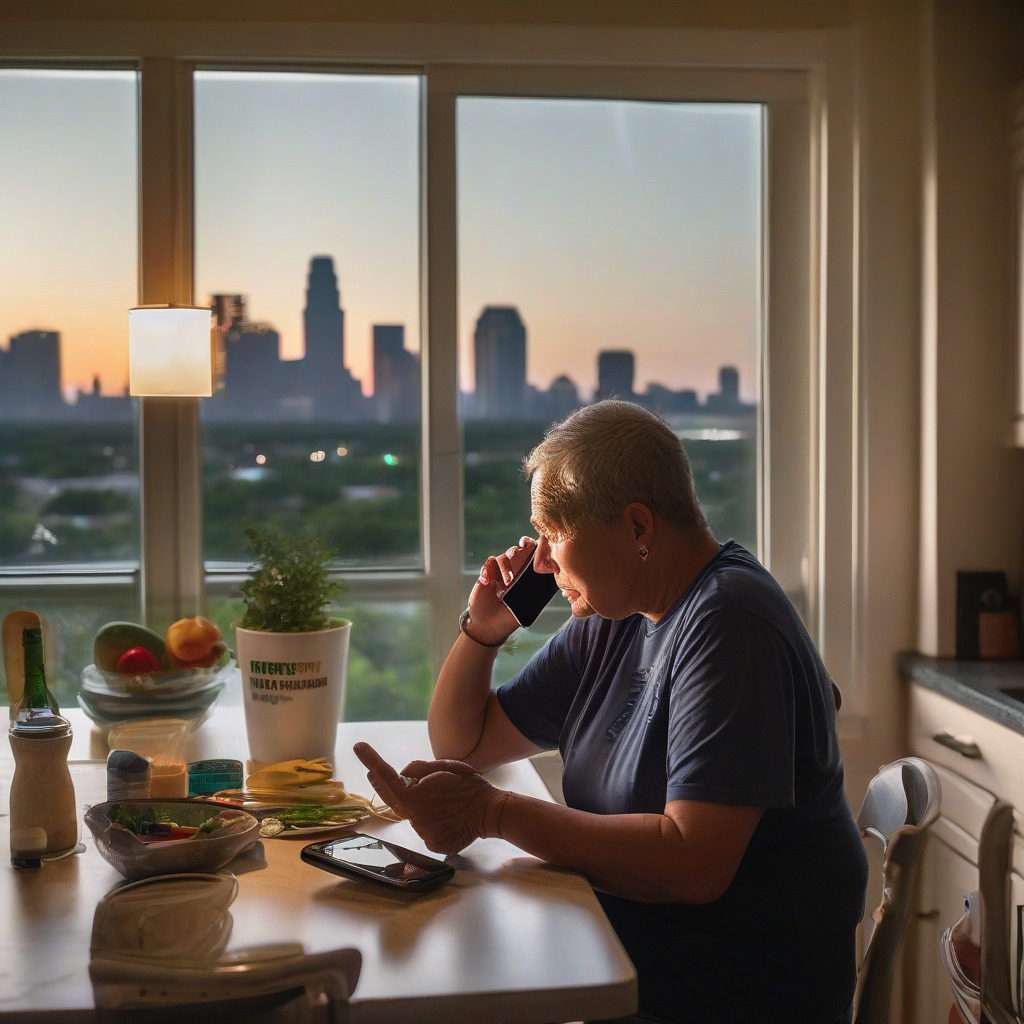
A step-by-step decision guide for Travis County parents — from the first phone call through inpatient care, who pays, and what to do when the system says no.
⚠️ REPORTER’S NOTE BEFORE PUBLICATION: Several facts in this article are marked ⚠️ VERIFY and must be confirmed by phone with the named facility or agency before this piece goes live. The CSU minor-admissions question and MCOT response times are load-bearing facts that affect family safety decisions. Do not publish this article with those items unconfirmed. Insurance and fee details require direct confirmation with admissions staff.
The Numbers You Need Right Now
Before anything else:
Integral Care 24/7 Crisis Line: 512-472-4357 National 988 Suicide & Crisis Lifeline: dial or text 988 Dell Children’s Medical Center ED: 1301 Barbara Jordan Blvd, Austin, TX 78723
If your teenager is threatening to harm themselves right now with a means in hand — a weapon, pills, anything — call 911 and tell the dispatcher you need a mental health co-responder. Then come back to this guide.
For every other situation, read the next section before you dial.
This guide is a sequential decision tool. Written for a parent at 11 p.m. who needs to make the right call in the next five minutes, not for a policy seminar. Read it in order. If you’re already past an earlier step — your teen has been evaluated, or you’re figuring out what happens after discharge — skip to the section that matches where you are.
Step One: 911 or 512-472-4357? How to Make the Right Call in the First Five Minutes
These two calls do not lead to the same place. The one you make first shapes everything that follows.
Call 911 if your teenager is threatening imminent self-harm and has a means in hand — a weapon, pills, a specific plan they’re acting on right now. Call 911 if they’ve already hurt themselves and need medical attention, if you believe someone else in the home is in danger, or if your teenager is unconscious.
When you call 911 in a mental health situation, say this explicitly: “This is a mental health crisis. My teenager is not being violent toward others. I’m requesting a mental health co-responder.” Austin Police Department has a co-responder program pairing trained officers with mental health clinicians. Asking by name doesn’t guarantee one will arrive — availability shifts by time of day and staffing — but it puts the dispatcher on notice. ⚠️ VERIFY: Confirm current status of APD’s co-responder program with APD public affairs and Austin City Council records, including whether the program has expanded beyond its original pilot.
Call Integral Care’s crisis line first — 512-472-4357 — if your teenager is in serious distress but not in immediate physical danger. Suicidal thoughts, refusing to speak, not leaving their room, but no weapon and no active plan. Call it if you’re unsure whether this requires emergency response or clinical assessment. Call it if your teenager will talk to someone but won’t go to an ER.
The Integral Care line connects you immediately to a licensed clinician — not a call center, not a triage script. That clinician can talk with you or directly with your teen, assess the situation over the phone, and dispatch the Mobile Crisis Outreach Team without police involvement if the situation warrants it. For a teenager already in crisis, who responds to those two options can look very different.
988 is the national crisis lifeline. ⚠️ VERIFY whether Travis County calls route to Integral Care before asserting this as confirmed fact. If confirmed, it functions the same way as the direct line. Use whichever you can reach faster.
When you call Integral Care, give your address immediately. Tell them your teenager’s age, what you’re observing — what they said, what they’ve done, whether there are means in the home, how long this has been building. The clinician will guide you from there. You don’t need answers ready. You need to describe what you’re seeing. That’s enough.
Step Two: What MCOT Actually Does When It Arrives, and How Long You’ll Wait
If the Integral Care clinician determines your situation warrants an in-person response, they’ll dispatch the Mobile Crisis Outreach Team.
MCOT sends two people: a licensed mental health clinician and a peer support specialist — someone with lived experience of mental health crisis or recovery. They don’t arrive with police unless the scene is determined to be unsafe. For a teenager who’s already in crisis, that matters.
On scene, the clinician conducts a structured risk assessment. They ask your teenager directly about suicidal ideation, plan, means, and intent. They’ll talk with you separately. The peer support specialist may sit with your teenager during that time, or engage them directly, depending on what’s happening.
What the team can offer at the end of a visit: a written safety plan that your teenager and family help build — specific names, specific steps, not a generic form. Voluntary transport to Integral Care’s Crisis Stabilization Unit for up to 23 hours of observation. Connections to outpatient follow-up. What they cannot do: involuntarily commit your teenager, physically restrain anyone, or provide medical treatment. If your teenager needs medical care — an overdose, a wound, a medication emergency — MCOT will call 911.
On response times: ⚠️ VERIFY current MCOT response time targets and real-world averages with Integral Care communications staff before publication. Integral Care has historically cited targets around 30–45 minutes for non-life-threatening situations in urban Travis County, with longer waits documented in eastern Travis County and unincorporated areas near Pflugerville and Manor. Overnight calls may run longer depending on team availability. If Integral Care can provide average response times by zip code or time of day, that data is exactly what families in outer-ring communities need — get it and publish it. ⚠️ VERIFY also whether there is an adolescent-specific MCOT protocol or whether the same team responds regardless of age. If there’s no adolescent-specific training, say so plainly.
Step Three: Stabilization vs. Inpatient — What the Options Actually Are in Austin
The Crisis Stabilization Unit lasts up to 23 hours. It’s not a formal admission. It’s designed for observation, stabilization, and safety planning — not multi-day treatment. The 23-hour limit sits just below the threshold that triggers a formal inpatient admission and its associated insurance machinery, which is either a useful structural design or a telling commentary on how mental health care gets financed in this country, depending on how charitable you’re feeling.
Integral Care operates a CSU at 1165 Airport Blvd, Austin. ⚠️ VERIFY AND PROMINENTLY REPORT: Call Integral Care’s CSU directly to confirm whether they accept patients under 18. This is one of the most critical facts in this guide. If the CSU doesn’t accept minors, Travis County has no crisis stabilization option specifically for adolescents outside of a hospital emergency department. That’s a service gap that belongs in the lead, not buried.
Inpatient psychiatric hospitalization is something different entirely. Multi-day, formal admission. It’s appropriate when a teenager can’t be safely managed at home or in a less intensive setting, requires medication evaluation or adjustment under medical supervision, or hasn’t stabilized after a CSU stay or ED visit.
Three Austin facilities accept adolescent inpatient psychiatric admissions. ⚠️ VERIFY all age ranges, admission pathways, and current bed availability policies with each facility before publication:
Dell Children’s Medical Center (1301 Barbara Jordan Blvd) is the largest pediatric hospital in Central Texas and the most common inpatient destination for minors in acute psychiatric crisis. Patients come through the emergency department. ⚠️ VERIFY current adolescent psych bed count and typical ED-to-admission timeline. Dell Children’s accepts Medicaid STAR and CHIP, major commercial plans, and operates an Ascension charity care program for qualifying uninsured and underinsured families. If you have no idea where to go, Dell Children’s ED is the most reliable starting point in Travis County.
Shoal Creek Hospital (3501 Mills Ave) is a freestanding psychiatric facility that accepts adolescents. There’s no general medical ER — patients typically transfer from Dell Children’s or another ED after medical clearance. ⚠️ VERIFY: Current age range for the adolescent unit, whether walk-in assessment is available or all admissions require a referral, and which Medicaid managed care organizations are currently in-network given recent ownership and contract changes.
Austin Lakes Hospital (1025 E. 32nd St) is another freestanding psychiatric facility. ⚠️ VERIFY adolescent unit age range, admission pathway, and current insurance contracts with admissions staff.
Psychiatric beds for adolescents in Austin are genuinely scarce — not abstractly, but in a way families hit directly. When no local beds are available, hospital social workers look regionally, sometimes an hour or two out. You’re allowed to ask how far away the placement options are before agreeing. You’re allowed to ask whether a local bed is expected to open within 24 to 48 hours. If your teenager is stable enough to wait for a closer placement, you can say so. If they’re not stable, placement distance is secondary to immediate safety. You already know which situation you’re in.
If you’re in an ED and being told no beds are available, ask by name to speak with the hospital social worker assigned to your teenager. They have access to regional bed availability information you don’t, and navigating the placement process is part of their job.
Step Four: The Insurance and Cost Question
Mental health billing is confusing by design, and the stakes in a crisis are too high for vague reassurance.
Dell Children’s Medical Center accepts Medicaid STAR and CHIP, major commercial plans, and TRICARE. The Ascension charity care program provides financial assistance on a sliding scale based on household income. Ask for a financial counselor when you arrive. ⚠️ VERIFY current charity care eligibility thresholds with Dell Children’s financial services before publication.
Shoal Creek Hospital and Austin Lakes Hospital: ⚠️ VERIFY accepted payers, current Medicaid managed care contracts, and self-pay policies with each facility’s admissions staff before publication. Do not publish insurance information for these facilities without direct confirmation.
Integral Care’s Crisis Stabilization Unit operates on a sliding-fee scale as Travis County’s statutorily designated mental health authority. They’re required to serve residents regardless of ability to pay. ⚠️ VERIFY current fee schedule and income documentation requirements with Integral Care admissions.
For commercial insurance, inpatient psychiatric admissions almost always require prior authorization. In a genuine emergency, the facility initiates this — not the family. The hospital’s utilization review team contacts your insurer. You shouldn’t be expected to manage this at 2 a.m. What you should expect: your insurer may authorize only a limited length of stay and require daily clinical updates to keep approving coverage. If they try to cut off coverage before your teenager’s treatment team thinks they’re ready to leave, ask the hospital social worker about the appeals process. Facilities have staff whose job is to fight exactly that fight. Know they exist before you need them.
If you have no insurance, Integral Care is the statutory safety net. CommUnity Care provides integrated behavioral health services at multiple Austin locations on a sliding-fee basis. LifeWorks serves youth and young adults and can help families navigate to the right services. ⚠️ VERIFY current intake processes and wait times for behavioral health services at both CommUnity Care and LifeWorks before publication.
If the Crisis Happens at School
AISD counselors have real authority in a mental health emergency and real limits. Every Austin parent should understand both before a crisis, not during one.
Counselors can conduct an initial risk screening, contact parents, develop a safety plan with the student, and activate 911 if they determine there’s imminent risk. What they’re not equipped to do: conduct a formal psychiatric evaluation, order or initiate an involuntary hold, mandate treatment, or provide ongoing therapy. Counselors are not therapists. Their caseloads don’t permit it.
Texas law and AISD policy require that if a school professional has reason to believe a student is in immediate danger of self-harm or harm to others, 911 must be activated. ⚠️ VERIFY with AISD communications: Is a parent notified before or after 911 is called? That answer is something Austin parents deserve to know now, not when it’s happening. Also verify whether AISD has a district-level crisis response team that can be dispatched to individual campuses.
The American School Counselor Association recommends a ratio of one counselor per 250 students. ⚠️ VERIFY AISD’s current district-wide ratio using TEA data or AISD’s published figures. If the ratio significantly exceeds that benchmark, it belongs in this article — it’s the structural reason counselors can’t function as mental health providers, and it’s the kind of number that gets buried in annual reports when it deserves to be on the front page.
After school hours, on weekends, during breaks: AISD has no crisis response capacity. No after-hours line, no on-call counselor. That’s not a criticism of AISD — it’s the structural reality. But parents need to know it before a Friday night crisis. During those hours, 512-472-4357 is the right call.
Texas Law, Your Teen, and Who Has Authority
Parents often arrive at an ER with fundamental misconceptions about what they can legally compel their teenager to do.
You cannot involuntarily commit your teenager by yourself. Texas Health & Safety Code Chapter 573 specifies that emergency detention requires either a peace officer or a qualified mental health professional. A parent’s request alone — no matter how urgent or well-founded — is not sufficient legal authority to initiate an involuntary hold.
When a treating physician in an emergency room determines that involuntary psychiatric evaluation is necessary, they can issue a Physician’s Emergency Order (PEO) authorizing detention. ⚠️ VERIFY the exact detention timeframe authorized under a PEO before publication. This is the most common pathway for involuntary evaluation of minors in Travis County. The ER physician makes this determination based on clinical assessment, not on the parent’s request.
For minors under 18, parents retain authority to consent to voluntary inpatient psychiatric treatment. If your teenager is willing to accept voluntary admission, your consent as a parent is what authorizes it. If they’re not willing and don’t meet the PEO threshold in the physician’s clinical judgment, the options narrow significantly.
⚠️ VERIFY exact age threshold and current statutory language before publication. Texas law permits minors above a specified age to consent to their own outpatient mental health treatment without parental knowledge or authorization. This has been subject to legislative changes and must be confirmed against current statute. It’s also directly relevant for parents who discover their teenager has been seeking outpatient care independently — the provider had no legal obligation to notify you.
This section is written for comprehension at 11 p.m., not legal precision. For case-specific questions, ask to speak with the hospital social worker or consult a Texas attorney who practices family or mental health law.
Step Five: The Days After a Crisis, and Why They Matter
The system doesn’t advertise this: the period immediately after discharge from an inpatient unit or a CSU is one of the highest-risk stretches in adolescent mental health. A teenager discharged on a Thursday may not see an outpatient provider until the following Thursday. Or later. Austin’s outpatient follow-up infrastructure doesn’t move at the speed the situation demands, and that gap is where families are most completely on their own.
Integral Care’s outpatient adolescent services have historically carried new-patient wait times of three to six weeks. ⚠️ VERIFY the current wait for a new adolescent outpatient appointment before publication. If that number has improved or worsened, report what it actually is. As part of our health & wellness coverage, we also report on what it actually takes to find a therapist in Austin, including current waitlists and sliding-scale options — what it actually takes to get a therapist in Austin in 2026 is a useful companion read for families navigating this gap. If any Austin provider can reliably offer same-week crisis follow-up for adolescents, name them. If no such provider exists in Travis County, say that plainly. That is the finding.
CommUnity Care provides integrated behavioral health services at multiple Austin clinic locations on a sliding-fee basis as a Federally Qualified Health Center, accepting all payers. ⚠️ VERIFY current behavioral health intake wait times for adolescents before publication. LifeWorks serves youth and young adults — including those dealing with housing instability or family disruption alongside mental health needs — and can connect families to multiple services. ⚠️ VERIFY current services and adolescent intake process.
NAMI Austin doesn’t provide clinical services. What it offers instead is the Navigate program — free, peer-led, open to Austin families regardless of income or insurance. For a parent who has just brought their teenager home from a hospital and has no idea what comes next, sitting with other Austin parents who’ve been through it offers something a discharge packet can’t. ⚠️ VERIFY current Navigate schedule and format (in-person, virtual, or both) before publication.
Foundation Communities provides benefits navigation and can help families connect to coverage options that may open access to faster outpatient care. ⚠️ VERIFY current mental health navigation services.
Before your teenager leaves the hospital or CSU, the treatment team should complete a formal safety plan. Ask for a paper copy. If what they hand you is vague — “contact a trusted adult,” no names, no specifics — push back. The plan should include: specific warning signs your teenager shows when escalating, coping strategies they said actually help, names of real people they’ve agreed to contact, and explicit steps for what to do if suicidal thoughts return, including when to call 988 and when to go back to the ED. If you left without one, call the facility and ask for it.
Return to the emergency room — don’t wait for an outpatient appointment — if your teenager is expressing a specific plan or intent to harm themselves, has accessed or is trying to access means, has become unreachable or unresponsive, or your gut says something has shifted in a dangerous direction. Trust that read. You know your teenager better than any clinician who met them three days ago.
Every Resource Named in This Article
⚠️ REPORTER’S NOTE: Every phone number and address below must be confirmed by phone before publication. Do not publish numbers that have not been verified against a live answer or current recording.
Integral Care 24/7 Crisis Line 512-472-4357 24 hours a day, 7 days a week. Licensed clinicians answer directly. Can dispatch MCOT. Serves Travis County residents of all ages and income levels. ⚠️ VERIFY whether 988 Travis County calls route here before asserting it as confirmed.
988 Suicide & Crisis Lifeline Dial or text 988 National line with local routing. Available 24/7. Text option available for teens who won’t make a voice call.
Mobile Crisis Outreach Team (MCOT) Activated through the Integral Care crisis line (512-472-4357). No separate public number — call the crisis line and request MCOT dispatch. Two-person team (licensed clinician and peer support specialist), no police by default. ⚠️ VERIFY current response time targets with Integral Care.
Dell Children’s Medical Center — Emergency Department 1301 Barbara Jordan Blvd, Austin, TX 78723 ⚠️ VERIFY main number before publication Accepts adolescent psychiatric patients through the ED. Accepts Medicaid STAR/CHIP, major commercial plans, Ascension charity care.
Shoal Creek Hospital — Admissions 3501 Mills Ave, Austin, TX 78731 512-452-0361 ⚠️ VERIFY current number and adolescent admissions process Freestanding psychiatric facility. ⚠️ VERIFY current age range accepted, insurance contracts, and admission pathway before publication.
Austin Lakes Hospital — Admissions 1025 E. 32nd St, Austin, TX 78705 ⚠️ VERIFY current number and adolescent admissions process before publication Freestanding psychiatric facility. ⚠️ VERIFY current adolescent unit details and insurance contracts before publication.
Integral Care Crisis Stabilization Unit 1165 Airport Blvd, Austin, TX 78702 512-472-4357 (routed through crisis line) ⚠️ VERIFY direct CSU contact Up to 23-hour observation and stabilization. Sliding-fee scale. ⚠️ VERIFY and prominently report whether minors are accepted.
CommUnity Care — Behavioral Health ⚠️ VERIFY current behavioral health intake line before publication Multiple Austin clinic locations. Sliding-fee scale. Integrated behavioral health services. ⚠️ VERIFY current wait times for adolescent intake.
LifeWorks ⚠️ VERIFY current address before publication ⚠️ VERIFY current number before publication Serves youth and young adults. Navigation assistance, counseling, crisis services. Particularly relevant for teenagers experiencing housing instability or family disruption alongside mental health needs.
NAMI Austin ⚠️ VERIFY current number before publication Free family support groups including the Navigate program (post-crisis family support). Not a clinical resource. Peer-led. Open to Austin-area families regardless of income or insurance.
Foundation Communities ⚠️ VERIFY current navigation services line before publication Benefits navigation and insurance enrollment assistance. Can help uninsured or underinsured families access coverage that opens pathways to faster care.
CityDesk Austin will update this guide as verified information changes. If you are a provider with a correction, contact our newsroom at [newsroom email].