How Cedar Fever Season in Austin Works and When to Start Preparing
The pollen calendar, the biology, and a neighborhood-by-neighborhood look at why mountain cedar hits Austin harder than almost anywhere else in North America. Plus where to get tested and treated b…

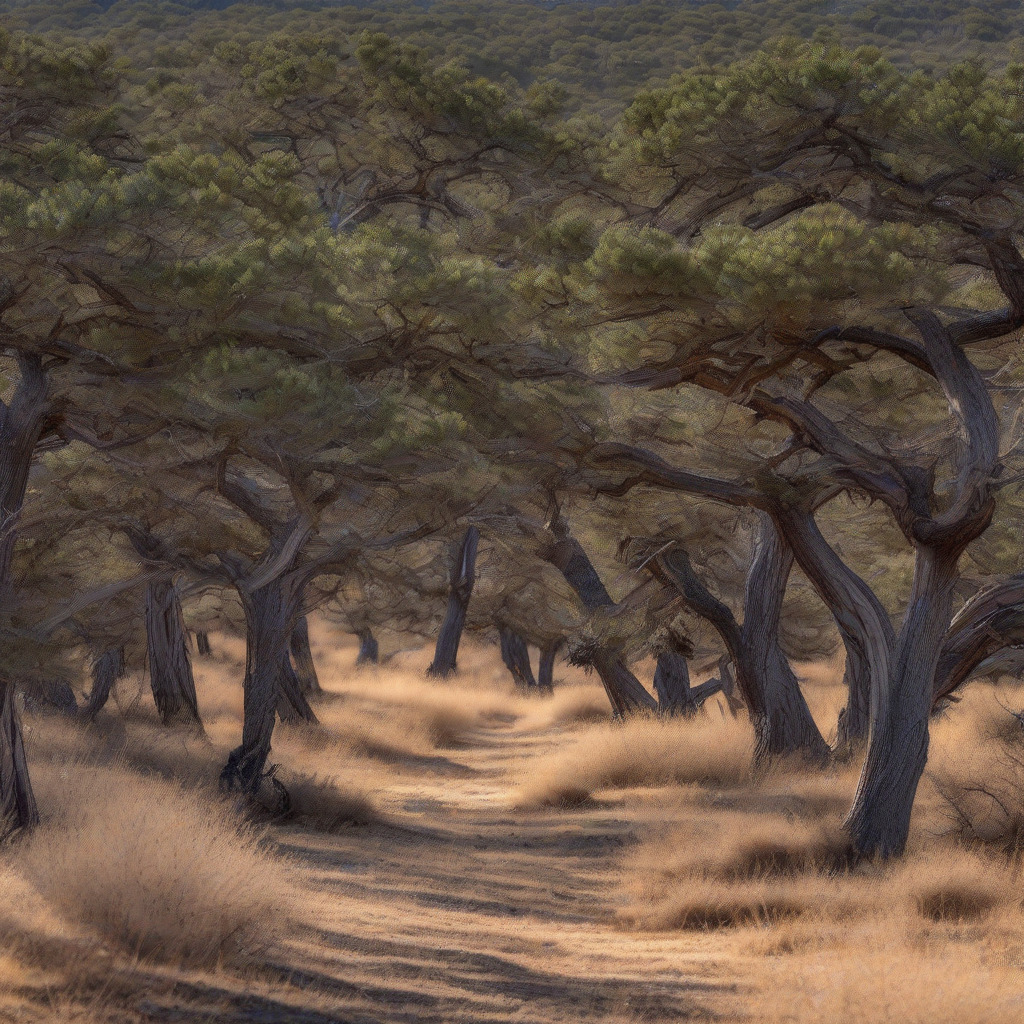
The pollen calendar, the biology, and a neighborhood-by-neighborhood look at why mountain cedar hits Austin harder than almost anywhere else in North America. Plus where to get tested and treated before the worst weeks arrive.
If you flew home for Christmas last year and spent the first week of January congested, exhausted, and convinced you’d caught something on the plane, there’s a reasonable chance you were wrong. What knocked you flat probably wasn’t a virus. It was pollen — specifically the pollen of Juniperus ashei, the Ashe juniper that blankets the Hill Country west of Austin so densely that the hills turn rust-colored when it blooms. The pollen cloud is large enough to register on Doppler radar. That’s not a metaphor. That is actual radar.
Cedar fever is the most reliably misdiagnosed condition in Central Texas, and the misdiagnosis isn’t trivial. Treat it like a cold and you’ll rest, hydrate, and wait it out — two weeks of unnecessary misery while the actual problem goes unmanaged. Treat it correctly, starting before it peaks, and you can get through January functional.
Here’s what you need to know, and when you need to act.
The Mountain Cedar That Isn’t Really a Cedar
“Mountain cedar” is the colloquial name for Ashe juniper, Juniperus ashei. Not a true cedar. True cedars belong to the genus Cedrus and are largely ornamental. Ashe juniper is a native juniper: drought-adapted, limestone-loving, extraordinarily prolific.
The tree is native to the Edwards Plateau, the massive limestone tableland that begins immediately west and northwest of Austin and stretches across the Hill Country toward the Llano Uplift. This plateau hosts one of the densest natural concentrations of Ashe juniper on the planet — thick stands across rocky slopes, dominating terrain where overgrazing eliminated competing grasses over the past century and a half. Large sections of western Travis County, all of Hays County toward Wimberley, and virtually all of Gillespie and Kerr counties look like a continuous juniper canopy from above.
Austin sits at the eastern edge of that plateau — the Balcones Escarpment, where the Hill Country drops to the coastal plain. The city is positioned directly in the prevailing drift path of pollen released from millions of trees upwind. This is why Austin’s cedar season is categorically different from the ornamental juniper allergies someone from the Northeast might have encountered. It isn’t one tree in a yard. It’s a regional pollen event shaped by geography. The scale genuinely surprises people who move here, and it should.
Austin’s westward growth has added another dimension. Bee Cave, Dripping Springs, and the subdivisions spreading along 620 and 71 have placed a significant share of the metro’s population inside the pollen source zone, not just downwind of it. Those residents aren’t receiving pollen that has traveled 30 miles. They’re living among the trees producing it — a distinction that matters a great deal on a bad front day.
The Pollen Calendar, Broken Into Phases
Most coverage of cedar fever describes the season as “winter” and leaves it there. That vagueness is part of why people keep getting caught off guard. The season has a specific structure.
Ashe juniper begins releasing pollen in early December when temperatures drop and day length shortens. Meaningful counts appear in Austin by the first or second week of the month — a warm-up phase, hovering in the low thousands of grains per cubic meter. Enough to trigger the most sensitive people, but below the thresholds that affect most.
The worst stretch falls between Christmas and the second week of January. This is when cedar bombs detonate and Austin regularly records counts between 10,000 and 20,000 grains per cubic meter. The threshold meteorologists and allergists classify as “high” is 1,500. Austin during peak season blows past that number by a factor of ten or more, routinely recording among the highest pollen counts anywhere in North America. I don’t think most Austinites have fully internalized how extreme that actually is.
February can still produce significant events if cold fronts keep moving through. Some people are symptomatic well into late February.
The timing problem is obvious once you see it: the worst weeks of Austin’s worst allergy season coincide almost exactly with the holiday travel period. Residents who flew somewhere humid and cedar-free feel fine for the trip. They return in late December or early January, hit a wall of pollen, and spend the following week convinced they picked up something at the airport. Thousands of Austinites lose the first weeks of the year to a condition they don’t correctly identify until it’s at full intensity. Every year.
For daily tracking, TexasAllergy.com — operated by the Texas Allergy, Asthma & Immunology Center — publishes local pollen counts throughout the season. Bookmark it before December. When you check it, note the trend direction, not just the number. A count of 4,000 heading into a front-day forecast means something different than 4,000 declining on a calm, humid morning.
Why Cedar Doesn’t Build Gradually — It Detonates
Ashe juniper doesn’t gradually emit pollen across weeks. It waits for a trigger and releases enormous quantities in hours.
The trigger is meteorological: a cold, dry northerly front. When a front drops humidity and temperature simultaneously, the trees respond by explosively releasing pollen from their male cones — across the Hill Country, in near-synchrony, producing plumes visible on Doppler radar as the front moves through. Not weather. Biology riding the weather. The Balcones Escarpment acts as a funnel. Cold fronts moving south through Texas are channeled through the Austin metro, which sits at exactly the right position to concentrate what’s coming off the plateau. Cedar pollen is light and travels efficiently; plume movement of several hundred miles during major release events is documented.
What this means practically: a clear morning can become a genuinely difficult afternoon if a front moves through. Someone who checks the pollen count at 7 a.m., sees a modest number, and decides to spend the afternoon on the Barton Creek Greenbelt can return home symptomatic in ways that persist for days. During peak season, the forecast direction matters as much as the morning reading.
TCEQ, the Texas Commission on Environmental Quality, operates air quality monitoring stations across Travis County and maintains public records of these events. The data is technical but authoritative — the best source for pollen events tied to specific weather dates.
Cedar Fever Symptoms and How to Tell It From a Virus
The name is misleading. Cedar fever almost never produces a true fever — temperature above 100.4°F. The profound fatigue that sufferers describe as “fever-like” comes from the immune system’s inflammatory response to an overwhelming allergen load. The body releases cytokines, signaling molecules that cause systemic inflammation. Those cytokines create symptoms that feel viral even though no virus is involved. Your body is fighting something that doesn’t need fighting, and it exhausts you in the process.
Expect intense, often severe nasal congestion — bilateral and unrelenting, not the shifting one-nostril pattern of a cold. Watering eyes, intense eye itching, a scratchy throat, fatigue disproportionate to what you’d expect from “just allergies.” Occasionally a low-grade temperature that stays under 100.4°F.
Against COVID: COVID typically produces body aches, possible GI symptoms, and genuine fever. Loss of smell or taste remains a distinguishing feature in some variants. Cedar fever doesn’t cause body aches or GI symptoms.
Against flu: Influenza comes on fast — sudden high fever, aching muscles, significant systemic illness. If you feel fine Monday morning and can’t get out of bed Monday night with a 102°F fever, that’s flu. Cedar fever builds over hours to days as allergen accumulates.
The clearest differentiator is the eyes. Viral respiratory illness doesn’t typically cause the intense ocular itching that cedar fever produces. Eyes that itch severely alongside congestion are almost certainly an allergic response. Eyes that are red and watery but not itchy — consider a virus.
See a clinician if you develop a fever above 100.4°F; if symptoms persist beyond two weeks without improvement on antihistamines and a nasal steroid; if you develop facial pain suggesting a sinus infection; or if you have asthma and cedar season triggers lower respiratory symptoms. That last one is worth taking seriously. Cedar can be a genuine asthma trigger, not just a nuisance.
What to Do Before It Hits
The most common mistake is reactive management: wait until you’re symptomatic, then try to catch up with medication. This works poorly because the most effective medications require lead time. You’re not treating a symptom that’s appeared. You’re trying to suppress a response before it gains momentum.
October is when you call an Austin allergy clinic for a new-patient appointment. Wait times at major practices stretch to four to eight weeks during fall. A call in October gets you an appointment in November or early December. A call in November may get you an appointment in January — after the worst has already hit. If you’ve managed cedar fever with OTC medications for years and never had formal testing, this is your window.
By November, if you have an existing diagnosis, start your nasal corticosteroid now — not when symptoms begin. Flonase and Nasacort are both OTC and are the pharmacological backbone of cedar fever management. Neither is fast-acting. They require consistent daily use over several days before reaching meaningful efficacy. Starting Flonase on December 26th when you’re already symptomatic is substantially less effective than having been on it since Thanksgiving.
Early December: add a daily antihistamine one to two weeks before peak season. Cetirizine, loratadine, and fexofenadine have different onset and duration profiles — ask your allergist which fits your pattern. Start checking TexasAllergy.com daily.
Late December through mid-January is the highest-risk window. Run your HVAC on recirculate rather than fresh air intake. If you have a HEPA air purifier, run it in the bedroom. Reduce time on the Barton Creek Greenbelt, Bull Creek, and other corridors with significant juniper presence — especially on front afternoons. Keep car windows closed. Shower and change clothes after extended outdoor exposure. Medication adherence during this stretch matters more than at any other point.
Which Neighborhoods Get Hit Hardest
Austin’s cedar exposure follows a geographic gradient, though the clinical difference between neighborhoods is smaller than people want it to be. Living in East Austin doesn’t mean you’re dodging this.
The highest-exposure areas are the western neighborhoods that back up directly to cedar stands or sit closest to the escarpment — West Lake Hills, Rollingwood, Barton Hills, properties along the 360/Mopac corridor, and communities toward Lakeway. Residents there face the highest baseline exposure, particularly on low-wind days when pollen hasn’t dispersed far. Neighborhoods bordering the Barton Creek Greenbelt or Bull Creek drainage face elevated risk because the greenbelts themselves contain significant juniper. Trail runners and hikers who use those corridors during peak weeks are moving through the pollen source, not ambient dispersed pollen. That’s a real distinction, and it explains why you can feel fine at 8 a.m. and wrecked by noon.
East Austin and downtown receive pollen that has already traveled and spread. Concentrations are somewhat lower — until a mass-release event happens, at which point the disparity is small enough to not matter clinically. Once pollen is airborne across the metro, a downtown reading doesn’t substantially differ from a Westlake reading.
Your location affects your baseline. It doesn’t determine whether you need to prepare. Everyone sensitive to Ashe juniper needs to prepare.
Where to Get Tested and Treated in Austin
As part of our health & wellness coverage, CityDesk Austin tracks Austin’s seasonal health conditions and where to find care.
Texas Allergy, Asthma & Immunology Center (TAAIC) operates TexasAllergy.com and runs the local pollen counter. Locations in North Austin, South Austin, and Round Rock. Because they’re tracking the pollen data themselves, the staff tends to be unusually conversant in Austin’s specific seasonal patterns — which sounds like marketing but is actually useful when you’re trying to understand your own history against what the season is doing. Call in October.
Austin Regional Clinic Allergy and Immunology provides allergy and immunology services at several campuses. New patients typically come in through primary care referral. Confirm which campuses offer allergy testing before you make the drive.
Allergy and Asthma Center of Austin is a dedicated allergy practice with a long Austin presence. Skin testing, evaluation, immunotherapy. Call directly to confirm current wait times and whether they offer sublingual immunotherapy for mountain cedar — protocols vary and change.
UT Health Austin, the clinical practice affiliated with Dell Medical School, offers access to faculty allergists. Wait times for new patients can run longer, but it’s the right call if you have a complicated history or haven’t gotten satisfactory answers elsewhere.
Ascension Medical Group Austin provides allergy services through specialist referral, useful primarily for patients already in the Ascension system.
On cost: allergy skin testing runs roughly $200 to $500 out of pocket depending on panel size. With insurance and a primary care referral, patient cost is usually significantly lower. Call the billing department before your appointment — this is one of those ten-minute phone calls that saves you a surprise. OTC antihistamines are available at any Austin H-E-B or Costco; H-E-B’s store-brand generics are among the cheaper options.
Shots, Drops, and the Path to Long-Term Tolerance
OTC antihistamines manage symptoms. They don’t reduce your sensitivity to cedar pollen over time. If you’ve been taking Zyrtec every January for five years and suffering just as much in year five as in year one, that’s why. Symptomatic relief is not desensitization.
The only treatments that actually recalibrate your immune response are immunotherapy protocols.
Subcutaneous immunotherapy — traditional allergy shots — remains the gold standard. Injections of increasing allergen concentrations, weekly during the build-up phase, monthly during maintenance. Full course runs three to five years. Shots are administered in-office with an observation period for reactions. At the end of a complete course, a significant proportion of patients achieve lasting reduction in sensitivity. The evidence base for this is strong.
Sublingual immunotherapy (SLIT), allergy drops placed under the tongue daily at home, is an alternative several Austin clinics now offer for mountain cedar. It’s the standard of care in Europe and hasn’t received FDA approval for most individual allergens in the U.S., which is why insurance coverage is inconsistent. SLIT is worth asking about if you can’t commit to weekly in-office visits. Call clinics directly to confirm current pricing and availability.
Both options require an allergist evaluation first, and both are more effective when started outside peak season — spring or summer, so the desensitization process has months to work before the following December. If extreme heat is driving you indoors during those planning months, Austin’s cooling center locations and which neighborhoods they miss is worth knowing before summer hits.
If you’ve taken antihistamines for years and want to know whether there’s a path to actually solving this rather than managing it indefinitely: there is. The timeline is long. It’s real.
The Short Answer
Cedar fever peaks between Christmas and mid-January. During that window, Austin regularly records pollen counts that rank among the highest in North America — often ten times the threshold considered “high.” It can go from mild to severe in a single afternoon when a front moves through. It’s not a cold, not the flu, not COVID. Severely itchy eyes alongside congestion are your clearest sign you’re dealing with an allergen, not a virus.
If you’re sensitive to cedar and you haven’t started Flonase yet, start now. If you’ve never been formally tested and you lose weeks every winter to this, call an Austin allergy clinic this month. Not in January, when every symptomatic person in the metro is calling simultaneously. The wait time for an appointment is the real variable, and it starts the moment you pick up the phone.