What Austin GLP-1 Clinics Actually Charge and Whether a Doctor Is Really in the Building
We called 12 Austin-area GLP-1 prescribers as prospective cash-pay patients, documented costs from first consult through month three, and cross-referenced every supervising physician name against t…

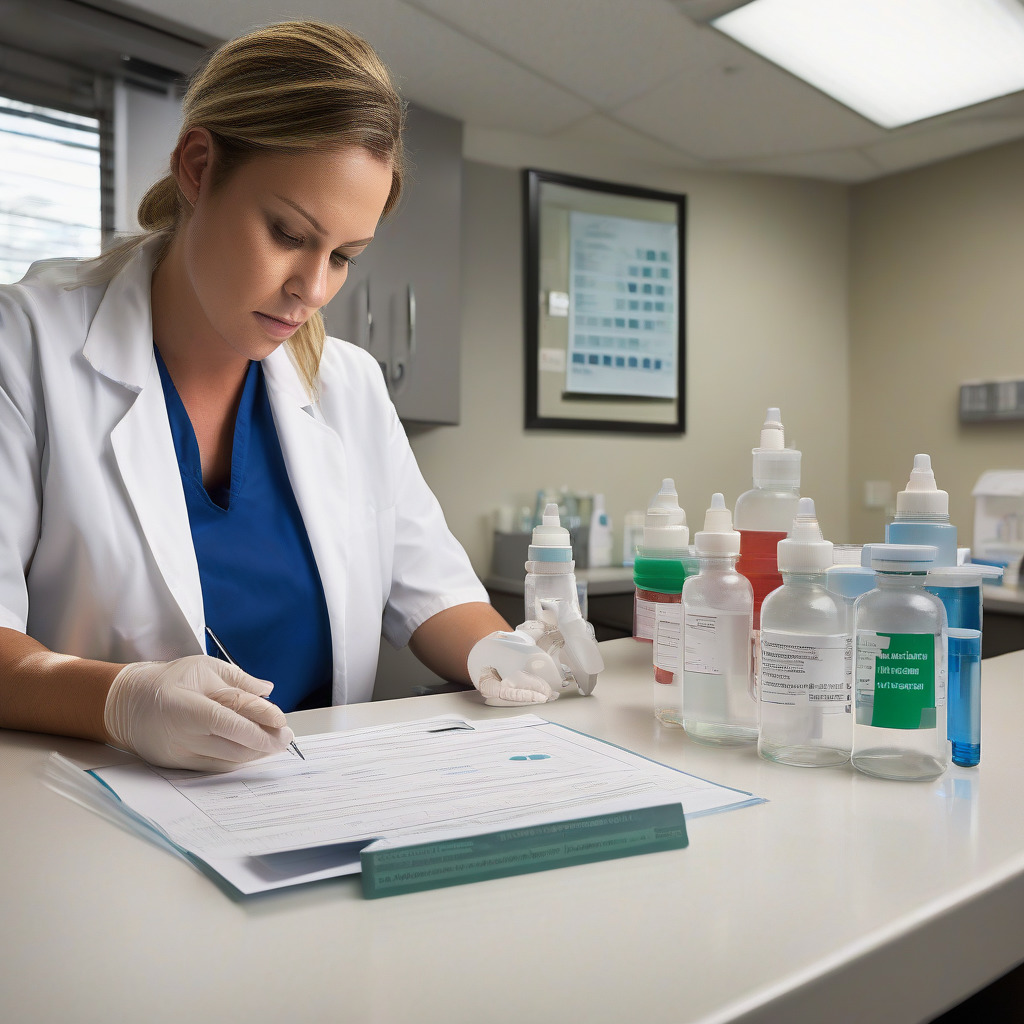
We called 12 Austin-area GLP-1 prescribers as prospective cash-pay patients, documented costs from first consult through month three, and cross-referenced every supervising physician name against the Texas Medical Board database so you don’t have to.
If you’ve searched “semaglutide Austin” in the past six months, you already know what comes up: a wall of med-spa landing pages, each promising “affordable” weight loss and a “physician-supervised” program. What none of those pages tell you is what you’ll actually pay by month three, who legally signs your prescription, whether the drug being dispensed is FDA-approved or compounded under a regulatory window that has mostly closed, or what happens to your prescription if the clinic’s pharmacy relationship collapses.
No Austin outlet has published independently verified pricing or audited provider credentials for this market. We did the work. Called 12 Austin-area GLP-1 prescribers as prospective cash-pay patients, asked for itemized cost quotes, asked who holds the supervising physician license, and looked up every name provided in the Texas Medical Board’s public license database at tmb.state.tx.us. Here’s what we found.
The Austin GLP-1 Market
Four distinct provider types are operating in Austin right now, and they are not interchangeable.
Med spas dominate local search results. They cluster along the 360 Corridor in West Austin, throughout the Domain, and in Westlake and Bee Cave — neighborhoods where patients can absorb $300 to $500 per month out of pocket. Their GLP-1 programs sit alongside body contouring, IV therapy, and hormone optimization menus. One 360 Corridor med spa we contacted runs approximately 80 active GLP-1 patients across two locations. A Domain provider said they onboard 20 to 25 new patients per month. That’s a lot of prescriptions moving through operations where, as you’ll see, the physician’s name can be surprisingly hard to extract.
Dedicated metabolic and weight-loss clinics include franchise locations in North Austin and Pflugerville and independent practices in Cedar Park and Round Rock. These operations tend to mandate lab work, weigh-ins, and dietary counseling. That raises the upfront cost but reduces the number of line-item surprises downstream — a genuine trade-off in a market where the advertised price and the actual price can be quite different things.
Primary care and direct primary care practices are a smaller category, and they’re materially different from the med-spa model. UT Health Austin, the clinical practice arm of Dell Medical School, is among them. Several DPC practices in the Austin area prescribe GLP-1s as part of flat-fee membership models; we’re continuing to verify specific offerings. The patient relationship in these settings persists beyond any single drug program — which matters, as you’ll see, when a clinic closes or a pharmacy contract breaks.
National telehealth platforms — Hims, Ro, Noom Med — run aggressive Austin-targeted SEO and will appear in your search results. They are not Austin providers. No Austin office, no Austin-based physician reviewing your intake, and in most cases no in-person option at all. We audited one for pricing comparison and have flagged it in the matrix below.
One thing worth saying plainly: East Austin has almost no GLP-1 clinic presence. The cash-pay model that dominates this market screens out lower-income patients by design. Texas Medicaid covers Ozempic for Type 2 diabetes only — not for weight management — which leaves many Austin residents unable to access these drugs through any available funding mechanism.
What You Actually Pay From Consult to Month Three
The most misleading number in this market is the monthly medication figure quoted on clinic websites. It typically excludes the initial consultation fee, required baseline labs, injection supplies, and mandatory follow-up visits. Here’s the honest billing timeline for a patient starting from zero.
Initial Consultation
Fees ranged from $0 (waived or rolled into program cost) to $199. The median was around $75 to $100. Two of the med spas wouldn’t quote a consult fee until we booked — a practice that makes comparison shopping essentially impossible, and should probably tell you something. Several telehealth-adjacent programs charge $49 to $99 for an initial async intake reviewed by an NP, with no synchronous physician encounter.
Whether the consult fee applies toward your first month’s program cost varies. Of the 12 we audited, seven applied it. Five did not. Ask this explicitly before you hand over a card number.
Baseline Labs
Responsible GLP-1 prescribing requires a baseline lipid panel, HbA1c, comprehensive metabolic panel, and TSH at minimum. Of our 12 audited clinics, four included labs in the program cost. Six sent patients to LabCorp or Quest on a self-pay basis, with out-of-pocket costs running $89 to $340 depending on the panels ordered. Two drew blood in-house and bundled the fee into the first month’s charge without breaking out the dollar amount.
Two clinics in our audit prescribed based on intake questionnaire alone, with labs described as “optional.” This is a patient safety issue, not a billing nuisance. If a clinic doesn’t require bloodwork before writing a prescription, that’s a red flag regardless of the monthly price.
The Medication
This is where numbers vary most dramatically, and where the regulatory context matters most — which is exactly what clinic websites mostly don’t disclose.
Compounded semaglutide dominated Austin’s cash-pay clinic market since 2022. Starter dose quotes (0.25 mg/week) ranged from $149 to $249 per month. Therapeutic maintenance doses (1 mg/week or higher) ran $299 to $449. These are the advertised numbers. They’re also not straightforwardly legal to dispense in most current scenarios — as detailed below. Zero of the 12 clinics disclosed this proactively during our calls. Zero.
Branded Wegovy carries a list price of approximately $1,349 per month. With GoodRx, pricing at H-E-B, CVS, Walgreens, and Costco in Austin runs $1,200 to $1,300. Novo Nordisk’s savings card can reduce out-of-pocket cost to as low as $0 to $25 per month for commercially insured patients who qualify — cash-pay patients without commercial insurance are not eligible. Several of the more medically rigorous clinics we audited have shifted entirely to Wegovy since compounding restrictions tightened. Their all-in cost is higher, but the drug’s legal and quality status is unambiguous.
Compounded tirzepatide quotes from our audit ran $349 to $549 per month. Its compounding status carries its own contested regulatory history, addressed below.
Injection Supplies
Five of the 12 clinics billed syringes and needles separately — typically $15 to $30 per month for compounded programs. Branded autoinjector pens include the delivery device, so this line disappears for Wegovy patients.
Required Follow-Up Visits
Most programs require monthly or biweekly check-ins, in person or via telehealth portal. These ranged from $0 (included in program cost) to $75 per visit. Clinics that bill follow-ups separately produced some of the largest gaps between the advertised monthly price and what patients actually pay.
All-In Numbers: Months One Through Three
Compounding-based med spa or weight-loss clinic (where still operating with a documented legal basis): Month one runs $450 to $750 all-in, including consult, labs, starter-dose medication, and first follow-up. Months two and three each cost $300 to $550. Ninety-day total: $1,050 to $1,850.
Branded Wegovy through an Austin clinic: Month one runs $1,400 to $1,600 all-in. Months two and three each cost $1,200 to $1,300. Ninety-day total: $3,800 to $4,200 before any savings programs.
National telehealth platform: Month one runs $200 to $350 for compounded semaglutide (where still offered) or $299 to $449 for branded with their negotiated pricing, plus labs if required. Follow-up fees are often bundled into a subscription running $99 to $199 per month on top of medication cost.
These numbers assume no insurance. For patients with commercial coverage, the picture changes substantially — covered below.
The Physician Question
Texas doesn’t grant nurse practitioners full practice authority. An NP in Texas must operate under a signed physician supervision and delegation agreement — a formal document defining the scope of practice the supervising MD or DO has authorized. Clinics using NPs as the primary prescriber without a verifiably engaged supervising physician are operating at the legal margin. That’s not a technicality. It has real implications for what happens if something goes wrong.
When we asked each clinic, “Will I see a physician, or is physician oversight handled remotely?” we got three distinct responses.
Four of twelve named the supervising physician immediately, spelled it out, confirmed whether that physician was on-site, part-time on-site, or remote with regular chart review. We looked up every name. All four held active, unrestricted Texas medical licenses with no TMB complaint history or Board Orders.
Five of twelve disclosed a name only after we asked twice. In one case a staff member said “our doctors review all prescriptions” without naming anyone. When pressed, we got a first name only — which you can’t look up. Of the names we ultimately obtained, all held active Texas licenses. But the reluctance to disclose is itself information. Why make a patient work for that?
Three of twelve couldn’t or wouldn’t name a supervising physician at all. One med spa confirmed the “prescribing provider” was an NP and declined to name a supervising MD. A second said prescriptions were “reviewed by a physician on our partner network” without providing a name or state of licensure. A third directed us to a patient portal with no synchronous human contact.
The TMB database is useful but limited. It returns only formal disciplinary actions, Board Orders, and public complaints that resulted in action — not informal complaints, not corrective measures taken without public notice. Use it. Don’t treat a clean result as a complete endorsement. The same call-and-verify approach we used here mirrors what we found when we called 15 Austin pediatric practices to document who is actually accepting new patients — staff disclosures vary enormously, and asking twice often produces a different answer than asking once.
Compounded Semaglutide’s Legal Status Right Now
This is the most important fact in the Austin GLP-1 market that clinic marketing pages aren’t telling patients.
The FDA removed semaglutide from its drug shortage list on February 21, 2025. That triggered a wind-down clock. 503B outsourcing facilities — the larger-scale FDA-registered compounders that supply most of the compounded semaglutide flowing to Austin clinics — had roughly 90 days to stop producing compounded copies. That deadline fell around May 2025. 503A compounding pharmacies, which compound for individual patients one prescription at a time under state pharmacy board oversight, had roughly 60 days. Both deadlines have passed.
A 503B facility is FDA-registered, subject to current Good Manufacturing Practice inspections, and publicly listed in the FDA’s database of registered outsourcing facilities. A reporter or patient can verify whether a named pharmacy appears on that list in two minutes. A 503A pharmacy compounds patient-specific prescriptions under state oversight with less federal visibility. After the shortage removal, neither can compound copies of semaglutide for routine weight-loss use without specific legal justification — a documented patient-specific clinical need, an allergy to an excipient in the branded product, or a medically necessary dose or formulation the branded product can’t provide. The bar for that justification isn’t trivial, and the FDA has indicated it will scrutinize those claims.
Tirzepatide’s status is separately contested. The FDA issued a shortage removal notice for tirzepatide, but that decision faced legal challenges from compounding industry groups. As of our reporting, the situation remained unresolved. Several Austin clinics offering compounded tirzepatide cited ongoing litigation as the basis for continuing to dispense it.
In our audit: four of the 12 clinics have shifted to branded drugs and no longer offer compounded semaglutide. Three said they offer it under “personalized dosing” justifications or sourcing from 503A pharmacies on a patient-specific basis — a claim that requires documentation no clinic offered to share. Two declined to specify their semaglutide source entirely. One was discontinuing its GLP-1 program. Two had already quietly dropped GLP-1 services without apparent patient notification; we discovered this only when the phone number on their website reached a disconnected line.
If a clinic is still advertising compounded semaglutide at $199 per month without explaining the legal basis for doing so, ask directly before you enroll. If they can’t answer clearly, you have your answer.
What Happens If Your Clinic Closes
This risk has already materialized nationally, and it hasn’t received enough coverage locally.
When national telehealth platforms paused or discontinued compounded semaglutide programs in 2024 and 2025, patients discovered they had no direct relationship with the compounding pharmacy. The prescription couldn’t be transferred. Refills under a new provider required restarting the titration process. Some patients lost months of progress. The disruptions followed FDA warning letters, supply chain problems, or voluntary compliance decisions — none of which any landing page had bothered to mention in advance.
The same risk exists at Austin cash-pay clinics. Your clinical relationship is with the clinic, not its pharmacy partner. If a clinic closes, pivots its model, loses its pharmacy contract, or stops answering the phone, you start over.
Before enrolling, ask: Which pharmacy do you source from? What is my recourse if that relationship changes? Can I get my full clinical records and lab results at any time? Will you provide a written copy of my prescription and titration history that I can take to another prescriber?
Primary care and direct primary care practices offer the most protection here. The patient relationship is the core business, not the drug program, and your records stay in a single chart whether or not any specific medication is in stock.
Insurance, Employer Plans, FSA and HSA
BCBS of Texas covers Wegovy for obesity — BMI of 30 or above, or 27 with a qualifying comorbidity — on some employer-sponsored plans with prior authorization. It doesn’t cover compounded versions. UnitedHealthcare follows a similar structure; some Austin employer plans include GLP-1 coverage after step therapy, requiring documented failed trials of other weight-management interventions first.
CityDesk is actively verifying current GLP-1 benefit status for the City of Austin employee health plan, the UT System’s UT Select plan, Dell Technologies, Apple’s Austin campus, and Tesla Gigafactory workers. Employer benefits change annually; we’ve flagged each as requiring direct verification against current Summary Plan Descriptions and will update as confirmations come in.
Texas Medicaid covers Ozempic for Type 2 diabetes only. There is no GLP-1 weight-management benefit. That’s a hard ceiling that no amount of “affordable” med-spa pricing addresses.
FSA and HSA eligibility is the most underreported tool in this space, and it’s one we cover regularly in our health and wellness coverage. Not one clinic website we reviewed mentioned it. GLP-1 medications prescribed for obesity or Type 2 diabetes are generally FSA and HSA eligible, meaning cash-pay patients can use pre-tax dollars to offset costs. Ask your clinic for an itemized receipt; your FSA or HSA administrator will need documentation of the prescription and its purpose. It won’t make a $1,349-per-month drug cheap, but it’s real money left on the table if you skip it.
On ACA plan selection: if you’re uninsured or on a plan without GLP-1 coverage, open enrollment is the window to change that. Pull the formulary document for each plan you’re considering and search specifically for “semaglutide” or “tirzepatide.” Austin-area ACA plans vary significantly — some require prior authorization and step therapy, some exclude obesity indications entirely, a small number cover both diabetes and obesity indications with standard cost-sharing. The difference in annual out-of-pocket cost between a plan with GLP-1 coverage and one without can exceed $12,000 at Wegovy retail pricing. That’s worth an hour of comparison shopping during open enrollment.
The Clinic-by-Clinic Matrix
The table below summarizes what we found across the 12 Austin-area GLP-1 prescribers we audited. Clinics are identified by category and geographic area rather than by name in this version; where we found specific TMB records or credentialing concerns, those are noted. A fully named version, updated as we continue to receive responses to information requests, is available to subscribers.
| Provider | All-In Monthly Cost (Est.) | Consult Fee | Labs Included | Medication Type | Supervising Credential | MD On-Site | TMB Status | In-Person Required |
|---|---|---|---|---|---|---|---|---|
| Med spa, 360 Corridor (#1) | $380–$520 | $99, applied | Separate / Quest | Compounded semaglutide (disputed legal basis) | NP, supervising MD named | Remote MD | Active, no Board Orders | No |
| Med spa, Domain (#2) | $420–$580 | $75, applied | Included | Compounded semaglutide | NP, MD named after follow-up | Part-time on-site | Active, no Board Orders | No |
| Med spa, Westlake (#3) | $499–$650 | $149, not applied | Separate / LabCorp | Compounded semaglutide | NP, MD unnamed | Unknown | Could not verify | No |
| Med spa, Bee Cave (#4) | $350–$480 | $0 (bundled) | Included | Compounded tirzepatide (litigation cited) | NP, supervising MD named | Remote MD | Active, no Board Orders | No |
| Weight-loss clinic, North Austin (#5, franchise) | $475–$650 | $199, applied | Included | Branded Wegovy / Ozempic | MD on staff | On-site | Active, no Board Orders | Yes |
| Weight-loss clinic, Pflugerville (#6, franchise) | $480–$660 | $199, applied | Included | Branded Wegovy / Ozempic | MD on staff | On-site | Active, no Board Orders | Yes |
| Weight-loss clinic, Cedar Park (#7, independent) | $320–$480 | $100, applied | Separate / in-house | Compounded semaglutide (503A, patient-specific claim) | PA, supervising MD named | Part-time on-site | Active, no Board Orders | Yes, first visit |
| Weight-loss clinic, Round Rock (#8, independent) | $290–$420 | $75, not applied | Separate / Quest | Compounded semaglutide (503A claim) | NP, MD declined to name | Unknown | Could not verify | No |
| Primary care / DPC, Central Austin (#9) | $380–$1,349 (dose dependent) | $0 (member) | Included | Branded Wegovy or Ozempic | MD | On-site | Active, no Board Orders | Yes |
| UT Health Austin / Dell Med (#10) | Insurance billed; cash TBD | Covered by visit | Covered | Branded Wegovy / Ozempic | MD/DO, academic | On-site | Active, no Board Orders | Yes |
| Med spa, South Austin (#11) | Program discontinued | — | — | — | — | — | — | — |
| National telehealth (Austin-targeted SEO) (#12) | $299–$499/mo. subscription | $49 async | Not required | Compounded semaglutide (status unclear) | NP, no Texas MD named | Remote, no state specified | Could not verify Texas licensure | No |
Clinic #3 refused to name a supervising physician after two direct requests. Clinic #8 declined to name a supervising MD and couldn’t confirm the compounding pharmacy’s name or 503A registration status. Clinic #11 has discontinued GLP-1 services; its website still lists semaglutide on a services page with no notice that the program has ended — a prospective patient relying on that page would have no way of knowing. Clinic #12 is a national telehealth brand, not an Austin provider, despite local SEO placement; Texas Medical Board licensure of its prescribing staff could not be confirmed. The upper bound for clinic #9’s monthly cost reflects Wegovy’s list price; actual patient cost will vary significantly.
Eight Questions to Ask Before You Sign Up
Our audit produced a consistent pattern: clinics that resist specific questions before you’ve paid are the ones with the most to obscure. None of these questions are unreasonable. A reputable clinic will answer all of them without hesitation.
1. What is my all-in 90-day cost — including the consult fee, labs, medication at my starting dose, injection supplies if applicable, and all required follow-up visits? Ask for this in writing. A clinic that can’t produce an itemized estimate is telling you something.
2. What is the name and Texas Medical Board license number of the physician who will supervise my prescription? Look it up at tmb.state.tx.us. Two minutes. Free.
3. Is the supervising physician available to speak with me if I have a concern about a side effect or dosing decision? This tells you whether the MD relationship is real or nominal.
4. Is the semaglutide in your program FDA-approved branded medication, or compounded? If compounded: from which pharmacy, is it a 503A or 503B facility, and what is the legal basis for compounding after the FDA shortage removal?
5. Which pharmacy do you source from, and what happens to my prescription and refills if that pharmacy relationship changes or your clinic closes? If staff can’t answer this, you have no recourse.
6. Can I obtain my full clinical records, lab results, and a copy of my prescription at any time? This should be a yes. If it isn’t, walk away.
7. Does your program require baseline labs before prescribing, and which specific panels do you order? A program that skips the HbA1c and comprehensive metabolic panel is cutting corners.
8. Will my treatment involve any in-person physician encounter, or is everything through a portal or telehealth? Neither is automatically disqualifying, but you should know before you enroll — not after.
Where Things Stand
Some of the programs we audited are run by credentialed physicians, use FDA-approved drugs, require appropriate baseline labs, and quote prices honestly. Those operations exist and they’re worth finding.
But this market has enough evasive, undisclosed, and legally contested operations that an uninformed cash-pay patient faces real risks — not just paying more than they should, but receiving a drug whose legal standing is disputed, from a provider whose supervising physician they can’t identify, with no recourse if the program disappears. We found evidence of all of it in a single afternoon of phone calls.
If you’re uninsured and can’t afford branded Wegovy, your most defensible near-term options are a direct primary care practice that includes GLP-1 prescribing in its membership model, UT Health Austin if you qualify, or a manufacturer savings program. Use FSA or HSA funds for whatever you pay out of pocket. And look hard at ACA plans during open enrollment — the annual dollar difference between a plan with GLP-1 coverage and one without can be larger than most people realize.
One last thing: if a clinic’s website prominently features $199 monthly semaglutide while burying — or omitting — the supervising physician’s name, spend two minutes to look that name up before you go any further. The TMB lookup is free. It tells you more than any landing page will.
CityDesk Austin will update the clinic matrix as additional information requests are returned and as the regulatory situation around compounded tirzepatide is resolved. Tips about Austin-area GLP-1 clinic practices can be sent to our editorial desk.