How Austin's Sliding-Scale Clinics Actually Work and What You Will Pay
If a mid-year job change or lease turnover just left you without coverage, here is exactly what to expect at CommUnityCare's Cedar Avenue and MLK clinics — costs, documents, wait times, and all.

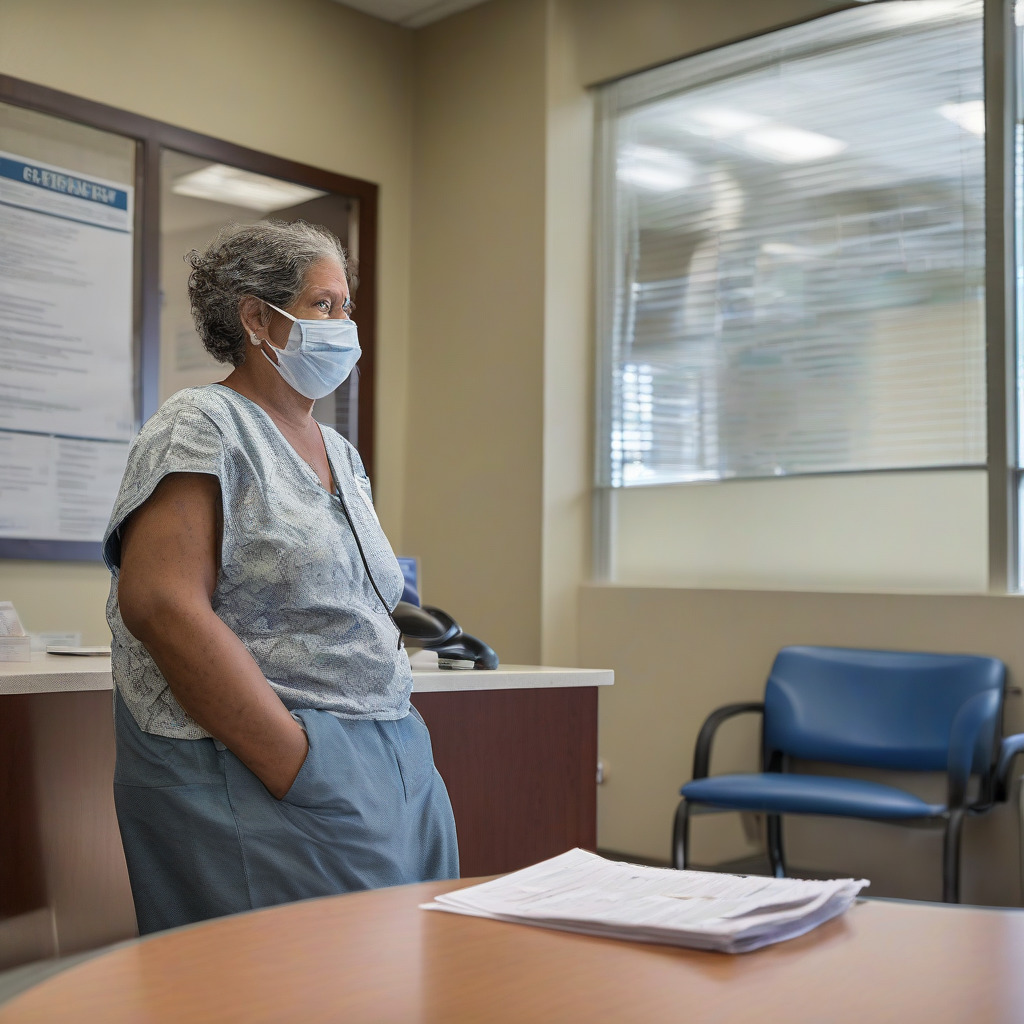
If a mid-year job change or lease turnover just left you without coverage, here is exactly what to expect at CommUnityCare’s Cedar Avenue and MLK clinics — costs, documents, wait times, and all.
It’s July in Austin. Leases expired June 30. Income changed when they did. The job that covered insurance ended, or the gig work that replaced it never offered any. Texas declined to expand Medicaid, so single adults earning around $16,000 a year fall through a gap that neither Medicaid nor the ACA marketplace closes. Someone at that income earns too much for Texas Medicaid and too little to get a meaningful subsidy on HealthCare.gov. It’s an ugly piece of policy geography, it is not going away, and Austin has a lot of people living inside it right now.
This article is for those people. Not the destitute, not the fully insured, but the working Austinite in between who needs to see a doctor and has no clear idea what it will cost or which door to use.
The answer is usually CommUnityCare. Here’s how the system actually works.
What CommUnityCare Is, and Why It Cannot Turn You Away
CommUnityCare is a federally qualified health center, or FQHC. That designation carries legal obligations, not just good intentions. Under Section 330 of the Public Health Service Act, CommUnityCare receives federal funding in exchange for binding requirements: serve everyone in the service area regardless of ability to pay, charge on a sliding-scale fee schedule tied to federal poverty guidelines, and never deny care on the basis of immigration status.
That last point matters considerably for the patient population at Cedar Avenue and other East Austin sites. You won’t be asked for proof of citizenship or visa status.
This isn’t a charity program the clinic can suspend when budgets tighten. The sliding-scale obligation is written into the federal funding structure itself. CommUnityCare is not a free clinic, and it’s not a hospital emergency room. It provides ambulatory primary care, behavioral health, and dental services.
If your need is a heart attack, go to Seton or St. David’s. If your need is a primary care visit, a prescription refill, a mental health check-in, or a dental exam, CommUnityCare is the right place. It’s not a last resort. It’s the system that exists precisely for this situation.
Do You Qualify? The Coverage Gap Explained
Most people ask first whether they earn too much to use CommUnityCare. They probably don’t.
The sliding-scale fee schedule is anchored to the Federal Poverty Level. For a single adult in 2024, 100% FPL is approximately $15,060 per year. Texas Medicaid covers very few adults without dependent children — a single adult under 65, without a disability and not pregnant, is unlikely to qualify regardless of income. That’s the coverage gap in one sentence.
CommUnityCare’s sliding scale extends well above the poverty line. Patients at or below 100% FPL pay the lowest tier. Between 100% and 200% FPL (up to roughly $30,120 for a single adult), you pay a stepped-up but still reduced rate. Above 200% FPL, you pay a higher tier — but still below what an uninsured patient would face at a private urgent care or concierge practice.
If CommUnityCare’s next available appointment is too far out when you call, People’s Community Clinic at 4705 Koenig Lane (78756) operates under the same federal mandate and the same sliding-scale requirement. Call both.
What You Will Actually Pay: Fee Tiers at Real Austin Incomes
Most pages on this topic write vaguely about “reduced fees based on income” and leave you to guess. The figures below are more specific, but they require one important caveat: dollar amounts must be confirmed directly with CommUnityCare billing at 512-978-9015 before this article publishes. The $20 nominal fee for patients at or below 100% FPL is historically documented; all other tier amounts need direct confirmation. The table structure and income bands are accurate. The dollar figures are placeholders until verified.
| Annual Income (Single Adult) | Approx. % of FPL | Primary Care Visit Cost |
|---|---|---|
| $15,060 or below | At or below 100% FPL | ~$20 (verify current figure) |
| $15,061–$22,590 | 101–150% FPL | Confirm with billing |
| $22,591–$30,120 | 151–200% FPL | Confirm with billing |
| Above $30,120 | Above 200% FPL | Confirm with billing |
This table publishes only after confirmed dollar figures are obtained from CommUnityCare billing. Call 512-978-9015.
Behavioral health visits and dental visits use separate fee schedules. Lab work, imaging, and procedures carry additional charges, also on a sliding scale. Ask billing to break those out when you call.
One thing that doesn’t get enough attention: the fee is assessed at intake, before the visit, not mailed to you six weeks later. That eliminates the worst feature of uninsured medical billing. If you genuinely cannot cover even the nominal fee, you sign a zero-pay declaration — not a debt instrument, not a payment plan agreement. Federal law requires this. If a front-desk staff member implies otherwise, ask to speak with the billing coordinator.
What to Bring: The Document Checklist
The fear that stops people from showing up is arriving unprepared and getting charged full price. Here’s what to bring.
For income documentation, bring one of the following: your most recent federal 1040 tax return, two or three recent pay stubs, an employer letter on company letterhead if you’re paid in cash, or a zero-income declaration form if you’re currently unemployed (CommUnityCare staff can provide that form at intake). For identity, a Texas driver’s license or state ID works; a Matrícula consular — the Mexican consular ID card issued to Mexican nationals abroad — may also be accepted, though confirm acceptance at your specific site when you call. A Social Security card or ITIN documentation is helpful if you have it.
If you don’t have documents, self-attestation — verbally stating your income — may be accepted. The intake process is designed to assign a fee tier, not to screen people out. Staff can generally work with nonstandard situations. Verify this with the specific clinic when you call.
You will not be asked about your immigration status. It is not a field on the intake form and is not a legal basis for denying care at an FQHC.
The Cedar Avenue and MLK Clinics: What to Expect
CommUnityCare Cedar Avenue Health Center is at 1700 Cedar Ave in East Austin, in the Govalle and Johnston Terrace neighborhoods near I-35 and Cesar Chavez. This is one of CommUnityCare’s highest-volume sites for uninsured and Medicaid patients. Spanish-language capacity is strong — bilingual staff and interpretation services are available — and the patient population includes long-term East Austin residents who have used this clinic for years. The building is functional rather than polished. Expect a busy waiting area, especially Monday mornings after weekend gaps. Capital Metro Route 7 serves this corridor from downtown.
The MLK Health Center near 2901 N. IH-35 draws a more mixed crowd: UT-area residents in their 20s who aged off parental insurance, long-term East Austin families, recently arrived immigrants navigating the system for the first time, sometimes all in the same waiting room. The IH-35 location makes it accessible from both central and northeast Austin. Historically it has carried slightly shorter new-patient wait times than Cedar Avenue during summer demand spikes, though that fluctuates. Verify the exact current address when calling.
CommUnityCare also operates clinics on Rundberg Lane (78753) and Braker Lane (78758), serving the dense apartment corridor north of 183 where a lot of Austin’s lower-income service workers live. These sites may have shorter waits than the East Austin locations during summer. Worth asking about when you call. Verify current operating hours before your visit — CommUnityCare has periodically adjusted hours at satellite sites.
Call 512-978-9015 to schedule or ask about same-day availability. Walk-in slots have historically been offered, but availability has been inconsistent since 2020 and varies by location and day. Don’t assume walk-in is available. Call first.
Current next-available appointment windows for Cedar Avenue, MLK, and at least one north Austin site will be added before publication, obtained by calling ahead.
Mental Health at CommUnityCare Versus ATCIC
Several CommUnityCare sites have behavioral health consultants embedded in the primary care setting. What this means practically: a patient who comes in for a physical or a hypertension follow-up can receive a same-day behavioral health referral without going through a separate intake process. Mention to your primary care provider that you’ve been dealing with anxiety or depression, and they can connect you to a behavioral health consultant at that same visit. No second appointment, no second trip across town. Verify which specific sites currently have embedded behavioral health staff when you call to schedule.
Austin Travis County Integral Care (ATCIC) is a separate entity — the Local Mental Health Authority for Travis County — and it’s designed primarily for serious mental illness: schizophrenia, bipolar disorder, major depressive disorder with significant functional impairment. If your need is clinical anxiety that’s making it hard to leave the house, ATCIC outpatient services are an option, but the intake process is more involved and the waitlist for ongoing therapy can be long. For a fuller picture of what that search looks like, finding a therapist in Austin in 2026 covers the waitlist landscape, cost ranges, and sliding-scale options across the city.
The honest routing guide: start with CommUnityCare if you need primary care plus a mental health check-in. For a psychiatric crisis — suicidal ideation, psychotic symptoms, a mental health emergency — go directly to ATCIC. Their 24/7 crisis line is 512-472-4357. ATCIC also operates a walk-in crisis center at 1165 Airport Blvd, 78702, near Mueller, around the clock, no appointment required.
If your need is acute today, that’s where to go. Don’t wait for a primary care appointment.
If You Have a Marketplace Plan, Medi-Share, or a High Deductible
CommUnityCare accepts some marketplace plans, historically including Ambetter, but participation changes year to year. Verify current plan acceptance with billing at 512-978-9015 before your visit. If your plan isn’t accepted in-network, you’ll be treated as self-pay and the sliding scale applies based on your income.
If you carry a high-deductible health plan and haven’t met your deductible, you’re paying out of pocket regardless of what’s on your insurance card — economically identical to being uninsured. Depending on your income, self-paying at CommUnityCare on the sliding scale may cost less than running a claim through your plan. Ask CommUnityCare billing whether insured patients can elect to self-pay. The answer may depend on your specific plan terms, so verify directly.
Health-sharing ministries like Medi-Share are not ACA-regulated insurance. CommUnityCare would treat Medi-Share members as self-pay patients, making them eligible for the sliding-scale fee schedule. For most Medi-Share members who’ve never looked into CommUnityCare, that’s probably better news than they expect. For more on this and related topics, see our health & wellness coverage.
How to Get Started
Call 512-978-9015. Ask for the next available new-patient primary care appointment at the site most convenient for you. Ask whether same-day or walk-in slots exist. Ask which sites currently have embedded behavioral health staff if that’s relevant to you.
Gather your income documentation before you go. Two or three recent pay stubs is the easiest form. If your income is irregular — gig work, cash work, no current income — ask the scheduler what CommUnityCare accepts for non-traditional situations. They field this constantly.
Know your rough annual household income and household size before you arrive. The billing coordinator calculates your FPL percentage. You just need to be able to state your income honestly; fee determination happens before or during check-in, not after care is delivered.
If you know you want to address anxiety, depression, or a related concern, mention it when you call to schedule. Some sites can coordinate behavioral health at the same visit; others schedule it separately. Knowing in advance saves a return trip.
If CommUnityCare’s next available slot is too far out, call People’s Community Clinic at 4705 Koenig Lane, 78756. Same federal mandate, same sliding-scale obligation, same patient rights.
If your mental health need is acute today, don’t wait. Call ATCIC’s crisis line at 512-472-4357 or go directly to the walk-in crisis center at 1165 Airport Blvd, 78702.
Fee tier dollar amounts, current appointment wait times at Cedar Avenue, MLK, and north Austin sites, embedded behavioral health site locations, ATCIC outpatient fee range, and People’s Community Clinic contact details must all be verified by CityDesk Austin before publication. Call CommUnityCare billing and scheduling at 512-978-9015 and ATCIC directly to confirm current figures. This article will be updated when those figures change.