What to Know About Getting Same-Day STI Testing in Austin
Same-day STI testing is genuinely available in Austin without an appointment. Multiple locations. A wide range of costs. No bureaucratic friction. Whether you're uninsured, underinsured, a minor, o…

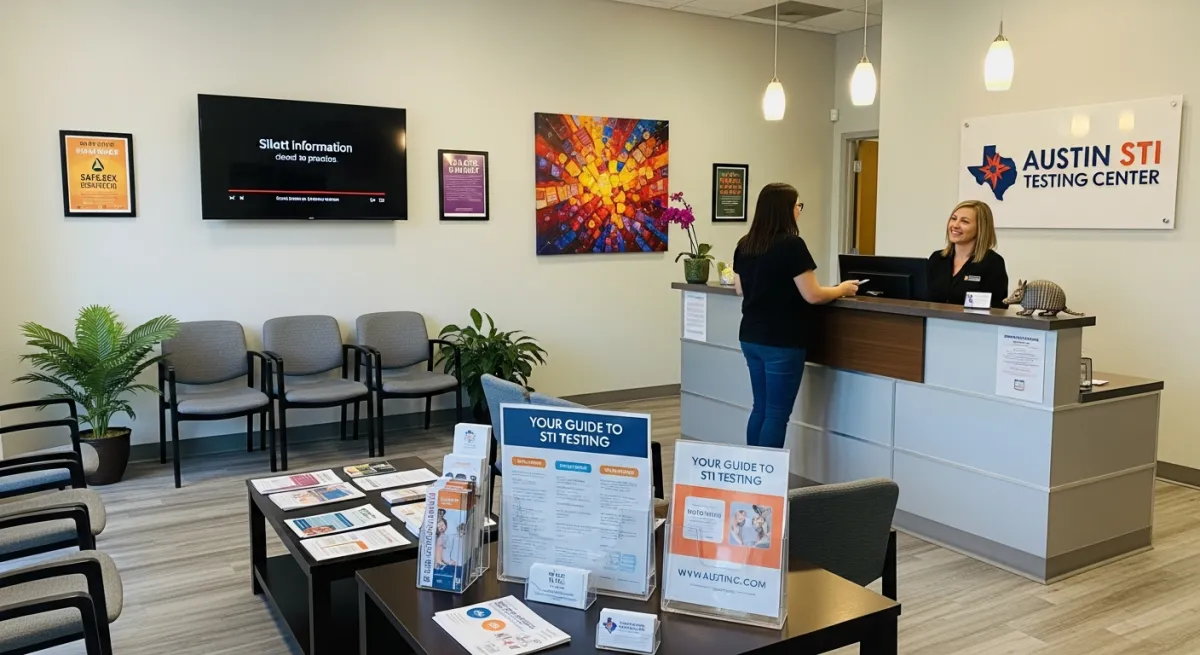
Same-day STI testing is genuinely available in Austin without an appointment. Multiple locations. A wide range of costs. No bureaucratic friction. Whether you’re uninsured, underinsured, a minor, or simply want to know your status as quickly as possible, Austin has walk-in options that work. The harder part is knowing which clinic fits your situation, what a test actually covers, and what to realistically expect when you walk through the door.
This guide covers all of it: specific locations, pricing context for uninsured patients, what a “full panel” does and doesn’t include, at-home kit options with real clinical caveats, and your privacy rights under Texas law.
Same-Day Testing in Austin: Quick-Reference Table
Before the detail, here’s the answer to the immediate question. All three of these providers offer walk-in same-day testing at their Austin locations as of publication. Addresses, hours, and pricing below reflect the best available information. Confirm directly before traveling — all three shift on their own schedules, and there’s nothing worse than making a trip that turns out to be wasted.
| Provider | Address | Walk-In Hours | Cost (Uninsured) | Result Turnaround |
|---|---|---|---|---|
| Kind Clinic | Verify current address at kindclinic.org before visiting | Varies; check same-day availability online | Sliding scale; verify current rates with clinic | Rapid HIV: same-day; full panel: verify with clinic |
| Austin Public Health Sexual Health Clinic | Historically near 6800 Burleson Rd. area—verify current location at austintexas.gov/health before visiting | Walk-in hours vary with city budget cycles—verify schedule before going | Free or low-cost for most STI services; sliding scale | Rapid HIV results available on-site; other results vary—confirm with clinic |
| Planned Parenthood Greater Texas | Verify current Austin location(s) at plannedparenthood.org/planned-parenthood-greater-texas before visiting | Walk-in accepted; 1–3 hr wait at peak times | Sliding scale; ask front desk for out-of-pocket estimate before services begin | Verify current turnaround with clinic |
Hours and pricing shift. Confirm directly before traveling.
Kind Clinic — Low-Barrier Walk-In Testing
Kind Clinic is Austin’s most accessible full-service walk-in STI testing option for patients without appointments. The clinic was founded to serve people who face barriers to sexual health care — financial, geographic, or social — and its operational model reflects that in concrete ways. It’s located in the South Lamar corridor. Verify the current address at kindclinic.org before visiting.
The clinic uses a sliding-scale fee structure where patients who qualify based on income can be seen at significantly reduced or no cost. The income threshold isn’t stringent. It’s designed to serve the significant chunk of Austin’s population that earns too much for Medicaid but not enough to absorb large out-of-pocket lab visits — a category that probably includes more people reading this than you’d expect. Patients who don’t qualify for the lowest tier still pay below market rate. Verify current pricing with the clinic directly.
Kind Clinic doesn’t require insurance. Whether a government-issued ID is required should be confirmed directly with the clinic by calling ahead if documentation is a concern. The clinic’s low-barrier model is specifically designed for populations that have historically avoided care due to documentation anxiety, including undocumented residents and people experiencing housing instability.
A standard Kind Clinic panel covers HIV (with rapid testing available for same-day results), chlamydia, gonorrhea, and syphilis. Hepatitis C testing is also available. Patients can request additional testing — see the herpes discussion in the panel coverage section below — but you have to ask explicitly. Don’t assume it’s included. The intake process is straightforward: you arrive, check in, and are seen by a clinician. No referral required. Kind Clinic was built with LGBTQ+ patients as the primary population in mind, which shapes everything from intake forms to how clinicians approach risk conversations. That’s relevant context for patients who’ve had negative or uncomfortable experiences with sexual health conversations at more traditional providers. The clinic sees all patients, regardless of identity.
Rapid HIV results are available during your visit. Confirm full panel turnaround times directly with the clinic when you call or check in. Kind Clinic’s website allows patients to check walk-in capacity before traveling. Given high demand, checking ahead is worth the two minutes.
Austin Public Health Sexual Health Clinic — The Free Option
Austin Public Health operates a dedicated sexual health clinic that remains Austin’s best option for free or near-free testing. The clinic is located in Southeast Austin — historically near 6800 Burleson Rd., Building 310, in the airport corridor area. Verify the current address at austintexas.gov/health before visiting. Public health clinic locations can change.
This location is worth naming plainly: it’s not walkable from downtown, it’s not close to UT, and if you’re without a car, getting there requires real planning. That’s not a complaint, just useful information.
The clinic doesn’t charge for most STI testing services. HIV, chlamydia, gonorrhea, and syphilis testing have historically been available at no cost, and the threshold for qualifying is generous. This is the right destination for patients who can’t pay anything out of pocket.
APH Sexual Health Clinic operates walk-in hours on a schedule that has historically run on weekday mornings, with morning slots filling fastest. The specific hours are subject to change based on city budget cycles and staffing — and Austin Public Health has faced funding fluctuations that occasionally compress walk-in availability. Before you go, call the clinic directly or check the Austin Public Health website for the current schedule. Showing up on the wrong day wastes a trip and that’s genuinely frustrating when the visit already takes planning.
Here’s where APH holds a meaningful advantage over some other providers: Texas law permits anonymous HIV testing at designated sites, and Austin Public Health’s sexual health clinic has historically operated as one of those designated sites. The distinction matters more than people realize. Anonymous testing means your name is never attached to the sample. No record connects you to the test or its result. This differs from confidential testing, where your name is on file but legally protected from most disclosures. If your primary concern is that a positive result not be connected to your identity in any database — not to an insurer, not to an employer, not to a file anywhere — anonymous testing at APH is how you achieve that in Austin. Confirm with the clinic directly that anonymous testing is still available when you call, as designated-site status can change.
Bring whatever documentation you have, but don’t let the absence of ID stop you from going. Free public health clinics are designed to serve patients without insurance and aren’t running a documentation checkpoint at the door. Expect a wait. This is a public clinic operating on a limited budget with high demand. The service is thorough.
Planned Parenthood — What’s Changed in Texas Since 2021
Planned Parenthood Greater Texas still operates Austin locations and still provides STI testing. But the honest version of this section has to acknowledge that Planned Parenthood’s Texas footprint looks different than it did several years ago, and that has direct implications for uninsured patients.
In 2021, Planned Parenthood Greater Texas lost its Title X federal family planning funding after Texas excluded the organization from the state’s Title X network. Title X is the federal program that made deeply discounted or free contraception and sexual health services available to low-income patients at Planned Parenthood nationwide. Without that funding, Planned Parenthood Texas affiliates can no longer offer the same low-cost baseline that patients may remember — or that their friends in other states still experience. Services are still available on a sliding scale for uninsured patients, but the pricing floor is higher than before. Some patients who previously paid nothing now pay something. That’s worth knowing before you go.
Verify which Austin locations are currently operational directly at plannedparenthood.org/planned-parenthood-greater-texas before visiting. Location details should be confirmed rather than assumed.
Planned Parenthood accepts walk-in patients, but at high-traffic times — evenings, Saturdays, first weekdays after a holiday — wait times of one to three hours are realistic. If your schedule allows, calling ahead or using the online scheduling tool to grab a same-day slot cuts that wait significantly. Uninsured patients are seen on a sliding-scale fee structure based on income. Since the Title X funding loss, the lowest-income tier pricing has shifted. Uninsured patients should ask the front desk specifically what the visit will cost before services begin. This is a completely reasonable question, and the staff expects it. Lab results are delivered through the patient portal. Confirm specific turnaround times with the clinic when you visit.
What “Full Panel” Actually Means — and What It Misses
This is one of the most important sections in this guide, and honestly, it’s the part that most people leave a clinic not knowing.
A standard STI panel at most Austin clinics — and nationally — tests for four things: chlamydia, gonorrhea, syphilis, and HIV. That’s it. Patients often leave believing they’ve been “tested for everything” when they’ve actually been tested for four specific infections. Herpes simplex (HSV-1 and HSV-2) is routinely excluded from standard panels at most clinics, often without the patient being told about that omission. If you want herpes testing, you need to ask for it explicitly. That conversation won’t start itself. For people with a cervix, HPV is detected through Pap smears and co-testing, not an STI panel. For other patients, current diagnostic options are limited. Don’t leave a clinic assuming you’ve been cleared for HPV because your panel came back negative — those are two different things.
Trichomoniasis is also often absent from standard panels unless specifically ordered. If you have symptoms consistent with trichomoniasis, ask for it by name.
When you arrive at any Austin clinic for STI testing, ask the clinician directly: “What exactly am I being tested for today?” Ask whether herpes and trichomoniasis can be added. A good clinician will have a direct conversation with you about risk-based testing rather than running a default panel without discussion. If that conversation doesn’t happen on its own, start it yourself.
At-Home and Telehealth Testing — Useful for Austin Residents, With Real Caveats
At-home STI testing has improved meaningfully as a category and is a legitimate option for many Austin residents. This is especially true for those in outer suburbs — Cedar Park, Pflugerville, Leander, Round Rock — who face a real drive to reach any of the above clinics. If a 45-minute round trip is the thing standing between you and knowing your status, an at-home kit is worth taking seriously.
Nurx, Everlywell, LetsGetChecked, and myLAB Box are established mail-order testing services that ship to Texas. These services offer panels covering chlamydia, gonorrhea, syphilis, and HIV through clinically validated tests using urine samples, swabs, or finger-prick blood draws depending on the infection. You order online, collect the sample at home, mail it back, and receive results through a secure portal. Everlywell kits are sold at Austin CVS and Walgreens locations. Verify current local stocking through the CVS and Walgreens store locators, as inventory varies by location. Everlywell’s tests are FDA-authorized.
Most at-home panels don’t include herpes or trichomoniasis — same gap as clinic panels, same caveat applies. Read the specific panel contents before ordering. Don’t assume comprehensive coverage.
Here’s the important part: a positive result from an at-home kit requires clinical follow-up. You can’t treat a positive chlamydia or gonorrhea result with a prescription from your testing kit. You need a clinician to prescribe antibiotics or other treatment. At-home testing answers the diagnostic question. It doesn’t answer the treatment question. Telehealth services including Wisp and Nurx operate in Texas and may be able to connect patients who test positive at home with clinical follow-up. Verify current Texas service availability and prescribing scope directly with each provider before relying on them for treatment, as telehealth rules and service areas vary.
Free and Low-Cost Testing Events in Austin
Texas HIV Connection hosts and promotes free HIV and STI testing events across the state, including in Austin. Their event finder at texashivconnection.com is the most reliable ongoing source for Austin-area community testing. The CDC’s gettested.cdc.gov site also aggregates local testing locations and occasional event listings.
Out Youth Austin focuses on young people up to age 24 and offers or connects clients to free sexual health services — part of our health & wellness coverage of low-barrier care in Austin. If you’re under 24, Out Youth is a resource that operates with a real understanding of the specific barriers that age group faces — including parental consent concerns, cost, and stigma. Worth knowing about.
National HIV Testing Day falls on June 27 each year, and National STI Awareness Week occurs in April. Both typically generate a cluster of free testing events across Austin, organized by community health organizations and local nonprofits. In the weeks surrounding those dates, check Texas HIV Connection and Austin Public Health’s announcements for specific event listings.
UT Austin Health Services provides STI testing to enrolled UT students at the Student Health Center on campus. This isn’t a public resource — you need to be a currently enrolled UT student to use it. But for Austin’s large student population, it’s worth naming: testing is low-cost, on-campus, and covered partly through student health fees. Community testing events change dates, move locations, and sometimes cancel on short notice. This article can’t stay current on specific event schedules. Use Texas HIV Connection and gettested.cdc.gov as your live sources, and check Austin Public Health’s announcements for city-organized events.
Cost, Insurance, and ID — Straight Answers for Uninsured Patients
The anxiety around cost and documentation is a genuine barrier to care. Here’s how it actually breaks down by clinic.
Kind Clinic requires no insurance. The sliding-scale model is specifically designed to serve uninsured patients, including those without income documentation. Whether a government-issued ID is required should be confirmed with the clinic directly. The clinic’s low-barrier model is built for patients who’ve historically avoided care because of cost or documentation concerns — that’s not marketing language, it’s the operational design.
Austin Public Health provides testing at no cost for most services. APH is a public health clinic designed to serve patients without insurance. If you want anonymous HIV testing — no name attached to the sample — APH has historically been a designated anonymous testing site in Austin. Confirm this remains the case when you call.
Planned Parenthood accepts insurance and bills when available. Uninsured patients are seen on a sliding scale. Since the Title X funding loss, the lowest-income tier pricing has shifted. Uninsured patients should ask the front desk about their out-of-pocket estimate before services are provided. Call ahead if documentation is a concern.
For uninsured Austin residents who don’t qualify for the lowest sliding-scale tier, a full STI panel at a walk-in clinic can be a significant expense. Kind Clinic’s sliding scale is the most aggressive in cutting that cost for qualifying patients. At-home kits from services like Everlywell or Nurx represent a mid-range option — they don’t require transportation, which matters. Austin’s uninsured population is substantial: gig workers, early-career residents, people between jobs, younger residents who’ve aged off a parent’s plan. The cost question isn’t hypothetical for a lot of people in this city. The sliding-scale clinics in this guide exist because that population is large and the need is real.
Privacy Rights and What Texas Law Actually Requires Clinics to Report
The privacy question is the one patients are often most hesitant to ask directly. Here are straight answers.
Confidential testing means your name is attached to your test results, and those results are part of your medical record. They’re legally protected from disclosure to employers, insurers, or family members under standard medical privacy law. The exception is mandatory public health reporting, described below. Anonymous testing means your name is never attached to the sample or result at all. A code number tracks your sample. No record connects it to your identity. Anonymous HIV testing is available at designated sites in Texas. Austin Public Health has historically been one. It’s the appropriate choice if your concern is identity-based, not just third-party disclosure. Confirm anonymous testing availability with APH directly before your visit.
Texas law requires clinics to report positive results for HIV, syphilis, gonorrhea, and chlamydia to the Texas Department of State Health Services. This is a public health function — it’s how the state tracks disease trends and facilitates partner notification programs. What this reporting does not involve: your employer, your insurance company, your landlord, your family members, or anyone not involved in public health disease surveillance. A report to DSHS is not a report to anyone in your personal life.
Under Texas Family Code §32.003, a minor can consent to STI testing and treatment without parental consent. This is state law, not clinic policy, which means it applies at Kind Clinic, Planned Parenthood, and Austin Public Health alike. A teen who wants to be tested doesn’t need a parent present, a parent’s signature, or a parent’s knowledge. If a clinician or front-desk staff ever suggests otherwise, that’s worth pushing back on — cite the statute directly.
One more thing worth knowing: if you use your health insurance to pay for STI testing, the claim will appear in your Explanation of Benefits, which may be mailed to the policyholder. This is relevant if you’re on a parent’s or partner’s plan and the mail goes to their address. Paying out of pocket or using a sliding-scale free visit avoids that paper trail if privacy is a concern.
Same-day STI testing in Austin is available, affordable, and in several cases completely free. The main barrier for most people isn’t the testing itself — it’s knowing where to go, what it’ll cost, and what to expect when you get there. Kind Clinic on South Lamar is the right first call for most uninsured walk-in patients; verify the current address before heading over. Austin Public Health is where you go if cost is genuinely zero and anonymous testing matters; verify the current location and walk-in hours before making the trip. Planned Parenthood remains operational with important caveats about pricing since 2021. At-home kits work as a diagnostic tool but require clinical follow-up for treatment. And whatever clinic you visit: ask what you’re actually being tested for before you leave. That question matters more than most people realize.