What Austin's Current Drought Stage Means for Your Yard, Sprinklers, and Water Bill
Austin Water's outdoor watering rules are triggered by a number on a gauge at Lake Travis, not by a bureaucrat's judgment call. Here's what that number means for your lawn right now, and what happe…

Austin Water’s outdoor watering rules are triggered by a number on a gauge at Lake Travis, not by a bureaucrat’s judgment call. Here’s what that number means for your lawn right now, and what happens if you ignore it.
Editor’s note: This article requires live data pulls from lcra.org/highlakes, austintexas.gov/department/water-restrictions, and austintexas.gov/waterwise before publication. All figures marked [VERIFY] below must be confirmed against current sources and replaced with accurate values before this piece goes live. The structural framework, explanations, and verification instructions throughout are publication-ready; the live figures are not. Do not publish with placeholder values.
Where the Highland Lakes Stand Right Now
As of [DATE OF PUBLICATION], the combined storage level for Lake Travis and Lake Buchanan sits at [VERIFY: combined storage percentage from lcra.org/highlakes] percent of capacity. Those two reservoirs supply the Highland Lakes system and, through it, most of Austin’s drinking water.
That number is not a forecast or a political determination. It’s a gauge reading, updated daily by the Lower Colorado River Authority. When combined storage drops below certain thresholds — [VERIFY exact LCRA threshold percentages that correspond to each Austin Water stage] — Austin Water has no discretion. The stage changes, the restrictions tighten, and the fine structure changes with them. No committee vote. No mayoral press conference. Just a number crossing a line.
Drive State Highway 71 west through Lakeway or take RM 2222 toward the lake this month and you can see the math in physical form. The exposed caliche at Lakeway Marina. The widening band of pale limestone above the waterline at Starnes Island boat ramp. Western Austin commuters who pass those landmarks daily are watching the same variable that determines whether their irrigation timer is legal this week.
July is when this matters most. Historically, the Highland Lakes hit their annual low point in midsummer. Snowmelt from the Edwards Plateau is long gone. Monsoonal moisture from the Gulf hasn’t arrived reliably. Residential water demand is at its peak. This article exists because the rules are in force, fines are being issued, and the question of whether you can run your sprinklers on a Tuesday morning has a specific legal answer.
The Active Drought Stage and What It Actually Bans
As of [DATE OF PUBLICATION], Austin Water is operating under [VERIFY: Stage 1, 2, 3, or 4 from austintexas.gov/department/water-restrictions].
What follows is a plain-language translation for a residential homeowner — not the regulatory PDF, not the glossary of prohibited “non-essential outdoor water use.” Just what you can and cannot do in your yard this week.
Automatic irrigation systems are restricted to [VERIFY: specific frequency, e.g., once per week]. Watering between 10 a.m. and 7 p.m. is prohibited. [VERIFY: confirm current prohibited hours against the active stage rules.] Runoff into streets or gutters is prohibited regardless of stage or time of day. Washing hard surfaces with potable water — driveways, sidewalks, parking lots — is prohibited unless health or safety conditions require it. [VERIFY current exceptions.]
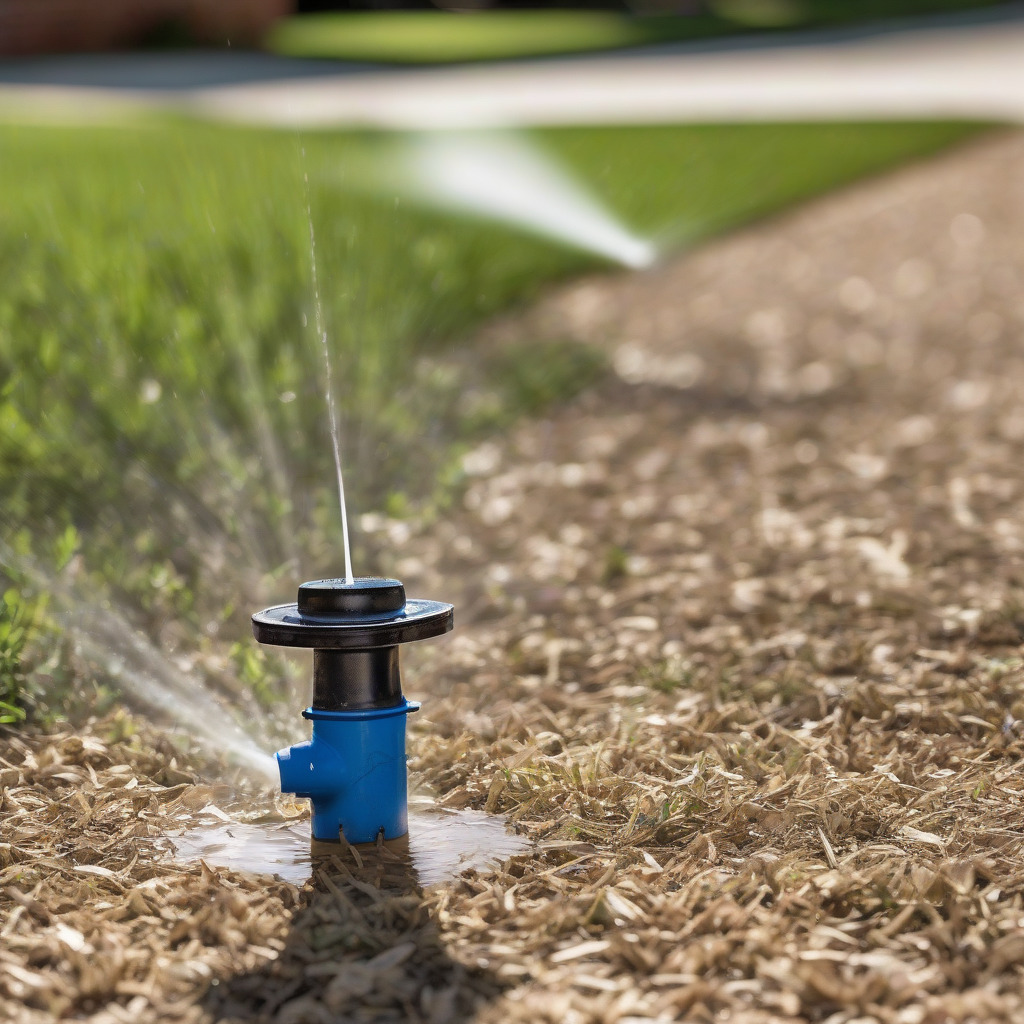
One thing homeowners consistently misread: restrictions apply to the type of irrigation equipment, not just the schedule. A Rainbird pop-up system and a drip emitter on a crape myrtle follow different rules. That breakdown is in Section 4.
Drip irrigation and soaker hoses remain permissible outside the midday prohibited window because they deliver water to root zones with minimal evaporation and runoff. Hand-watering with a shutoff nozzle has historically been unaffected by stage increases because it allows precise, user-controlled application. [VERIFY both exemptions remain in place under the current active stage.]
If August brings typical heat and no significant rainfall — the historical baseline, not an outlier — a stage increase is possible. Austin Water can escalate within [VERIFY: the escalation timeline under the current Water Conservation Plan, typically tied to a specific number of days at a threshold storage level or a rapid drop rate]. The watering rules would tighten further.
Check austintexas.gov/department/water-restrictions if you’re reading this more than two or three weeks after publication. The current stage is not a ceiling.
Your Watering Day: Which Days, What Hours, and How to Look Up Your Address
This is the section most Austin homeowners actually need, so let’s keep it short.
Under the current [VERIFY: active stage], residential customers using automatic irrigation or sprinklers are limited to [VERIFY: once per week / once every two weeks], and only before 10 a.m. or after 7 p.m. [VERIFY: confirm current prohibited hours] on your assigned day.
The assigned day is determined by your street address number. Not your zip code. Not your neighborhood. Not anything your HOA posted. Austin’s odd/even address system works as follows: [VERIFY all specifics against current stage rules.] Odd-numbered addresses (4317 Speedway, 1103 S. 1st Street) are assigned to [VERIFY: historically Sundays and/or Thursdays in Stage 1]. Even-numbered addresses (4318 Speedway, 2204 Barton Hills Drive) water on [VERIFY: historically Saturdays and/or Wednesdays in Stage 1].
To confirm your specific day, go to austintexas.gov/department/water-restrictions and use the address lookup tool. Enter your street address and it returns your assigned watering day and current restrictions. [VERIFY: confirm the lookup tool is live and functioning at publication.]
Corner lots, addresses spanning a range, and shared irrigation systems in condo or townhome complexes don’t always resolve cleanly through odd/even logic. For those, call Austin Water’s customer service line. The number is at austintexas.gov/department/water-restrictions.
Drip, Hand-Watering, Pools, Pressure Washing, and New Plantings
Austin Water’s restriction documents lump equipment categories together in ways that obscure meaningful practical differences. Running a drip emitter on a newly planted fig tree is not the same thing as running a rotary sprinkler head on a St. Augustine lawn at 2 p.m. on the wrong day, but you’d have to read carefully to find where the rules treat them differently. Here’s the breakdown by activity type, part of our home & property coverage of what Central Texas ownership actually costs to maintain.
All entries below require [VERIFY] confirmation against current Austin Water stage rules before publication. The categories are correct; the permitted/restricted designations must be verified.
| Activity | Current Status | Conditions |
|---|---|---|
| Automatic irrigation / sprinkler systems | [VERIFY: Restricted to assigned day and permitted hours] | Odd/even schedule applies; prohibited between 10 a.m.–7 p.m. [VERIFY hours] |
| Drip irrigation and soaker hoses | [VERIFY: Typically permitted any day, outside prohibited midday hours] | Must not cause runoff; confirm current stage exemption status |
| Hand-watering with a shutoff nozzle | [VERIFY: Typically permitted any day, any time] | Shutoff nozzle required; free-flowing hose without shutoff is prohibited |
| Newly planted sod, trees, or plants (30-day exemption) | [VERIFY: Exemption exists; confirm it applies in current stage] | Applies for 30 days after planting; documentation of planting date recommended; confirm daily watering specifics |
| Pool filling (initial fill) | [VERIFY: Typically restricted; may require variance] | Contact Austin Water Conservation at 512-974-2199 [VERIFY number] |
| Pool topping off (evaporation loss) | [VERIFY: Typically permitted in limited amounts] | Confirm current stage allowance |
| Vehicle washing | [VERIFY: Typically restricted to commercial car washes with recirculating water, or bucket/shutoff nozzle at home] | Confirm current stage specifics |
| Pressure washing of hard surfaces | [VERIFY: Typically prohibited for non-essential cleaning] | Exception may exist for health/safety reasons; confirm |
On the 30-day new-plant exemption: if you installed sod, planted a nursery tree, or put in landscape plants within the past 30 days, you can water those specific plants more frequently than your assigned irrigation day to support establishment. This exemption does not cover your entire yard, and it doesn’t suspend the prohibited midday hours. [VERIFY the current exemption terms and whether any documentation or notification to Austin Water is required under the current stage.]
Drip irrigation receives more permissive treatment than overhead irrigation across all of Austin Water’s stages because it delivers water directly to root zones with minimal evaporation and runoff. That distinction reflects the actual language of the restrictions, which differentiate between irrigation methods, not just schedules.
The Fine, Who Enforces It, and How Violations Get Reported
The fine for a first residential violation under the current stage is [VERIFY: dollar amount from the Austin Code enforcement page or Austin Water penalty schedule]. A second violation within 12 months escalates to [VERIFY: second-violation fine amount]. Subsequent violations carry higher penalties.
Austin Code Department enforces water restrictions, not Austin Water. Austin Water handles billing, account status, and the rule-setting framework. Citations come from Austin Code officers. If you receive a notice or a violation, the relevant agency is Austin Code. Their contact number is at austintexas.gov.
After repeated violations, Austin Water also has authority to install a flow restrictor on your service connection. That’s worse than the fine. A restrictor physically caps your water pressure and flow — affecting indoor and outdoor use — until Austin Water removes it.
Enforcement is primarily complaint-driven, through Austin 311: phone (dial 3-1-1 within Austin), the Austin 311 app, or austintexas.gov/311. When a neighbor or Austin Code officer sees a sprinkler running at noon on a Thursday when your address number puts you on a Wednesday schedule, a 311 complaint starts the process. Austin Code conducts some active patrols in residential areas during peak summer months [VERIFY: whether Austin Code has confirmed active patrol activity for the current publication period], but the volume of potential violations citywide makes complaints the primary trigger.
Commercial properties — strip centers, apartment complexes, restaurants — are subject to the same drought stage restrictions and frequently violate them with automatic controllers nobody has reprogrammed. A single 311 report creates a documented complaint Austin Code is required to investigate. When you file one, note the wet pavement, the actively running heads, or the irrigation tracks on dry surrounding soil, and submit photographs through the 311 app. Austin Code bears the documentation burden after a complaint is filed, not the person who filed it.
If You Are Not on Austin Water
Your zip code does not tell you which utility serves your property. A 78746 address in Westlake Hills may be on the West Lake Hills Water System, a Water Control and Improvement District, or Austin Water. Same zip, different rules. People assume wrong on this more than you’d expect.
Each utility sets its own restriction schedule independently. A smaller system with less storage capacity may have stricter restrictions than Austin Water during the same drought period — not looser.
West Lake Hills Water System serves portions of the City of West Lake Hills. Current restriction status: [VERIFY at westlakehills.org or by contacting the city directly.]
City of Bee Cave purchases treated water from LCRA rather than Austin Water. Current restriction status: [VERIFY at beecavetexas.gov or LCRA’s retail customer information page.]
Rollingwood is a small municipality inside Austin’s ETJ. Water provider: [VERIFY: Austin Water or independent system.] Current restriction status: [VERIFY.]
Travis County WCIDs operate across unincorporated western Travis County under independent board governance and independent restriction authority. Identify your WCID from the header on your water bill, then go directly to that district’s website or call their operations number.
The rule is simple: look at your water bill. The entity named at the top is the one whose restrictions govern your property. If it says Austin Water, this article applies to you. If it says anything else, go to that entity’s current restriction page before assuming anything here applies to your address.
Cedar Park, Round Rock, and Georgetown each operate under agreements with LCRA and the Brazos River Authority. Cedar Park Water, Round Rock Water Utilities, and Georgetown Utility Systems set their own restriction schedules. Start at your city’s utility department website.
The WaterWise Rebate Program: Current Funding Status and Application Timeline
Most Austin homeowners in July are focused on the restrictions they’re trying to comply with. Fewer know that Austin Water will pay them to reduce how much irrigation their yard needs in the first place. The WaterWise Landscape Rebate program does exactly that.
July timing matters here for a concrete reason: rebate funding pools have run dry in high-demand summers, sometimes mid-year. Before spending money on any project, call Austin Water Conservation at 512-974-2199 [VERIFY current number] and ask whether rebate funds are still available for the current fiscal year. Staff can answer that in about two minutes. In previous summers, funding has run out by late July or August. Completing a turf removal project after the pool depletes means absorbing the full cost yourself.
Current rebate amounts as of [DATE OF PUBLICATION] [VERIFY all figures at austintexas.gov/waterwise]:
Turf removal and xeriscape conversion: [VERIFY: dollar amount per square foot; Austin Water has historically offered rebates for turf removal; confirm current rate] per square foot of qualifying turf replaced with drought-tolerant landscaping. Maximum rebate cap per residential property: [VERIFY current cap.] Smart irrigation controller rebates apply to EPA WaterSense-certified controllers at [VERIFY: current rebate amount]. Rain barrels: [VERIFY: current rebate amount]. Qualifying barrels must meet program specifications listed on the WaterWise page.
The application process requires pre-approval before any work begins. Do not remove turf, buy a controller, or start any project before receiving pre-approval from Austin Water Conservation. Work completed before pre-approval is ineligible, full stop. After approval, complete the work within the allowed project window [VERIFY: current completion timeline] and submit before-and-after photographs, receipts, and the completed application form. Austin Water may conduct a site inspection before issuing payment for larger turf removal projects. [VERIFY whether inspection is required at current rebate tiers.] Payment arrives as a bill credit or check, depending on your account status. [VERIFY current payment method.] Apply at [VERIFY: current online application portal URL at austintexas.gov/waterwise].
Why Following the Restrictions May Actually Lower Your Bill
The civic-duty argument for drought stage compliance is real but doesn’t move most people in July when they’re watching their St. Augustine go brown. So here’s the financial version.
Austin Water uses a tiered rate structure for residential billing. The base tier covers typical indoor household use at the lowest per-gallon rate. As monthly consumption climbs above certain thresholds, each additional gallon gets progressively more expensive. The top tiers are specifically designed to make high-volume outdoor irrigation hurt. [VERIFY current Tier 1, 2, 3, and 4 thresholds in gallons per billing period and the corresponding per-gallon rate for each, from the FY2026 Austin Water rate schedule at austintexas.gov.]
A residential irrigation system running multiple days per week in Austin’s July heat can add [VERIFY: estimated gallons per watering cycle for a typical Austin lawn; Austin Water has published estimates for typical 6,000–8,000 sq. ft. lots with standard zone configurations] gallons per cycle to a household’s monthly total. Run that system three or four times a week and you’re in Tier 3 or Tier 4, at [VERIFY: current Tier 3 and 4 rates] per gallon — a materially higher rate than what covers your first [VERIFY: Tier 1 threshold] gallons. Homeowners who want to weigh these ongoing costs against longer-term housing decisions will find useful context in this rent-vs.-buy analysis for Austin in 2026.
Drought stage restrictions cap outdoor irrigation at a frequency that keeps most households in lower billing tiers. A homeowner frustrated about watering once a week may find, when the July bill arrives, that the restriction produced real savings compared with an unrestricted schedule. Austin Water publishes a residential water use calculator at [VERIFY: URL] that lets you model your monthly consumption against the current tier structure before the August bill cycle closes.
Austin Water Restrictions at a Glance: Bookmark This
Last verified: [DATE OF PUBLICATION]. Check back if drought stage changes.
| Item | Current Status |
|---|---|
| Current drought stage | [VERIFY: Stage 1 / 2 / 3 / 4] |
| Permitted watering days | [VERIFY: Once per week / Once every two weeks; Odd addresses: ___; Even addresses: ___] |
| Permitted watering hours | [VERIFY: Before 10 a.m. and after 7 p.m.] |
| Drip irrigation and soaker hoses | [VERIFY: Permitted any day, outside prohibited midday hours] |
| Hand-watering with shutoff nozzle | [VERIFY: Permitted any day] |
| First-violation fine | [VERIFY: $___] |
| WaterWise rebate funding | [VERIFY: Funded / Depleted / Waitlist] |
| Address lookup tool | austintexas.gov/department/water-restrictions |
| Report a violation | Austin 311 (phone: 311, app, or austintexas.gov/311) |
| Austin Water Conservation | 512-974-2199 [VERIFY] |
| Next update recommended | If LCRA storage changes by more than 5 percentage points or drought stage escalates |
CityDesk Austin will update this article when the drought stage changes or when new LCRA storage figures reflect a meaningful shift. The LCRA Highland Lakes storage level is updated daily at lcra.org/highlakes. Austin Water’s current restriction page is at austintexas.gov/department/water-restrictions.