What Austin Home Inspectors Are Actually Finding in 2026
A look at the clay-soil readings, hail-damaged roofs, and East Austin electrical panels that sellers disclose around but inspectors still flag — and why buyers closing in summer face a specific con…


A look at the clay-soil readings, hail-damaged roofs, and East Austin electrical panels that sellers disclose around but inspectors still flag — and why buyers closing in summer face a specific convergence of risks.
The bungalow looks sharp from the curb. Fresh hardie siding, a repainted porch, new light fixtures visible through the front window. The sellers did their homework on cosmetics. What renovated East Austin homes often conceal is what didn’t get opened, replaced, or permitted: the attic hatch, the crawl space, the wall behind the new drywall.
This pattern dominates summer 2026. Cosmetic renovation hiding real problems. Buyers under schedule pressure reluctant to push back. It unfolds against a seasonal backdrop that makes this window more treacherous than most buyers realize — and if you’re closing right now, you should probably read this slowly.
July Is the Single Riskiest Month to Rush a Closing
Three forces converge in July that don’t converge at any other point in the transaction calendar, and all of them push in the same direction: toward buyers absorbing risk they can’t fully see.
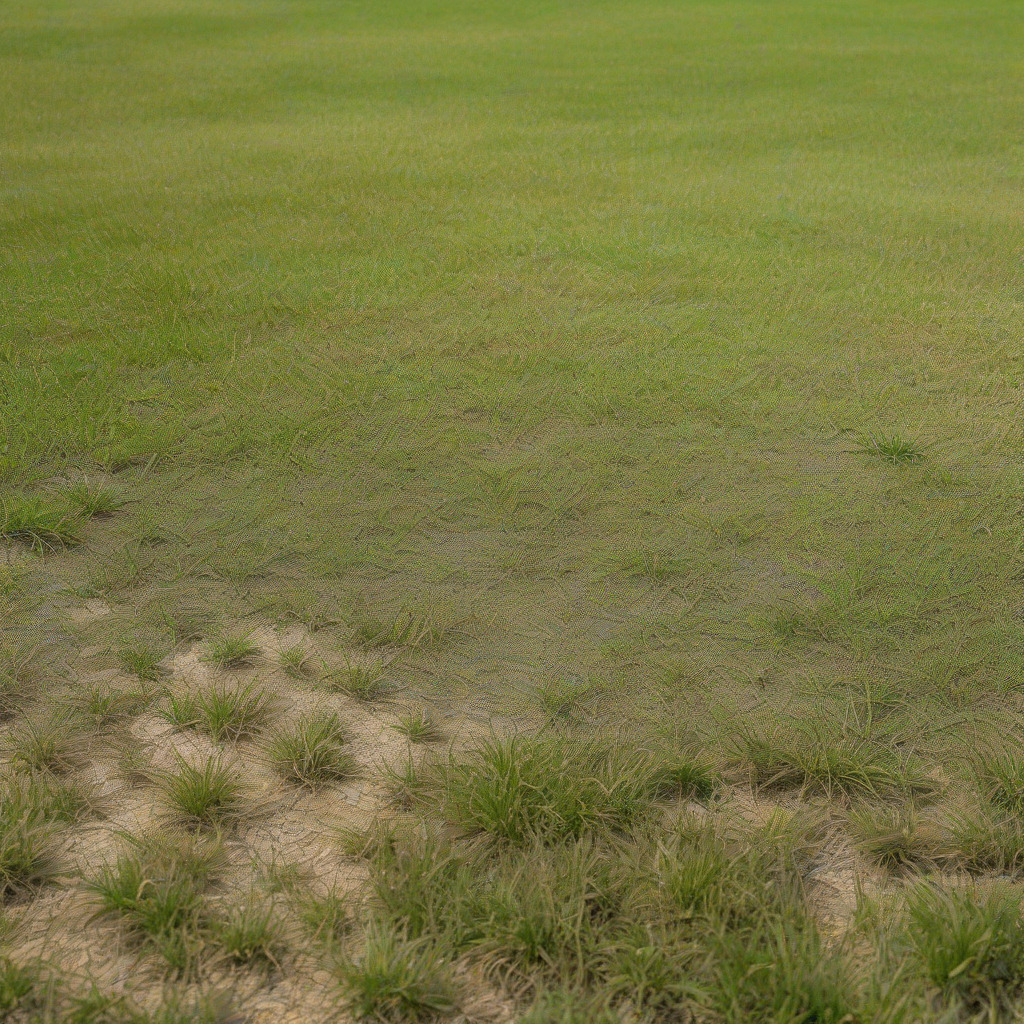
Austin’s Blackland Prairie soils east of I-35 are predominantly montmorillonite-heavy expansive clay. They shrink dramatically in dry summer heat and expand after significant rain. July typically represents maximum annual shrinkage. For an inspector reading a foundation, this creates a real complication: the movement is most visible right now, but without moisture-history context, it can also be misread.
A pier-and-beam home that looks worrisome in July may simply be reflecting seasonal contraction, not progressive structural failure. A seller who’s been running soaker hoses around the perimeter may be actively suppressing visible symptoms. If you’re inspecting in July, ask the inspector directly: “Would this look different if you came back in February after two months of rain?” That’s not a trick question. It’s the question.
The Austin metro absorbed hail events during the spring 2025 storm cycle. Damage from that season — now more than a year old — has moved through the system unevenly. Some sellers repaired and disclosed. Others filed insurance claims and spent the payout elsewhere. Still others genuinely don’t know their roof took a hit, particularly on older asphalt shingles where the visual difference between hail bruising and normal weathering requires a trained eye. In summer 2026 inspections, that damage is still being found. Quietly.
Calendar pressure is real for families trying to secure a school seat before fall. The pattern accelerates every June and July: buyers who schedule a standard inspection and then skip the follow-up structural engineer consultation, skip the sewer scope, and let the option period expire before getting repair bids. In desirable East Austin neighborhoods, this cuts deepest. “People are making $600,000 decisions in ten days,” is how transaction professionals in 78702 and 78721 consistently put it. “And they spend the first three of those days figuring out what the inspection report actually means.”
This has been true every June and July for about a decade. The market doesn’t slow down long enough for buyers to catch their breath, and it won’t this summer either.
Clay Soil and What It Actually Looks Like in a Report
Most buyers gloss over the line in a standard TREC inspection report that reads something like: “Stair-step cracking observed in masonry veneer at northeast corner; recommend monitoring.” That phrase — recommend monitoring — carries real weight. It may signal something cosmetic. It may signal something that warrants a structural engineer’s review before you wire your down payment. The report won’t tell you which.
Stair-step cracking in brick or mortar follows the mortar joints in a staircase pattern, typically at corners or around window and door openings. This pattern reflects differential movement — the foundation isn’t settling uniformly. Not automatically catastrophic, but not cosmetic either. Sellers who tell you it’s “just how old houses are” aren’t necessarily lying. Many have been looking at that crack for years and genuinely stopped thinking about it.
Door and window binding — doors that stick, windows that won’t close flush — are structural symptoms sellers routinely attribute to humidity or age. In Austin’s clay soils, it frequently reflects the frame racking slightly as the foundation shifts. Plenty of sellers have been blaming their sticking back door on “the humidity” for years and believe it completely.
The most useful number in a foundation assessment is measured floor slope. Inspectors use a digital level to measure elevation changes across the floor plane. Structural engineers generally consider slopes exceeding one inch over twenty feet as warranting further review; slopes over two inches over twenty feet as significant. Push for those numbers. “Sloping observed” is nearly useless — it tells you something is happening without telling you how much.
Properties east of I-35 — Govalle, Cherrywood, Holly, MLK/Rosewood — sit disproportionately on Blackland Prairie clay. The Balcones Fault Zone runs roughly along I-35 and marks a soil transition that’s genuinely consequential for home buyers, not just geologically interesting. West of the fault, terrain trends toward limestone-based soils with far less volumetric change. East of it, you’re in expansive clay territory. This is not a minor distinction, and it doesn’t get less true just because the house has new quartz countertops.
When you’re getting an inspection in July, ask the inspector to document current soil moisture conditions and note whether visible irrigation — soaker hoses, sprinkler zones running at the perimeter — could be artificially stabilizing what they’re reading. If the inspector flags any foundation concern, including language as mild as “recommend monitoring,” budget for a licensed structural engineer’s report before your option period expires. An inspector identifies; an engineer diagnoses. Most buyers don’t appreciate that distinction until it’s too late.
Hail Damage: What Inspectors See Versus What Sellers Disclose
Hail damage on an asphalt shingle roof does not look like damage to a homeowner who climbs up for a quick look. It looks like the roof looks. That is the problem.
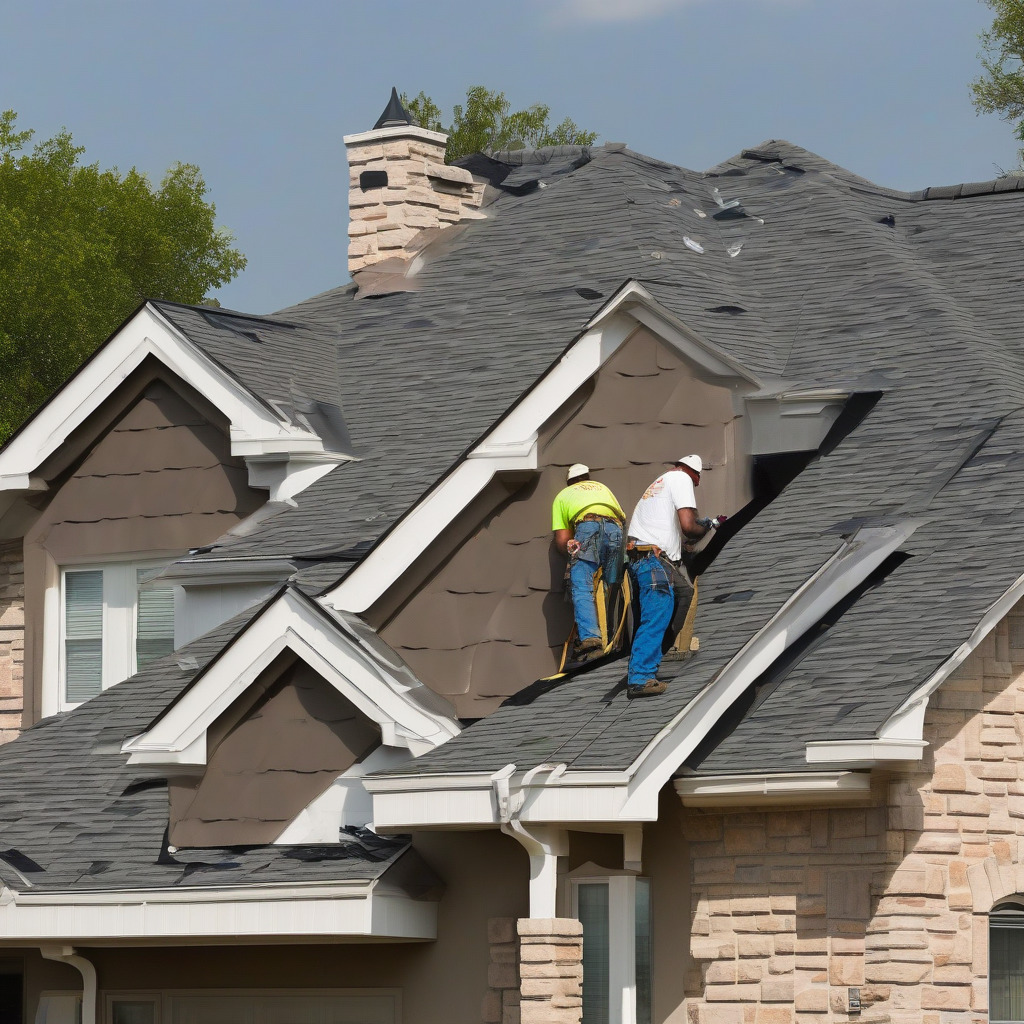
What a trained inspector sees is circular granule displacement. The asphalt granules that protect the underlayment are knocked loose by impact, leaving a darker, sometimes slightly indented mark that exposes the fiberglass mat beneath. This differs from blistering — a manufacturing defect creating raised bubbles — and from mechanical wear, which tends to be linear and irregular. Hail damage is circular, clustered, concentrated on the exposure portion of the shingle, distributed across the roof in a pattern that corresponds to storm direction. You would not recognize it. Your seller probably didn’t either.
The corroboration inspectors use is the soft-metal test: checking gutters, downspout caps, HVAC condenser fins, and window screen frames for dimpling. Hail hard enough to damage asphalt shingles leaves uniform, circular dents on soft metal. Dimpling on the gutters combined with granule loss on the shingles points to storm damage, not weathering. It’s the kind of thing you’d never think to look at yourself, which is exactly why you’re paying an inspector.
Two Texas-specific concerns follow from this. First, the insurance inheritance problem. Buyers who close on a hail-damaged roof without requiring repair face risk at renewal — Texas carriers have increasingly run aerial imagery scans at policy renewal, and a roof clearly damaged before the buyer took ownership can result in mid-policy non-renewal or coverage limitations on wind and hail. Confirm with your prospective insurer whether the roof’s current condition is bindable before closing, not after. [The Texas Department of Insurance’s specific current guidance on carrier use of aerial imagery requires verification with TDI directly.]
Second: when inspectors find hail damage, the options in order of buyer protection are straightforward — seller repairs the roof with a licensed contractor before closing; seller provides a credit sufficient to cover replacement cost based on an actual contractor bid; or buyer walks, which is what the inspection contingency exists to enable. Accepting a credit sized for cosmetic repair on a roof that actually needs full replacement is the single most avoidable costly mistake in the whole process. Buyers make it regularly, under schedule pressure, and regret it.
East Austin Renovated Bungalows and the Electrical Problem That Passes Disclosure
The zip codes 78702 and 78721 contain dense concentrations of pre-1960 pier-and-beam housing stock. Pull Travis Central Appraisal District data for either zip code and you’ll find blocks of homes built from the late 1920s through the 1950s, many of which changed hands during Austin’s renovation boom between 2015 and 2023.
The electrical problems inspectors are finding in these homes in 2026 share one feature: they survive seller disclosure because sellers frequently don’t know they exist. That’s not an excuse — it’s a reason the inspection exists in the first place.
Knob-and-tube wiring is the two-conductor, ungrounded system used in residential construction from roughly the 1880s through the 1940s. In a renovated bungalow, it often coexists with a modern panel — the original wiring was tied into new circuits rather than replaced. Inspectors find it most often in attics, crawl spaces, and walls behind new drywall, which is to say exactly the places a cosmetic renovation wouldn’t touch. Insurance carriers increasingly decline to bind policies on homes with active knob-and-tube circuits, or require immediate remediation as a condition of coverage.
Some Austin housing stock built between 1965 and 1973 has aluminum rather than copper branch circuit wiring. Aluminum expands and contracts differently than copper; connections can loosen over time in ways that create fire risk. This wiring requires specific receptacles and connections rated for aluminum. Inspectors flag homes where aluminum wiring is present but standard copper-rated devices have been installed — a detail that’s easy to miss and genuinely dangerous to ignore.
Federal Pacific Stab-Lok panels, common in homes built from the 1960s through the 1980s, have a documented failure rate: the breakers may not trip under overload conditions. Insurance carriers have been declining to bind or renew policies on homes with Federal Pacific panels at an increasing clip. Here’s the wrinkle: a renovated bungalow may have had its exterior panel replaced while a Federal Pacific sub-panel or the original service entrance equipment remains inside. New panel on the wall, old problem still in the system. Inspectors catch this. Sellers often don’t know it’s there.
Last: unpermitted 200-amp panel upgrades. The 2020–2022 renovation surge in East Austin produced a significant number of electrical upgrades completed without City of Austin permits. An unpermitted upgrade may have been done competently by a licensed electrician who skipped the paperwork, or it may have been done incompetently. Without a permit, there was no city inspection, and there’s no way to know which scenario you’re in. Buyers can cross-check permit history through the City of Austin Development Services Department public portal at austintexas.gov/department/permits before making an offer. If a seller claims a major electrical upgrade was completed but there’s no permit record, that question is worth asking before the option period starts — not during it, when you’re already running out the clock.
“The disclosure form asks sellers what they know,” as experienced Austin inspectors put it. “It doesn’t ask them what’s in their walls. Those are different questions.”
Pier-and-Beam vs. Slab: What Buyers Should Ask Right Now
Inspectors approach Austin’s two dominant foundation types with fundamentally different checklists. Buyers should too.
Pier-and-beam foundations dominate the pre-1960 East Austin housing stock. Concrete or wood piers support wood beams and a wood-frame floor system. They’re repairable, adjustable, and inspectable in ways slab foundations are not — genuinely reassuring — but they carry specific vulnerabilities. Inspectors check for pier settlement or out-of-plumb piers; beam rot where wood contacts soil or masonry; inadequate crawl-space ventilation, which accelerates moisture damage; and the quality of any previous leveling work. That last point matters more than it sounds. A house that’s been leveled three times is not the same as a house that was leveled once and held.
Post-tension slab foundations became standard in Austin construction from roughly the 1970s onward. High-strength cables tensioned through the concrete resist the expansive forces of clay soil. The inspection checklist shifts: edge-beam cracking, which can compromise cable anchorage; efflorescence and staining that may indicate moisture intrusion; interior cracks in tile or flooring suggesting differential movement; and evidence of previous repair.
Pier-and-beam re-leveling typically runs $3,000 to $8,000 for moderate work. Post-tension slab piering generally runs $8,000 to $25,000 or more depending on pier count and site conditions. [Confirm both ranges directly with contractors before relying on them.] Every foundation situation is specific. But “foundation issues” said out loud sounds terrifying, and sometimes it’s a $4,000 fix. Knowing the range matters.
If the inspector flags any foundation concern — any of them, even language as mild as “recommend monitoring” — commission a structural engineer’s report before your option period expires. No exceptions. The report typically costs $400 to $700. Ask the inspector to measure floor slope with a digital level and record the actual readings, not just note that sloping was observed. Ask whether visible irrigation around the perimeter could be masking what they’re reading. An engineer assesses causation and progression; an inspector identifies symptoms. You need both, and skipping the engineer to save $500 on a $600,000 transaction is not a trade worth making.
The Things Buyers Are Leaving on the Table
Beyond foundations and electrical, inspectors consistently flag findings that buyers are less likely to negotiate on — and shouldn’t let slide.
Austin attics in summer are not conditioned spaces. They routinely hit 140 degrees Fahrenheit in July. Flexible duct that’s improperly supported, crimped, or partially detached from registers loses significant efficiency under those conditions. In pre-1970 homes with room additions, duct systems designed for the original square footage were often never properly extended. Ask specifically about duct condition and whether the HVAC system was sized for the current floor plan. If it wasn’t, August will tell you.
The EPA completed its phaseout of R-22 refrigerant production and import in January 2020. HVAC systems running on R-22 are still operating in older Austin homes, but servicing them when they leak requires either recovered refrigerant — expensive and increasingly scarce — or a retrofit that may not be compatible with existing equipment. An R-22 system that needs a refrigerant charge is on borrowed time. Treat it as deferred maintenance that will become urgent, not someday urgent.
Pre-1970 Austin homes were almost universally plumbed with cast-iron drain lines, which corrode from the inside over decades. A sewer scope — a camera run through the drain lines — is not included in the standard inspection but costs roughly $150 to $250 as an add-on. In a pre-1970 East Austin home, it’s not optional. Cast-iron drain line failure is a four-to-five figure repair; a scope can identify the problem before closing rather than six months after. That $200 is probably the best money spent in the entire transaction.
Buyers also routinely ignore the aging water heater — typically flagged when it’s past 10 to 12 years old and showing corrosion at the connections — because it feels minor against a backdrop of foundation flags and electrical concerns. A 14-year-old water heater with corroded connections is a $1,200 credit left on the table. Not glamorous. Still $1,200.
“The one add-on inspection Austin buyers skip that they should never skip is the sewer scope,” is standard advice from inspectors east of I-35. “I tell every buyer in those zip codes. About half of them actually do it.”
What to Do With a Flagged Report
The practical step before any negotiation is a two-category sort. It sounds simple. It’s harder to execute when you’re emotionally attached to the house.
Life-safety issues are non-negotiable: active knob-and-tube wiring, Federal Pacific Stab-Lok panels, hail-damaged roofs that carriers won’t bind, structural concerns an engineer has assessed as active rather than stable. These are not deferred maintenance — they create immediate risk or immediate financial liability. Credit requests on these items, with contractor bids attached, are routine and well-supported by the findings. A seller who won’t move on a Federal Pacific panel in 2026 has unrealistic expectations, and you should be willing to say so.
Deferred maintenance is the other category: the aging water heater, the R-22 system that’s working today, the ductwork that’s inefficient but functional. This is where buyers are most likely to absorb cost. The smarter move is pricing deferred maintenance into your offer rather than expecting to negotiate it out after inspection. The inspection report is a risk assessment document, not a shopping list for credits. Treating it as the latter is a category error that produces worse outcomes.
The goal is to understand what you’re buying. An inspector who flags nine items isn’t saying the house is uninhabitable — they’re doing their job. A buyer who reads the report carefully, asks follow-up questions, and gets a structural engineer consultation when warranted closes with clear eyes. That’s the whole point, and it’s achievable if you don’t let the calendar pressure make decisions for you.
Sidebar — How to Hire an Inspector and What to Actually Pay For
Every inspector working in Texas must hold a TREC license. Verify current license status and any disciplinary history at license.trec.texas.gov before signing any inspection agreement. Takes about 90 seconds and has saved buyers real heartache.
Worth paying for in Austin’s current market: a sewer scope ($150–$250, essential in any pre-1970 East Austin home); a structural engineer report ($400–$700, warranted any time the inspection flags foundation concerns, however mild); a pool specialist if the property has one (standard inspectors aren’t required to operate pool equipment or assess pool structure, and older East Austin pools carry their own expensive surprises).
The standard TREC inspection form covers structural components, electrical systems, plumbing systems, HVAC, and appliances. It does not include a sewer scope, pool equipment operation, or pest and termite activity — that’s a separate Wood Destroying Insect report. [Confirm the current TREC inspection form’s exact scope at trec.texas.gov before the inspection.]
One additional resource: if the inspection finds significant insulation deficiencies — common in East Austin bungalows with original attic insulation — Austin Energy offers weatherization rebates through its customer programs. Details at austinenergy.com. If the inspector flags inadequate attic insulation, call Austin Energy before finalizing your repair request. The money is already on the table.
CityDesk Austin is a locally edited business publication. Licensing and permit information referenced in this article is current as of publication date; verify current requirements with TREC (512-936-3000) and the City of Austin Development Services Department before relying on it for transaction decisions. Foundation repair costs, HVAC replacement costs, and hail event specifics should be confirmed with local contractors, NOAA records, and agency sources before final publication.
For more local coverage, explore our Home & Property section.