When Your Austin HOA Demands Green Grass But the City Says You Can't Water It
Stage 2 restrictions allow one watering day per week. Your HOA wants a maintained lawn. Texas law hasn't cleanly resolved what happens when you can't have both — but it gives you more protection th…

Stage 2 restrictions allow one watering day per week. Your HOA wants a maintained lawn. Texas law hasn’t cleanly resolved what happens when you can’t have both — but it gives you more protection than your violation notice implies.
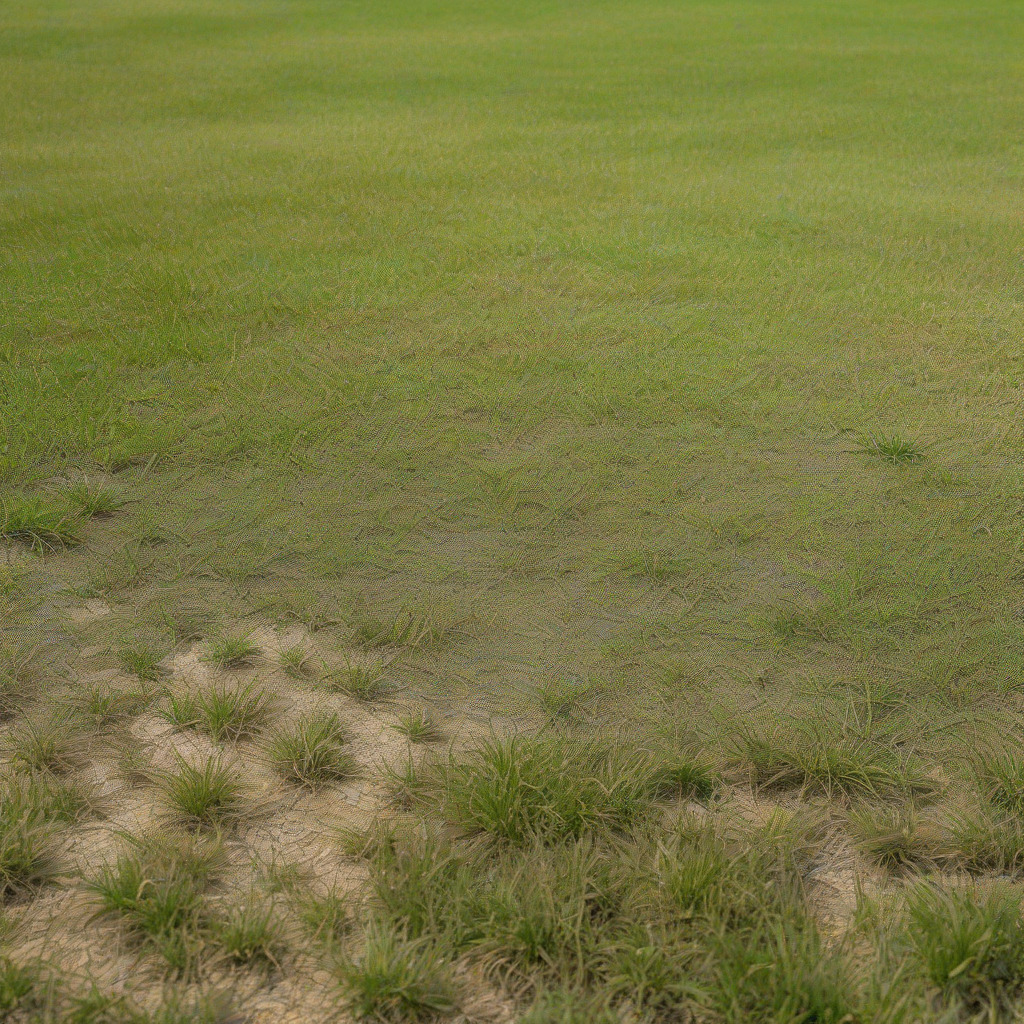
It’s August in Austin, and your grass is brown.
Not neglected brown. Not I-forgot-to-water brown. This is brown because the City of Austin has restricted your address to one outdoor watering day per week during weeks of triple-digit heat. St. Augustine grass, which blankets much of suburban Austin, begins going dormant within three to four weeks without adequate irrigation. One watering day a week cannot overcome that math. Horticulture does not negotiate with city ordinances.
Now you have a letter from your homeowners association. Thirty days to remedy the condition or face fines. The letter doesn’t mention that remedying the condition would require you to water on days the city prohibits, during hours the city prohibits, in amounts that Stage 2 restrictions effectively prohibit. It just says: fix your lawn.
This conflict isn’t hypothetical. HOA management companies across Austin have sent lawn notices through prior restriction periods, and it recurs every time a drought stage climbs high enough to meaningfully restrict watering frequency. It’s a reliable August tradition, and not the fun kind.
No one in Austin city government has cleanly resolved this. No Texas court has issued a published opinion on it. Most homeowners who get these letters either ignore them or pay the fine. They don’t know that Texas law gives them a more defensible position than the notice implies.
Here’s what the law actually says — and exactly what you should put in writing to your HOA if you’re in this situation right now.
What Austin’s Stage 2 Restrictions Actually Require
Verify the current Austin Water drought stage before acting on anything in this article. Lake levels at Lake Travis and Lake Buchanan fluctuate, and the stage can change on short notice. Check austintexas.gov/drought or call 512-972-1000. The stage active when you read this determines which rules apply to you.
At Stage 2 — which Austin Water has moved in and out of repeatedly since 2022 as LCRA storage at the Highland Lakes drops below critical thresholds — the rules are specific and enforceable. Residential customers may water lawns once per week on a day determined by address. Odd-numbered addresses water Wednesday only; even-numbered addresses water Thursday only. No outdoor watering is permitted between 10 a.m. and 7 p.m. on any day. Additional restrictions apply to drip irrigation, hand watering, and landscape watering. This isn’t “water whenever, just once a week.”
These are not suggestions. Austin City Code Chapter 15-9 establishes the drought restriction framework, and violations carry civil penalties of $500 to $2,000 per day. A homeowner who waters outside their designated day to satisfy an HOA maintenance standard could receive a penalty that dwarfs anything an HOA would assess. Worth keeping in mind before you drag the hose out on a Tuesday.
One critical caveat: Austin Water restrictions apply only to Austin Water customers. Large portions of suburban Travis County, Williamson County, and Hays County are MUD territory — Brushy Creek MUD, West Travis County PUD, and dozens of other districts maintain independent drought schedules that may be at a different stage than Austin Water, use different designated watering days, or carry different fine structures. If your water bill comes from anyone other than Austin Water, look up your district on the TCEQ’s utility database at tceq.texas.gov or call your MUD directly. Don’t assume Austin Water’s schedule applies to you. For a fuller picture of what MUD districts add to your obligations as a homeowner, our home & property coverage addresses several related topics.
Where Texas Law Actually Stands
This is the question most homeowners want answered. The honest answer: Texas law hasn’t resolved it cleanly. The conflict sits in a genuine legal gap — which is frustrating, but knowing the gap exists is more useful than assuming the HOA automatically wins.
Texas Property Code § 202.004 makes deed restrictions enforceable as written. If your subdivision’s deed restrictions require “a maintained, healthy lawn” or prohibit “brown or dead vegetation visible from the street” — language that appears in thousands of Texas HOA governing documents — that restriction is presumptively enforceable. HOA boards can assess fines for violations and, in some circumstances, pursue court enforcement.
That authority runs into a legal problem when compliance with the deed restriction would require violating a city ordinance. Contract law — and deed restrictions are a form of property contract — generally doesn’t require a party to perform what has become impossible through no fault of their own. If city ordinance prohibits the watering frequency necessary to maintain green St. Augustine grass during an Austin summer drought, the maintenance standard becomes impossible to satisfy by lawful means. You can’t be ordered to water your lawn in violation of a city ordinance that carries civil penalties. The impossibility defense is recognized in contract law, though Texas courts haven’t applied it directly to this circumstance.
Courts in Texas and elsewhere generally decline to enforce contract provisions requiring an illegal act. It’s not settled Texas law that deed restrictions automatically yield to city ordinance here, but it’s a recognized defense theory, not a frivolous one.
There’s no blanket Texas statute declaring city water restrictions superior to private deed restrictions. The City of Austin hasn’t issued a formal legal declaration that its drought orders preempt HOA maintenance standards. The Texas AG hasn’t weighed in on it. This conflict has recurred across multiple drought seasons without producing a cleaner answer — the legal gap is still wide open, which means HOA boards can’t point to controlling precedent either. That cuts both ways.
The Defense in Practice
Editor’s note: This article was unable to secure an on-record attorney quote before publication. Homeowners facing an active HOA dispute should consult a licensed Texas real estate or HOA attorney. Austin-area firms with HOA law practices include Roberts Markel Weinberg Butler Hailey and Winstead PC’s Austin office.
The practical defense isn’t primarily a constitutional preemption argument. HOA boards in Texas are reluctant to litigate cases where the homeowner is documented to be in compliance with city ordinance, because those cases are losable in court and look bad in front of a judge. An HOA seeking to enforce a deed restriction must file a lawsuit and prove the violation. At that point, the homeowner raises impossibility and the illegal-act theory. The board must then argue, before a Travis County district court judge, that its landscaping standard should be enforced against a homeowner who was following city water law. Most HOA attorneys will counsel against pursuing it.
The realistic risk isn’t that your HOA takes you to court over brown grass during Stage 2. The realistic risk is narrower: the HOA assesses fines you ignore, fines accumulate, and you discover a lien on your property when you try to sell or refinance. At closing, the lien has to be satisfied — often with added collections fees — before the transaction can proceed. That’s where ignored HOA fines do real financial damage. It’s not foreclosure, but it’s not nothing, and it’s more common than homeowners expect.
As of publication, no published Texas appellate opinion addresses the collision between HOA deed restrictions and city drought ordinances. A board’s attorney who understands that gap will be cautious about being the test case.
Your Procedural Rights Before Any Fine Is Legal
Before any HOA fine is legally assessed, Texas Property Code Chapter 209 gives homeowners procedural rights that management companies count on residents not knowing.
Under § 209.006, a planned-community HOA must provide written notice of a violation and give the homeowner at least 30 days to cure before fines begin accruing. If your cure period is 30 days and the drought lasts 60 — which Austin summers routinely produce — the cure period arguably never expires through any action you can lawfully take. Fines assessed before cure is possible are procedurally vulnerable.
Under § 209.007, you have the right to a hearing before the board before fines are assessed. Request it in writing. Appear, present your documentation of compliance with city water law, and make your impossibility argument directly. The board’s written response creates a record. If they vote to fine you anyway, that record matters if the dispute escalates.
Many violation notices from management companies imply fines begin running immediately or at the end of the 30-day window regardless of circumstance. Language that misrepresents the fine timeline is itself a procedural defect.
The real financial exposure in an escalated HOA dispute often isn’t the fine itself. Under § 209.008, attorney’s fees can be awarded to either party in litigation — a homeowner who prevails can recover fees; one who loses can be assessed the HOA’s fees. That bilateral exposure is why the written record matters, and why your response letter deserves more than five minutes of attention.
What to Put in Writing Right Now
Send your response directly to the board, not the management company. Management companies act as agents; the board makes decisions. Certified mail, return receipt, copy retained. Not an email.
State the current Austin Water drought stage and your designated watering day as fact: “Austin Water is currently operating under Stage 2 drought restrictions. My address [number] is designated to water on [day] only, with no watering permitted between 10 a.m. and 7 p.m.” Cite the ordinance: “These restrictions are established under Austin City Code Chapter 15-9 and carry civil penalties of $500 to $2,000 per day for violations.”
Make the impossibility explicit: “Compliance with the deed restriction’s lawn maintenance standard would require watering on days and at frequencies prohibited by city ordinance. I cannot satisfy both obligations simultaneously.” Assert your hearing right: “I am requesting a hearing before the board before any fine is assessed, as provided under Texas Property Code § 209.007. Please confirm the date, time, and location of that hearing in writing.”
The most important sentence in the letter is a direct request: “Please confirm in writing whether the board is directing me to water my lawn in violation of Austin City Code Chapter 15-9 and Austin Water’s Stage 2 restrictions.” Most boards won’t put that in writing. The ones that do have created a useful document.
One more point on dormancy. Brown St. Augustine in August is almost certainly dormant, not dead — it can recover once restrictions lift and adequate watering resumes. If your notice uses the word “dead” or demands replacement, respond specifically: the lawn is dormant, the condition is temporary and reversible, and you’ll address it when restrictions allow adequate irrigation. An HOA demanding you replace a dormant lawn is making a harder-to-defend claim than one citing you for appearance, and they should know you understand the difference. For context on what the current drought stage specifically requires of Austin homeowners, see what Austin’s current drought stage means for your yard, sprinklers, and water bill.
On Foreclosure
Foreclosure is the fear that makes HOA violation letters feel more threatening than they are. The Texas Legislature amended § 209.009 to require that a planned community HOA obtain court approval before foreclosing for unpaid fines — not dues or assessments, which follow a different track. Fine-only foreclosure requires the HOA to file a lawsuit, obtain a judgment, and have a court authorize it. That’s slow, expensive, and subject to judicial scrutiny. In practice, fine-only foreclosure is extremely rare at low accumulated debt levels, because the legal costs to the association can exceed what the fine justifies. A board burning thousands in attorney’s fees to pursue a lawn fine through court-supervised foreclosure isn’t doing its fiduciary duty to the community.
Take the lien risk seriously. Don’t catastrophize about foreclosure over dormant grass.
What the City Says — and Won’t Say
Austin Water and the City Attorney’s office are the authorities here. What they’ve said publicly is that residents subject to HOA violation notices during drought restrictions should document their compliance with city water law and present that documentation to their HOA. Austin Water’s drought page has at various points included language acknowledging the conflict and encouraging residents to communicate their watering schedule to their association.
What the city has not done is issue a formal legal declaration that its drought orders preempt private deed restrictions. That’s a real gap, and worth naming plainly. The City of Austin created this legal conflict by restricting watering to levels that can’t maintain HOA-standard lawns. It has not resolved it. Homeowners are left to manage it themselves, with legal theories the city hasn’t officially endorsed. Austin Water’s guidance runs to documentation and communication rather than formal preemption — the same informal posture it took during the analogous tensions that followed Winter Storm Uri in February 2021. That’s probably not going to change, so the written record you build matters more than waiting for the city to ride to your rescue.
Austin Water drought information line: 512-972-1000. Current stage and full text of restrictions: austintexas.gov/drought. MUD customers should contact their district directly.
The Clock on This
When LCRA combined storage at Lake Travis and Lake Buchanan recovers above the Stage 2 threshold — tracked in real time at lcra.org — Austin Water steps down to Stage 1, and once-per-week restrictions relax enough that a homeowner watering consistently can begin recovering a dormant lawn. The legal conflict eases materially at that point. If your violation notice has a 30-day cure window and lake levels recover within it, your HOA’s argument weakens as you can now water more frequently and begin rehabilitation. Track the lake levels. It matters for your timeline.
If a violation notice is running, your § 209.007 hearing request should go out this week. Your certified letter documenting city water law compliance should go out this week. The paper record that protects you — against fines assessed before cure is possible, against a lien, against a title problem when you list the house — is built now. Brown grass recovers. An ignored HOA violation accumulates fees while you wait. The protection Texas law gives you is real. Claim it in writing before the cure window runs out.
Austin Water drought stage information: austintexas.gov/drought or 512-972-1000. Texas Property Code chapters cited in this article are available at statutes.capitol.texas.gov. Homeowners facing HOA disputes during drought conditions should consult a licensed Texas real estate or HOA attorney before making legal decisions based on their individual circumstances.