What Austin Foundation Repair Actually Costs After the Drought and Whether Insurance Covers It
Foundation companies are fielding their highest call volumes of the year after another dry Austin summer. We lay out what current repair costs look like, what your homeowners policy's earth movemen…

Foundation companies are fielding their highest call volumes of the year after another dry Austin summer. We lay out what current repair costs look like, what your homeowners policy’s earth movement exclusion actually means, and what questions to ask before you sign anything.
If you’ve noticed a door that stopped latching in June, a hairline crack above a window frame that widened through July, or a gap opening between your exterior brick and your garage slab, you are not alone and you are not imagining it. Foundation companies across the Austin metro are reporting August call volumes they describe as the highest of the year. In Central Texas, that’s saying something.
The drought conditions that built through 2022 and intensified in 2023 are still working their way through the system. Damage seeded two summers ago is surfacing now as clay soils that have been in near-continuous shrinkage finally reach their driest point. The lag matters. This piece is built around it.
This is not a general homeowner’s guide. It’s a triage document for Austin residents seeing symptoms right now, grounded in soil-zone context specific to this metro and a straight read of what your homeowners insurance actually covers. For drought-induced foundation damage, spoiler: almost certainly less than you hope.
Why August Is the Worst Month to Ignore Your Foundation
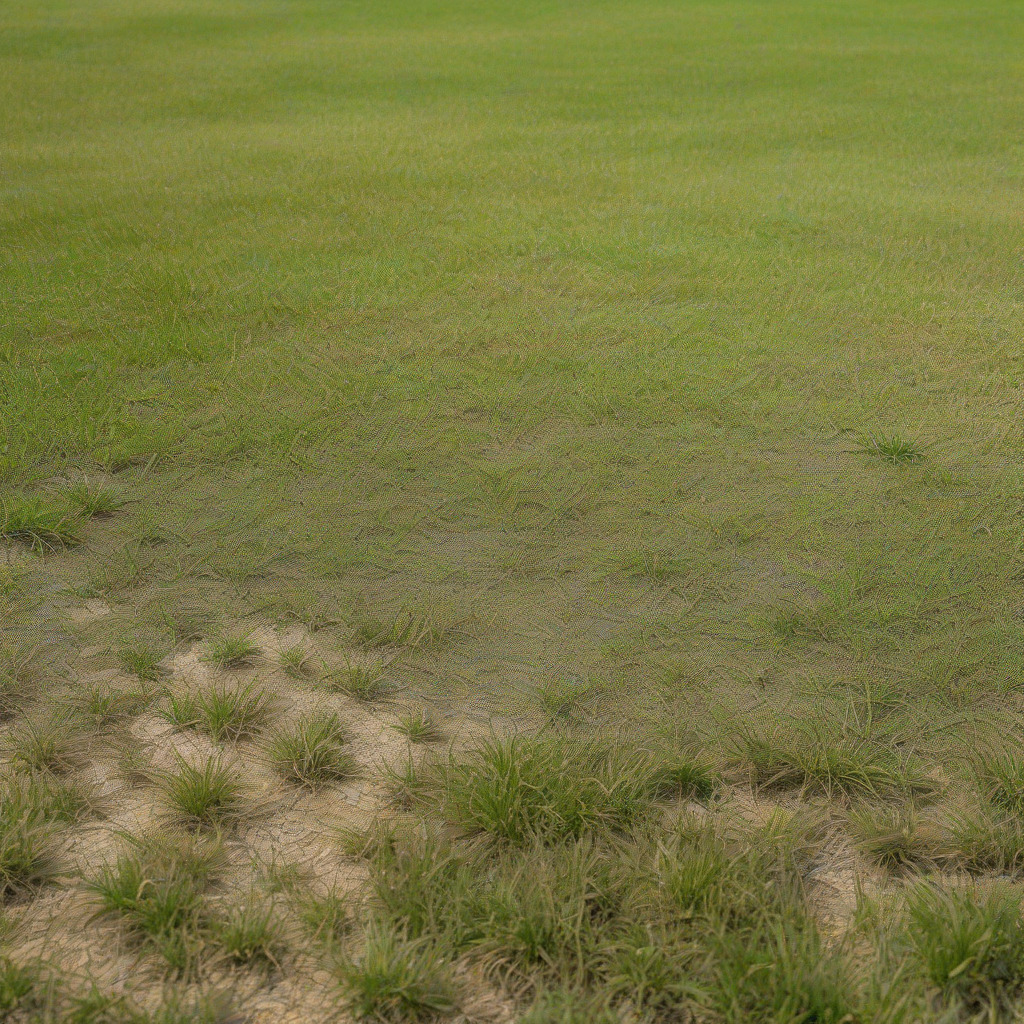
Central Texas sits on some of the most reactive expansive clay soil in the country. The Houston Black clay series underlying most of North Austin, Pflugerville, and Manor is among the most expansive in the United States. When that soil shrinks away from the perimeter of a slab foundation, it creates voids. When those voids are large enough and the slab edge loses bearing, the perimeter drops. Engineers call that differential settlement. Late August is when it’s most pronounced.
The soil’s response to drought is cumulative and lagged. The shrinkage visible under slabs right now reflects rainfall deficits going back eighteen months or more. A wet October does not undo that in one season. The clay closes back up at the surface. Cracks appear to heal. Homeowners assume the problem resolved itself.
Here’s what actually happens in many of those cases: the void under the perimeter remains.
This seasonal masking is one of the most consequential misunderstandings in foundation repair, and it’s the reason so many Austin homeowners get blindsided in the spring. Fall rains will close the surface crack above your window. They will not necessarily refill the void under your slab perimeter. The monitoring section at the end of this piece covers what to watch for and how to tell the difference.
Your Neighborhood’s Soil Is the Single Biggest Cost Driver
Before any prices are meaningful, you need to know what you’re building on. Austin’s soil geology varies enough across the metro that a quote from a company that hasn’t assessed your specific site is essentially a placeholder. This sounds like a caveat. It’s actually the most useful thing in this article.
North Austin, Pflugerville, and Manor sit on the deepest deposits of Houston Black expansive clay in the metro — the most volatile soil type in Central Texas, with high plasticity, high shrink-swell potential, and a slow response to rainfall. Piers in this zone typically need to reach 12 to 16 feet to find stable bearing below the active zone. Settlement jobs here tend to require more piers and deeper drives than the same square footage elsewhere. If a company quotes you shallow work in this corridor, ask specifically how they determined bearing depth. If they can’t answer that in plain terms, you have your answer.
Cedar Park, Leander, and Lakeway sit on or near the Edwards Plateau limestone shelf. Thinner soil, considerably less expansive, but the limestone substrate creates its own complications — drilling is harder, equipment wear is higher, and helical piers are frequently the preferred method because they can be torqued into fractured limestone where hydraulic push piers lose reliable resistance. Per-pier costs are competitive with North Austin, but for entirely different reasons.
East Austin, Mueller, and Del Valle are more complicated than most company inspectors will tell you. The former airport site and the creek corridors along Boggy Creek and its tributaries involve significant engineered fill placed during redevelopment in the 2000s and 2010s. Post-construction settlement in fill soils behaves differently from expansive clay movement, and homes built on that land can experience ongoing consolidation that a company calibrated to clay repair may misdiagnose. If you’re in a Mueller or East Cesar Chavez build from that era, the source and depth of any fill under your foundation is worth putting to an independent engineer before you accept a scope of work from a company inspector.
South Austin, Travis Heights, and Bouldin Creek present yet another profile. A large share of pre-1960 housing stock here sits on pier-and-beam foundations over mixed soils that vary within a single block. These homes face wood deterioration in the crawl space as much as soil movement. Foundation repair in this part of the city often involves rot and beam work that is scoped and priced completely differently from slab work. If a company sends a slab specialist to quote your 1952 bungalow, flag it.
What Slab Foundation Repair Costs in Austin Right Now
The following figures reflect historical Austin-market baselines. Post-drought demand has pushed pricing upward across the board, and some companies are booked weeks out. Treat any number here as a floor to verify against current quotes — not a ceiling. Get at least three companies out for written, itemized proposals before you sign anything.
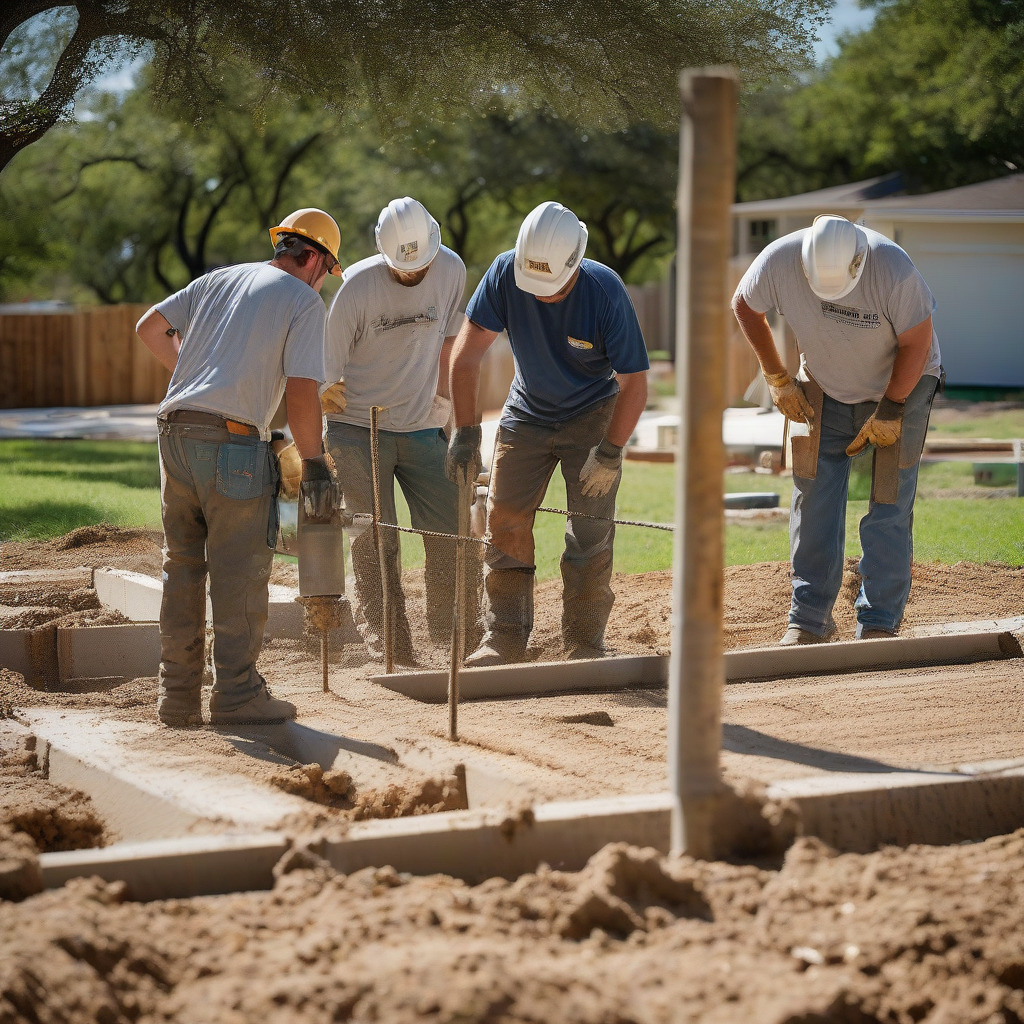
Concrete pressed pilings are the most common repair method in the Texas residential market. The process drives cylindrical concrete stacks hydraulically into the ground until they hit resistance, then uses that resistance as the bearing point for a bracket that lifts the slab edge. Pre-drought pricing in Austin ran roughly $300 to $450 per pier; current pricing is higher. A typical perimeter settlement job on a modest single-story slab involves somewhere between 8 and 15 piers depending on how much of the perimeter has lost bearing. Multi-story homes, post-tension slabs, or jobs requiring interior pier installation all run more — and interior work means concrete cutting and tunneling, costs that frequently don’t appear in the headline quote.
Steel push piers come up when load requirements exceed what pressed pilings reliably handle, or when soil conditions make staged concrete driving unreliable. Less common in Austin residential work, but worth understanding if you’re in a two-story home or a structure with heavier loads. Per-pier pricing is substantially higher than pressed pilings.
Helical piers — essentially large steel screws torqued into bearing material — work well in the Cedar Park and Lakeway limestone zones where push resistance against fractured rock is unreliable. Get specific quotes for your area; per-pier pricing reflects the higher equipment demands of drilling into limestone.
Hidden line items to ask about specifically: Concrete cutting and patching for any interior pier installation are frequently billed separately. Post-lift plumbing inspection — which some Austin companies recommend or require after a significant lift because pipe joints can fail when a slab moves — is often a separate charge. Some companies bundle it; most don’t. City of Austin permit fees add more, where companies bother to pull them. Get each of these itemized in writing before you compare quotes. Verbal assurances have a way of evaporating once work begins.
For a mid-range slab repair on a modest Austin home — partial perimeter correction, standard pier count — historical quotes have run anywhere from $8,000 to $25,000 depending on scope, pier type, and site conditions. Verify current pricing directly.
What Pier-and-Beam Repair Costs and Why South Austin Is a Different Problem
Pier-and-beam foundations are a fundamentally different repair problem than slab work, and conflating the two leads to some genuinely unpleasant budget surprises.
The access difference works in your favor. A crawl space gives a contractor direct visual and physical access to the understructure without tunneling or cutting concrete, which substantially reduces labor cost compared to slab methods. The Austin market has historically priced pier-and-beam work somewhere in the $3,000 to $8,000 range for typical jobs. Treat that as a starting point.
The complication is what a contractor actually finds once they’re under there. Stand underneath a 1948 Travis Heights bungalow and you’re likely looking at more than soil settlement — wood rot in sill plates, shims compressed to dust, failed concrete piers poured in the 1940s, occasionally beams that need sistering. These are common findings in South Austin’s pre-war housing stock. A full-scope pier-and-beam rehabilitation can run well beyond the baseline range. That’s not necessarily scope creep or a contractor padding the bill; it’s that crawl spaces hide things until someone’s actually in them.
Before any contractor visit, assess your own crawl space or have an inspector do it. Do you smell mold or rot? Are existing piers cracked or listing? Does the problem feel like settling — floors sloping consistently in one direction — or rot, with floors feeling spongy in localized patches? The diagnosis changes the scope. The scope changes the price. Worth knowing before you invite anyone to quote. For broader context on what a thorough seasonal inspection should surface, what a summer home inspection in Austin should catch goes further on findings specific to this climate.
Who Should Inspect Your Foundation and What That Costs
The free company assessment is a sales tool. That’s not a criticism of any particular company — it’s just the honest description of what it is. The inspector, often an estimator with company training rather than a licensed engineer, will identify problems, recommend a scope of work, and hand you a quote. Experienced company estimators see a lot of foundations and can legitimately flag real problems. But their financial incentive is to recommend repair, and they have no independent obligation to tell you when repair isn’t warranted.
An independent inspection from a licensed structural engineer (PE) operates on different terms. A PE performing a formal foundation assessment will conduct a measured elevation survey, calculate actual differential settlement, review soil conditions and available construction records, and produce a stamped written report that carries legal and insurance weight. Current Austin market rate for that service: $400 to $700. Certified home inspectors with a foundation specialty — through ASHI or InterNACHI — typically charge $200 to $400 for a standalone inspection, though without the PE stamp.
The PE fee isn’t optional if you’re in a pre-purchase scenario with disclosed foundation issues, if you’re disputing a denial with your insurance company, if the quoted job exceeds $10,000, or if you’ve received wildly divergent quotes from company inspectors. That last situation is more common than people expect. When quotes diverge sharply, it usually signals genuine uncertainty about scope — not that one company is lying and one is honest. The PE report gives you an independent baseline and, if repair is warranted, a scope document that lets you compare company quotes on equal terms.
Verify current license status through the Texas Board of Professional Engineers for PEs, or TREC for licensed inspectors. Ask specifically whether they have experience with expansive clay foundations in Travis or Williamson County. And for company inspectors: ask whether the person assessing your foundation holds any professional license or is primarily a sales estimator. The answer tells you something about how to weight their recommendation.
What Your Homeowners Insurance Actually Covers After a Drought
Short answer, and it applies to the question most Austin homeowners are currently typing into search boxes: no.
Your standard homeowners policy almost certainly does not cover foundation damage caused by drought-induced soil shrinkage. The reason is the earth movement exclusion, which appears in virtually all standard Texas HO-3 policy forms. Standard language excludes loss caused by earth movement — earth sinking, rising, or shifting — and most forms add explicit exclusions for settling, shrinking, bulging, or expansion of foundations, regardless of any other cause occurring concurrently.
That last phrase is the part worth reading twice. It’s drafted specifically to foreclose arguments that a covered peril contributed to the same loss. Carriers know exactly how to use it.
Drought causes clay to shrink. Shrinkage means soil is moving. The carrier points to that exclusion, and the claim gets denied at initial review. No drought rider exists in the standard Texas residential market. No specialty endorsement through standard carriers covers expansive clay movement specifically.
Three scenarios give a claim any realistic traction, and I’ll be direct about how to rank them.
The most viable is a covered plumbing leak under the slab that contributed to differential settlement. A pipe leaking under your foundation is sudden and accidental water damage — a covered peril — and some carriers will consider resulting foundation damage under a concurrent causation argument. This is actively disputed territory. Anti-concurrent-causation language in many policy forms is deployed to deny these claims, and results vary by carrier, by adjuster, and frankly by how well-documented your claim is. If you have a plumbing component to your foundation problem, consult a licensed public adjuster before you accept any denial. They work for you, take a percentage of any settlement, and know which adjusters are worth pushing back on. Find licensed Texas public adjusters through TAPIA — the Texas Association of Public Insurance Adjusters — which maintains a member directory.
Less likely but worth checking: sudden collapse. Some policy forms treat collapse under a separate provision from gradual settlement. If a section of foundation has actually collapsed rather than settled incrementally, check your policy language specifically for collapse coverage. The distinction between collapse and settlement is defined differently across policy forms and is litigated often enough that carriers and policyholders have genuinely different working definitions.
The third scenario — a general appeal with public adjuster involvement — isn’t really a separate claim type so much as a reminder that adjuster involvement improves outcomes on disputed claims. Mention it to any public adjuster you consult; let them assess whether your specific policy language and damage circumstances are worth pursuing.
Pull your declarations page and the full policy form. The earth movement exclusion lives in the “Perils Insured Against” or “Exclusions” section. Look for collapse language in the same place. If you have any plumbing component to the foundation problem, document the leak separately and report it to your carrier before repair begins. Filing sequence matters more than most people realize.
Selling an Austin Home with Foundation Issues
Two obligations, and they sometimes conflict with the impulse to minimize foundation history on a listing.
Under Texas Property Code Section 5.008 and the TREC Seller’s Disclosure Notice (Form OP-H), sellers must disclose known defects. The form asks directly about foundation condition, prior repairs, and structural deficiencies. Checking “No” when you know about prior repair work or active problems is potential misrepresentation and creates genuine legal exposure — particularly in Travis County, where buyers’ attorneys are familiar with disclosure case law and motivated to use it. Sellers navigating this alongside broader disclosure obligations may also want to review what Austin home sellers must disclose about flooding under the updated Texas Property Code, since water-related damage and foundation issues often appear together in the same disclosure conversation.
The sales calculus, though, is more nuanced than most sellers expect. A disclosed, properly repaired foundation with a transferable warranty is a materially different thing than an undisclosed one. Most major Austin-area foundation companies offer 10 to 25-year transferable warranties that follow the home. That’s a real asset in a disclosure package. Experienced Austin buyers’ agents will tell you that documented repair with a long-term warranty from a reputable company generates far less buyer alarm than a vague disclosure with no paper trail. Buyers can work with documentation. What makes them nervous is the absence of it.
Active movement can kill financing outright. FHA and VA programs require an appraiser to certify acceptable foundation condition. Active differential settlement, visible stair-step cracking in brick veneer, and doors recently planed to fit — a red flag any competent inspector will catch — can trigger an appraiser’s concern notation and require resolution before close. Conventional loans have more flexibility, but lenders still require appraisal sign-off.
Prior repair without documentation is harder. If work was done informally — shimming by a handyman, an undocumented repair by a previous owner — and you’re uncertain about your disclosure obligation, get a real estate attorney involved before you list. The legal exposure from a post-close misrepresentation claim is substantially worse than the negotiating impact of a disclosed repair. That’s not a close call.
Repair Now or Wait
Not every crack warrants an immediate call to a foundation company. The repair market is busy right now, and unnecessary urgency pushes homeowners toward the first quote rather than the right one.
Call an engineer this month, not later:
- Cracks wider than 1/4 inch at their widest point
- Cracks with vertical offset — one side has dropped relative to the other — which indicates differential movement, not shrinkage-only cracking
- Stair-step mortar cracking in brick veneer, particularly at exterior corners or around window openings
- Doors or windows in multiple locations binding simultaneously after operating normally six months ago
- Floors with measurable slope — structural engineers commonly use one inch of drop over 20 feet as an action threshold
- Any slab crack with standing water in it after rain, which suggests the void beneath is communicating with surface drainage
- Exterior gaps between brick veneer and the foundation edge wider than 1/4 inch
Worth watching, not panicking over:
- Hairline cracks — under 1/16 inch — in drywall at window and door corners. Common in any structure, frequently seasonal
- Cracks that were there last August and haven’t grown
- Doors that stick in summer and close freely in winter, consistently year after year
Photograph every crack with a ruler in frame and date-stamp it. Mark endpoints with pencil on the wall. Check back after the first significant fall rain — an inch or more in 24 hours. If a crack hasn’t widened in six weeks and shows no vertical offset, you have reasonable basis to keep monitoring through the wet season. If it has widened by any visible amount, call an independent inspector.
One more time, because this gets Austin homeowners into trouble reliably: fall rains will partially close surface cracks as clay rehydrates and swells. That is not resolution. The void under the slab perimeter may persist for months after surface symptoms improve. Don’t let a wet October convince you that August’s warning signs have resolved themselves.
What to Ask Before You Sign a Foundation Repair Contract
The Texas Residential Construction Commission — the agency that used to license and mediate residential construction disputes — was dissolved by the legislature years ago. The Texas Department of Licensing and Regulation has limited oversight of foundation repair specifically. Licensing requirements for foundation companies in Texas are weaker than most homeowners assume. In a high-demand market with thin regulatory coverage, the contract conversation is your primary protection. You are largely on your own here, which is uncomfortable but worth knowing going in. This is also a core theme in our home & property coverage more broadly, where contractor accountability and permit gaps come up across repair categories.
Does your company pull a City of Austin permit for this work? Many don’t. Permitted work creates an inspection record and some consumer protection. The answer also tells you something about how the company operates.
Is the post-lift plumbing inspection included in this quote or billed separately? Get the answer in writing. A significant lift — anything over half an inch of elevation correction — can stress cast-iron drain lines in older homes. Some companies include the camera inspection; most don’t.
What specifically voids the warranty? Common voids include failure to maintain drainage away from the foundation, tree removal or addition near the foundation, plumbing leaks not reported within a specified window, and structural changes to the home. If you have a large heritage oak whose root system is a factor, ask explicitly how the company addresses root-influenced settlement and whether that voids coverage. Get it in writing.
Is your scope prepared by a licensed PE or your in-house inspector? A company-prepared scope is a sales document. A scope with a PE signature carries independent professional liability. For any job over $10,000, a PE signature on the scope — from the company’s engineering consultant or from your own independent engineer — is worth requiring.
What pier method are you proposing and why does it match my soil conditions? A company proposing pressed pilings in a North Austin Houston Black clay zone should be able to explain how they determined that depth reaches stable bearing. If the salesperson can’t explain the soil rationale in specific terms, ask to speak with their engineer. If there isn’t one available to speak to, that’s worth knowing.
Get quotes from at least three companies. In the current Austin market, the spread between high and low quotes for the same scope can be substantial. A dramatically low quote deserves scrutiny about what it excludes. A dramatically high one deserves the same question in reverse. The goal isn’t the lowest number. It’s the most honest scope matched to your actual soil conditions.
CityDesk Austin is an independent local publication covering Austin business and civic affairs. Pricing figures in this article reflect historical Austin-market baselines; current pricing should be verified directly with companies serving your area, as post-drought demand has shifted market rates. This article does not constitute legal or engineering advice; consult a licensed professional for your specific situation.