How Much Does It Cost to Hire a Bankruptcy Attorney in Austin
A reported price guide for Chapter 7 and Chapter 13 filings in the Western District of Texas: what Austin attorneys actually charge, what Texas law lets you keep, and how the math works for homeown…


A reported price guide for Chapter 7 and Chapter 13 filings in the Western District of Texas: what Austin attorneys actually charge, what Texas law lets you keep, and how the math works for homeowners in 2026.
Bankruptcy attorneys in Austin will tell you the same thing in almost every initial consultation: the question isn’t just whether you can afford to file. It’s whether, given what Texas law protects, filing actually costs you anything beyond the legal fees.
That second question is what makes Austin genuinely different from most of the country. A homeowner carrying $400,000 in equity on a house near Tarrytown or East Cesar Chavez can file Chapter 7 bankruptcy, discharge tens of thousands in unsecured debt, and walk out of the process with the house intact. That outcome isn’t available to a filer with the same profile in California — and if you’re a recent transplant, it may explain why some of your friends who moved here from the Bay Area keep bringing up bankruptcy law at dinner.
This piece covers what the process costs, what it protects, who qualifies, and what to know before you hire anyone.
The Austin Equation: Why Filing Here Is Different
Austin’s median home value has held near $490,000–$520,000 through early 2026. Many central-city and Travis Heights properties carry more equity than mortgage balance. In nearly any other state, that equity would be the central problem in a bankruptcy filing — a Chapter 7 trustee would be looking at it as an asset available to pay creditors.
Texas changes that math entirely. The state’s homestead exemption has no dollar cap for urban properties up to 10 acres. A filer with $350,000 in equity keeps it in a Chapter 7 filing the same way a filer with $40,000 does. The exemption covers the property’s value, not a capped slice of it. In a market where home appreciation has lapped wage growth for a decade, that’s the whole ballgame for a lot of Austin filers. I’d argue it’s the single most consequential feature of Texas bankruptcy law for anyone who owns property here.
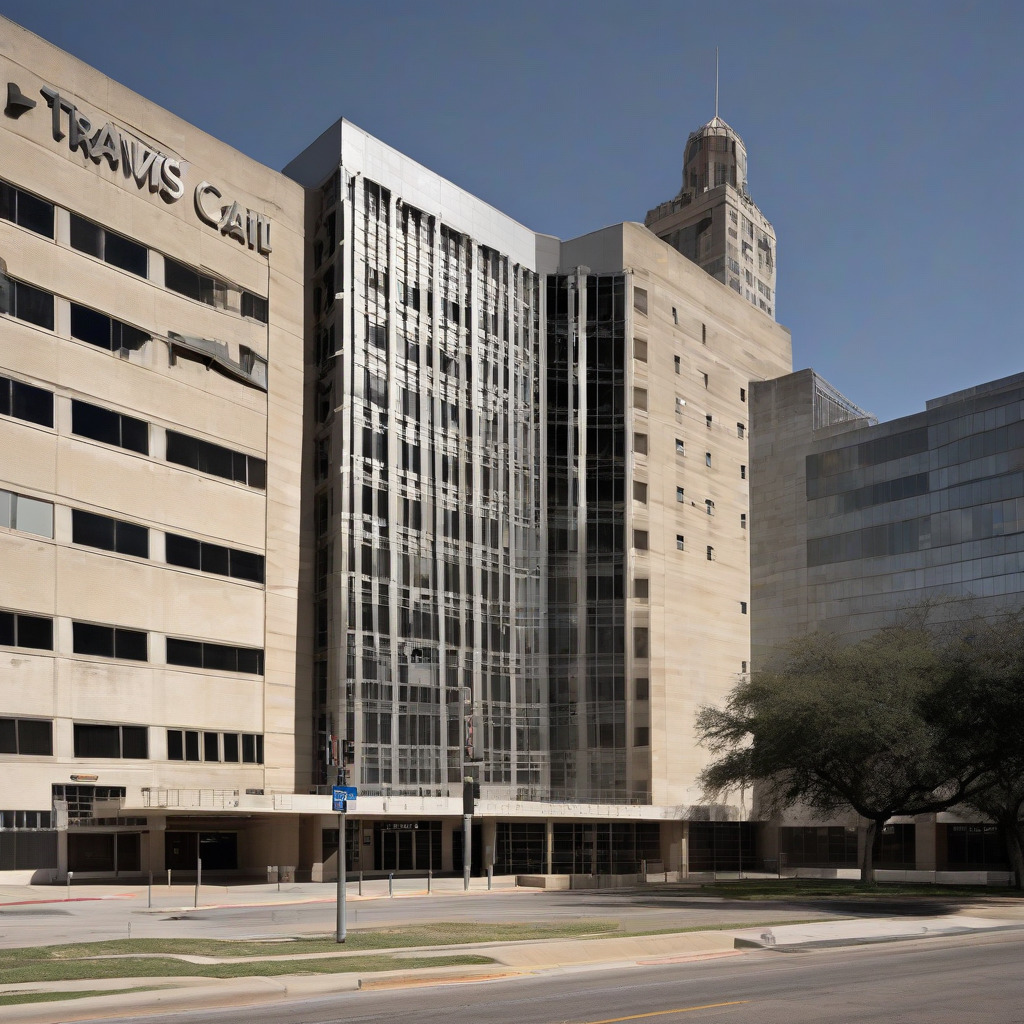
Austin filings are handled by the Western District of Texas, Austin Division. The courthouse is at 903 San Jacinto Blvd, Suite 322. Travis County residents file there. If you’re in Williamson or Hays County, your filing may land in a different division — confirm jurisdiction with an attorney before assuming.
What You’ll Pay for Chapter 7
Chapter 7 is the liquidation chapter. A trustee reviews your assets, discharges eligible debts, and the case closes — typically within three to five months of filing. For most Austin consumer filers with primarily exempt assets, “liquidation” is something of a misnomer. The trustee confirms there’s nothing available to creditors and moves on. The name is scarier than the reality.
Attorney fees for a straightforward Chapter 7 run $1,200 to $2,500. Straightforward means: you pass the means test, your assets are mostly exempt under Texas law, no prior filings in the last eight years, nothing requiring trustee negotiation. A single person with one car, a retirement account, no real property, and ordinary wage income is close to a document exercise for an experienced bankruptcy attorney.
A married homeowner with a side LLC, a brokerage account, and income that requires full means test analysis is a different matter. That’s actual legal work, and it typically runs $3,500 to $5,000 or higher. The additional cost reflects the attorney’s time managing trustee inquiries, working through complicated schedules, and negotiating how assets get treated. The quote you receive during a consultation should reflect which situation you actually fit. If it doesn’t, ask why.
The federal filing fee for Chapter 7 is $338. Filers with household income below 150 percent of the federal poverty line can apply for a waiver using Official Form 103B. Between 150 and 200 percent of poverty, installment payments are available. The Austin Division clerk’s office handles these routinely. Under 11 U.S.C. §329, attorney fees in bankruptcy cases are subject to court review for reasonableness — one of the few areas of consumer law where that protection actually exists. This is also a recurring topic in our legal & finance coverage of Austin’s professional services market, where fee transparency across law practices is increasingly in focus.
What You’ll Pay for Chapter 13 — and Why It’s More
Chapter 13 is the repayment chapter. Instead of an immediate discharge, the filer proposes a three-to-five-year repayment plan, pays monthly to the Chapter 13 trustee, and receives a discharge when the plan completes. It requires more administration, takes far longer, and suits a narrower set of problems. Most people filing bankruptcy don’t need it. But for the filers who do, it’s often the only viable option.
Attorney fees for Chapter 13 in Austin run $3,500 to $5,000 for the full case — plan confirmation and ongoing management through the life of the plan. The fee splits: a portion as an upfront retainer, the remainder paid through the repayment plan itself. A filer without substantial cash on hand can still access representation. That matters more than people realize when you’re already in financial distress.
The Western District has established a “no-look fee” — a presumptively reasonable amount the court will approve without detailed fee documentation. Attorneys charging above it must justify the difference to the court, which protects Chapter 13 filers from unchecked billing once they’re locked into a multi-year plan. Verify the current no-look figure directly with the Austin Division clerk’s office; it’s subject to revision and any published number goes stale.
The filing fee for Chapter 13 is $313.
Chapter 13 comes up in three situations that recur in Austin. Homeowners behind on mortgage payments and facing foreclosure can file Chapter 13; the automatic stay halts a foreclosure the moment the petition is filed, and the plan can cure arrears over time. Filers with non-exempt assets they want to keep rather than surrender to a trustee need Chapter 13, since Chapter 7 would expose those assets to liquidation. And filers whose income exceeds the Texas median and who don’t survive the full means test analysis may find Chapter 13 is their only available path.
Here’s what doesn’t get said plainly enough: the three-to-five-year commitment is real, and it demands honest self-assessment before filing. Filers who can’t complete the plan — because their income drops, their circumstances shift, life intervenes — don’t receive a discharge and may end up worse than before they filed. Before hiring anyone for a Chapter 13, ask how the firm handles ongoing communication with active clients. Some practices have dedicated case managers. Others become hard to reach after the initial filing. That difference matters enormously when you’re two years into a plan and your income changes.
The Means Test: What Austin’s Income Levels Mean
The means test determines whether a filer qualifies for Chapter 7. First, compare your household’s current monthly income — averaged over the six months before filing — against the Texas median for a household of your size. Income at or below the median: you pass. Above the median, you run a second calculation.
Stage two subtracts allowed expenses from current monthly income. Housing, transportation, food, healthcare, secured debt payments — many using IRS national and local standards rather than actual figures. If remaining disposable income falls below a threshold, Chapter 7 is still available.
Pull current Texas median income figures from the U.S. Trustee Program at justice.gov/ust. They update every April and November. Don’t rely on any published article — including this one — that may be months old when you read it.
Austin’s income picture makes this calculation relevant for a lot of filers here. City median household income runs around $80,000–$85,000, but the metro has a heavy concentration of tech, professional services, and healthcare workers earning well above that. A two-income household at $120,000 that’s been wrecked by medical debt or a business failure shouldn’t assume the means test disqualifies them without running the actual numbers. Housing costs in Austin are high, and the expense deductions — particularly for mortgage or rent — can meaningfully reduce disposable income for means test purposes. The headline income figure is not the final answer.
A filer with modest income who assumes they pass automatically should still confirm it with an attorney. Means test errors are among the more common reasons amateur filings hit trouble. And watch for this: any attorney who quotes a flat fee without asking detailed questions about your asset situation, income history, and residence history is skipping questions that can change your case fundamentally. That’s not a deal; it’s a red flag.
The Unlimited Homestead Exemption: What It Actually Covers
The Texas homestead exemption protects the primary residence, no dollar cap, for urban properties up to 10 acres. A home worth $800,000 with $500,000 in equity is fully exempt. The trustee cannot force its sale. In most states, homestead protections cap at a fixed dollar figure, leaving equity above that ceiling potentially available to creditors. Texas has no ceiling — which in a city where real estate has appreciated as aggressively as Austin has, is an enormous distinction.
But the exemption doesn’t apply equally to everyone in every situation.
Before claiming Texas exemptions in a bankruptcy case, a filer must have been a Texas resident for at least 1,215 days — roughly three years and four months — under 11 U.S.C. §522(b)(3). Austin has absorbed enormous in-migration over the past several years, and this residency rule catches people who didn’t know to look for it. A filer who moved from the Bay Area, bought a home in Austin in 2022, and is considering filing in 2025 may not yet clear that threshold. If you moved to Texas recently, ask an attorney this question before anything else.
The exemption covers the primary residence only. An Austin homeowner who also holds title to a rental in East Austin or a family member’s house has no homestead protection on that second property. It’s a non-exempt asset in a Chapter 7 filing, subject to trustee review.
The exemption protects against unsecured creditors — not against the mortgage lender. Filing bankruptcy doesn’t eliminate a mortgage. It discharges personal liability on unsecured debt; the lien survives. A filer behind on their mortgage who wants to keep the house needs Chapter 13, not Chapter 7. That distinction gets missed often enough to be worth saying plainly.
The automatic stay applies to both chapters. The moment a petition is filed, the stay halts virtually all collection activity, including foreclosure. For a homeowner days away from a foreclosure sale, filing buys time. But in a Chapter 7 case, the stay is temporary. Chapter 13 — with its ability to cure mortgage arrears through the repayment plan — is the tool that actually produces a lasting result for someone trying to save their home.
The Rest of the Texas Exemptions
Beyond the homestead, Texas provides protections that, taken together, make Chapter 7 genuinely useful for Austin filers who understand them.
Vehicles: Texas exempts one motor vehicle per licensed household member, no cap on value. Two adults, two cars — both fully exempt regardless of what they’re worth. A filer driving a 2024 Lexus worth $55,000 keeps it. That surprises people who assume the exemption cuts off at some reasonable-sounding number.
Retirement accounts: 401(k)s, IRAs, pensions, and other ERISA-qualified retirement accounts are fully exempt under Texas Property Code §42.0021, with no dollar cap. Retirement savings aren’t at risk in a Texas bankruptcy. For professionals who’ve accumulated meaningful balances, this is one of the more consequential protections in the statute.
Personal property: Texas exempts personal property up to $50,000 for a single adult and $100,000 for a family, in aggregate, covering furniture, clothing, food, sporting equipment, and tools of the trade under Texas Property Code §42.002. The cap is aggregate — the filer’s total personal property across covered categories must fit within the limit.
Current wages are exempt. Money already deposited in a bank account is treated differently and can lose its exemption protection once commingled with savings — worth discussing with an attorney if timing is a consideration. Certain life insurance policies and annuities may also be exempt, depending on structure.
Texas has no wildcard exemption. That’s an important gap. Filers with cash savings above the personal property cap, non-retirement brokerage accounts, a second vehicle, or other assets outside the enumerated categories need to account for those in planning. A trustee will ask about them. Assets without an applicable exemption are subject to liquidation, full stop.
The Transplant Problem
Austin’s bankruptcy bar has run into this consistently for several years. If you moved here from out of state in the last three or four years, this section applies to you.
Under 11 U.S.C. §522(b)(3), a filer who hasn’t lived in their current state for at least 730 days before filing must use the exemptions from the state where they lived for the bulk of the 180-day period ending 730 days before filing — typically the state they moved from. If that prior state’s exemptions don’t apply cleanly, the filer falls back to federal bankruptcy exemptions. There’s a gap period where neither state law is fully available.
The 1,215-day threshold adds another layer: even a filer past the 730-day mark and entitled to use Texas exemptions may face additional scrutiny if the property was acquired during that 1,215-day window before filing, which can limit the available homestead amount. Confirm the current parameters with an attorney at the time of filing.
A California transplant who sold a Bay Area home, bought a house in Mueller in early 2023, and files in mid-2025 should not assume Texas’s unlimited homestead exemption is available. The fix is often just waiting — letting the calendar clear the 1,215-day threshold — but that calculation requires an attorney who asks the right questions about residency history. A filer who moved to Austin from Massachusetts in 2024 and is considering filing in 2026 is likely still subject to Massachusetts exemptions. That’s a fundamentally different situation, and it’s exactly the kind of thing a non-specialist misses.
Filing in Austin: The Court, the 341 Meeting, the Timeline
Once you file, the Western District courthouse at 903 San Jacinto Blvd processes the petition and assigns a trustee. Chapter 7 cases go to panel trustees; Chapter 13 cases in the Austin Division are administered by the standing Chapter 13 trustee. Confirm current trustee appointments with the court.
The 341 meeting of creditors is not a courtroom proceeding. No judge. It’s a brief examination — ten to fifteen minutes for routine cases — at which the trustee asks the filer, under oath, whether the schedules are accurate and complete. Creditors have the right to appear. In the vast majority of consumer cases, none do. If you’ve been dreading this, you can probably exhale.
Since the COVID pandemic, the Western District has conducted many 341 meetings by phone or video. Confirm the current format with the clerk’s office before your meeting date.
Chapter 7 moves fast. Filing to discharge is three to five months for a straightforward case. Chapter 13 is a three-to-five-year commitment, with monthly payments to the trustee throughout.
Bankruptcy is a federal public record. Chapter 7 stays on a credit report for ten years from filing; Chapter 13 for seven. I won’t minimize that. But attorneys who work in this space consistently note that filers who’ve reached the point of seriously considering bankruptcy typically already have severely damaged credit. Recovery often begins from the discharge date, not the filing date. The ten-year clock sounds long until you consider what the alternative looks like.
Free and Low-Cost Legal Resources
Not everyone in financial difficulty can afford even the lower end of the Chapter 7 fee range. Austin has real options.
Volunteer Legal Services of Central Texas (VLS) provides free civil legal assistance to low-income Travis County residents and periodically offers bankruptcy clinics. Check current program availability and income thresholds at vlsoct.org. The income limits are set against federal poverty standards — in a city with Austin’s cost of living, the cutoffs may be lower than you’d expect.
Texas RioGrande Legal Aid covers a broad swath of Central and South Texas including Travis County and has historically handled bankruptcy matters for qualifying clients. Verify current service scope before contacting them.
Austin Community Law Center focuses on housing and poverty law and may provide referrals or limited assistance in foreclosure-related bankruptcy situations.
The Western District’s Pro Se Self-Help Program at the courthouse offers official forms, filing instructions, and self-help materials for filers representing themselves. It doesn’t provide legal advice, but it exists specifically for this purpose.
For a genuinely simple case — minimal assets, no real property, income well below the means test threshold — pro se filing is possible. For anything involving a home, a complicated means test, or assets that require exemption analysis, it’s risky. The filing fee you save is not worth the asset you lose.
How to Evaluate Attorneys Before You Hire One
A free initial consultation should accomplish several concrete things. You should leave knowing which chapter the attorney recommends and the actual reasoning behind it. You should have an assessment of your exempt versus non-exempt assets. You should have a realistic fee quote — not a range from the website — for your specific situation. You should understand the likely timeline. And you should know whether anything in your profile (recent out-of-state residency, prior filings, non-exempt property) creates added complexity.
If an attorney quotes you a fee before asking detailed questions about your assets, income, residence history, and prior filing history, that’s a problem. The fee varies based on those facts. A quote given without them isn’t a quote; it’s a marketing number.
Verify the attorney is licensed and in good standing through the State Bar of Texas at texasbar.com. Membership in the National Association of Consumer Bankruptcy Attorneys indicates the attorney practices primarily in consumer bankruptcy rather than treating it as a sideline — that distinction matters more than most people realize. Ask how many Chapter 7 and Chapter 13 cases the firm handles per year. An attorney filing fifty cases a year has seen your situation before. One filing five may not have.
For Chapter 13 specifically: ask how the firm handles ongoing communication during the plan period. You’ll need your attorney if your income changes, if you need to modify the plan, if a creditor objects. Find out what you’re buying before you sign. Readers comparing attorney costs across practice areas may also find the reported figures in what Austin estate planning attorneys charge for a basic package useful context for understanding how legal fees in this city are structured. A Chapter 13 is a multi-year relationship, not a one-time transaction.
The Bottom Line
For most Austin filers going the conventional route with legal representation, total out-of-pocket runs somewhere between $1,500 and $5,500 — attorney fees plus court filing fees, depending on chapter and complexity. Not trivial, but knowable. You can plan for it.
Under Texas law, that cost buys a process that can eliminate unsecured debt while protecting your home, your retirement accounts, your car, and most of your personal property — if your situation fits the profile. For a homeowner with substantial equity and a debt problem that has become unmanageable, the math often works more favorably here than in most other states. That’s because of Texas’s exemption structure, not because of anything special about the process itself.
The actual calculation requires actual numbers. The means test is math. Exemption eligibility turns on specific facts about your assets and your residency history. The 1,215-day rule has a hard date. None of this resolves through generalization, including this article. An initial consultation with a licensed Austin bankruptcy attorney — many of whom offer it free — is the only way to find out whether the numbers work for your specific situation. That hour is probably the most useful thing you can do if you’re on the fence.
Editorial note: Attorney fee figures reflect reported ranges current as of early 2026. Means test thresholds are updated by the U.S. Trustee Program every April and November; verify current figures at justice.gov/ust before making any filing decision. Court filing fees, the Western District Chapter 13 no-look fee, and the 341 meeting format should be confirmed directly with the Austin Division clerk’s office.