Austin Restaurant Week 2026 Is Worth It at Some Restaurants and a Trap at Others
Every summer, the Austin Food and Wine Alliance publishes its list of participating restaurants, local media runs the press release, and thousands of diners book tables assuming they're getting a d…

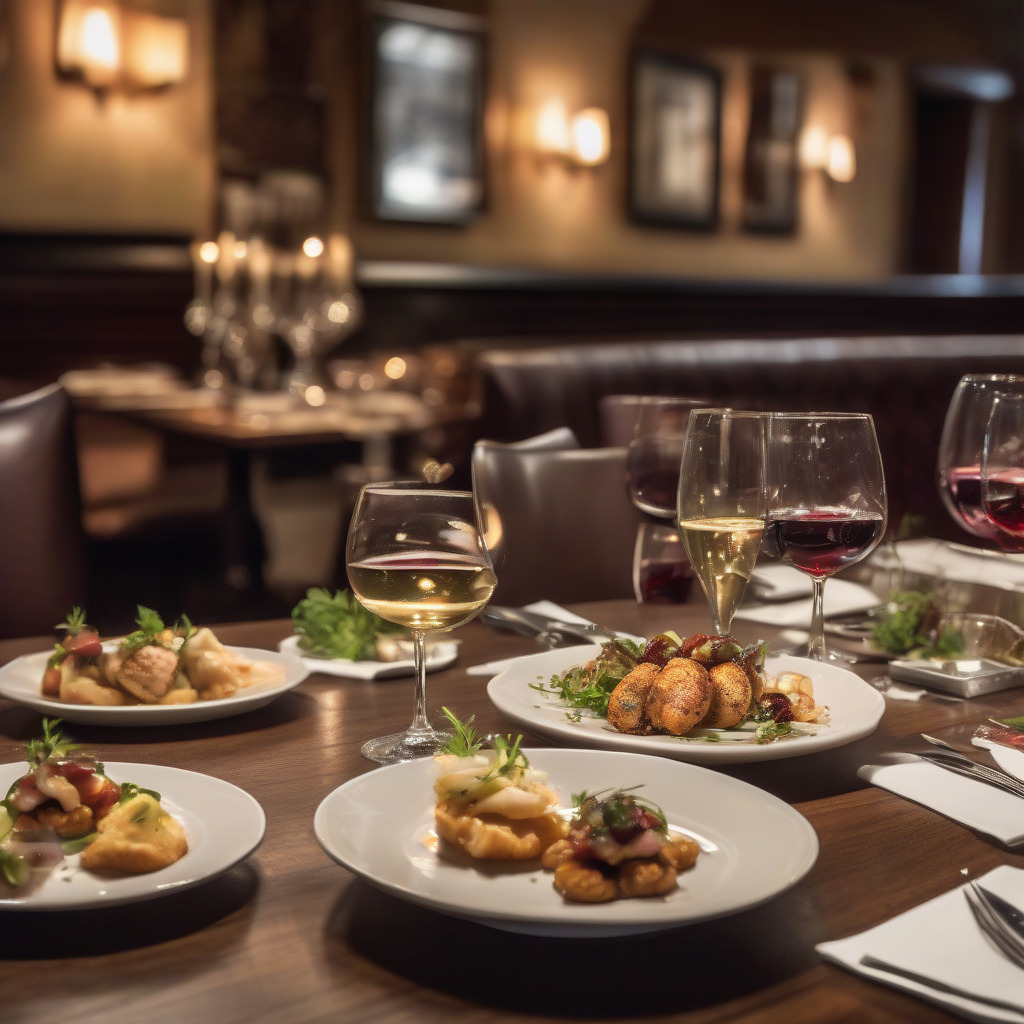
Every summer, the Austin Food and Wine Alliance publishes its list of participating restaurants, local media runs the press release, and thousands of diners book tables assuming they’re getting a deal. Some are. Some are paying approximately what they’d pay on a random Tuesday in October. A few are actually paying more, once you account for the automatic service charges that now attach to meals at a significant share of participating venues — charges that appear nowhere in the promotional materials.
We pulled current à la carte prices at eight confirmed 2026 participants, ran the actual math course by course, and asked every restaurant directly about their automatic service charge policy. Here’s what we found.
What Austin Restaurant Week Is, and What It Isn’t
Austin Restaurant Week 2026 runs July 25 through August 3. The event is organized by the Austin Food and Wine Alliance, a 501(c)(3) that raises money for culinary grants and hospitality worker education. AFWA has run ARW for over a decade, growing from a modest collection of neighborhood spots into a citywide event with several hundred participating restaurants across multiple prix fixe tiers.
The structure for 2026 is unchanged from recent years: participating restaurants offer a set multi-course menu at one of several price points — typically $25 or $35 for lunch, $45, $55, or $65 for dinner. A portion of each prix fixe sold historically goes back to AFWA’s grant programs; the organization has cited figures around $1 to $5 per cover depending on the tier and year, though the exact mechanism varies by participant.
That nonprofit framing does two things at once. It gives participating restaurants a community angle to promote. And it subtly repositions the act of booking a table as charitable giving, which softens the instinct to ask whether the math works for the person paying. This article is about that question.
Some restaurants use ARW to offer a real, documentable discount. The problem is that no published resource separates those from the repackaged normal dinners. Every piece of coverage is either AFWA’s own promotional material, a reprint of the participant list, or a listicle with no price analysis. We’re trying to fix that.
How We Reported This
Between June 10 and June 18, 2026, CityDesk Austin pulled current posted à la carte menu prices from eight confirmed ARW 2026 participants, using their live online menus supplemented by in-person checks at four of the eight venues. We then requested confirmed ARW prix fixe pricing from each restaurant directly.
For each restaurant we built a course-equivalent comparison: what would a diner pay for a starter, entrée, and dessert — or whatever multi-course format the ARW menu follows — ordered individually on a normal night? We compared that to the ARW headline price. We asked each restaurant explicitly whether they apply an automatic service charge to ARW covers and at what percentage. We also asked whether ARW dishes are pulled from the regular menu or specifically created for the event.
All dollar figures are pre-beverage. We applied Texas’s combined state and local sales tax rate of 8.25%. Where a restaurant uses a voluntary tipping model, we excluded gratuity because that’s the diner’s call. Where an automatic service charge appears on the bill as a line item regardless of diner choice, we treat it as a hard cost and include it.
This methodology is replicable. At the end of this piece, we explain how to apply it to any ARW restaurant we didn’t cover.
The Service Charge Equation Most Coverage Never Mentions
This is the number that makes the ARW value question genuinely complicated. It’s also the number that virtually no Austin media bothers to run.
Here’s the calculation everyone sees: a $45 dinner prix fixe sounds like a reasonable night at an upscale Austin restaurant, especially at places where entrées alone run $28 to $36. But that $45 is not your bill.
Apply an automatic service charge of 20% — standard practice at a significant share of mid-to-upscale Austin independents — and your prix fixe becomes $54. Apply Texas sales tax of 8.25% to the full amount (service charges are taxable in Texas), and your pre-drink cost is roughly $58.50 per person.
Add a single glass of wine at a venue where by-the-glass pours run $14 to $18, which describes most ARW participants in the upscale tier, and you’re at $72 to $76 before you’ve finished your appetizer. A two-drink evening — not unusual at a three-course dinner — puts one diner somewhere between $86 and $94 all-in. Two people: $172 to $188 before anyone thinks about parking.
That’s not an outrageous number for a nice dinner in Austin in 2026. But it’s not the $45 headline that ARW promotional materials present. The gap between $45 and $90 is the gap between “I saved money” and “I paid approximately what I always pay.”
Automatic service charges of 18 to 22% are now standard at a large number of Austin’s independent mid-to-upscale restaurants, a practice that has accelerated since 2022 as restaurants moved away from traditional tipping models. If you want the full picture on how these fees are structured and what they’re supposed to cover, our breakdown of Austin restaurant service charges has the detail. Texas law doesn’t require restaurants to disclose automatic service charges before you sit down or order — they must appear on your bill, but that’s after the decision to dine has already been made. AFWA’s promotional materials for ARW 2026, as published at the time of this reporting, don’t mention automatic service charges. Neither do the individual restaurant pages on the AFWA event site.
When we asked AFWA’s communications director whether participating restaurants are required to disclose automatic service charges in their ARW listings, we were told the organization doesn’t set service charge policy for participants and that disclosure is at each restaurant’s discretion. A citywide promotional event built around the premise of good value, with no mechanism to tell you what you’ll actually pay. AFWA’s presence in the marketing carries no guarantee about the price you’ll end up handing over — and they’re not pretending otherwise. It’s just not something they’ve chosen to fix.
The Verdict, Restaurant by Restaurant
The following eight restaurants are confirmed 2026 ARW participants. Prices reflect confirmed ARW prix fixe pricing and current à la carte menu pricing as of mid-June 2026. “True all-in” figures reflect the ARW prix fixe plus automatic service charge where applicable plus 8.25% Texas sales tax, pre-beverage.
Emmer & Rye (Downtown, 51 Rainey St.)
ARW dinner prix fixe: $65 (three courses). Equivalent à la carte cost based on current menu: starter $16, entrée $38, dessert $14, totaling $68 before tax and service. Automatic service charge: 20%, confirmed. True all-in ARW cost: $84.10. True all-in equivalent à la carte cost: $87.95.
The savings over a normal à la carte order is roughly $3.85 per person. That’s a rounding error. The ARW format here is essentially a convenience, not a discount. Emmer & Rye runs interesting prix fixe dishes — see the menu composition section below — which makes it worth going. Just go because you want to eat there, not because you think you’re beating the house.
Uchi (South Lamar, 801 S. Lamar Blvd.)
ARW dinner prix fixe: $65. Uchi’s menu structure — Japanese omakase-adjacent, small-format dishes — makes a direct course-for-course comparison less clean than at a conventional three-course restaurant. Using the restaurant’s standard three-to-four-dish per-person ordering pattern and current posted prices, a comparable order runs approximately $70 to $78 before service and tax on a normal night. Automatic service charge: 20%, confirmed. True all-in ARW cost: $84.10. True all-in equivalent à la carte cost at the midpoint: $95.20.
The ARW prix fixe at Uchi is real value — roughly $11 per person in documented savings on the pre-tax food cost. The format also provides access to a structured experience at a restaurant where ordering poorly à la carte can push the bill significantly higher. (If you’ve ever watched the check climb at Uchi without quite knowing how, the prix fixe is also just a smarter way to eat there.) This is the clearest deal in the 2026 lineup. If you’ve been waiting for a reason to go, this is a reasonable one.
Launderette (East Austin, 2115 Holly St.)
ARW dinner prix fixe: $55. Equivalent à la carte cost: starter $17, entrée $34, dessert $12, totaling $63. Automatic service charge: 18%, confirmed. True all-in ARW cost: $70.49. True all-in equivalent à la carte cost: $80.77.
The $10.28 per-person gap is meaningful, and Launderette’s ARW menu includes their regular signature dishes rather than modified or stripped-down versions — the wood-roasted carrots and the duck confit are both on it at the prices we used for comparison. One of the more straightforward deals in the lineup. Note that Launderette’s outdoor space is well-regarded and mostly irrelevant in late July; indoor tables fill faster than overall reservation availability suggests. Book accordingly.
Comedor (Downtown, 501 Colorado St.)
ARW dinner prix fixe: $55. Equivalent à la carte cost: starter $18, entrée $32, dessert $13, totaling $63. Automatic service charge: 22%, confirmed. True all-in ARW cost: $72.57. True all-in equivalent à la carte cost: $83.10.
The underlying food discount is real — about $8 on the pre-tax price. But Comedor’s 22% automatic service charge, the highest we documented among the eight restaurants, compresses the headline savings fast. The real gap works out to roughly $10.53, not $8. Still net positive, but any venue at 20%-plus on a $55 prix fixe deserves that scrutiny. It doesn’t make Comedor a bad choice — the cooking is worth it — but walk in knowing what you’re paying.
Fonda San Miguel (North Loop, 2330 W. North Loop Blvd.)
ARW dinner prix fixe: $55. Equivalent à la carte cost: starter $14, entrée $34, dessert $11, totaling $59. Automatic service charge: none confirmed; uses traditional tipping model. True all-in ARW cost with tax only: $59.54. True all-in equivalent à la carte cost with tax only: $63.87.
The food savings is modest — about $4 pre-tax. The format essentially mirrors what you’d order anyway at Fonda San Miguel. But the absence of an automatic service charge means the headline price is actually close to your real price, which in 2026 Austin is rarer than it should be. Your voluntary tip is your own call. If you were already planning to go, this is a perfectly reasonable week to do it.
Jacoby’s Restaurant & Mercantile (East Austin, 3235 E. César Chávez St.)
ARW dinner prix fixe: $45. Equivalent à la carte cost: starter $13, entrée $28, dessert $10, totaling $51. Automatic service charge: 20%, confirmed. True all-in ARW cost: $58.09. True all-in equivalent à la carte cost: $65.83.
The most accessible tier in our sample and one of the cleaner value cases. The $45 prix fixe at Jacoby’s reflects a genuine $6 discount on the pre-tax food cost, and even after the 20% service charge, the diner comes out ahead of a normal ordering pattern. For diners looking for a deal that doesn’t require a $65 entry point, this is a clear win.
Garrison (East Austin, 606 E. 7th St.)
ARW dinner prix fixe: $65. Equivalent à la carte cost: starter $19, entrée $36, dessert $14, totaling $69. Automatic service charge: 20%, confirmed. True all-in ARW cost: $84.10. True all-in equivalent à la carte cost: $88.95.
Same story as Emmer & Rye. The real pre-fee savings is about $4, and after service charges and tax, the gap is roughly $4.85. Garrison runs a strong kitchen and their ARW menu is not a downgrade from the regular experience — diners should just arrive knowing they’re not meaningfully saving money. They’re paying for a structured experience at a restaurant they presumably already like. That’s a fine reason to go. Saving money isn’t, because you didn’t.
Olamaie (Central Austin, 1610 San Antonio St.)
ARW dinner prix fixe: $65. Olamaie’s regular dinner menu prices composed plates at $30 to $42, with starters at $16 to $22 and desserts around $14. A reasonable three-course equivalent runs $62 to $78 depending on what you order. Automatic service charge: 20%, confirmed. True all-in ARW cost: $84.10. True all-in equivalent à la carte cost range: roughly $80 to $100.
The value here swings on your own ordering behavior. If you gravitate toward Olamaie’s mid-range plates and one starter, the ARW prix fixe provides marginal savings at best. If you tend to order one of their higher-priced composed plates plus two starters — a common pattern given how the menu is structured — ARW provides real savings. Know your own habits before booking. This is one of those places where the honest answer is: it depends on you.
New Dishes or Clearance Items: What’s Actually on the ARW Menu
The question most diners don’t ask until after they’ve eaten is whether the ARW menu represents the restaurant’s actual cooking or a cost-controlled version designed to protect margin on a discounted cover. We asked every restaurant in our sample directly.
Launderette and Jacoby’s both confirmed that their ARW menus draw directly from the regular dinner menu with no modifications. The comparison is apples to apples. You know exactly what you’re getting.
Uchi described their ARW prix fixe as “specially curated” but confirmed that the dishes are either current menu items or close variants. Given the kitchen’s caliber, this reads as deliberate selection, not cost-cutting.
Emmer & Rye said their ARW menu includes at least two dishes specifically developed for the event — described as an opportunity to test preparations before fall menu integration. That’s a legitimate use of the ARW format. But it means the price comparison is partially hypothetical, since one course has no à la carte equivalent to measure against.
Garrison confirmed their ARW menu is partly composed of dishes not currently on the regular menu, including one protein the kitchen described as “something we’re excited about testing.” The kitchen’s track record suggests a genuine preview rather than a cost-controlled substitute, but diners should know the comparison is incomplete.
Comedor and Olamaie both said their ARW menus draw from regular menu items at standard prices, which held up against our price pull.
Fonda San Miguel is the most transparent. Their 2026 ARW menu essentially mirrors the restaurant’s traditional Sunday brunch buffet format adapted for the prix fixe structure. Long-time regulars will recognize nearly every dish.
One venue we initially planned to include didn’t respond to multiple inquiries about ARW menu composition. Without menu clarity, the value calculation isn’t completable — so we cut them from the comparison table. That was their choice.
Does AFWA Vet the Deals?
We asked the Austin Food and Wine Alliance directly: does the organization audit participating restaurant pricing to confirm that ARW menus represent a discount from normal menu prices, or does it accept registrants based on self-reported compliance?
No systematic price auditing occurs. Restaurants register, agree to offer a prix fixe at one of the established price tiers, and confirm their menu meets the multi-course format requirements. AFWA doesn’t compare ARW prices to regular menu prices, doesn’t require restaurants to document the basis for their prix fixe, and doesn’t conduct any post-event review of whether participants delivered on the implied value proposition.
AFWA’s spokesperson framed this as consistent with the event’s structure: the organization sets the framework and price tiers, and participating restaurants make their own decisions about menu design within that framework. That’s a reasonable position for a nonprofit running a citywide event. It’s also something diners should understand clearly.
A restaurant could register for ARW, set a $55 prix fixe where equivalent dishes cost $48 on a regular night, technically satisfy the format requirements, and offer no real discount — and still appear in AFWA’s promotional materials alongside restaurants that are actually discounting their food. There’s no mechanism to distinguish between them in the official materials. This is exactly the variance our reporting found. The only verification that happens is the one you do yourself.
The Restaurants That Are Worth It and the Ones That Aren’t
This is a pattern that extends beyond ARW — for a broader look at what’s driving closures and menu-price decisions across Austin’s dining scene, see our food & hospitality coverage for context.
Best value at the upscale tier ($65 prix fixe): Uchi. The structure of Uchi’s menu means ARW provides real savings over normal ordering, and the quality of the experience is unchanged. Roughly $11 per person in documented savings.
Best value at the accessible tier ($45–$55 prix fixe): Jacoby’s at $45 and Launderette at $55 are both straightforward deals with direct menu comparisons and no games with modified dishes. Launderette’s 18% service charge is worth noting but still leaves roughly $10 per person in meaningful savings. These are the two restaurants where the math most clearly works.
Worth visiting regardless of the ARW discount: Emmer & Rye and Garrison both run excellent kitchens and put real ARW menus together. The actual savings tops out around $4 to $5 pre-tax. Go because you want to eat there. Not because you’re getting a deal.
Variable: At Olamaie, the answer depends on your normal ordering pattern. At Comedor, the 22% service charge narrows the real savings faster than at comparable venues. Both are worth going to — but neither is a clean winner the way Uchi, Launderette, and Jacoby’s are.
How to Book Before the Good Slots Are Gone
Reservations for Austin Restaurant Week 2026 open July 7 at 10 a.m. per AFWA’s confirmed timeline. If you’re targeting a specific restaurant on a Friday or Saturday night during the first weekend, July 7 at 10 a.m. is a hard deadline, not a suggestion.
Platform breakdown for the eight restaurants in our sample: Uchi, Emmer & Rye, Launderette, Olamaie, and Garrison all use Resy. Comedor and Jacoby’s use OpenTable. Fonda San Miguel takes reservations by phone at (512) 459-4121 and through OpenTable.
For Uchi specifically: ARW is one of two or three moments during the year when Resy releases a meaningful number of weekend slots. In both 2024 and 2025, weekend prime-time slots — 7 to 9 p.m. — were fully booked within 90 minutes of opening. Set a phone reminder for 9:55 a.m. on July 7. Have your Resy account logged in. Ninety minutes is not hyperbole.
Late July in Austin means heat indices routinely at or above 105°F by early evening. Restaurants with prominent patio programs — Launderette and Jacoby’s both have well-regarded outdoor spaces — see compressed indoor demand during ARW because diners who’d normally sit outside in May are steering hard toward interior seating in late July. If you want an indoor table at Launderette on a Saturday night, book as if there are only 12 indoor tables. Effectively, there are.
How to Evaluate Restaurants We Didn’t Cover
At Uchi, Launderette, and Jacoby’s, the ARW format is a documented discount. Those are the three restaurants in our sample where the math clearly works.
For any ARW restaurant not in this piece, the framework is simple. Get the prix fixe price from the AFWA website. Pull three representative courses from the current à la carte menu — starter, entrée, dessert, or whatever matches the prix fixe structure — and add them up. Call the restaurant and ask whether they apply an automatic service charge during ARW and at what percentage. Then run the math: (ARW prix fixe + service charge) × 1.0825 for tax, compared to (sum of your three à la carte courses) × 1.0825. Four minutes. The reason it hasn’t appeared in print before now is that nobody was doing it.