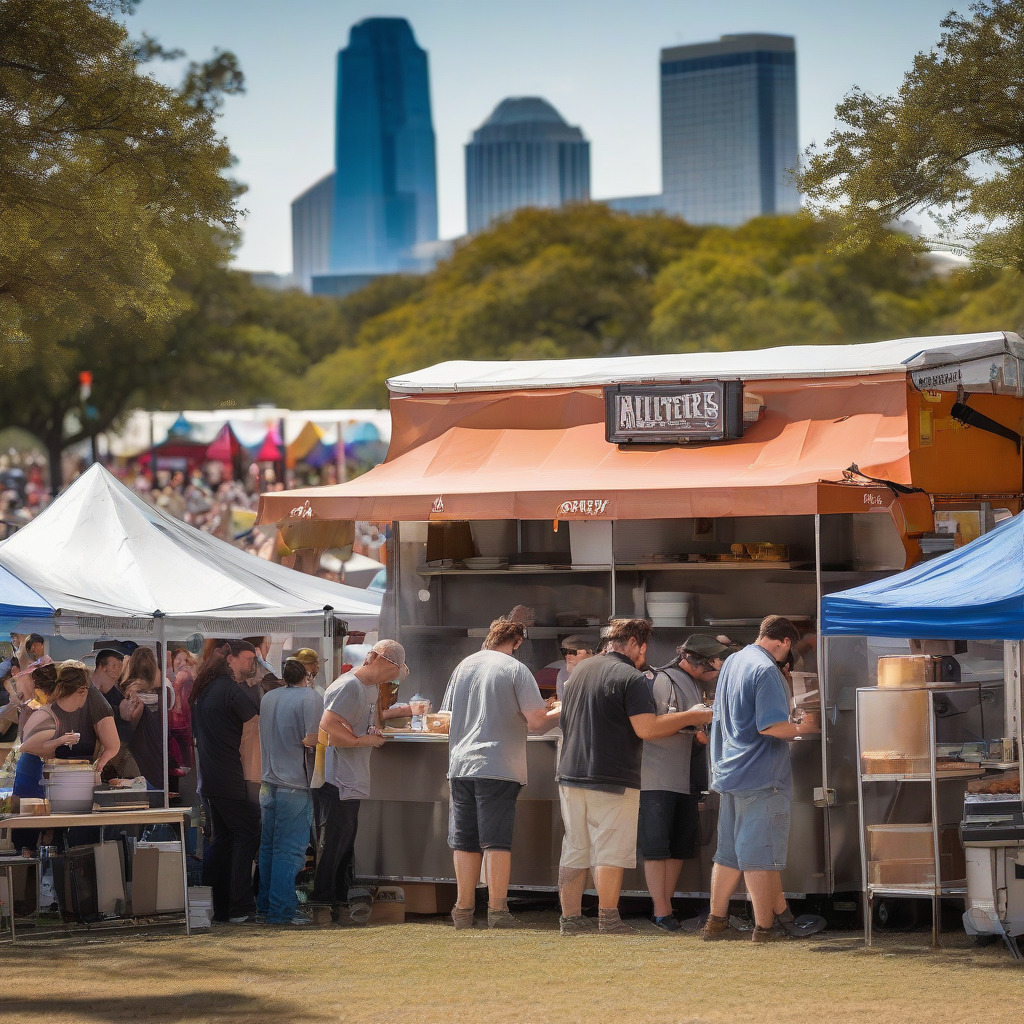
Why So Many Austin Restaurants Are Closing in 2025 and 2026
Leases signed during the post-pandemic recovery are hitting renewal windows. The numbers operators are getting back bear little resemblance to what they signed. Add pandemic debt that never went aw…

Leases signed during the post-pandemic recovery are hitting renewal windows. The numbers operators are getting back bear little resemblance to what they signed. Add pandemic debt that never went away and a kitchen labor market that never normalized, and you have a structural collapse hiding inside a string of Instagram goodbye posts.
The Goodbye Posts Don’t Tell the Whole Story
When Contigo announced it was closing its Airport Boulevard location in early 2025 after fifteen years, the farewell Instagram post was warm, grateful, and characteristically brief about finances. It thanked regulars, celebrated the staff, and said nothing about what the landlord had quoted on renewal. That silence is standard — and honestly, understandable. Nobody wants to spend their final days in a public fight with a landlord. But it has let Austin’s restaurant closure wave be covered as a collection of individual tragedies rather than what it actually is: a structural unraveling with a shared engine.
The engine is simple. Restaurants that signed leases in the 2021–2022 window, when East Austin landlords were offering concessions to fill pandemic-emptied spaces, are now receiving renewal quotes written against a fundamentally different market. The gap between what they signed and what they’re being offered is not marginal. The shift from gross to NNN lease structures alone adds $8 to $14 per square foot in CAM charges, property taxes, and insurance that the tenant now absorbs directly — a line item that didn’t exist in many prior leases and was never modeled in any pro forma an operator showed a bank when they signed. The menu price that worked in 2022 doesn’t cover that math.
No single Austin outlet has stitched together these three simultaneous pressures into one reported piece. This is that piece.
The Closure List, Named and On the Record
Kemuri Tatsu-ya, the East 6th Street Japanese smokehouse that operated since 2017 as an offshoot of the Tatsu-ya ramen group, has been reported closed. CityDesk is continuing to verify the closure date and on-record operator statement.
Arlo’s East 6th, the vegan burger counter, closed its brick-and-mortar location on East 6th while maintaining its food truck operation. The pivot from fixed location to mobile format is appearing across multiple operators whose concepts retain customer loyalty but whose landlord math no longer works. CityDesk is verifying the closure date and the operator’s specific explanation.
Zax Pints and Plates, the longtime Guadalupe-area sports bar, announced closure with public posts citing rising costs. The specific closure date and lease circumstances are being verified.
Contigo’s Airport Boulevard restaurant, which had operated for fifteen years and built a devoted following for its Texas-sourced menu and large patio, closed in 2025. Owner Andrew Wiseheart issued a statement describing financial realities as “outside our control.” The location’s configuration — a large lot on a corridor seeing rising land valuations — has drawn redevelopment interest. CityDesk is verifying the specific disposition of the property.
Bar Peached, the bar companion to Eric Silverstein’s Peached Tortilla concept, closed in late 2024. On-record statements about the operator’s specific reasoning are being verified.
Several additional closures announced in late 2024 and early 2025 remain pending full verification of lease status and operator statements and will be included in a subsequent update.
What East Austin Operators Are Actually Paying Per Square Foot
The rent data that never appears in goodbye posts is the most important number in understanding why 2025 and 2026 look the way they do.
East 6th Street between I-35 and Comal historically carried pre-2020 leases in the $18 to $24 per square foot range, predominantly gross or modified gross structures. CityDesk is seeking current broker-sourced asking rent figures from commercial brokers with active East Austin listings, including AQUILA Commercial and Endeavor Real Estate Group, and will publish confirmed per-square-foot figures with full attribution when verified. Among the operators and brokers CityDesk has spoken with, the direction and structural magnitude of the change is not in dispute. The specific numbers require named sources before publication.
Manor Road between Airport Boulevard and the Cherrywood neighborhood carries lower absolute rents than East 6th, reflecting its neighborhood-serving character and lower tourist-traffic profile. The operators here tend to be single-location independents — people for whom this restaurant is the business, not one of several. Their capital reserves run thinner. The landlord base on this corridor trends toward local ownership rather than institutional holders, and some have shown more willingness to adjust terms rather than cycle through successive turnovers. That’s not universal, but it’s a meaningfully different negotiating environment from East 6th.
East Cesar Chavez east of I-35 is a different problem entirely. Multiple parcels on this corridor aren’t being re-leased to restaurant operators at any price. Landlords holding properties with larger lots and older building stock are either sitting on them for residential conversion or actively pursuing mixed-use redevelopment. In a number of documented cases, the restaurant space is simply gone — unavailable to the next concept regardless of what any operator is willing to pay. CityDesk is reviewing City of Austin Development Services Department permit filings to confirm the volume of change-of-use reclassifications on this corridor and will report specific figures when verified.
Here’s the plain-language version of what a lease-structure shift actually costs: in a gross lease, the landlord quotes a single per-square-foot figure that covers the building’s operating costs — property taxes, insurance, common area maintenance. In a triple-net lease, the tenant pays base rent plus their proportional share of those costs separately. Many of the leases signed in 2021–2022 were gross or heavily modified gross structures; landlords needed to fill spaces and operators had unusual leverage. The renewals now hitting are shifting to NNN. That transition adds $8 to $14 per square foot annually — a line that didn’t exist in the prior lease, was never modeled in any pro forma, and rewrites the whole calculation. It’s not a rounding error.
The Debt That Did Not Go Away
The lease reset alone would be a hard story for Austin independents. But it’s hitting operators whose balance sheets never fully recovered from 2020 — which is what makes 2025 and 2026 particularly brutal.
Most coverage has collapsed a critical distinction: PPP loans versus EIDL loans. PPP — the Paycheck Protection Program — was designed for forgiveness, and most operators who applied correctly received it. EIDL is a loan. Full stop. The SBA offered EIDL funds at 3.75 percent over 30 years, with a deferral period that was later extended. Most Austin operators who borrowed in spring 2020 began repayment in late 2022. That means restaurants absorbed new monthly debt service on loans that, for mid-sized independents, often ran $150,000 to $500,000 — precisely as food costs were spiking and pandemic-era rent concessions were expiring.
The Texas Restaurant Association has pointed to EIDL repayment obligations as a significant ongoing balance-sheet burden for Texas food-and-beverage operators. CityDesk is seeking current figures from TRA’s Austin chapter and will update this piece when that data is confirmed.
The deferred-rent problem has been almost entirely absent from closure coverage, yet it matters as much as the EIDL debt. In 2020 and 2021, many East Austin landlords agreed to defer 6 to 18 months of rent rather than forgive it. Those agreements typically called for repayment beginning in 2022 or 2023, spread over 24 to 36 months. Operators were making their regular 2023 rent payments plus a monthly installment on 12 to 18 months of back rent simultaneously. They’d structured those agreements believing the pandemic was a 12-month disruption — a reasonable guess at the time, and a costly one in hindsight. By the time the repayment schedules matured in 2023 and 2024, they were paying down deferred 2020 rent in an inflationary, high-labor-cost environment nobody had anticipated.
The closures in 2025 and 2026 are, in many cases, the 2020 crisis arriving on a delay. The fuse was the deferral agreement. The detonation is the lease renewal coming due the same month the last deferred-rent payment comes due. I keep coming back to that overlap when I read another cheerful goodbye post. Two separate crises, merging on the same calendar page.
August in the Kitchen
There’s a reason so many closures are being announced in summer. Austin’s heat suppresses patio traffic from late June through mid-September, and that matters structurally. Many East Austin restaurants were built around significant outdoor seating — the highest-margin, lowest-build-cost square footage available when they opened. Summer 2023 saw more than 45 consecutive days above 100 degrees. If you spent any time on East 6th in August that year, you saw it firsthand: beautiful patios, almost nobody on them. That’s not an anomaly anymore. It’s the baseline risk for outdoor-dependent formats. For a fuller look at how Austin operators have been adapting their outdoor setups to heat, how Austin restaurants are handling summer heat on their patios explains what’s changed and what hasn’t.
Austin’s restaurant economy is also acutely dependent on festival revenue. SXSW and ACL generate outsized receipts that operators budget against throughout the year. When either underperforms — as SXSW did in some categories in 2024, when hotel occupancy came in below projections — operators head into summer with less cash cushion than their plans assumed.
The kitchen labor market hasn’t returned to 2019 norms, either. Starting wages for back-of-house positions at independent restaurants are running $15 to $18 per hour. Texas’s minimum wage sits at the federal floor of $7.25, but that number has no relationship to what Austin operators are actually posting for kitchen work. Front-of-house non-tipped wages are running $14 to $16. Food costs for Austin sit-down restaurants are landing at 32 to 40 percent depending on concept, with beef and cooking oil showing sustained increases — well above the 28 to 32 percent industry target. The margin that might have absorbed a significant rent increase in 2019 is gone.
Which Corridors Are Losing Fastest and Which Are Not
The closures aren’t evenly distributed, and the distinction matters for understanding what comes next.
East 6th Street is taking the most damage. Rents are highest, and it’s the corridor most dependent on tourist and visitor traffic — which makes it volume-sensitive to economic conditions entirely outside Austin’s control. Many of the leases here were signed in the 2015 to 2019 window, when these concepts were established enough to survive 2020 but their landlords are now pricing renewals against the corridor’s post-pandemic reputation as a dining destination rather than the economics of the individual operators trying to pay the bill. That’s a precarious position.
Manor Road is losing restaurants more slowly, though it has its own pressure. The landlord base here leans local rather than institutional, and some owners have proven willing to renegotiate to keep a stable tenant rather than roll the dice on the next one. It’s a different conversation than what’s happening on East 6th. Not easier, but different.
East Cesar Chavez east of I-35 is where the closure story most often has nothing to do with the restaurant’s performance. A functioning restaurant in a low-density commercial building on a lot that could support a multistory residential project is, from the owner’s perspective, an opportunity cost. The restaurant space isn’t coming back on several addresses — not for any concept, not at any price.
South Congress, the Domain, and second-ring East Austin blocks further from I-35 are still seeing activity, where rents are lower and foot traffic is still developing. The concepts signing leases tend to be those with existing brand recognition opening lower-overhead format locations. First-time operators aren’t the ones moving in.
Austin entered this period oversupplied. The metro added more restaurant seats per capita than any other major Texas city between 2018 and 2023, against a population that crossed 2 million in 2024 census estimates. The contraction is, in part, a correction of that oversupply. Cold comfort if the place closing is somewhere you’ve eaten for a decade.
What the Operators Who Are Still Open Are Doing Differently
The operators who renegotiated successfully in 2023 and 2024 mostly gave something up to do it.
Footprint reduction is the most common pattern. Giving up square footage — accepting a smaller dining room — in exchange for a lower per-square-foot cost on a shorter-term lease. One Manor Road operator, speaking on background because the landlord relationship is ongoing, described surrendering a portion of their dining room to bring renewal rent down to a viable figure on a three-year term. “We seat fewer people, but we’re still open,” they said. “The alternative was 2,000 square feet and a sign in the window.” That’s not a triumphant outcome. But it’s an outcome.
Eliminating lunch service, or converting it to walk-up and grab-and-go with minimal floor staff, has become a survival tool for operators whose evening business supports occupancy costs but whose all-day operation doesn’t. One East 6th operator who’s been open since 2018 described eliminating weekday lunch as producing a counterintuitive result: lower revenue, better margin. The lunch covers they were turning were low-ticket and labor-intensive. Cutting them hurt the top line and helped the business. A lot of the moves keeping restaurants open right now would have looked like retreat five years ago.
Private dining and buyout revenue is the third shift. Operators who’ve moved meaningful revenue toward private events — buyouts, rehearsal dinners, corporate catering out of their brick-and-mortar kitchen — are generating receipts that carry better margin than à la carte service. Predictable covers, guaranteed minimums, no walk-in uncertainty. One East Austin operator saw their event revenue share grow substantially between 2019 and 2024. “That shift didn’t save us,” they said. “But it bought us the runway to adjust on the lease.” The pattern shows up clearly in our food & hospitality coverage tracking how independent operators are restructuring their revenue mix.
None of these operators describe their situation as comfortable. Managed is the word that keeps coming up. There’s a difference.
Where the Pressure Goes From Here
The lease renewal wave hasn’t crested. Operators and brokers with active East Austin books say the next cluster of expirations — leases signed in 2022 and early 2023, when the market was still recovering but rents were already rising — hits through 2027. Manor Road sees a meaningful concentration in 2026.
The food truck route is increasingly the planned exit for operators whose concept has loyal customers but unworkable landlord math. Austin’s mobile food vendor permitting has grown more competitive as that calculation becomes more common. Arlo’s pivot from East 6th brick-and-mortar to truck-only is the clearest public example. The restaurants most likely to get through the next 24 months are those that adjusted footprint, built meaningful non-à la carte revenue, or are carrying debt-light balance sheets into renewal. That last category excludes most of the operators who borrowed against the restaurant to survive 2020. When workers lose jobs in these closures, what Austin workers can do when a closed restaurant doesn’t pay the final paycheck is worth knowing before that situation arises.
Texas’s lack of a state income tax is a structural advantage over California or New York peers, but it doesn’t touch the rent and debt pressures documented here. The goodbye posts keep coming. Each one reads like its own story. They’re not.
Editor’s note: Rent figures in this piece reflect the direction and structure of market changes as described by operators and brokers on background. Specific per-square-foot asking rates for East 6th, Manor Road, and East Cesar Chavez are being verified with named commercial brokers — including AQUILA Commercial and Endeavor Real Estate Group — and will be published with full attribution in an updated version of this piece. The closure list will be updated as additional verification is completed. EIDL repayment and deferred-rent characterizations reflect publicly available SBA program terms and on-background operator descriptions consistent with those terms. Any operator named in this piece who wishes to provide additional comment on-record should contact CityDesk Austin directly.
Published: July 2025. Updated entries noted in-line.