What the Ascension and St. David's Expansions Mean for Austin Patients in 2026
Both of Austin's dominant health systems have active construction underway across the metro. But a close look at where the new facilities are landing—and where they aren't—raises serious questions …

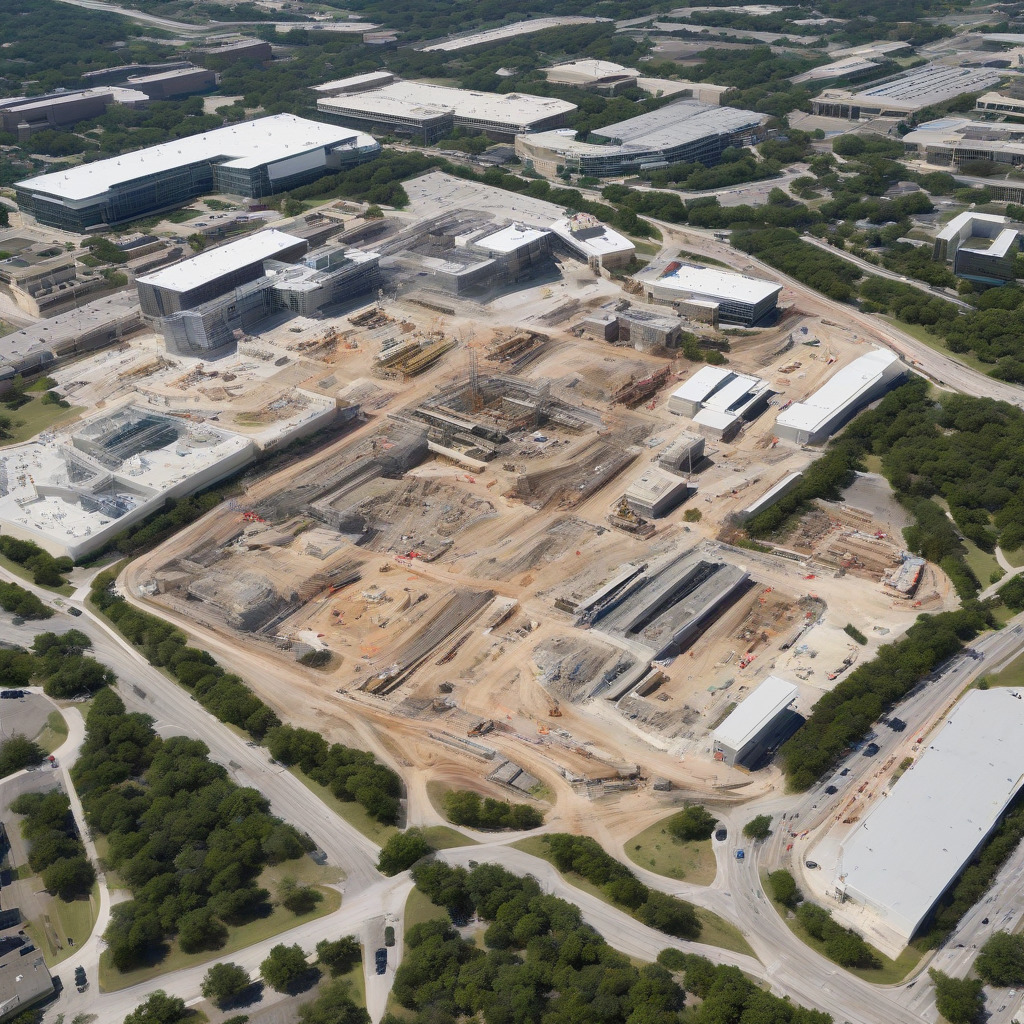
Both of Austin’s dominant health systems have active construction underway across the metro. But a close look at where the new facilities are landing—and where they aren’t—raises serious questions about who this building boom is actually for.
Austin’s two dominant health systems are spending money on construction, and the timetable is accelerating. Ascension Texas and St. David’s HealthCare both have capital programs active or announced for 2025 and 2026. The roughly 1.3 million residents of Travis County, and the hundreds of thousands more in the surrounding suburbs, deserve a closer look at what those commitments actually mean: where the new beds and facilities are going, which communities will benefit, and which ones are still waiting.
Based on confirmed project locations and stated system priorities, most of the new construction is following insured, higher-income growth corridors rather than heading toward the neighborhoods that need it most. That’s not a surprise given how hospital economics work in a state without Certificate of Need oversight. But it matters, because the gap between where Austin’s healthcare capacity is being added and where Austin’s unmet need actually sits is measurable, specific, and growing.
Austin’s Bed Shortage Is Real and Getting Harder to Ignore
Austin’s hospital bed-to-population ratio sits below national averages — a persistent structural deficit that the region’s decade-long population surge has made considerably worse. At peak growth, the Austin metro was adding roughly 50,000 to 60,000 residents a year. Hospitals don’t build on that pace. They move on capital cycles, regulatory windows, and return-on-investment calculations. The result: a metro that absorbed hundreds of thousands of new residents with essentially the same acute-care footprint it had five years ago, give or take a few freestanding emergency departments on the suburban fringe.
Austin Public Health’s 2022 Community Health Assessment documented the gap explicitly. Certain ZIP codes in the city’s Eastern Crescent — the arc of low-income, majority-minority neighborhoods running roughly from 78702 through 78721, 78724, and 78725 — have no major hospital within any reasonable proximity. ER access times require crossing I-35, a commute that in traffic can mean the difference between a manageable emergency and a critical one. Pflugerville, now a city of more than 75,000 people, has no hospital of its own. Neither does Manor, whose 78653 ZIP code residents are largely dependent on Dell Seton or Round Rock facilities — the nearest major acute-care options 15 to 20 minutes away under favorable conditions, considerably longer during peak commute windows or a major weather event. “Favorable conditions” is doing a lot of work in that sentence, and anyone who’s driven 130 Toll toward Round Rock at 5:30 p.m. knows it.
This is the context against which both systems’ 2026 expansion plans should be evaluated.
What Ascension Texas Is Building and What It Isn’t
Ascension Texas operates two major hospital campuses in the city proper: Dell Seton Medical Center at the University of Texas, at 1500 Red River Street, which is the system’s flagship and the teaching hospital for UT Dell Medical School; and Seton Medical Center Austin on 38th Street at Medical Parkway, an aging campus whose long-term role within the system is, frankly, unresolved.
Dell Seton added a new tower in 2022 — a significant capital investment that expanded inpatient and specialty care capacity on the east side of downtown. Ascension has pointed to that project as evidence of its Austin commitment, and fair enough. But a tower that opened in 2022 is not a 2026 expansion. It’s infrastructure that’s now well into its operational life. The more recent project pipeline from Ascension has been comparatively quiet since.
Seton Medical Center Austin’s future remains unclear. The facility is older, less efficient by modern hospital standards, and sits in a part of the city that, while historically central, is not where the system’s growth bets appear concentrated. Whether Ascension invests to modernize that campus, repurposes it, or begins consolidating services elsewhere has significant implications for the patients who currently rely on it. Ascension hasn’t given Austin a public answer on that question. I find that silence harder to ignore the longer it goes on.
Ascension’s national financial picture complicates everything. The system reported substantial operating losses in fiscal year 2023 due to labor cost inflation and supply chain pressures that hit the nonprofit sector particularly hard. When operating margins are compressed nationally, the Austin market competes internally against every other Ascension market for available capital — and Austin isn’t always going to win that argument. That’s a structural constraint that Ascension’s Austin leadership has not addressed directly in any public communication reviewed for this article.
Ascension has continued to invest in ambulatory and outpatient infrastructure. UT Dell Medical School’s partnership with CommUnityCare and HealthPoint — the federally qualified health center network serving lower-income Travis County residents — provides clinic-level access in East Austin. That’s not nothing. But clinic access is not acute-care capacity. It doesn’t resolve the gap when someone has a heart attack in Manor at 2 a.m. and needs an emergency bed three minutes away, not thirty.
What St. David’s Is Building and Where It’s Placing Its Bets
St. David’s HealthCare operates as a partnership between HCA Healthcare — a Nashville-based, publicly traded hospital company that reported more than $67 billion in revenue in 2023 — and St. David’s Foundation, a separate local nonprofit focused on grantmaking rather than hospital operations. HCA’s capital deployment model is disciplined and market-driven. The company invests heavily in corridors where patient volumes are rising, insurance coverage rates are favorable, and revenue per bed justifies construction cost. Austin is on HCA’s list of priority growth markets, which means St. David’s has capital available that Ascension, in its current national financial position, may not be able to match.
The results are visible in where St. David’s has historically placed its bets. The system has pursued freestanding emergency department development in the suburban ring, and the Pflugerville, Hutto, and Buda/Kyle corridors have all been identified as areas of reported site activity. FSEDs are a strategic tool for HCA: cheaper to build than full hospitals, they establish a foothold in a growth corridor and create a pipeline for full-facility development if the market supports it. Whether specific FSED projects in those corridors have been permitted or formally announced for 2026 requires verification through the City of Austin Development Services Center permit database and direct inquiry with St. David’s communications — and I’d encourage anyone tracking this closely to make that call.
Any dedicated emergency facility in Pflugerville would address a documented need for a community of more than 75,000 people whose nearest major hospitals — St. David’s Round Rock and North Austin Medical Center — are a minimum 15 to 20 minutes away. St. David’s South Austin Medical Center at 901 W. Ben White has also been the subject of ongoing discussion about expansion and service-line growth, given the density and demand across South Austin. As of the reporting for this article, the scope of any South Austin expansion has not been publicly specified.
The difference between the two systems right now is essentially financial. HCA is profitable and deploying capital. Ascension is not, and isn’t. That asymmetry is going to shape what Austin’s hospital map looks like in five years more than any strategic plan either system has published. For a broader view of how these two systems compare where it actually counts, our coverage of how Austin’s hospitals compare on patient outcomes puts the performance data alongside the expansion picture.
The Eastern Crescent Has No Seat at Either Table
The access map is not ambiguous. ZIP codes 78702, 78721, 78724, and 78725 form a connected corridor of East Austin neighborhoods that are, by income, insurance coverage, and demographic composition, the communities with the highest healthcare barriers in the city. No major hospital sits within these boundaries. Dell Seton on Red River Street is close geographically but across I-35 — a barrier that functions differently depending on whether you’re in a personal vehicle, on a bus, or in an ambulance from a neighborhood without reliable transit connections.
Neither Ascension nor St. David’s has announced a facility, clinic expansion, or freestanding emergency department specifically targeted at the Eastern Crescent for 2026. Central Health, the Travis County Healthcare District that funds and coordinates care for low-income county residents, has ongoing partnerships with CommUnityCare’s clinic network, which does operate in East Austin. CommUnityCare clinics handle primary and preventive care. They are not equipped for acute emergencies, and they don’t substitute for hospital capacity. Central Health has been vocal about the access gap in the Eastern Crescent and has engaged both systems in conversations about directing investment toward underserved areas. Whether those conversations produce concrete, funded commitments — rather than letters of intent and working groups — is exactly the question East Austin residents and advocates are pressing. The same access dynamics that leave East Austin without a nearby hospital also explain which Austin ZIP codes have the fewest primary care doctors accepting new patients — a pattern that tracks closely with the Eastern Crescent boundaries. It’s also the question that tends to get the most carefully worded non-answers.
No partnership between Central Health and either Ascension or St. David’s that would result in a new acute-care facility in the Eastern Crescent ZIP codes has been confirmed publicly.
The Behavioral Health Crisis Barely Registers in Either Plan
Austin State Hospital on 38th Street is the primary inpatient psychiatric facility for the region. It is chronically overcapacity, serving a population with nowhere else to go. Dell Seton and St. David’s both carry inpatient psychiatric capacity, but neither system’s bed count in that service line matches documented demand. This is not a new problem — it’s been a new problem for about fifteen years now, which is its own kind of damning.
Do either system’s 2026 expansion plans include dedicated behavioral health units, expanded inpatient psychiatric beds, or freestanding psychiatric facilities? Based on public announcements and permit records reviewed for this article, the answer is unclear, which in practice means probably not. Dell Medical School has made psychiatry a focus area within its academic and research programs. But academic programming and research activity are not inpatient capacity. Austin’s behavioral health crisis is a beds problem as much as it is a programming problem, and construction announcements resolve beds problems. Letters of collaboration do not.
For readers navigating the practical consequences of that shortage, our health & wellness coverage tracks access gaps, wait times, and system capacity across Austin’s care landscape.
What UT Dell Medical School Brings and What It Doesn’t
The relationship between UT Dell Medical School and Dell Seton Medical Center is frequently cited as evidence of Austin’s healthcare progress in a way that can obscure the limits of what an academic affiliation actually delivers. Dell Seton is Dell Med’s teaching hospital. The affiliation has driven genuine clinical investment — the Livestrong Cancer Institutes are a legitimate addition to Austin’s oncology capacity, and Dell Med’s orthopedics programs are active at the main campus. The 2022 tower expansion was built, in part, to support the teaching and clinical mission. The Texas Legislature allocated additional funding for Dell Med expansion in its 88th session in 2023.
None of that automatically produces community-facing expansion into underserved neighborhoods. Academic medical centers tend to concentrate innovation and specialty care at their central campuses, where the teaching infrastructure exists. The patients who benefit most directly are those who can get to the central campus — meaning people with reliable transportation, insurance adequate for specialist care, and time to navigate a complex academic health system. Dell Med has engaged with CommUnityCare and HealthPoint on community health initiatives, and those partnerships have value. But if Dell Med has a funded, announced plan to extend its clinical reach into the Eastern Crescent or the northeast suburbs, it hasn’t surfaced in any communication reviewed for this article.
Why There’s No Public Approval Process and Where to Look Anyway
Texas eliminated Certificate of Need requirements in 1985, and that absence shapes everything that follows. In most states, a health system wanting to build a new hospital must seek state approval through a public review process that documents community need, considers existing capacity, and creates a formal record that residents and journalists can examine. Texas has none of that. A health system here can announce, permit, and build a hospital without any state health agency ever reviewing whether that facility serves a genuine community need or simply a market opportunity. You don’t have to love that setup — I don’t — but you need to understand it, because it explains why so much of the accountability work falls to local permit databases and city council agendas.
The primary public paper trail runs through the City of Austin Development Services Center, where permits for construction projects are filed and searchable. Zoning applications and site plan cases for medical uses go through the Austin City Council’s development review process and are posted publicly. Utility connection requests appear in Austin Energy and Austin Water records and can signal early-stage hospital construction before a formal announcement. The DSC permit search portal, available through the City of Austin’s development services website, is the most direct tool for identifying permitted medical construction by address or entity name. Site plan cases filed under medical or institutional zoning categories show where systems have made formal commitments. These records won’t tell you everything — some projects are structured to minimize early public disclosure — but they’re a meaningful indicator of where money is actually moving.
What Residents in Underserved Areas Should Watch and Ask
For residents in the Eastern Crescent, Pflugerville, Manor, and other underserved corridors, the practical question is how to stay informed and push for accountability in a system that offers no formal public input process on hospital siting decisions. Public comment is available at city council hearings where zoning changes or site plan approvals for medical facilities come before the dais. Any new hospital, freestanding ED, or major ambulatory facility will require city site plan approval, which triggers a public notice period. Residents and neighborhood associations in East Austin and the northeast suburbs should watch for those notices and show up when they happen.
Central Health holds public board meetings and is the entity most directly accountable for ensuring that Travis County’s low-income residents have access to care. Their board meetings are public, their budget decisions are public record, and their negotiating posture toward Ascension and St. David’s on access-gap issues is a subject on which they can and should be pressed directly. Ask specifically: What conditions, if any, is Central Health placing on its partnerships with either system in exchange for continued funding support? Is either system being asked, formally or informally, to demonstrate investment in underserved ZIP codes as part of those relationships? These aren’t gotcha questions — they’re the basic accountability questions a public entity should be able to answer.
On the behavioral health front, watch for any permit or zoning activity associated with psychiatric facility development by either system, and for any announcements tied to Austin State Hospital capacity relief, which is ultimately a state funding question as much as a system investment question.
The Real Picture as of Now
Based on what’s confirmed, reported, and visible in public records, the 2026 hospital expansion activity in Austin is primarily following commercially attractive growth corridors: the suburban ring from Pflugerville to Hutto in the north and the Buda/Kyle corridor in the south, where insurance coverage rates are higher and patient volumes are growing fast. That’s rational behavior for a for-profit system like St. David’s/HCA and the path of least financial resistance for a financially constrained nonprofit like Ascension Texas. I’m not accusing anyone of bad faith. I’m describing how the incentives work.
What it is not, at least not yet, is a response to the documented access gaps in the Eastern Crescent ZIP codes, in Manor, or in the behavioral health service line that cuts across every geography in the city. Neither system has made a concrete, publicly verifiable commitment to build new acute-care capacity in the communities that need it most.
The Eastern Crescent has no announced hospital or freestanding emergency department. Manor has nothing on the horizon. The psychiatric bed shortage appears in neither system’s 2026 project list. That could change — permit filings happen with limited advance notice, and system announcements can shift quickly when a site control agreement closes or a community benefit obligation comes up for renewal. CityDesk Austin will continue tracking permit activity at the Development Services Center, zoning cases for medical uses before City Council, and public announcements from Ascension Texas, St. David’s HealthCare, Central Health, and Dell Medical School as this expansion wave develops through 2025 and into 2026.
CityDesk Austin will update this report as permit filings, zoning applications, and system announcements develop. Readers with tips on new medical construction activity in underserved Austin ZIP codes can reach the newsroom directly.