How Austin's University of Texas Area Lease Market Works for Renters This Summer 2026
If you're searching for an August apartment near UT Austin right now and feeling like you missed something, you're not entirely wrong. The West Campus inventory most students want has been largely …

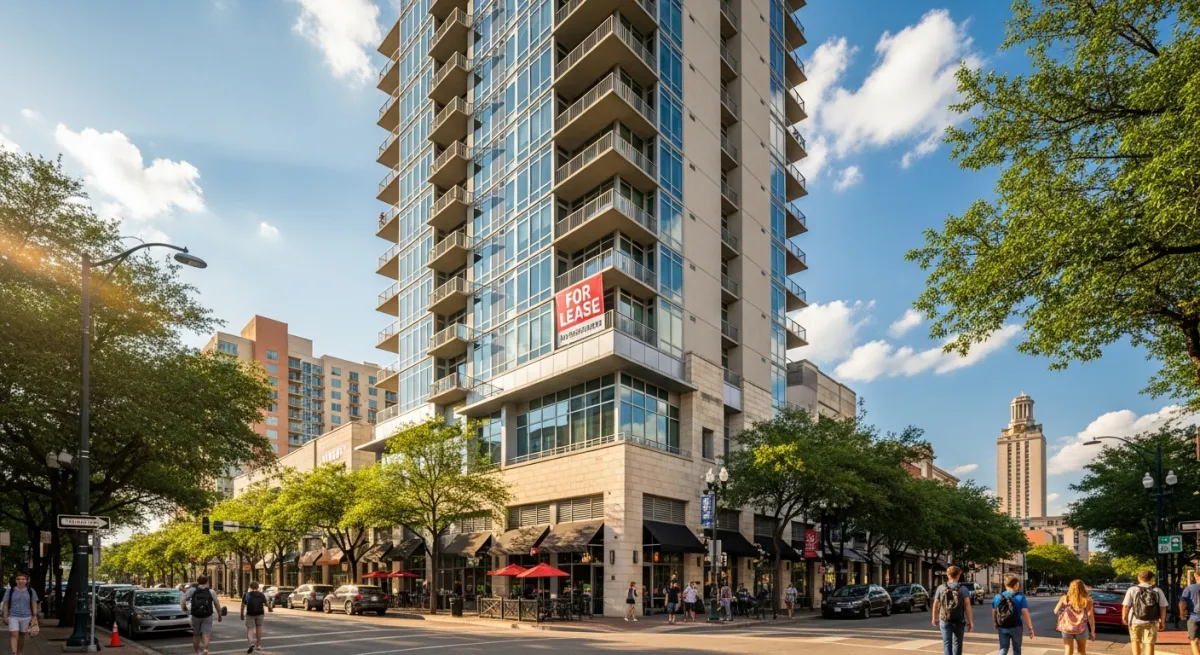
If you’re searching for an August apartment near UT Austin right now and feeling like you missed something, you’re not entirely wrong. The West Campus inventory most students want has been largely spoken for since late May. What remains skews toward higher floors, street-facing units on Guadalupe, or buildings that haven’t been renovated since the early 2010s — and you can tell just by walking through them.
Hyde Park and North Loop are different. That distinction matters more than anything else you’ll learn before spending a weekend driving around with a phone full of Zillow screenshots.
This guide covers the full picture for 78705 and 78751 in summer 2026: rent ranges, neighborhood tradeoffs, lease term red flags, and legal guardrails specific to Austin.
How Late Is Too Late for an August Move-In
It depends entirely on which neighborhood you’re targeting.
West Campus — the dense mid-rise corridor west of Guadalupe between 21st and 29th streets — runs on a leasing cycle synchronized to UT’s academic calendar. Purpose-built student housing operators like Greystar start taking applications in February and March. The preferred units — renovated two-bedrooms with in-unit laundry and covered parking — are gone by late May or early June.
By late June, what’s left in 78705 are units that sat for a reason. A difficult layout. A ground floor facing an alley. Asking rents that pushed above market and are now being quietly reconsidered.
That doesn’t mean West Campus is hopeless. Lease breaks happen. Graduating seniors who signed in February sometimes list for sublet in May. Buildings with new ownership occasionally release previously held units. But searching West Campus in June requires significantly more time and flexibility than it would have in February. If you need a guaranteed outcome before July 4, don’t plan around catching a lucky break — that’s a wish, not a strategy.
Hyde Park and North Loop, both primarily in 78751, stay active later into summer. These neighborhoods serve a broader mix — graduate students, UT staff, young professionals who don’t need to be on campus every day. That means longer lease cycles, fewer synchronized August starts, and a steadier supply of units turning over through June and July. If you can tolerate a longer bus ride instead of a 10-minute walk, you have actual options right now.
Practical recommendation: if you’re targeting West Campus at this point, visit in person on weekday mornings and check building management websites directly — don’t rely on aggregators alone. Be ready to move within 48 hours of finding an acceptable unit. If you have any flexibility on neighborhood, shift your search north to 78751 now.
What Rents Look Like Right Now, ZIP by ZIP
The figures below reflect estimated asking-rent ranges for summer 2026. These are asking rents, not signed lease rents — treat them as a ceiling. Concessions are more common in 78751 than in West Campus. Pull current listings from Apartments.com, Zillow, and property management sites before committing to any number. These shift fast in June.
78705 — West Campus
Studios are relatively rare here; the purpose-built stock skews toward one- and two-bedroom configurations. Studios run roughly $1,100 to $1,600, with newer construction at the top. One-bedrooms run $1,400 to $1,900 depending on building age and distance from Guadalupe.
Two-bedrooms — the dominant unit type — fall between $1,800 and $2,600 for the full unit, or roughly $900 to $1,300 per bedroom. Newer West Campus construction runs around $2.20 to $2.80 per square foot, though verify that against live listings before you use it to anchor a negotiation.
78751 — Hyde Park and North Loop
One-bedrooms in Hyde Park run approximately $1,200 to $1,650. Older pre-1990 duplex stock sits at the lower end; that’s genuinely where the value is if you don’t need new appliances and a rooftop deck. Two-bedrooms fall roughly between $1,600 and $2,100, with single-family conversions and duplexes more common than in West Campus.
Per-square-foot estimates for 78751 run $1.80 to $2.30 — making Hyde Park a measurably better deal than West Campus, though the gap has been closing faster than most renters realize.
North Loop comes in below Hyde Park core rents for comparable square footage, consistently. That difference makes the longer commute worth doing the math on before you dismiss it.
Riverside, outside these two ZIP codes but worth knowing as a benchmark, has traditionally run 20 to 25 percent below West Campus. CapMetro’s Route 10 and Route 20 provide campus access. For budget-constrained renters who don’t need to walk to class, Riverside is a legitimate option that most people researching 78705 never even consider.
The True Monthly Cost Beyond Base Rent
Rent is not your monthly number. The gap between the listed figure and what you actually pay can run substantially higher, depending on the building and how carefully you read the addenda. People budget off the headline number and then genuinely shock themselves at move-in. It happens every August.
Parking. In West Campus, covered parking runs $75 to $150 per month as a separate line item — and that’s not always disclosed in aggregator listings. Ask explicitly before touring whether parking is included, and get the figure in writing.
Pets. Pet rent runs $25 to $75 per month per animal, typically on top of a $200 to $500 deposit or non-refundable fee. Negotiable at smaller independent landlords; non-negotiable at institutionally managed buildings.
Administrative fees. A growing number of West Campus buildings charge a one-time administrative or move-in fee of $100 to $300, framed as covering lease processing. Non-refundable, not a security deposit, and occasionally buried in a move-in checklist rather than disclosed upfront. If you see it for the first time at signing, that’s a problem.
Deposit-alternative programs. Rhino and LeaseLock have a significant presence in Austin’s student-housing market. These programs let tenants pay a recurring monthly fee instead of a traditional deposit. They’re frequently presented as mandatory. They’re not. Ask whether a conventional cash deposit is available — some building staff present these programs as the only option either out of habit or because it’s easier for them administratively. It’s not easier for you.
August utilities. Austin’s July and August heat routinely drives utility costs $80 to $150 per month above what you’d pay in October, with highs regularly hitting 98 to 104 degrees. In buildings using a RUBS structure — where total building utility costs are divided among tenants by square footage or occupancy — a tenant in a north-facing unit can end up subsidizing the electricity of someone with western exposure whose HVAC runs considerably longer each day. That’s just how the math works.
Before signing, ask whether the building is submetered (you pay your actual consumption) or RUBS (you pay a share of collective consumption). If it’s RUBS, ask for the range of per-tenant utility charges from the previous August and September. A reasonable landlord will provide this without hesitation. One who won’t is telling you something.
Neighborhood Value, Zone by Zone
As part of our Austin home and property coverage, this breakdown is intended for renters comparing actual neighborhoods — not just ZIP codes — before committing to a lease.
Drag-Adjacent West Campus (Guadalupe frontage, 78705). The highest-cost zone, the most competitive, and the noisiest. The premium buys genuine walkability — Whole Foods at Lamar and 24th Street, main campus buildings within close walking distance, dozens of restaurants on Guadalupe. The tradeoff is street noise, older building stock on Guadalupe itself, and the highest density of college-adjacent activity — which, depending on your tolerance, is either the point or the problem. Worth it if walkability to campus is genuinely non-negotiable and the budget supports it. Not worth it if you’re stretching to afford it.
West Campus Mid-Blocks (24th–29th, one to three blocks off Guadalupe, 78705). Better noise profiles, more parking, more square footage. UT shuttle stops at Speedway, Dean Keeton, and 24th/Guadalupe serve this corridor, and units within two blocks of these stops command a premium. For renters who can handle a two-block walk from Guadalupe, this is often the best value in West Campus — assuming availability at this point in the season, which is the real constraint.
Hyde Park Core (Duval, Avenue B, Speedway corridor, 78751). Older duplexes and four-plexes mixed with some newer construction along 38th and 45th. The neighborhood has a genuinely residential character and a mixed population — graduate students, young professionals, long-term residents — that West Campus simply doesn’t. The Triangle at 46th and Lamar is the informal anchor for daily life here. Budget extra transit time to main campus; UT shuttle routes extend into this area during the academic year but run reduced schedules in summer.
North Loop (78751). The most affordable zone in this comparison and, honestly, the most interesting neighborhood on this list. One of Austin’s better concentrations of independent restaurants and vintage retail — which matters more than people admit when they’re thinking about where they actually want to live, not just where they want to commute from. For graduate students, staff, or anyone without a daily campus requirement, rents often run $200 to $400 below comparable West Campus units. That’s real money over twelve months.
Lease Terms Austin Landlords Are Actually Offering
Twelve-month August leases — August 1 or August 15 to July 31 or August 14 — are the standard in 78705 at every professionally managed building. The uniformity reflects the UT calendar. There’s essentially no negotiating the structure at larger buildings; you’re either on that cycle or you’re not.
Nine- and ten-month academic-year leases exist but carry a per-month premium, typically 10 to 20 percent above the equivalent twelve-month rate. If you know you won’t be in Austin for the summer, run the actual numbers. A 15 percent monthly premium on a nine-month lease adds substantially to your total. Subletting summer months on a twelve-month lease may cost less overall — but only if the lease permits it. That’s the part to verify first.
Month-to-month options in 78751 are more available than in West Campus, particularly at independently owned four-plexes. Monthly premiums typically run 15 to 30 percent above the base rate. If you need flexibility, this is where to look.
Subletting language requires careful reading. The issue isn’t whether subletting is permitted — many leases allow it with landlord approval. The issue is whether the approval process has a stated timeline. A clause that says “sublet requires landlord approval” with no defined response window gives the landlord indefinite power to delay. Negotiate a defined response window — thirty or forty-five days maximum — into the lease before you sign. If the landlord pushes back on that, ask why.
Guarantor income requirements in this market frequently run 3x to 4x annual rent — not monthly rent. A building charging $1,600 per month may require a guarantor with $57,600 to $76,800 in annual income. Legal and common, but it catches families off guard every year. Confirm the calculation basis before applying.
What Austin Landlords Can and Cannot Legally Charge
Source-of-income protections. Austin’s Fair Housing Ordinance under City Code Chapter 5-1 prohibits discrimination based on source of income, meaning landlords in 78705 and 78751 cannot refuse Housing Choice Voucher holders solely because of the voucher. This ordinance has been subject to legal challenge; confirm its current enforceability with the Austin Fair Housing Office before relying on it. If a landlord tells you flatly they don’t accept the program, document the conversation and contact the Fair Housing Office. Don’t just take their word for what the law allows.
Application fees. Texas Property Code requires that non-refundable application fees be disclosed as such before you pay them. Fees of $50 to $85 per person are normal and legal in this market. What’s not acceptable: charging a fee without disclosing it’s non-refundable, or charging significantly above $100 per person without written justification. If a building charges per-person fees for a multi-person application without disclosing upfront that each occupant will be charged separately, that warrants a direct question before you hand over anything.
Security deposits. Texas law requires landlords to return deposits within 30 days of lease termination, with an itemized written accounting of deductions. Failure to comply forfeits the right to retain any portion and may trigger additional damages under Texas Property Code §92.109. Document your move-in condition in writing and with dated photographs. Keep copies somewhere other than just your phone — both phones and email accounts are easier to lose than people think, and you may need that documentation a year later.
Austin’s just-cause eviction ordinance. Austin passed a local just-cause eviction ordinance that would require landlords to have specific grounds to terminate a lease beyond simply letting it expire. Its enforceability is currently under challenge in state court. Do not assume this protection is in effect. Check with the Austin Tenants Council for current legal status before relying on it in any dispute.
Red Flags in Austin Lease Agreements
Utility billing buried in addenda. The main lease may say “utilities billed separately” while an attached addendum specifies a RUBS calculation that passes shared building costs to tenants. Read every attached document — not just the main lease pages, not just the unit description. If you don’t understand the utility billing language, ask for clarification in writing before you sign. “I’ll figure it out later” is how people end up paying more than they planned.
Administrative fees on the application but not the lease. Some buildings list administrative fees on the application as part of the move-in cost estimate but don’t reproduce them in the lease. If the fee isn’t in the executed lease or a written move-in cost disclosure, it’s substantially harder to dispute later. Request that all fees be itemized in a signed addendum.
Parking charges without a dollar amount. Leases that refer to parking as “available at an additional fee per community policy” without specifying the amount give landlords room to change the rate. Get the exact monthly charge written into the lease or a signed addendum. Parking premiums in West Campus have increased meaningfully over the past two leasing cycles.
Deposit-alternative programs presented as mandatory. “We use Rhino instead of a security deposit” is frequently how it’s framed. Ask whether a conventional cash deposit is available. These programs are convenient for buildings; they’re not necessarily better for you.
Subletting clauses with no approval timeline. This matters most for May or December graduates who signed twelve-month leases and need to find a replacement tenant. “Landlord’s sole discretion” with no timeline is a functional veto. Negotiate a defined decision window before you sign.
Guarantor agreements that survive renewals. Some guarantor agreements in this market continue through any lease renewal unless the guarantor sends written notice of termination. A parent who cosigns a freshman-year lease may unknowingly remain obligated through a second-year renewal. Read guarantor agreements as a separate document. If yours doesn’t have a clear expiration tied to the lease end, request one.
Your Rights If Something Goes Wrong — Austin Resources
Austin Fair Housing Office — for complaints involving source-of-income discrimination, undisclosed fees, or other fair housing violations.
Austin Tenants Council | austintenants.org — tenant rights guidance and documentation help. If you’re in a dispute over a deposit or an ignored repair request, contact the ATC before you pay an attorney. Their Austin-specific guides are more useful than the Texas AG’s generic fact sheet, and they’re free.
Texas Property Code §92.331 — Retaliation Protections — Texas law prohibits landlord retaliation for repair requests. If you request a repair in writing and your landlord responds with a rent increase, a lease non-renewal, or an eviction notice, you have retaliation protections. Document every repair request in writing with a clear date and description. Keep copies of all correspondence.
Security deposit returns — if your deposit isn’t returned within 30 days of move-out, send a written demand via certified mail. Keep the receipt and tracking number. The landlord’s failure to comply can result in forfeiture of the deposit and liability for additional damages under Texas Property Code §92.109. This ends up in small claims court occasionally, and your certified mail record is your evidence.
The market near UT this summer isn’t a disaster for late searchers, but the people who get good units right now are the ones who know exactly what they’re looking for and can commit fast. Know which neighborhood you can actually afford. Verify asking rents from live listings — not this guide, not any guide. Read every addendum in the lease. And if a landlord’s verbal representations about fees or parking don’t match what’s written, the document is what controls. Get it right before you sign.