What Home Improvements Actually Add Resale Value in Central Texas
With inventory up and the seller's-market free pass gone, here's what local agents and Austin MLS data say before you spend a dollar on pre-listing renovations.

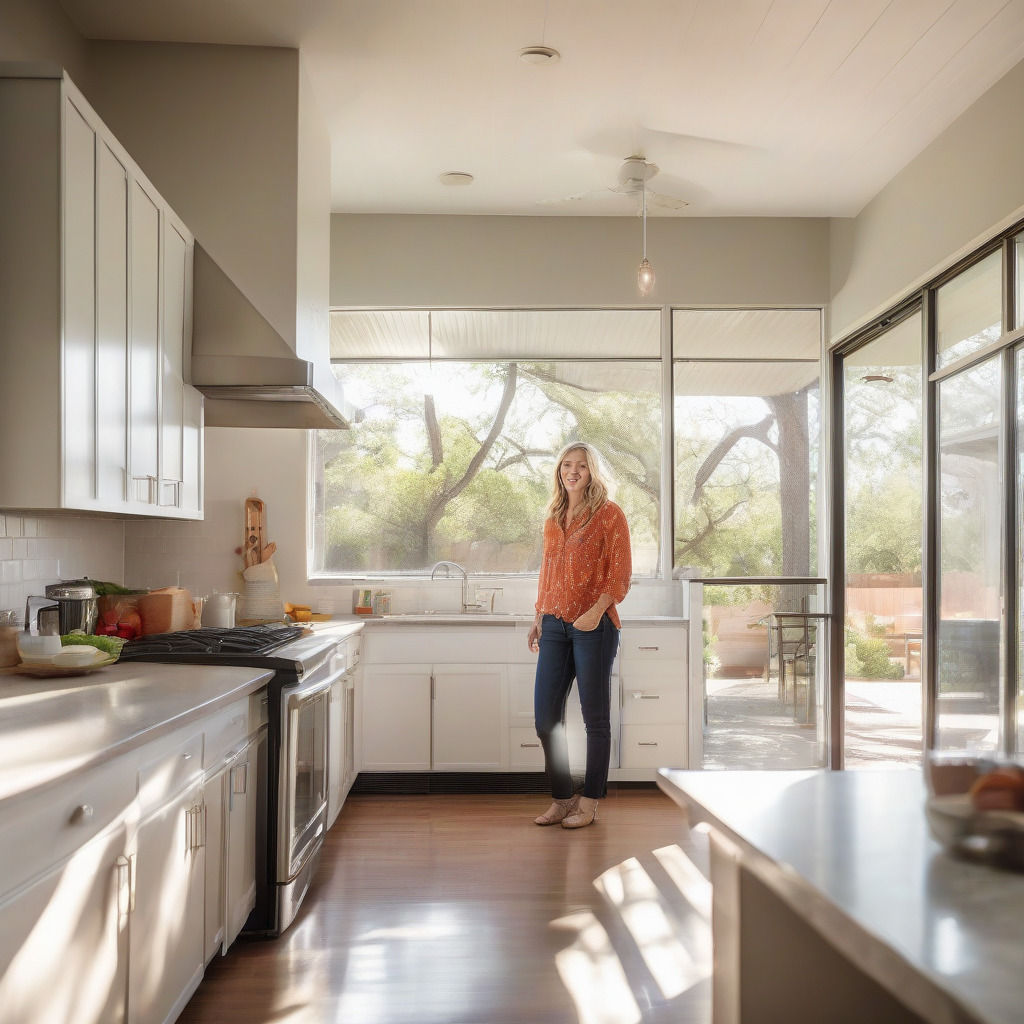
With inventory up and the seller’s-market free pass gone, here’s what local agents and Austin MLS data say before you spend a dollar on pre-listing renovations.
The math on pre-listing renovations has changed in Austin. It changed fast.
During the peak of 2021 and into spring 2022, sellers could list an unrenovated 1970s ranch in Allandale — original laminate counters, functional-but-dated kitchen — price it at $650,000, and watch four offers arrive by Sunday. Buyers were constrained by inventory. They forgave almost everything.
That’s over.
Austin Board of Realtors data tells the story. The metro median sale price has pulled back from its May 2022 peak near $667,000. Months of supply has climbed from the historic lows of 2021–2022 toward a range consistent with a balanced or slightly buyer-favorable market. Days on market in many Central Texas submarkets have stretched considerably for homes that don’t show well or are mispriced. [Editor: confirm current median, months of supply, and DOM figures from ABoR’s most recent monthly market report and Texas A&M Real Estate Center data before publication.]
Buyers are no longer making fear-of-loss offers on the only available property in a zip code. They’re comparing your home against two or three alternatives. That shifts everything — which renovations actually recover their cost, and which ones sellers essentially fund for the buyer.
What follows works through the categories Austin sellers are actually spending money on, with local agent input and Austin-specific data, as part of our home and property coverage for Central Texas residents. The goal is to give homeowners a clearer picture before they call a contractor and write a check they won’t get back.
Solar and Energy Efficiency: Austin Has a Local Calculation Worth Running
National renovation guides can tell you the federal Investment Tax Credit is 30% through 2032. What they can’t tell you is what solar does to your Austin resale price specifically, or how Austin Energy’s local programs change the math.
A typical residential system in the Austin market — call it 6 to 8 kilowatts — runs roughly $18,000 to $26,000 before incentives. After the 30% federal ITC, you’re out $12,600 to $18,200. [Editor: confirm current pricing with at least two Austin-area solar installers; ITC status confirmed through 2032 under Inflation Reduction Act.]
Austin Energy’s Value of Solar Tariff (VOST) pays residential customers for energy exported to the grid. Unlike net metering structures used in many other markets, the VOST pays a specific per-kilowatt-hour rate calculated annually based on the utility’s avoided cost of generation — so the number changes year over year. Austin Energy has also historically offered a direct rebate on residential installations, though funding status and dollar amounts need verification before you plan around them. [Editor: pull current VOST rate directly from Austin Energy’s published rate schedule; confirm rebate availability at (512) 494-9400 or austinenergy.com/go/solar before publication.]
On resale value: the most-cited research comes from Lawrence Berkeley National Laboratory, which tracked thousands of home sales and found solar contributes roughly $4 per watt of installed capacity. For a typical Austin system, that implies $24,000 to $32,000 in added value. Whether Austin transactions are actually hitting that figure, beating it, or discounting it in the current market is something a local appraiser with solar experience can tell you — and you should ask one before quoting that number to a seller. National averages obscure enormous local variation, and this one is no different. [Editor: interview a local appraiser with solar experience and at least one listing agent who can speak to whether Austin transactions are reflecting that figure.]
Leased systems are a different problem entirely. The wave of SolarCity and Tesla Energy leases written between roughly 2015 and 2020 is now showing up as a complication on Austin listings. When a homeowner leases rather than purchases, they don’t own the panels. They have a long-term payment obligation to a third party, secured by a lien or UCC filing on the property. Buyers must qualify to assume the lease. Lenders sometimes balk. Agents report deals getting complicated at closing when a lease transfer hits unexpected snags. If you have a leased system and you’re considering listing: talk to your agent first. Before you do anything else.
Beyond solar, efficiency upgrades work well in the Austin climate — attic insulation, air sealing, HVAC replacement. Their resale value is harder to isolate, though. Buyers notice a $120 July utility bill versus a $340 one, but appraisers can’t easily turn that into a line item. The value shows up most clearly when it’s documentable: an energy audit with a report, Austin Energy rebate paperwork, or a Home Energy Score your agent can include in the listing package. If you’ve done the work but have no paperwork, you improved the house and gave away the credit.
One thing sellers consistently miss: when you pull a permit for another project — a covered patio addition, a garage conversion — and the scope triggers certain thresholds under Austin’s adopted energy code, you may be required to bring insulation, air sealing, or HVAC up to current standards. The renovation you planned becomes a larger project. Get that clarity from a contractor or permit expediter who knows DSD’s current enforcement posture before you finalize any renovation budget.
Covered Outdoor Living: The Climate Makes This a Different Calculation
The national Cost vs. Value report treats a wood deck addition as a single line item. In Central Texas, that framing misses the most important variable: whether it has a roof over it.
Austin’s July through September high temperatures routinely hit 100 to 105 degrees. An uncovered wood deck sits unused those months, plus stretches of June and October. It adds a surface that requires maintenance and remains largely unusable for a third of the year. The 2024 Cost vs. Value figure for a wood deck addition nationally — roughly 68% of cost recouped — makes sense when you think about it that way.
A covered patio changes the equation. A properly designed covered space with a ceiling fan extends the practical outdoor season by three to four months. That’s a functional amenity in this climate, not a cosmetic one. Local contractor estimates for a covered patio attached to the house run $15,000 to $40,000 depending on size, materials, and finish level. [Editor: verify that range with Central Texas contractors before publication.] The higher end typically includes upgraded roofing materials, electrical for fans and lighting, concrete work, and finish details that integrate with the house.
Neighborhood targeting matters. In established central Austin neighborhoods — Tarrytown, Travis Heights, Barton Hills, along the South Congress corridor — buyers are purchasing move-in-ready homes and expecting outdoor living space. A well-executed covered patio carries real weight there. But in close-in East Austin, zip codes 78702 and 78721, a meaningful share of buyers are purchasing with full renovation or demolition in mind. Adding a $25,000 covered patio to a property that the buyer intends to gut doesn’t recover that cost. You’re building something for someone who didn’t ask for it.
Any patio cover attached to the structure in Austin city limits requires a building permit from the City of Austin Development Services Department. [Editor: confirm current square-footage thresholds and permit requirements for freestanding structures; check DSD’s online portal or call (512) 978-4000.] An unpermitted attached patio cover is a disclosed defect and a potential loan condition issue. The back-end cost of skipping the permit is higher than the permit fee. No exceptions.
Kitchen Remodels: The Minor vs. Major Gap Is Larger Than Most Sellers Realize
Austin sellers keep asking their listing agents some version of the same question: “Should I gut the kitchen before I list?” The data says almost always no. And Austin’s current market makes that answer stronger than it was three years ago.
The 2024 Cost vs. Value report puts a major kitchen remodel nationally at roughly 49 cents recovered per dollar spent. A minor kitchen remodel — targeted updates rather than a full gut — comes in around 96 cents. That gap is not a rounding error. A $60,000 kitchen renovation returns approximately $29,400 in measurable resale value. A $12,000 targeted refresh returns approximately $11,500. The refresh wins. It isn’t close.
What does a minor refresh cost in Austin? Figure $8,000 to $18,000. Cabinet repainting or refacing instead of replacement. New hardware. Quartz or granite countertops replacing dated laminate or tile. A stainless appliance package. Updated lighting. [Editor: verify with local contractors.] That scope addresses what buyers notice immediately. It avoids touching layout, plumbing, electrical, or structural elements — the things that drive major remodel costs through the ceiling. The goal is to remove the reasons a buyer objects, not to build a kitchen for yourself.
A full gut runs $40,000 to $80,000 for a typical Austin kitchen — layout reconfiguration, custom cabinetry, high-end appliances, new flooring, tile, designer fixtures. Design-forward renovations can push past $100,000. [Editor: confirm range with two or three Austin kitchen contractors.] During 2021 and into 2022, buyers in the $500,000 to $700,000 price tier routinely paid over asking for homes with dated kitchens because inventory gave them no alternative. That market is gone. Agents serving that price tier need to be the honest voice on what buyers in that range now consider baseline. Has a quartz-and-stainless kitchen become the floor, not the upgrade? [Editor: interview listing and buyer’s agents specifically about buyer expectations in the $500,000 to $700,000 range in today’s market.]
The full gut is hard to justify financially before listing in almost every scenario. At the $800,000-and-above tier, where buyer expectations are highest, there’s a narrow argument for it. Even there, the buyer may intend to customize further and is paying for finishes they didn’t choose.
The one case where a full remodel makes sense: a home that’s been a rental and has a genuinely damaged, worn-out kitchen — not simply an outdated one. In that situation, the renovation may be necessary to qualify for conventional financing or to attract reasonable offers. That’s a different calculation from a homeowner choosing to spend $65,000 on a cosmetic overhaul of a perfectly functional kitchen.
What Austin Agents Say Sellers Waste Money On
Over-personalized tile work. Austin has substantial stock of bungalows, craftsman homes, and midcentury ranches where bold tile fits the architecture — Saltillo floors, hand-painted Talavera, mosaic backsplashes, patterned encaustic tile. These reflect genuine local character and in the right home they’re genuinely beautiful. The problem is timing. Sellers who invest heavily in highly specific tile choices immediately before listing are gambling that buyers will share their taste. What one buyer finds authentically Austin, another finds impossible to live with. Neutral buyers represent the largest share of the market, and they factor removal cost into their offer. [Editor: get a specific agent quote on a transaction where tile work created buyer hesitation or a price negotiation; include a contractor estimate for tile replacement to anchor this section.]
Pool additions before listing. An inground pool in Austin runs roughly $60,000 to $90,000 installed — more for water features or extensive decking. [Editor: verify with Austin pool contractors.] Pools don’t return dollar-for-dollar at resale. Beyond the financial return, they generate active objections: buyers with young children, buyers who travel frequently, buyers who read “pool” as ongoing maintenance cost rather than amenity. If you’re considering adding a pool in the six months before you list, don’t. If you already have one, make sure the mechanicals are in excellent working order. A pool with a failing pump or a cracked skimmer becomes a negotiating problem that costs more than the repair.
Garage conversions in suburban markets. Converting an attached garage to living space may add square footage on paper. Austin agents serving Cedar Park, Round Rock, and Pflugerville report that buyers in those markets consistently push back on the trade-off. In a climate where summer temperatures hit 105, covered parking is a genuine daily-use amenity. A two-car garage converted to a bonus room is a bonus room most buyers would trade back for the parking. [Editor: get a named agent statement specifically about garage conversions and buyer response in suburban submarkets.]
High-maintenance landscaping. Curb appeal matters. A well-maintained front yard helps with first impression. But sellers who install lush, irrigation-dependent plantings before listing are creating a liability instead of solving one. Large palms, elaborate drip-fed beds, dense privacy hedges requiring professional trimming — Central Texas buyers have become attuned to the relationship between landscaping and utility bills. An elaborate irrigated landscape signals carrying cost in a drought-prone city where watering restrictions are a recurring reality. [Editor: verify current Austin water restriction status; confirm with an agent whether buyers are asking about irrigation costs in current transactions.]
HOA-violating improvements in suburban communities. These surface at closing, not during renovation planning. That’s what makes them damaging. Suburban communities in Cedar Park, Round Rock, Pflugerville, and parts of Georgetown have HOA covenants restricting exterior paint colors, fence materials, solar panel placement, patio cover design, and more. Sellers sometimes modify without checking. An improvement that violates an HOA restriction creates a disclosure obligation, a potential demand letter from the HOA, and a complication for lenders who require HOA compliance certification. Sellers who discover an unresolved violation during the closing process face a forced fix under time pressure — and that almost always costs more than doing it right the first time. [Editor: confirm this pattern with a named agent or closing attorney with suburban Austin transaction experience.]
Where Upgrades Pay Off and Where They Don’t
Established central Austin neighborhoods — Tarrytown, Westlake Hills, Brentwood, Crestview, Allandale, Barton Hills, Travis Heights — are condition-sensitive markets. Buyers here are typically purchasing for long-term owner occupancy, paying for walkability and school access, and comparing your home against other move-in-ready options. A clean, well-maintained house with a genuinely updated kitchen, clean bathrooms, and functional outdoor living space will command a real premium over a comparable home that needs work. With inventory up, hold times have stretched and concessions are real. Pre-listing investment that shortens days on market and supports list price has its clearest financial case in these submarkets.
Close-in East Austin is a different market and should be treated as one. Investor and developer activity in zip codes 78702 and 78721 remains elevated. A meaningful share of buyers in those corridors are purchasing for renovation or for lot value, with demolition in mind. Cosmetic updates help a property photograph better — fresh paint, updated fixtures, a refreshed kitchen attract a broader pool. But understand who is actually buying on your specific block before you spend $25,000 on a kitchen refresh that a buyer will rip out in six months.
Suburban new-construction competition zones in Cedar Park, Round Rock, Pflugerville, and Georgetown present a specific challenge. A renovated 2005 resale home competes against brand-new builder product with warranties, new mechanicals, and the psychological appeal of never having been lived in. To compete, the resale home needs to match new construction finishes. A kitchen refresh that works in Allandale might land flat in a Round Rock neighborhood where the new-build across the street has quartz waterfall edges, a farmhouse sink, and stainless built-ins. Agents working that market daily can tell you what the new-construction comps look like. That conversation should happen before you pick a countertop.
The Dripping Springs and Wimberley corridor requires different evaluation criteria entirely. Buyers purchasing acreage in Hays County — particularly on private well and septic — care deeply about infrastructure. A well that tests clean with adequate yield. A septic system in good repair and sized correctly for the house. A structure without moisture intrusion or foundation movement. A beautiful kitchen remodel on a property with marginal well output or a failing aerobic septic system is cosmetic improvement on a structurally compromised investment. If you’re listing in that corridor, spend the money on a well yield test and a full septic inspection before you think about countertops.
The Permit and Disclosure Trap
Texas law requires sellers to disclose known defects and material conditions affecting the property. Unpermitted work is a disclosure item. An addition, covered patio, garage conversion, or garage apartment built without a permit must be disclosed. And buyers, their agents, lenders, and inspectors will find it. A home inspector will flag an addition that doesn’t match original construction methods. An appraiser will note square footage discrepancies. A lender underwriting against a FEMA flood map may discover a permitted footprint that doesn’t match the actual structure.
The consequences range from annoying to deal-killing. Buyers who discover unpermitted work demand price reductions calculated to cover retroactive permitting costs — and those costs are almost always higher than the original permit fee would have been. Bringing the work into compliance with current code at the same time adds more. In some cases the lender won’t fund until a permit is issued and inspected, which can blow a closing deadline entirely. In the worst cases, the unpermitted structure must come down.
A properly permitted, code-compliant ADU or garage apartment in Austin adds genuine, documentable value. Austin’s short-term rental market, the demand from UT families and medical center workers, and the general appeal of rental income on a primary residence have made a legal accessory dwelling unit one of the clearest value-add improvements in certain submarkets. An appraiser can give a permitted ADU a contributory value. A buyer can underwrite their mortgage against projected rental income. An unpermitted garage apartment gives the buyer a liability. That distinction is the whole ballgame.
Before You Call a Contractor
The seller’s-market condition that forgave unrenovated homes and rewarded almost any improvement is behind us. What replaces it is a market where buyers have choices and exercise them. The gap between a minor targeted refresh and a full gut renovation is enormous financially. Neighborhood context is the variable that determines whether a given improvement pays off.
The most useful conversation a seller can have before spending a dollar is with a listing agent who works their specific neighborhood. Pull recent closed comparables showing homes with and without the improvement you’re considering — not a national Cost vs. Value average, not a contractor’s estimate of added value. Actual sold transactions from your zip code in the past six months. That conversation costs nothing. It can save you $40,000.
Editor’s note: Several figures in this article require verification against current sources before publication, as noted inline. Cost ranges should be confirmed with local contractors. Austin Energy rebate and VOST rate figures must be verified directly with Austin Energy’s residential programs at (512) 494-9400 or austinenergy.com/go/solar before any specific figures are published. ABoR market data should reflect the most current monthly report available at press time. All agent quotes and named sources must be confirmed on the record.